

This is how diversity month is celebrated in Uruguay
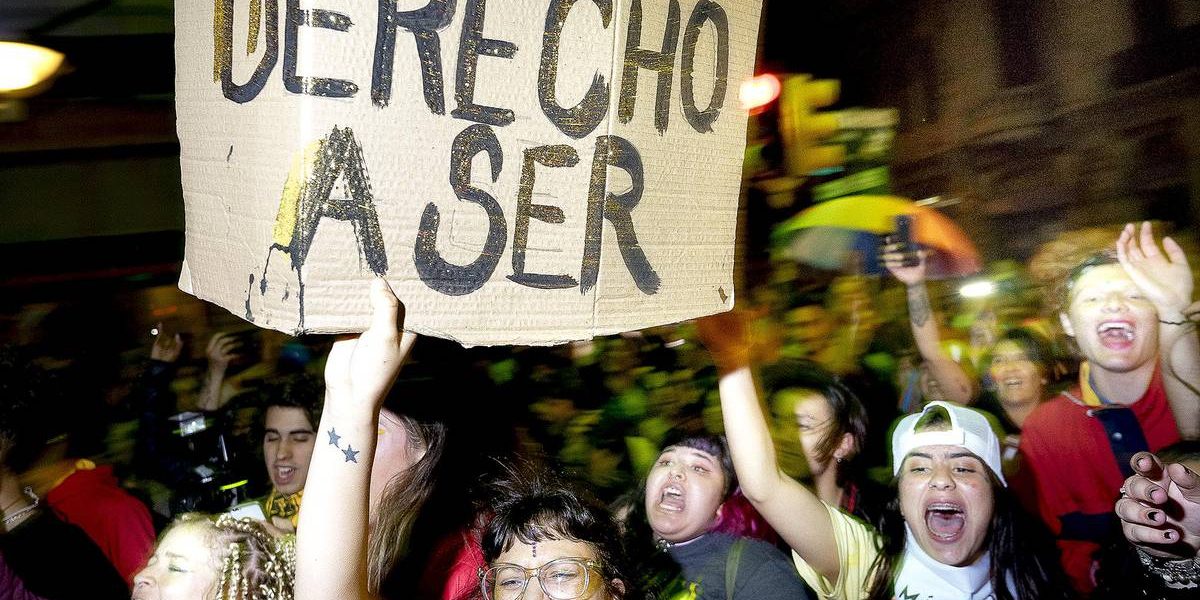
The National Council for Sexual Diversity, led by the Ministry of Social Development (Mides) of Uruguay, inaugurated Diversity Month 2019, which this year will be celebrated under the slogan "One country, diverse families".

Share

Photo: Mariana Grief
Uruguay's National Council for Sexual Diversity, led by the Ministry of Social Development (MIDES), inaugurated Diversity Month 2019, which this year will be celebrated under the slogan "One Country, Diverse Families." This idea will permeate all activities organized in September, according to MIDES promotional materials, with the aim of promoting "the plurality of different family arrangements," "the deconstruction of traditional models," and "the defense of diversity in all its manifestations, particularly for the most vulnerable populations.".
Why focus on families? For two specific reasons, Federico Graña, Director of Sociocultural Promotion at Mides, explained to La Diaria . “One is because of some processes we will be presenting throughout the month, which are linked, for example, to supporting the families of transgender adolescents during their transition,” he commented.
[READ ALSO: Campaign to repeal trans law in Uruguay fails: there will be no referendum]
The second reason for focusing on families this year is “for the respect of the diversity of families beyond those of sexual diversity, because our State recognizes different family models,” stated Graña. Uruguay has reason to celebrate in this area. In recent years, the country has incorporated new regulations into its legal framework that recognize diverse family arrangements and expand rights for people of diverse sexual orientations and gender identities, such as laws on cohabitation, same-sex marriage, modifications to adoption and assisted reproduction processes, and, more recently, the Comprehensive Law for Transgender People. Beyond these achievements, the Mides representative insisted that Uruguay's “anti-discrimination regulations” must be constantly reviewed to strengthen them and contribute to the best possible implementation of public policies aimed at sexual diversity.
Intersectionality
Other institutions and social organizations complete the extensive agenda of activities planned in different parts of the country. The Montevideo City Council (IM) chose the slogan “We are the city that celebrates diversity” this year to frame the month's activities. The capital city's campaign will revolve around the idea of intersectionality, that approach in which different identities intersect. Therefore, it aims to make visible “people affected by different inequalities, beyond belonging to the LGBTI community, whether they are migrants, people with HIV, young or old,” Andrés Scagliola, coordinator of the IM's Diversity Secretariat, explained to la diaria
With rainbow colors in the streets
Diversity in progress: “Never again in the closet”
The grand finale of September's diverse events will once again be the Diversity March, which this year will be held on Friday the 27th, coordinated by some fifteen civil society organizations and with the slogan "Never again in the closet" as its banner. The Diversity March Coordinating Committee agreed this year that the mobilization will revolve around two main themes: resistance against so-called anti-rights groups and rejection of the constitutional reform known as "Living Without Fear," promoted by National Party Senator Jorge Larrañaga.
Regarding this, Magdalena Bessonart, a member of the Black Sheep movement, said that the influence of “fundamentalist anti-rights groups,” for example, in Brazil under Jair Bolsonaro, is not the same as in Uruguay, but that in Uruguay there are “expressions of hatred from some people who have burst onto the political scene to question, basically, whether dissidents are people.”.
Lesbian visibility
Another aspect of this year's march will be lesbian visibility, especially in the event's aesthetics and the closing artistic performance. "As lesbian activists and members of Ovejas Negras (Black Sheep), we understand that we often make ourselves invisible, so we thought about how to make our presence felt. And how do we make our presence felt? Through our actions, not just by saying 'we're lesbians,'" Bessonart explained. Therefore, the idea is to have "non-hegemonic lesbian and bisexual women in all aspects of the march," and especially in the closing artistic performance, "because in Uruguay there are many dissident and LGBTQ+ women who have so much to offer, and we need to make them visible." The program, which is still being finalized, will reflect this profile, and its details will not be released until it is complete.
We are present
We are committed to journalism that delves into the territories and conducts thorough investigations, combined with new technologies and narrative formats. We want the protagonists, their stories, and their struggles to be present.
SUPPORT US

FOLLOW US
Related notes
We are present
This and other stories are not usually on the media agenda. Together we can bring them to light.