

Why I had surgery: a trans activist shares her experience
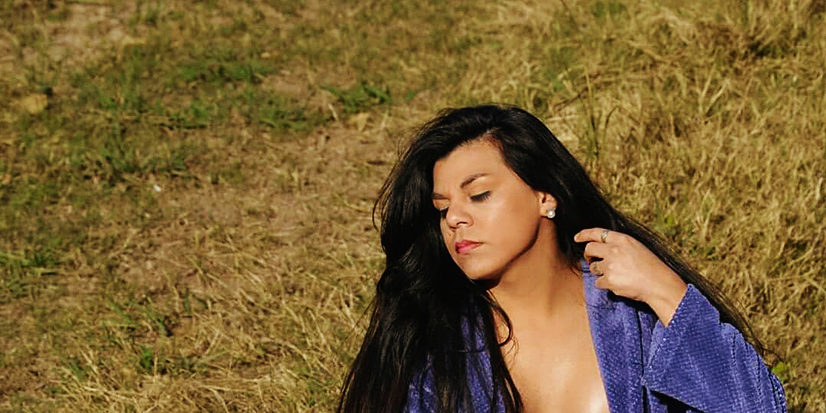
Keili González is a trans activist from Entre Ríos. A month ago, after much deliberation, she underwent breast implant surgery. In this column, she shares her story and reflects on a process where body and identity merge yet also diverge. “Do we have to pay for our identity with our bodies?” she asks. “I can’t summarize my entire trans experience in one surgery. But in my life, I’ve learned to find new meaning in pain and everything I’ve been through.”.

Share

Keili González is a trans activist from Entre Ríos. A month ago, after much deliberation, she underwent breast implant surgery. In this column, she shares her story and reflects on a process where body and identity merge yet also diverge. “Do we have to pay for our identity with our bodies?” she asks. “I can’t summarize my entire trans experience in one surgery. But in my life, I’ve learned to find new meaning in pain and everything I’ve been through.”.
By Keili González
The idea of getting breast implants started around 2009, during those "wild" outings with my gay friends—women, cis people, trans women, and transvestites. I'd sneak out of my parents' sight—I say "outside" because I wasn't yet of legal age—and go to the house of a friend who, at that time, was one of the few who was financially independent, lived alone, and managed her own time. There, I could do whatever I wanted without having to explain myself. The production was the most beautiful collective moment, where we recommended clothes to each other, did our makeup, stuffed every bra that came our way, and measured our plunging necklines. The "drink," the beverage, was the intermediary for hugs, jokes, laughter, and advice on how to handle ourselves if we ran into a violent man: they were never lacking in the places we frequented. They were also tumultuous encounters, because there were plenty of moments where monogamy was explicitly equated with love. We were "marking the playing field," we were jealous, and what a mess would erupt if someone "stepped a step.".[READ ALSO: When being trans “shows” ]
On one of those outings, noticing how the men looked at my female companions, I began to feel ashamed of my body, of what I understood as the standard of being a woman. Oh yes, a woman! The thought of myself as a transvestite was far from my mind. I had never questioned what kind of woman I was talking about. Back then, I only analyzed what I conceived as the construction of that category. She was 16, had never been in a relationship, and needed to find an explanation: maybe it was her breasts that were the problem.“I was one of the privileged ones”
My activism at that time was territorial, not academic. I lacked the tools to think theoretically about myself, or perhaps it was too complex for me. A desire was at stake, and I had to find the cause of my unease. First of all, I could rule out that it wasn't out of necessity, forced by stereotypes. I wasn't in the prostitution system. I wasn't forced to change my body to earn a few dirty pesos, pay rent, have clean sheets, and a hot meal. I was one of the privileged few who hadn't been kicked out of her home. There were two possibilities that could explain why I wanted breasts. The first was that I still thought of myself in a binary way. And the second was due to a sexual and emotional need. In the midst of the debate over the Gender Identity Law, there was still no comprehensive access to healthcare and I did not have the financial means to have surgery in the private sector.[READ ALSO: When the limit of feminism is trans femininities ]
In early 2011, I began to get involved in activism and debate with friends and fellow activists. The general consensus was that we had to pay with our bodies to change our names. This led me to wonder: where did that leave our freedom? Where did that leave our power to decide? That was the prevailing discourse in my community; but I wanted to be who I was, on my own terms, not what they wanted me to be. Two years later, under a different legal framework, with the approval of Law 26.743 on Gender Identity, I met Gustavo Terra in the only hospital in Nogoyá, the city where I live. There, after many battles, people in situations of prostitution were able to consult and receive care from an obstetrician-gynecologist, today a dear friend named Gustavo Terra.Questions and contradictions
When I read trans activist's note Violeta Alegre, where she reflects on the expressions "It shows" or "It doesn't show," made me start thinking about the surgical, hormonal, and aesthetic practices that we transvestites, transgender people, and transsexuals undergo and submit to. Firstly, I felt the need to ask myself why I had breast surgery, being clear that it was not a necessity and considering that there did not have to be a cause that generated it beyond my desires. Secondly, I encountered the contradiction, when I had the operation, of not reproducing hegemonic models or stereotypes, understanding that the trans-trava category is not unitary, exclusionary and without complications, since there is no single way to be it. Third and lastly, I considered reviewing the privileges I had gained through militancy and activism, which, to some extent, allowed me to have greater integration, reach, and economic sustainability to carry out the intervention.
Hormonal treatment
During my initial consultation, I suggested starting hormone therapy to gradually develop breasts. I explained that I had already had attempts with another healthcare professional, but this time I wanted ongoing follow-up. The treatment involved breast development, as well as reducing facial hair growth, fat accumulation in the hips, and improving skin and hair, among other benefits. However, there were also adverse effects: decreased libido, impotence, potential heart problems, infertility, and mood swings. These were factors I had to reconsider before continuing.Biology is not destiny
My time at university, combined with my activism and feminism as a way of life, allowed me to critically analyze hormone therapy and medicine as a discipline that normalizes bodies. It was there that the concept of freedom reappeared. I began to grapple with the tenets of biology and its framework of sex, gender, and sexuality. I needed to confront an identity based on my own standards, which meant challenging the biological discourse and distancing myself from what society expected of my body, my anatomy, and physiology, because I defend the position that.. Biology is not a destiny.[READ ALSO: “Transphobia is not a phobia: it is not an illness” ]
But I couldn't stop thinking about the freedom, the power, and the decision-making of my colleagues to choose to undergo certain hormonal treatments that involved physiological and anatomical changes.A memory
When I was a girl, comprehensive sex education for everyone didn't exist. The environments and spaces I was part of, which were very few, were exclusionary and generally sought to confine me to heterosexual norms. This hasn't completely changed today, despite the progress made. I wonder if there was anything in my childhood that had to do with my fears of showing my torso, my tiny breasts, and I remember that there was. It was a summer afternoon with my family. In the humid summers, when the heat was at its peak, my mother, father, siblings, and I would "shoot" at the stream; there were no public swimming pools, and if there were, we couldn't afford to go. My father, who used to go to the countryside for hunting and fishing, knew some places where we could spend those hot days and share a day in the countryside.[READ ALSO: A documentary about the transition of Laerte, Brazil's most famous cartoonist ]
Behind the cemetery, on the road to the Montoya district, in a field a little over two kilometers from what's known in town as the "Petizo" Mill, the stream flows. There's a ford there; it was one of the two or three places we used to go. I look back on that day that marked me, because it reflects the freedom that involved my breasts. I found it difficult to take off my shirt, a sign that there was already some "history" surrounding my breasts. At home, I did it under pressure because I was sure that some scolding or teasing would get me. That day was different. I remember wandering off from my family to a shallow spot in the stream. I shamelessly took off my shirt and waded into the water, submerging myself and smiling. I stayed there for almost half an hour, savoring that moment where I felt like never before. It doesn't seem like a momentous event, but for me it was. Happiness, that freedom that lasted for an instant. I was myself without fear, my body no longer subject to the dictates of appearances.
The surgery
The surgery took place on April 20th at the San Martín Hospital in Paraná, after several months of paperwork. The state covered the surgery and hospitalization, but not the necessary supplies like prostheses and medications. Despite the laws, I am aware that we are living in a very harsh social, economic, and political context. The policies of Mauricio Macri at the national level and Gustavo Bordet at the provincial level have exacerbated the violence. There is a lack of access to justice and the healthcare system. Trans women are among the most affected. Today, more than a month and a half after that day, what do I think and how do I feel? It's a process, not a contradiction; it has to do with my journey, which was collective and consequently reflects the "proudly trans me." Because I was once a boy, I deconstructed that identity, I abandoned it, and I went through other processes of identity construction.[READ ALSO: When the medical system violates the rights of LGBT people ]
It was my first surgery, and it was a way of breaking down a structure. The feelings afterward were complicated. Not only because of the physical pain, but also because I felt a kind of melancholy. I kept asking myself: Did I really do this to myself? But now I'm happy, and this is just the beginning. I can't summarize my entire journey of cross-dressing in just one surgery. But throughout my life, I've learned to reframe the pain and everything I've been through, what has shaped me, and what I want to do, and I stand by it because it speaks to my empowerment and the courage to create myself. I should clarify that it's another aspect of that self-construction, reflecting the freedom I have in who I am and, why not, in who I will become, because I don't know what the future holds]]>We are present
We are committed to journalism that delves into the territories and conducts thorough investigations, combined with new technologies and narrative formats. We want the protagonists, their stories, and their struggles to be present.
SUPPORT US

FOLLOW US
Related notes
We are present
This and other stories are not usually on the media agenda. Together we can bring them to light.
DEAR FRIENDS,
it's funny to see people complaining about their relationship and life problems when the solution isn't far from them… There are real spellcasters. Not every situation needs a spell to be cast, and I want to assure you that you'll get a definitive solution to your problem. Just check out this powerful man at his email address ODUDUSPIRITUALSHRINE@gmail.com , and you'll be delighted to have all your problems solved. Your love life and health will be back, and you're guaranteed to live a happy life forever.