

Love stories: Mayan families shelter their LGBT children
Three stories that tell how Mayan families live with and accept the sexual identity of their children.


Share

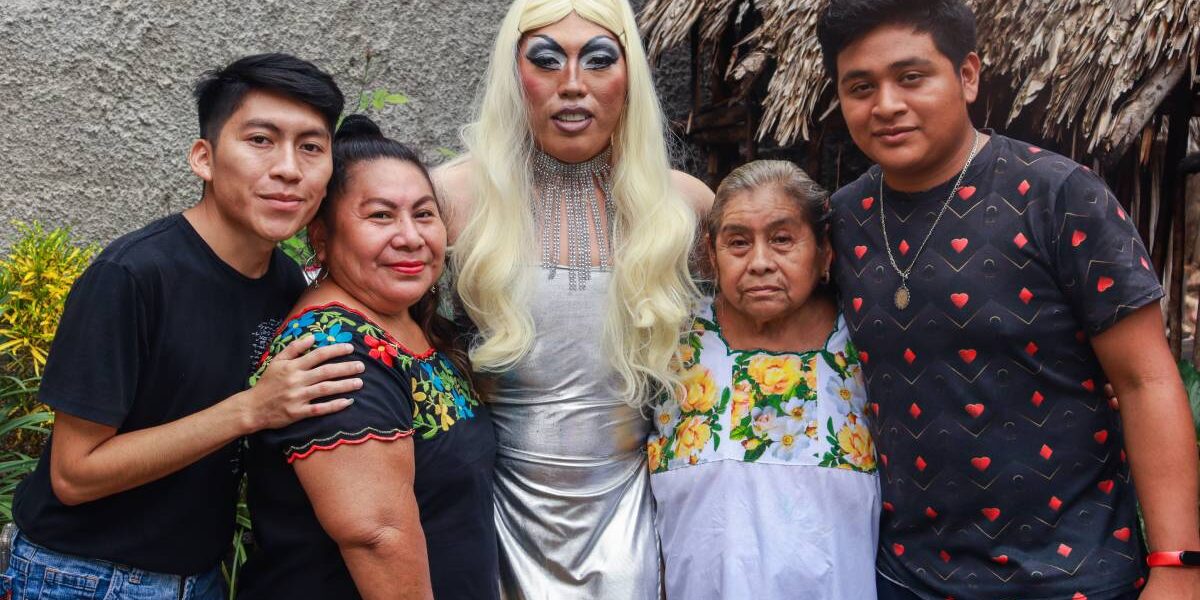
There isn't a word for drag queen in Mayan, but Alexandra Montenegro says xibí xchúp to describe someone who transforms, someone whose gender moves freely from one place to another. Alexandra, also known as Iván Tamay Gamboa, is 28 years old and a Mayan-speaking teacher from the community of Tiholop, Yaxcabá, Yucatán, in southern Mexico. She's a showgirl: she sings, sews, does makeup, dances jarana, and rides horses. But her passion is imitating the voices of Amanda Miguel, Laura León, and other Latin American singers.
When she began her transformation at 18, she had reservations about how her grandparents would react. Her grandmother replied with a smile that she would give her some fabric so she could make her first dress. In her room, where her wigs are hung and arranged by size, are her friends, other young people from Tiholop whom she asks to put away her makeup and straighten her dress.
“I never sat down to explain to them: this is who I am. I’ve always believed that we have no obligation to give explanations. So I was just free.”
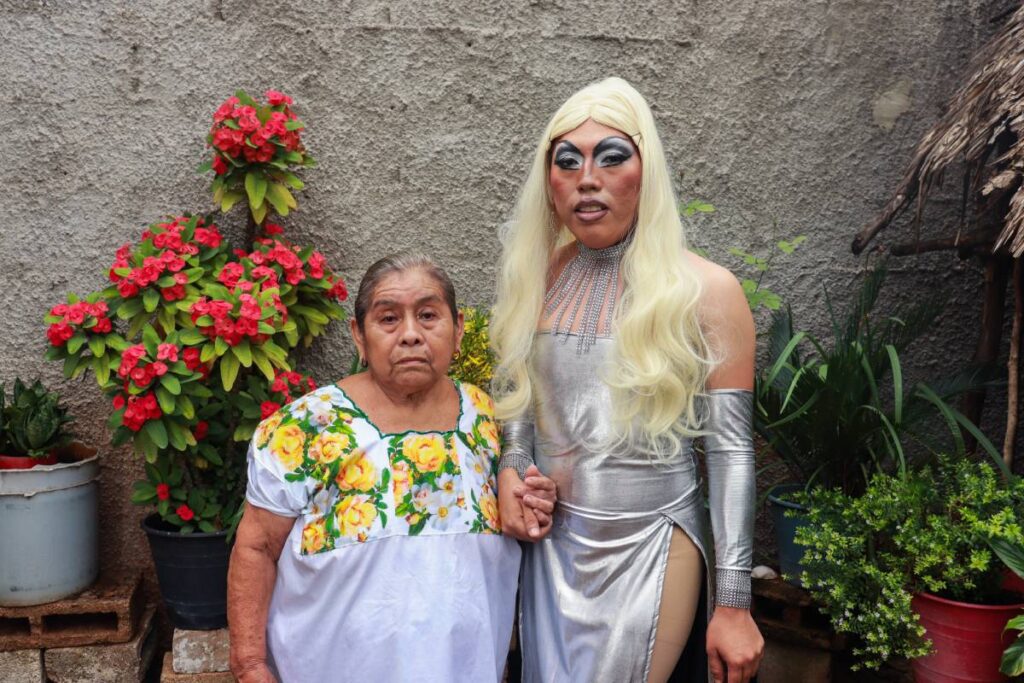
Photo: Kelly Gómez.
A place to live freely
The affectionate scene in Alexandra's house isn't common in many parts of the world, but it's even less expected in a town of just over a thousand inhabitants. According to the latest census by the National Institute of Statistics and Geography, 8.3% of the population in Yucatán is lesbian, gay, bisexual, trans, or non-binary, making it the second state with the highest percentage of LGBTI+ population in Mexico.
In the state there are 252,370 indigenous census households, according to the Expanded Questionnaire of the 2020 Population and Housing Census. Talking about sexual diversity and its interrelation in native communities is increasingly urgent in the state.
In Mérida, the capital of Yucatán, part of the LGBT activist movement identifies with the intersection of being Mayaqueer. Some of them migrated to the city, in part, because they didn't feel they could live their sexuality and identity freely in their own communities.
However, homophobia and transphobia are not inherent in Indigenous communities. It is an experience also present in large cities and embodied in movements of white people. Pedro Cruz Pech, a high school teacher who lives in Mérida, spoke openly about his sexual orientation just two years ago, when he was 27. He spent years of his childhood in the Mayan town of Tekantó, where part of his family is from, and moved to Mérida at age 9. He recalls always having the feeling that being gay “was wrong.”
“When I was younger, I had the dominant idea of sexual orientation. I’ve known I’m gay for as long as I can remember, but for me it was a stigma because I saw it everywhere.” His mother, Rosa Pech, originally from Seyé, replies that there was no need for him to tell her; she already knew.
The day his eight-year relationship ended, Pedro Cruz arrived home sad and wanted to share it with his mother and sisters. They reacted naturally, comforting him and focusing on the breakup rather than his sexual orientation.
“That made me share it publicly. I posted it on all my social media so that my family, friends, the world, my boss, everyone would know.”
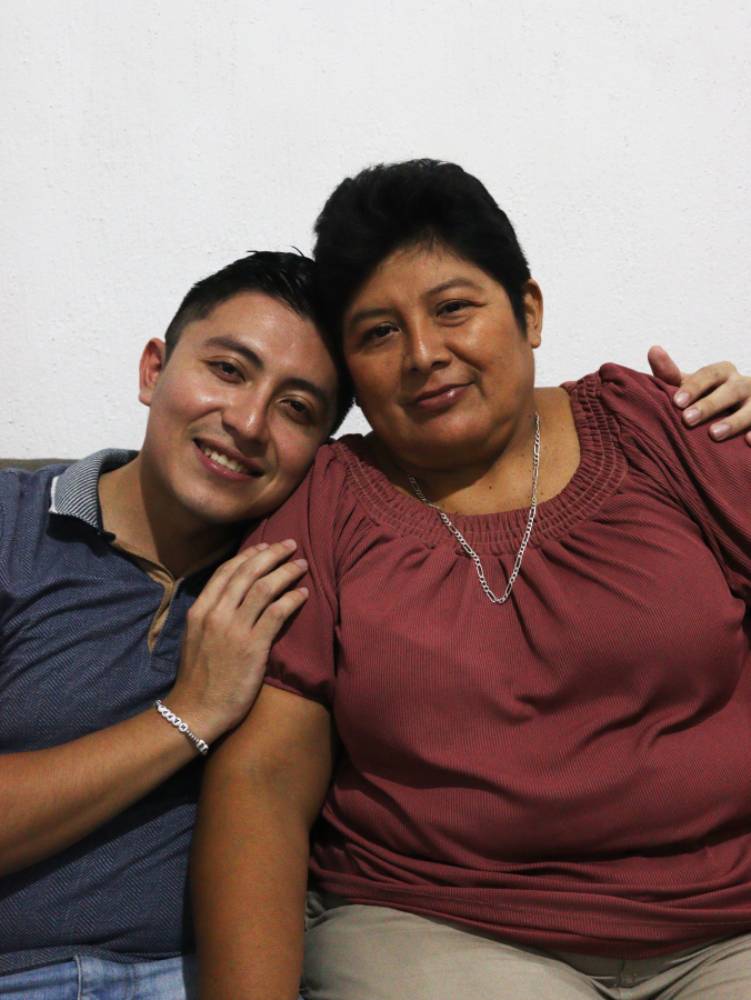
Photo: Katia Rejón
A visible LGBT person changes their environment
Those interviewed agree that meeting someone from the LGBT community changes prejudices. That's precisely what made Elena realize there was nothing wrong with her 16-year-old daughter, Itandehui, when she told her she was a lesbian and had a girlfriend. Elena was 13 when she saw her best friend, whom she still sees often, suffer from the homophobia that surrounded him.
“We had talked about these things before, and I didn’t grow up with the idea that it was wrong. I had been in a relationship with my girlfriend for a year, and I decided to tell my mom,” Itandehui says in an interview. They live in Dzoncauich, a town of 2,800 inhabitants in Yucatán. At their home, they have a cultural space where they hold activities. It’s also a place where Itandehui and her girlfriend’s gay and lesbian friends come to spend their afternoons.
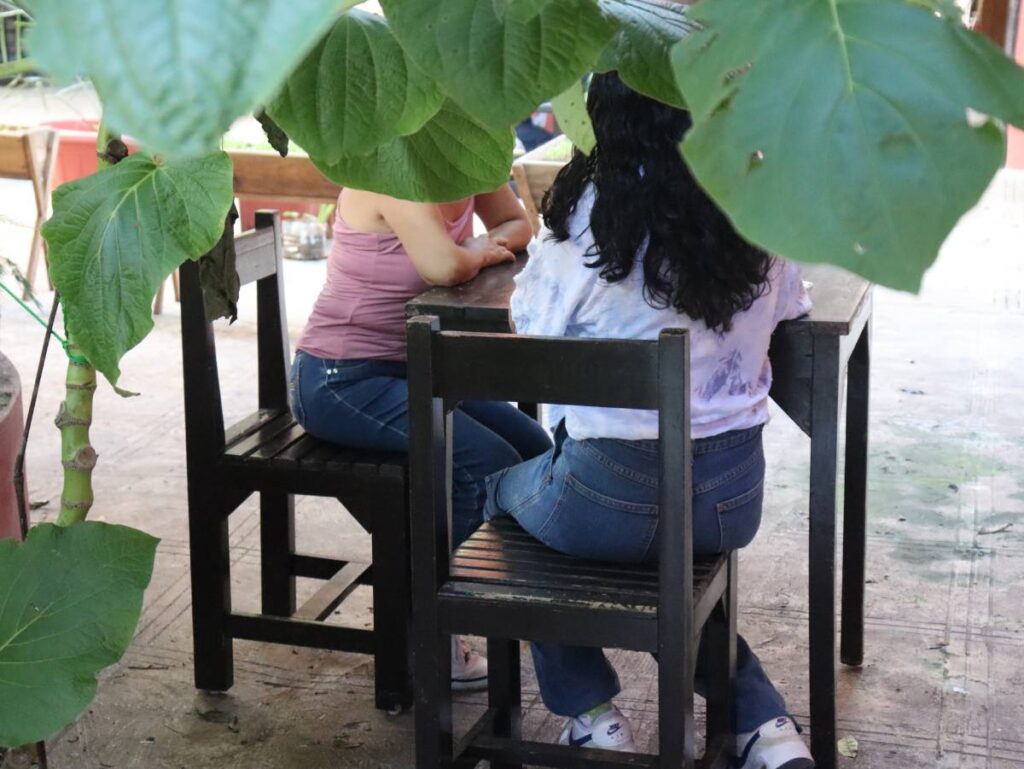
Photo: Katia Rejón
Elena says the only "but" she gave her daughter was to be careful about who she shared that information with, as she believes that in many places it's still not safe to come out. That's why they prefer that their last names not appear in the interview.
Although in Dzoncauich they don't talk openly about the LGBT people who live in the town, some couples are respected as long as they are "discreet" or "silent", but homophobia is public.
Itandehui recounts that when the textbooks from the Ministry of Public Education arrived, parents demanded that the school not use them, and they succeeded. This also happened in Mérida. But unlike in the capital, the censorship in Dzoncauich went unreported and was not countered by human rights activists. It's not that there is a greater or lesser tendency toward homophobia in Indigenous communities, but rather that there are conditions of inequality in access to information and the guarantee of rights that perpetuate it.
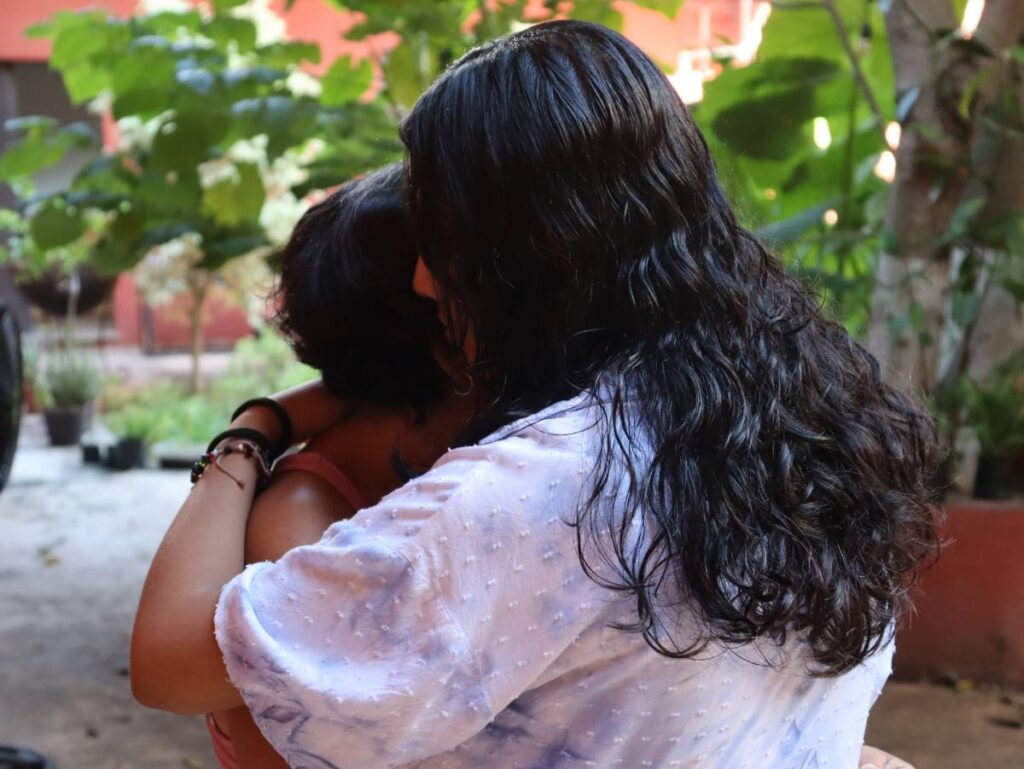
Photo: Katia Rejón
“Most of my friends aren’t straight. And in Temax, the next town over which is a bit bigger, the topic is discussed more; they hold marches and celebrate Pride,” Itandehui explains.
She clarifies that, regardless of whether a community has many or few people, there will always be LGBT individuals. The difficulty lies in speaking openly about it due to a lack of information in some circles and families' reluctance to discuss the topic. "These are issues I've always only discussed with myself; there's no chance anyone else will listen," she says.
The value of love
A few years ago, Alexandra Montenegro couldn't walk the streets of her town in a silver dress, blonde wig, and stilettos, as she does today, without being attacked. The first time she went on stage in 2014, she was subjected to a barrage of insults. Her family was in the audience and defended her.
“My family told me to do it in a certain way, in such a respectful way, that I would educate people. They didn't shut me out when I was insulted. That's what I did, but I also ended up getting into fights with people who didn't respect me. Now they recognize me; I go out and they see me like this or any other way and they call me Iván, they call me Tesoro, or Alexandra. In my town there are lesbian couples and everything is normal.”
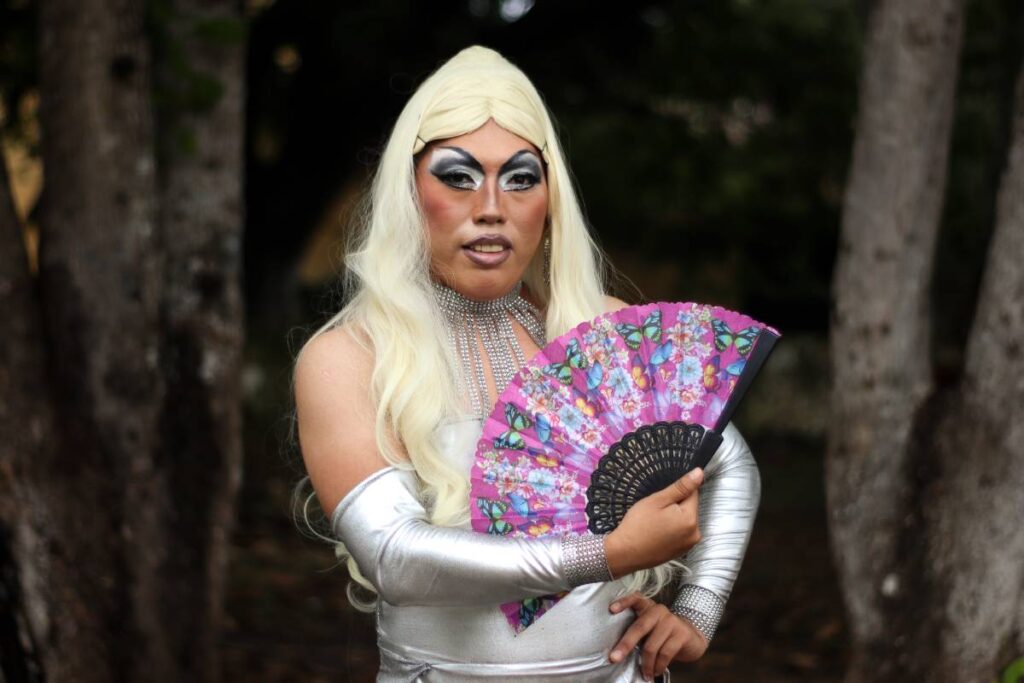
Photo: Kelly Gómez
Alexandra has drag queen friends from nearby towns with whom she performs shows and competes in events. At the town's carnival, her students and teachers greet her and applaud her; the next day they might see her on the street as Iván and respectfully say, "Good morning, teacher."
“Tiholop has a broader perspective in that sense. Once, Paloma † (a historical trans woman in the LGBT movement of Yucatán) came. She stayed for about three days, and everyone welcomed her warmly; people invited her to their homes for meals. And they knew she was a trans woman. I never heard a single insult or act of aggression. My friends come and transform themselves, they go out and are surprised. They ask me how it is that in the town of Yaxcabá, which is the municipal seat, they insult you, and here they even take pictures with you like a celebrity.”
Mothers who learn from their children
Everything that mothers in the LGBT community know, they know thanks to their children. Rosa Pech has four children, and two belong to the community: “We sit down to talk, and I always tell them that I learn; they are four different points of view,” says Rosa.
Pedro adds that as he and his sisters grew up, their trust in their mother increased, and since he came out, they've been able to talk about topics that might be controversial for many conservative families. They laugh as they reminisce about the time they talked about experimenting with marijuana and explained to their mother what a four-way kiss is.
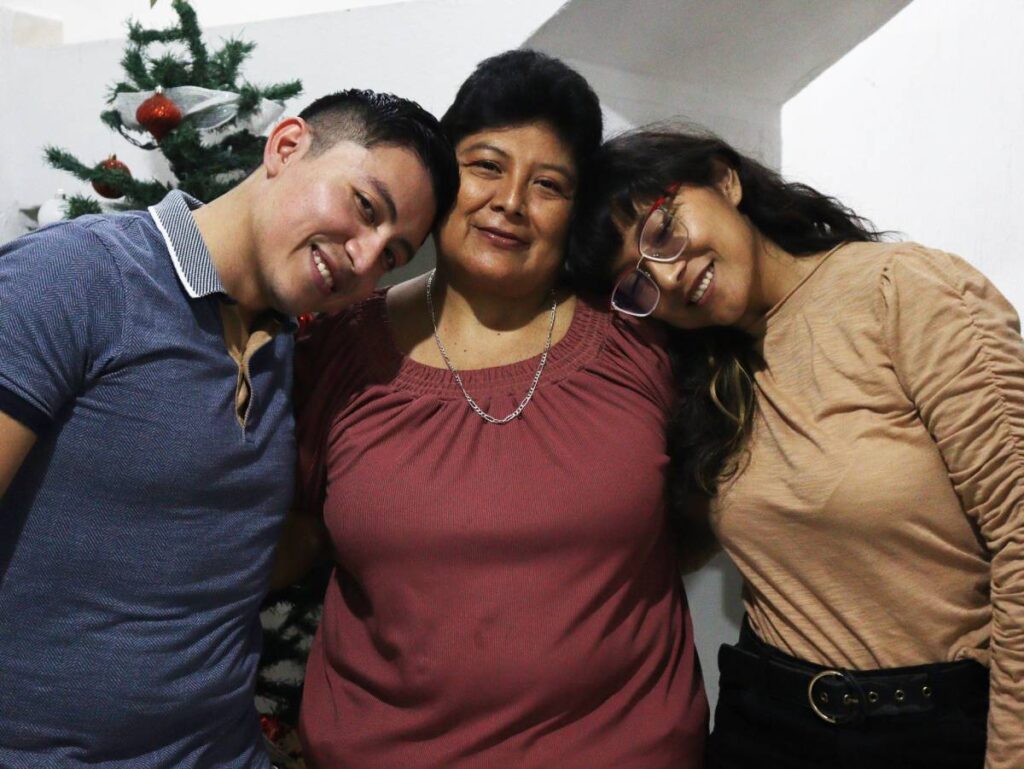
Photo: Katia Rejón
Elena and Itandehui also discuss the topic. They say that both of them have a strong character that leads them to defend the causes they believe in with well-reasoned arguments. “I feel I lack knowledge, because with good arguments I can also defend it. There are many things I don't know, I don't understand, but I put myself in their shoes. I lack preparation, and I would like us to show a film or do something in Dzoncahuich to talk about the topic. I would like it if, when someone in a family says, 'This is my sexuality,' the parents could say to them: 'Daughter, I don't know about this, but let's go find out together.'”
Being Mayan and being LGBT
Being a lesbian, gay, or trans Mayan person is a unique experience, with little representation within activism, according to those interviewed. Alexandra says she now experiences more discrimination because of her place of origin than because she is part of the LGBT community.
“It has happened to me that I mention Tiholop, explain where it is, and I get discriminated against a little. I'm not ashamed to speak my language. I speak Mayan in drag or as Iván, and sometimes even when talking to someone in Spanish I forget and start speaking in Mayan.”
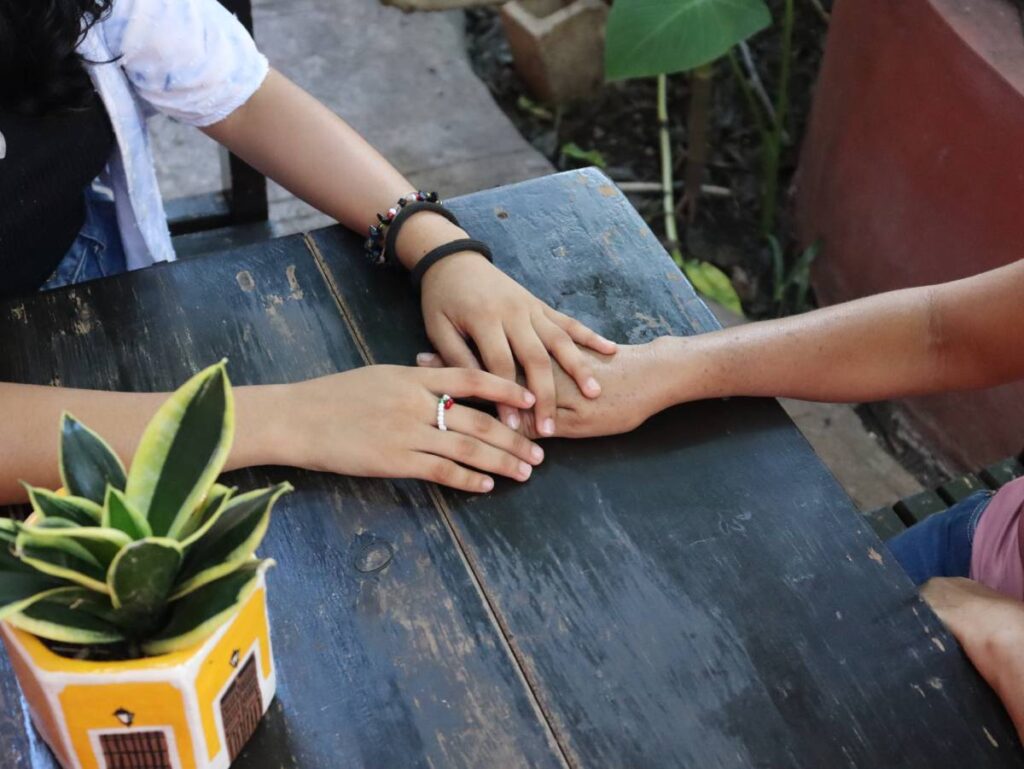
Photo: Katia Rejón
This, coupled with the difficulties of finding venues to perform, the lack of conversation topics with people uninterested in learning about a different culture, and the knowledge that in some circles it matters to have "a pretty face" with hegemonic features.
“They have more suitable places and the opportunity to emerge a little more in the scene, make contacts, have friends. But as I've always said: What you don't sweat for, you don't enjoy.”
We are present
We are committed to journalism that delves into the territories and conducts thorough investigations, combined with new technologies and narrative formats. We want the protagonists, their stories, and their struggles to be present.
SUPPORT US

FOLLOW US
Related notes
Cannon fodder: the book that recovers silenced stories of transvestites and trans people during the civic-military dictatorship
Lechedevirgen: “Undoing art means restoring its ritual and collective dimension”
Why the trial for the murder of Eldin and Milton could be historic for Guatemala's LGBT community
We are present
This and other stories are not usually on the media agenda. Together we can bring them to light.