

Carmelitas Clown: the transvestite clowns who respond to hate with cumbia, community and dissident humor
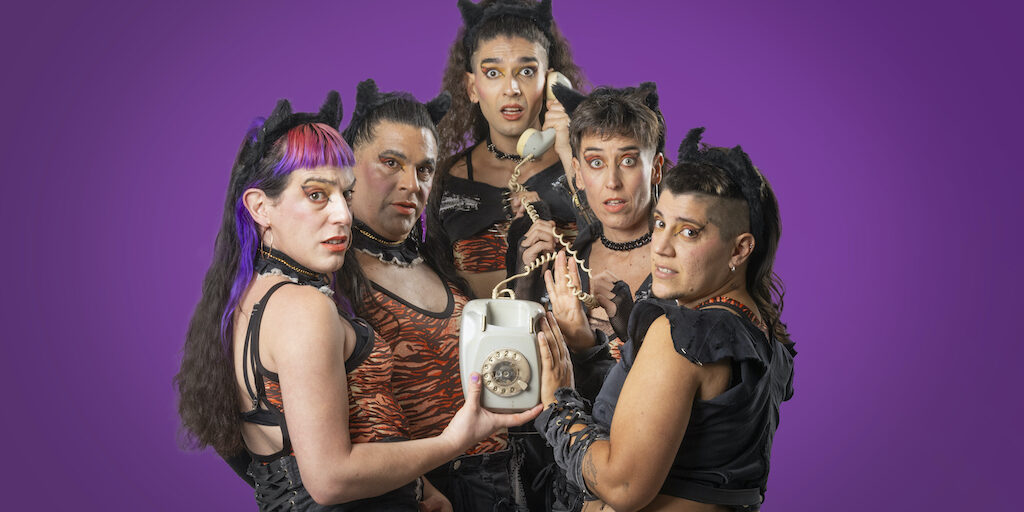
Carmelitas Clown is a duo of transvestite clowns. Gemma Ríos and Carmín Lupe have spent a decade building dissident humor, music, and community as a political response to the current situation in Argentina.


Share

BUENOS AIRES, Argentina. Humor, activism, and diversity. Carmelitas Clown is a duo of transvestite clowns who have been performing on stages across the country for over ten years. The duo consists of Gemma Ríos and Carmín Lupe. Both acknowledge the Tierra Violeta variety shows, where they first met artistically, as their starting point . At that time, one was active in Varones Floreciendo (in Haedo) and the other in Varones Antipatriarcales (in Buenos Aires). Now based in Córdoba, they continue to build networks to expand the reach of art.
“The complicity arose from inhabiting the stage with the discomfort that our identities represented. We met when our sexual identity was different, queer, we still perceived ourselves as such. At that time there weren't many people in the LGBTQ+ community who were sexual dissidents and approached clowning from that queer perspective, with all that that implied,” Gemma Ríos tells Agencia Presentes
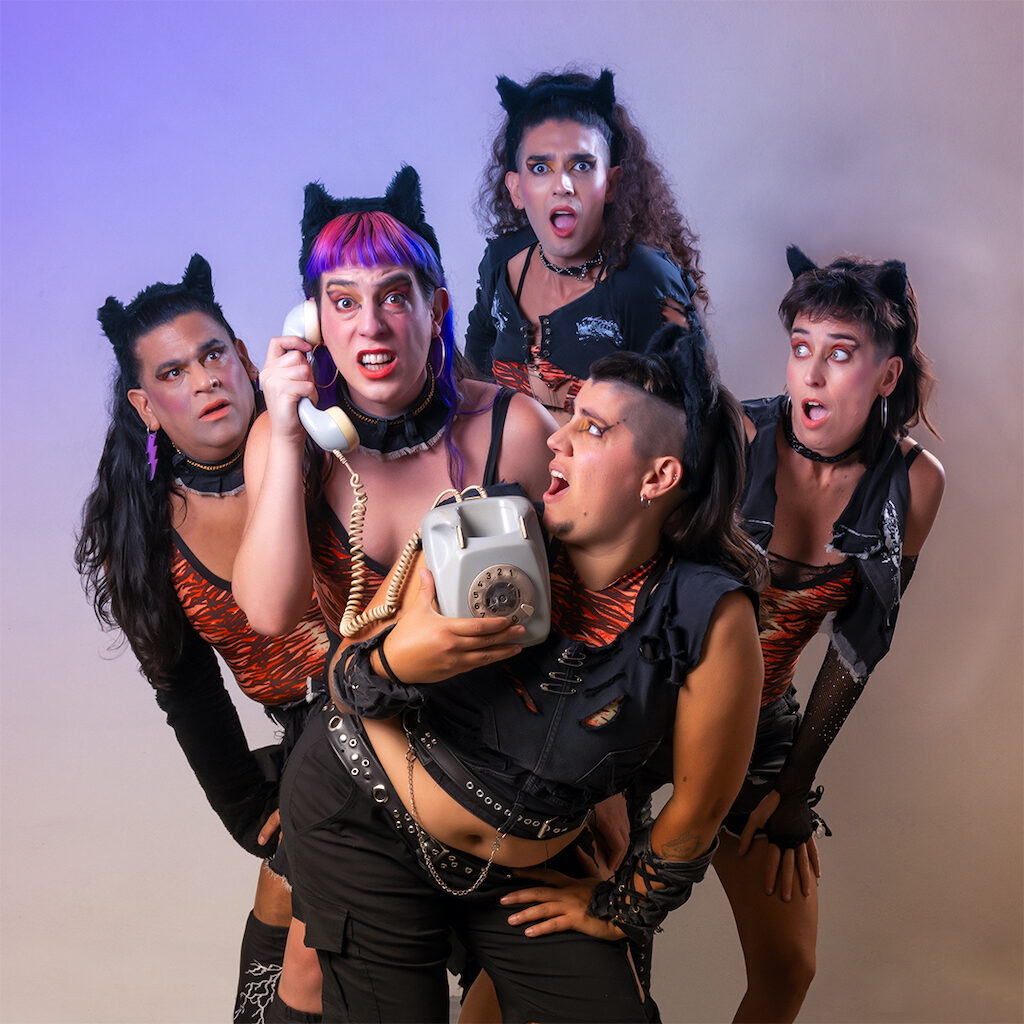
Experts in networking and building community, they formed La Simbiótica in 2024. It's a band "not just a cumbia band" that blends music, humor, and dissident sexual activism. "A group made up of transvestite, transvestite, and lesbian friends that's making waves," they add.
The art of occupying the stage
Since its inception, Carmelitas Clown has staged Travesía, a tribute to Federico García Lorca, which now has another version, Travesía Reciclada. They then performed Vestigios, a retelling of Medea's story, and currently have Conflagración, a transvestite tragedy, directed by David Piccotto, running.
“We created and put together our different works, different shows. We’ve evolved as a company, always working collectively,” Gemma explains. “Over the years, we’ve created plays that have represented us and that have always had a message, knowing that what we do is also, in a way, political. It’s about occupying spaces, having a message, not perpetuating vulgar humor, and putting ourselves in a different position as protagonists when we’re performing,” she adds.
All the works bear the clown duo's signature style. In Travesía, for example, they included scenes of an actress running across the stage under a red light, screaming and pleading for her friend who wasn't by her side so they could go out together, to look out for each other. “That same conflict is present in our latest work, Conflagración, because we explore the theme of exile. We question the need for trans women to create our own trans ecosystem, to build our own networks of solidarity simply to go out on the street and survive,” the actress adds.
The decade won on stage
Carmelitas Clown was formed some time before the arrival of Macri's government. During that administration, which worked hard to curtail rights, they found refuge in feminist and later trans-feminist activism to strengthen their artistic path.
They recall experiencing “a thousand dressing room anecdotes and thousands of scenes” where they were belittled or ridiculed. They also remember battling against “that historical issue of the representation of non-hegemonic female bodies on stage. We turned it around; we didn't let anything slide.”.
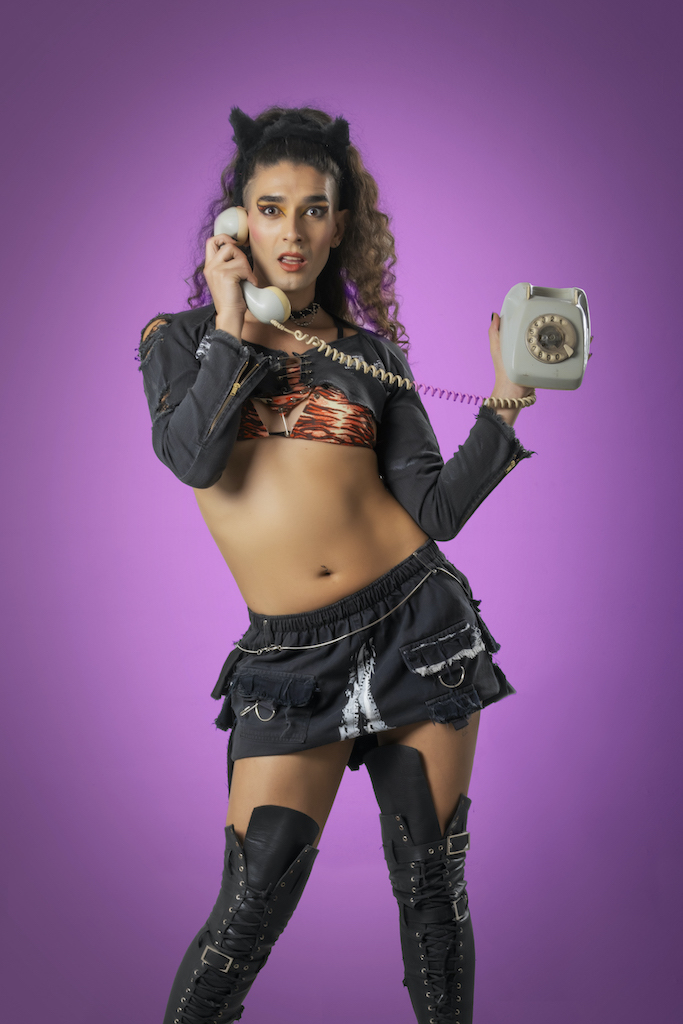
“In our early days, the political change was quite intense. That's why we positioned ourselves primarily as dissidents. In any context, dissidents are always somewhat marginalized or on the fringes. The difference was that, as a movement, we had seen progress with laws like the Equal Marriage Law and the Gender Identity Law,” adds Carmín Lupe, the other Carmelita Clown.
“At that time, it was considered irreverent to occupy the stage. We looked for ways to do it; for example, there was a time when we would blow kisses in every space we occupied. We felt that was what broke with the fragile macho image. We would arrive, there were two of us clowns—not just one—back to back, looking out for each other, because it was truly very hostile. Now you see a lot of artists, transvestites, trans kids, gay men on stage, and it's satisfying because it didn't happen before,” Gemma adds.
Rowing against hate
Word of mouth from the public created the Carmelitas Clown community both in Buenos Aires and in Traslasierra, Córdoba, where they live. The duo battled discrimination from the stage. “We’ve been having experiences related to this context of many 'haters' on social media. A few weeks ago, we uploaded a promotional video that got a lot of views. But it also received a lot of hate, many people commenting horrible things. We ended up taking it a bit to laugh and not die trying. Because this hate is legitimized, it’s more commonplace,” says Carmín.
“But something else is happening too. We’ve been working for 12 years, and even though we have an audience that knows and supports us, we still get the feeling that it’s difficult for people to come see a drag show. Our audience is generally made up of sexual minorities. We have a lot of trans people and a lot of cis women. But we go to a festival, and suddenly you see a lot of bands, cis guys playing, and a huge audience, both men and women. But that audience doesn’t come to see us. There’s still a divide, people who don’t consume drag art, they don’t approach us, they don’t dare, they don’t want to, it doesn’t appeal to them. Or maybe it does, but it scares them. It’s like a wake-up call.”
Trans representation
Since the emergence of Carmelitas Clown, there has been more representation of gender and sexual diversity in cultural spaces. Carmín Lupe states: “I love all the material, cultural productions, films, series, and so on, where there are trans people. I've seen it all. But we've also been seeing that in film, mainstream theater, and other media, it's always hegemonic trans bodies. Or as we call it, 'cis passing,' that is, transvestites who pass as cis, who don't look like transvestites or pass more smoothly. There's a constructed image in the media of a trans woman with a certain hegemony and a certain 'passing' as well.”
And Gemma adds, “This isn’t about punishing each other. Each of us constructs our femininity from wherever we want. But it is a concrete critique of the market, because this happens to cis women too.”
The clown as a dissident identity
For Gemma Luna, clowning came into her life in childhood, as soon as she decided to pursue theater. “I learned this technique, which is often overlooked in the acting world, and it's about spontaneity and naiveté. For me, it's what has always defined me.”.
She also remembers Batato Barea. “She was the first to call herself a literary transvestite clown, and she did so in a post-dictatorship context. That step she took is a banner that we carry. And it represents a bit of our universe; clowning helped us find the strengths that each of us brought with us, and we capitalized on them.”
The Symbiotic Ones
It was the summer of 2024, and the new government had taken office in Argentina a month earlier. Both Carmín and Gemma decided to create a musical expression of the difficult future they foresaw for diverse communities. This led to the birth of Las Simbióticas, a band that blends humor and dance.
“We’ve had several collaborations, like Carmelitas Clown. We did the play Vestigio with Opera Queer, for example. But when this fascist government came to power, we felt the need to create a new project. We thought about what we wanted to convey and what we wanted to work on as an audience, and cumbia came to mind,” says Gemma.
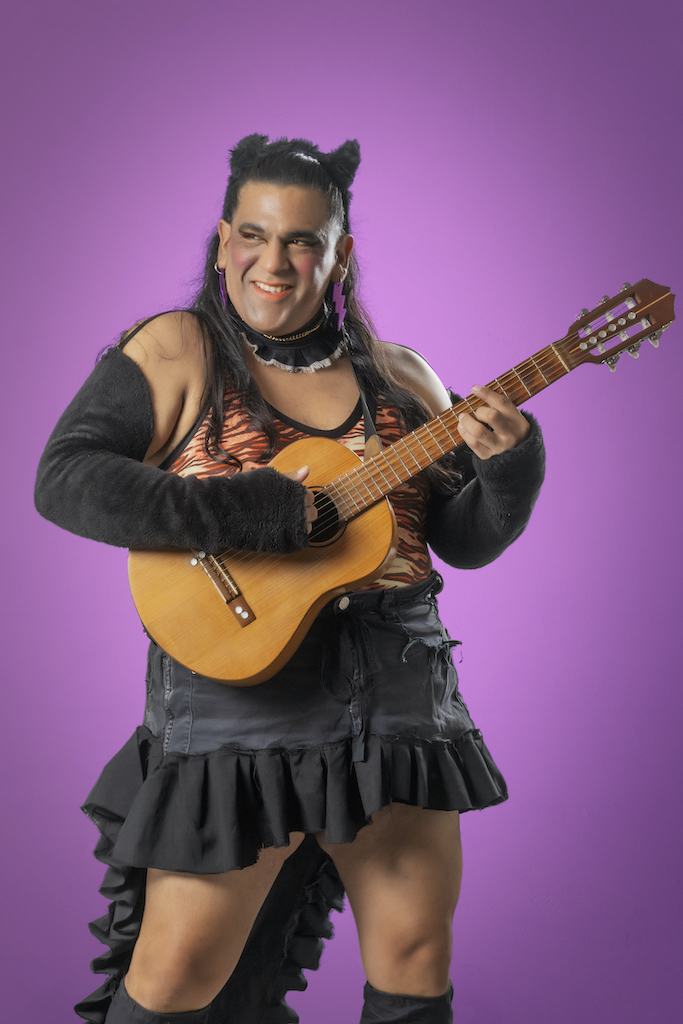
Thus they created a cumbia band also infused with transvestite and sexual dissident identities, with a clear message. Besides Gemma (vocalist) and Carmín (vocalist and guitarist), the band includes dancer Denn Semperena, Aleja Zannina on percussion, Anika Bartolomé on first accordion, and Ramón Uriel on second accordion. “We have all the identities,” they say, laughing.
To dance, to say, to group together
“How do we name Palestine? How do we name Sofía Fernández, who was murdered in a police station? How do we name the struggle of the Mapuche community?”asked the members of the La Simbiótica Cumbia collective. This is how “Emergency Call,” their most recent show, came about.
The name refers to the Daddy Yankee song, a reggaeton track that's almost 15 years old and has been reinterpreted by the dissident group. But it also reflects other concerns of the group. “We're in a time when we need to issue an emergency call about a lot of things,” explains Carmín Lupe. “We're making cumbia, but we're also working on a message that is 'they're killing us here,' 'our lives matter,'” adds Gemma.
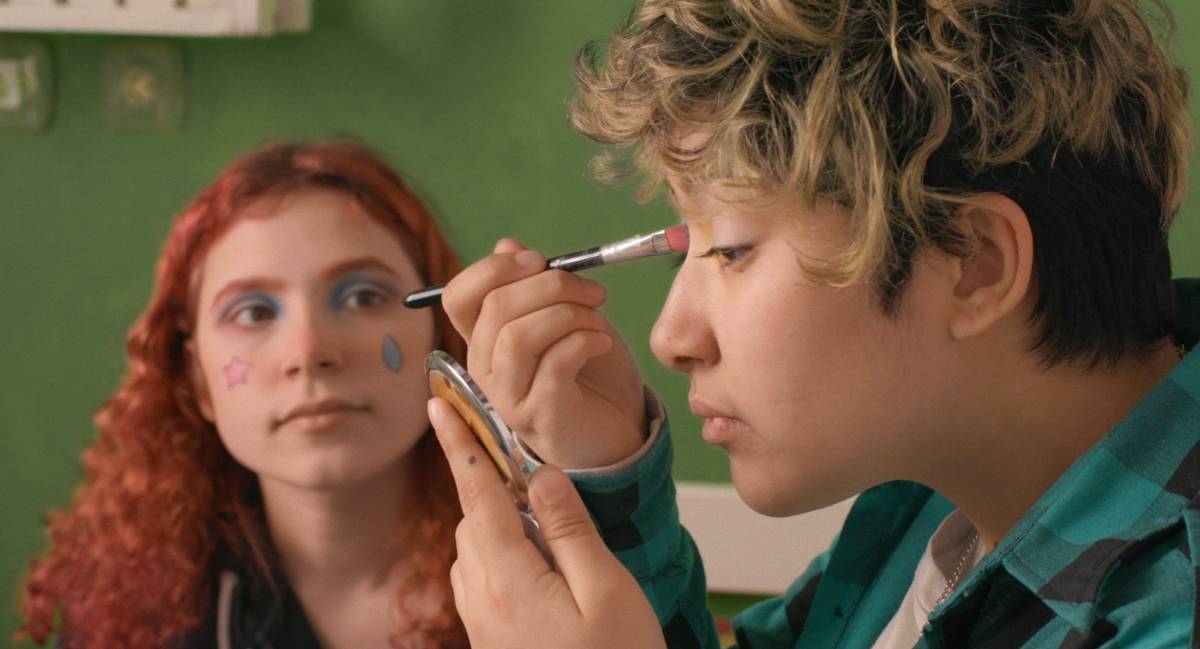
Photos: Courtesy of Guillermo Schierff
Next date:
June 5th in Córdoba Capital. La Simbiótica Cumbia + Pequeño Bambi at PEZ VOLCÁN.
Carmelitas Clown's work can be seen and followed on their social media @carmelitasclownoficial
We are present
We are committed to journalism that delves into the territories and conducts thorough investigations, combined with new technologies and narrative formats. We want the protagonists, their stories, and their struggles to be present.
SUPPORT US

FOLLOW US
Related notes


We are present
This and other stories are not usually on the media agenda. Together we can bring them to light.