

2026 FIFA World Cup: Evictions and gentrification denounced in Mexican cities
Activists from Mexico City, Monterrey, and Guadalajara denounce a "social cleansing" in preparation for the 2026 World Cup.


Share

As the countdown to the 2026 FIFA World Cup intensifies, the three host cities in Mexico—Mexico City, Monterrey, and Guadalajara—are undergoing a transformation that activists and researchers describe as a systematic “social cleansing.” Behind the official narrative of economic benefits and modernization, a strategy of “urban makeover” is unfolding, aimed at displacing homeless people, sex workers, informal vendors, and dissidents.
In a country and two cities particularly marked by the crisis of disappearances and gender violence, trans women in Guadalajara and Monterrey are part of the leadership of a resistance that not only demands identity rights, but also the fundamental right to inhabit the city without being "sanitized" by the passage of the three million international tourists estimated to arrive in these two cities.
Dynamics of exclusion and forced evictions
Luis Alberto Salinas Arreortua, a researcher at the Institute of Geography of the National Autonomous University of Mexico (UNAM), points out that Mexico faces “a completely neoliberal urban project .” In this model, he explains, “the State provides conditions for private participation and capital accumulation, which generates specific transformations in areas near stadiums to attract investment and tourism.”
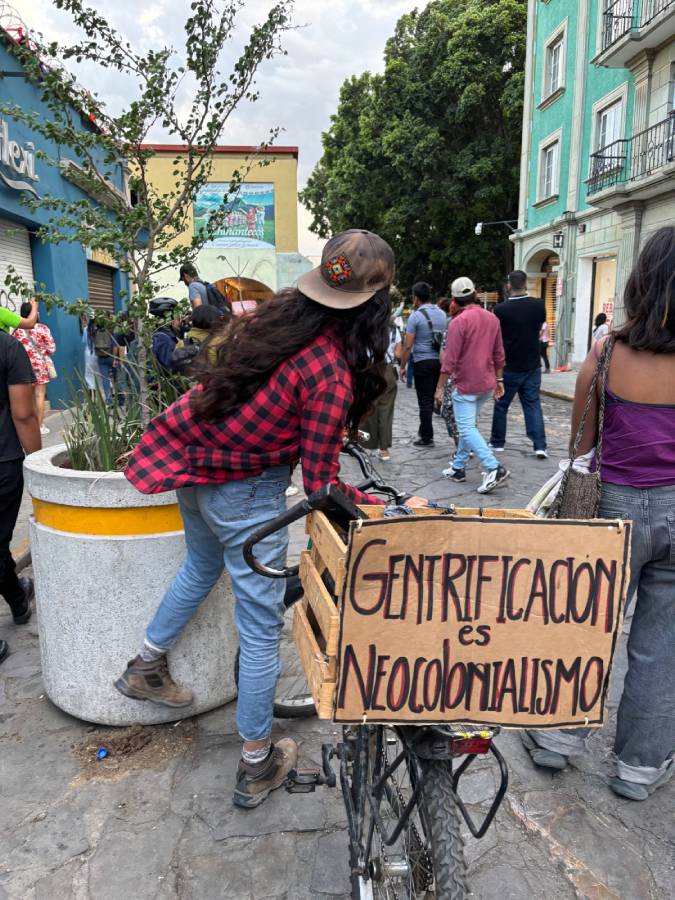
“The logic is that of a completely mercantilist city. The goal is to create conditions that attract greater investment, regardless of the negative impacts it may cause,” Salinas argues. This translates into gentrification, a process where the arrival of wealthier residents displaces the original, low-income inhabitants .
One example is the use of digital accommodation platforms. With the World Cup approaching, they are inflating prices and removing properties from the rental market to favor short-term tourism.
This commodification of public space is not only economic; it is aesthetic and punitive. The Mexico City Human Rights Commission (CDHCM) warns that these events often bring with them dynamics of exclusion and practices of forced evictions.
“Other countries have reported that, in the absence of mechanisms for the active and sustained participation of human rights-focused institutions, mega-sporting events can lead to exclusionary and sectoral dynamics. They can also generate narratives that undermine people's rights, such as: repression of social protests when rights conflict; a lack of specific and differentiated protection for the rights of sex workers, who are exposed to violence, extortion, and displacement; and practices of forced evictions, territorial displacement, and restrictions on the use of public space, affecting people experiencing homelessness, mobility issues, and those engaged in street vending,” the Commission notes.
Monterrey: projects designed to “whiten the city”
In Monterrey, preparations for the World Cup have taken the form of infrastructure projects. Far from improving the lives of Monterrey residents, they seem designed for the official photo op, notes Ana Eugenia Rodríguez, an activist with Casa Trans Monterrey .
In this city, 34 public works projects of varying sizes are underway. These include the modernization of the transportation system with 4,000 new buses, the expansion of metro lines 4 and 6, and the construction of the "Water Park.".
Amid these construction projects, public transportation fares have also increased, and citizens have expressed their discontent. There's a monthly increase of 10 cents in the cost of public transportation, both on bus routes and on the metro, one of the most expensive in the country, with fares now reaching 15 pesos.
Ana Eugenia Rodríguez denounces the lack of planning and the exclusion of citizens in these decisions.
“These projects affect everyone. Imagine what it’s like for LGBTQ+ people to navigate a hostile world, where there is so much discrimination and violence , and now have to face these devastating consequences caused by poor planning. Instead of using these resources to improve the lives of citizens in terms of mobility and freedom from all forms of violence, no. They’re suffocating us with projects that will never be finished and are only designed to beautify or whitewash the city. For an event like the World Cup, which will only be enjoyed by a select few,” Rodriguez explains.
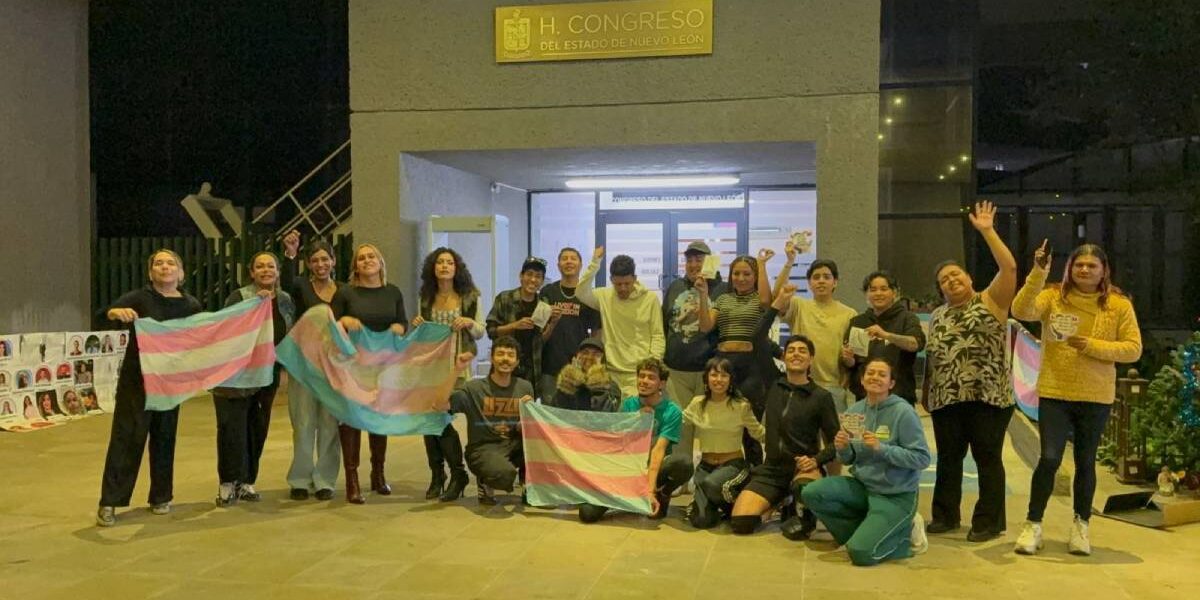
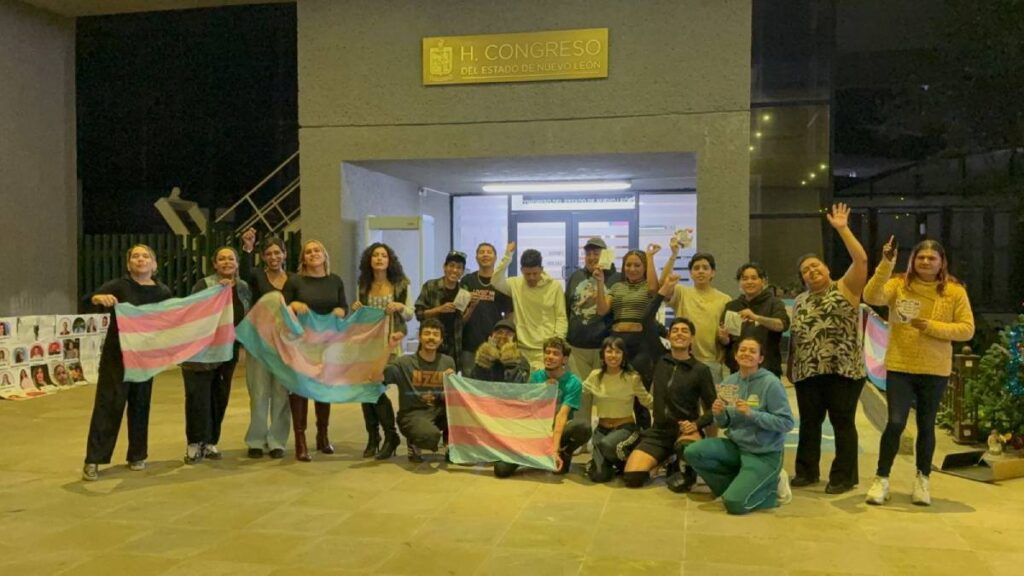
While the government reinforces 2,500 kilometers of streets in the city center to receive visitors, the trans community continues its "Trans Sit-in ." This protest, now in its 75th day, takes place in front of the local Congress building, demanding the legal classification of transfemicide.
The activist is clear: FIFA's arrival won't make their struggle invisible , but rather will serve as a platform to denounce systemic inequality. “ The World Cup will highlight that there are struggles in Latin America, in Mexico in this case . That we are ignored by the political class that seeks to please very few people , and that not everyone will enjoy it in the same way. During this month-long World Cup, some people will come to the cities to celebrate, and some of us will be there with pain, anger, and demands, seeking better realities,” Ana Eugenia adds.
Guadalajara: a classist and segregationist strategy
In Guadalajara, the narrative of global progress clashes with a brutal reality. The crisis of disappearances, clandestine graves , and urban "beautification" projects has resulted in restrictions and displacement for street populations , from musicians and windshield washers to people experiencing homelessness.
The government's plan to host the World Cup includes "improving mobility and the city's image ," highlighting the widening of the Chapala highway, new electric transport stations, and the remodeling of the Historic Center, including Paseo Alcalde and the Minerva roundabout.
This situation, as in Monterrey, is accompanied by an increase in the price of public transport (from 9 pesos to 14 pesos) and protests against the fare hike, which includes slogans such as "we don't want FIFA, lower the fare."
Danna González, a trans activist from the Critical and Dissident Bloc , defines the public works in Guadalajara and Zapopan as "a policy of deliberate exclusion, without citizen consultation."
“Modernization is being spearheaded by social sanitization. People in precarious situations, people experiencing homelessness, people of diverse sexual orientations, and people engaged in sex work in certain areas are being harassed, intimidated, and removed from those areas.”
Danna emphasizes that these actions respond to state protocols to offer a superficial face to tourism , ignoring the root of problems such as precariousness and inequalities.
“The government’s strategy is to generate a very classist, very segregationist, very whitewashed vision of what the state of Jalisco and the cities of Guadalajara and Zapopan are,” González adds.
Trans collectives forge alliances with other social movements
For these activists, joining forces with other social movements is not just a political choice. Ana Eugenia Rodríguez explains that her activism transcends gender identity or the classification of transfemicide. It connects with the problems faced by those who live in Nuevo León.
“The trans movement at the sit-in is actively participating with other groups: from public transportation, informal commerce, and the defense of neighborhoods resisting eviction or facing potential displacement, as well as those defending water rights. This coordination of struggles is concentrated in a movement we ourselves have named 'Regia Embrace.' We come together and discuss social causes such as defending Libertad Park, opposing the increase in transportation fares, and protecting the Santa Catarina River, among others,” Ana Eugenia commented.
“Social justice affects all of us who live in a city like Monterrey, which is managed by very few and governed by the same political class. And which follows the interests of very few people,” he adds.
For her part, Danna points out that in Jalisco, the activist groups respond to each other.
“ In Guadalajara, we are experiencing a reconfiguration of activism and social movements in response to this emerging need to create alliances and structures with solid actions that truly represent change and a social call to stop abuses,” he explains.
For both, another method of combat is to decentralize the struggles, recognizing that the organization in states like Jalisco and Nuevo León is just as strong and assertive as that in Mexico City. This allows local communities to be independent of what happens in the center of the country and to strengthen their own community processes.
Faced with an urban model that prioritizes image, profitability, and international tourism, trans collectives have chosen to organize their struggles and decentralize their agendas. For Ana Eugenia and Danna, it's not just about identity or legal recognition, but about the right to live in the city without being displaced, harassed, or erased from public spaces.
We are present
We are committed to journalism that delves into the territories and conducts thorough investigations, combined with new technologies and narrative formats. We want the protagonists, their stories, and their struggles to be present.
SUPPORT US

FOLLOW US
Related notes



We are present
This and other stories are not usually on the media agenda. Together we can bring them to light.