

Rocío Chiappe, a volunteer in Patagonia: “Today we are sustained by popular organization”
Interview with the founder of Brigada Andina. Today, her house is the only one left standing after the fires. "It's changing the way we inhabit these lands."


Share

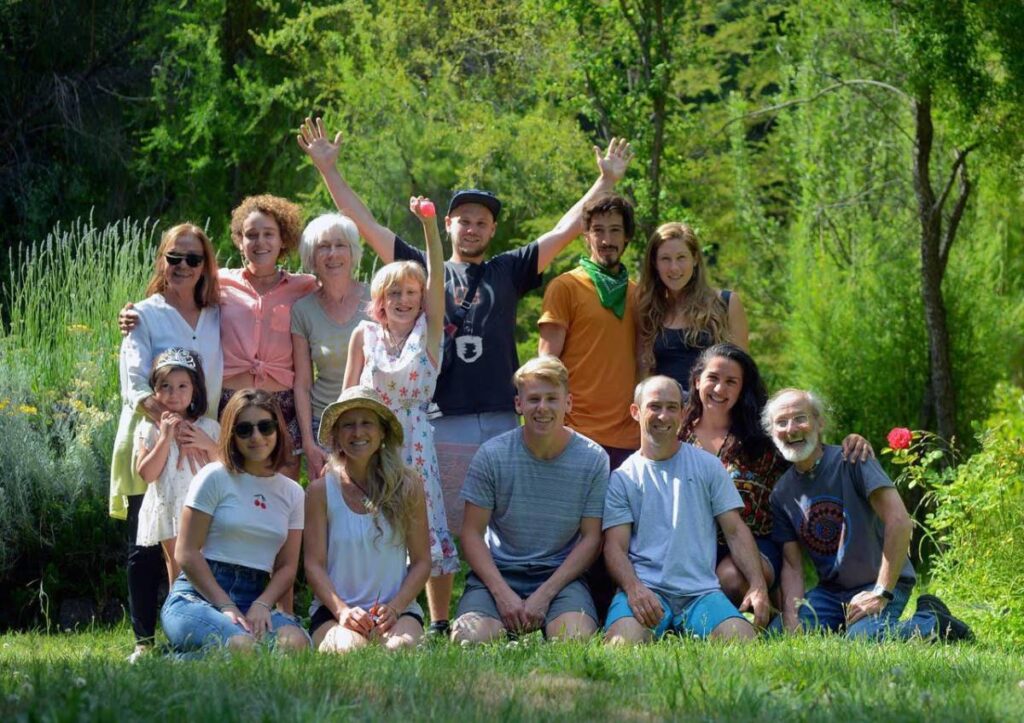
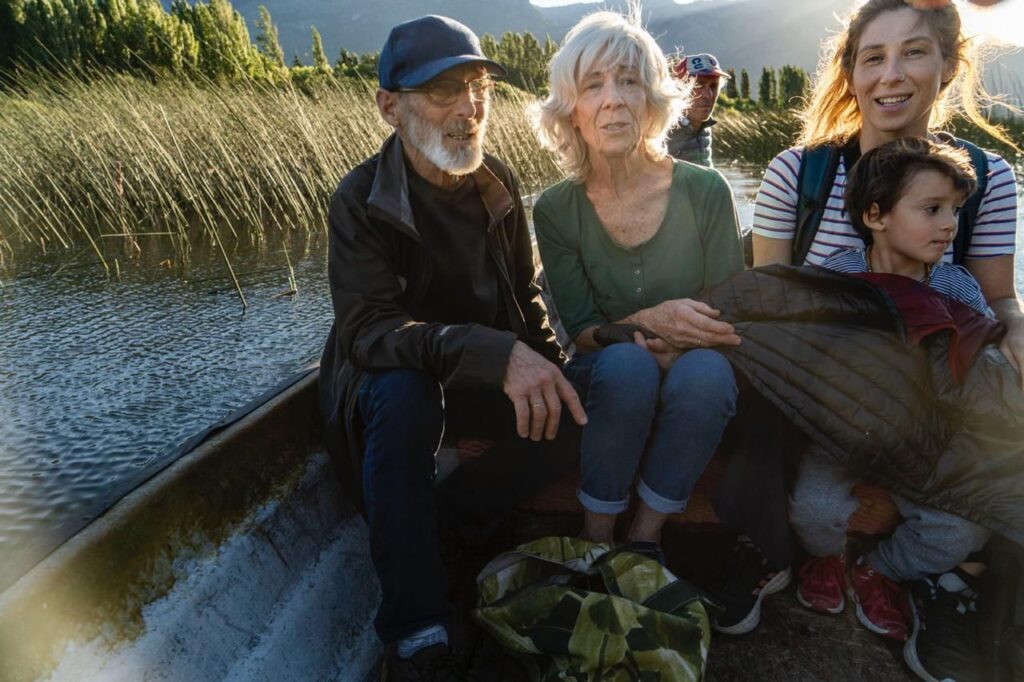
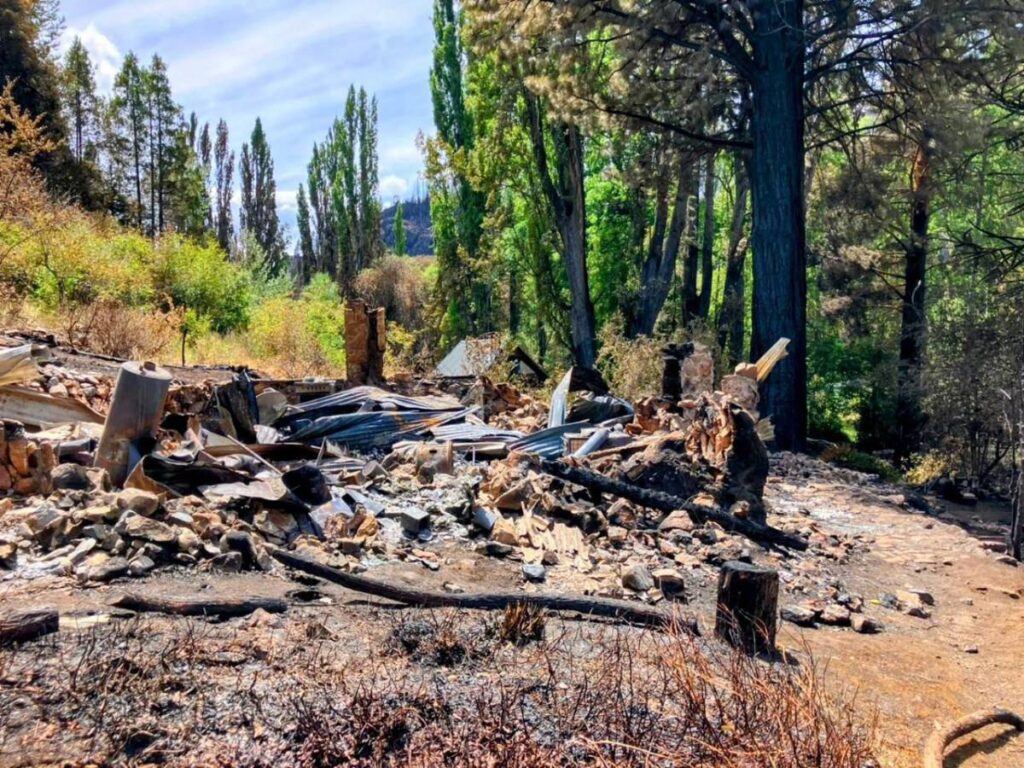
Rocío Chiappe was born in Epuyén, on the other side of the river, in a quiet area surrounded by forest, where her family built their farm, El Nagual. She is one of the founders of the Andean Brigade and the daughter of renowned environmentalist Lucas Chiappe and Jillian Webb. Her family has experience dealing with fire, but this year it was impossible: it arrived unexpectedly and with such intensity that they had no choice but to flee with only the clothes on their backs, leaving behind a lifetime of belongings. Four of the five houses belonging to her parents, cousins, and uncles burned down. Rocío's is the only one that survived.
“The place is now like an island surrounded by ash and burnt trees. Being there today feels very different from how it felt before: the sounds, the smell. Everything has changed into something completely new and unknown. I was never afraid living in the forest; I always lived with my door open, coming home at night in the dark. Now I feel like I'm constantly afraid. It changed our lives forever Rocío, who at 38 years old has lived her whole life in El Nagual, tells Presentes
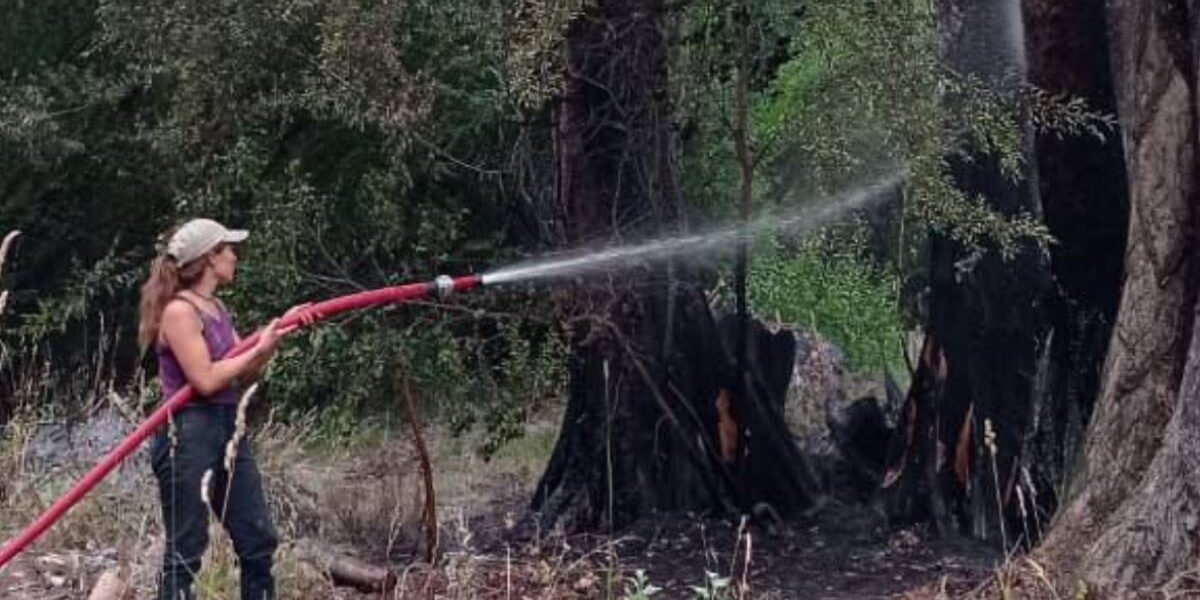
Wildfires have been burning for two months in the province of Chubut, in Argentine Patagonia. The fire in Los Alerces National Park started on December 9th, and the one in Puerto Patriada—which reached Rocío's family's home three days later—started on January 5th. They have already ravaged more than 45,000 hectares .
“Our place was defined by the forest. And what hurts us the most is that absolutely nothing remains of the forest we used to go to every day, where we gathered mushrooms, where we knew every single plant.”
A life in Epuyén
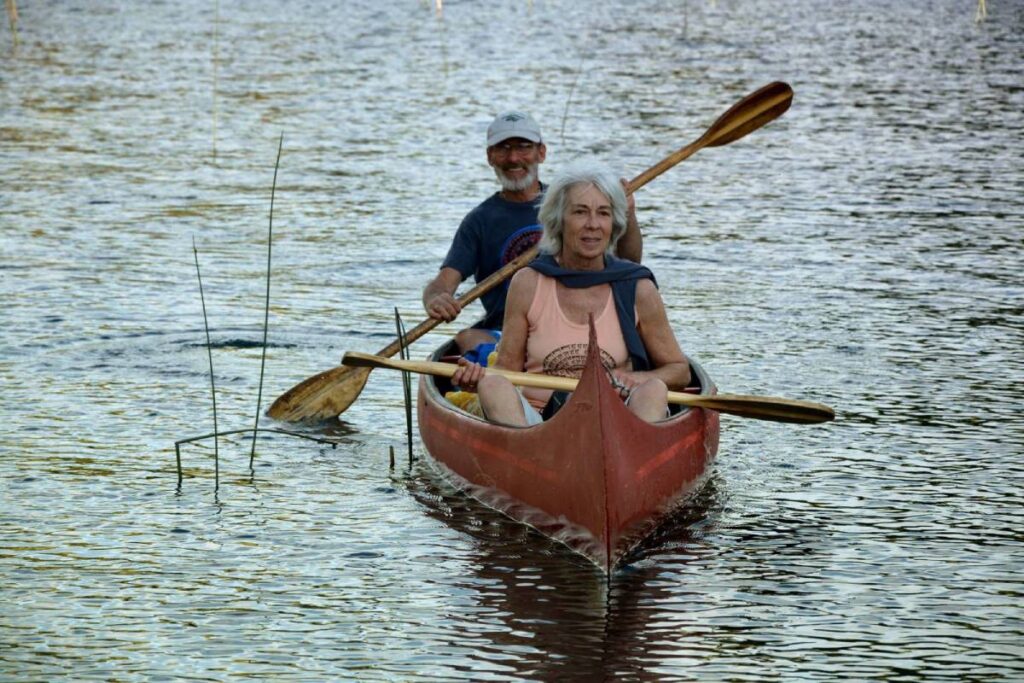
Jillian and Lucas, her parents, arrived in Epuyén in 1976, when the area didn't yet have that name. They met when they were very young, she was 15 and he was 17, in the Buenos Aires town of Acassuso. They came into contact with the hippie movement and began to look for alternative ways of life. They decided to get married so they could travel with the money they received as a gift. In a van, they explored India, Iran, Nepal, and several other countries, until Jillian became pregnant and they decided to return home.
“The dictatorship had begun, and a month after my sister was born, my father was told he was on a list and that he should leave. So they took a flight to Peru, stayed there for a while until things calmed down a bit, and a friend from the south told them to go there, that there was beautiful land. They were eager to put down roots, to build something in a place and start a family. When my father arrived in Epuyén, he fell in love with it, and they decided to settle there. At that time, there was no electricity or roads. It was what they wanted: peace and quiet, living in harmony with the rhythms of the land.”.
Presentes spoke with Rocío Chiappe to learn about her story, how she works alongside neighbors, friends and family in the response to the fire and how she imagines a future for her town and her four-year-old son.
—What was your childhood like in El Nagual?
"My parents built the house we lived in with their own hands. It's on the other side of the river, so they crossed everything by hand, on horseback. We did everything with our own hands, and that's how we learned to build and live off the land. Always in a traditional way. My mother is a craftswoman; she makes wicker baskets. So everything had its process of gathering, working, and creating. Since we didn't have TV or cell phones, and there wasn't much going on, I helped with the farm work: the vegetable garden, the harvest, gathering firewood, and preparing for the summer. My cousins lived on the same farm, and each of them had their own children. We were a little gang of six. We were always going to the woods, riding bikes, and playing in the river, making little wooden boats.".
My parents fell deeply in love with this place and instilled that sensitivity in us from a young age. My upbringing, with such a close connection to the forest, helped me develop many other senses.
—How did you experience your parents' activism?
—I always had great admiration for him. Listening to my dad so convinced, so lucid, always with such revolutionary ideas. I feel that experiencing it from the inside was incredible. When I went outside and saw what it generated, it gave me a lot of respect and a desire to fight for life.
But all the discussions and internal work were always done by two people. My mom is more low-profile, while my dad, being a Leo, has a strong presence ( laughs ). She sustained that activism through caring for the family and the home, with that feminine sensitivity. My dad was perhaps more combative and forceful in his message, and my mom always tried to bring that sensitivity and gentleness to it. They're a team: one doesn't function without the other.
—When did fires start to be a problem in your lives?
"For as long as I can remember, fires have been a constant in our community. My dad was the first to buy a water pump here about 35 years ago. Because it's something that affects us deeply, being so close to the forest. But before, they were on a different scale, in terms of how they spread and how they moved. I remember watching the fire advance for days. Now, it takes two days to spread what used to take a month.".
—What changed?
—The climatic and social complexity because now there are many more people living in interface zones. The drought is extreme. We see it year after year. The river I cross every day to get home hasn't risen at all this year. It's at a very low level. Everyone here notices the change.
It's amazing to see how many people now have a fire truck, a water pump, a pickup truck, but this only started happening three years ago. It wasn't done before because the fires were confined to the forest. Now, as they're spreading into urban-urban interface areas, near homes, it's taken on a whole new dimension, and everyone is finding out.
The way we live in these lands is changing because there's not much going back. It's about adapting, preparing, and being a little smarter year-round in terms of prevention and equipment.
—The mishandling of fire also impacts a people's memory. Your parents' house was known as "The Sanctuary," in this sense…
"It was a very special place, it had so much history, and so many people passed through there seeking inspiration and sharing conversations. My father is a photographer and he arrived in Epuyén with an analog camera. He had an incredible record of the people who lived here at that time, of the growth of families, the manual labor. He had thousands of slides of our entire family history and of the community we formed. It's very painful to think about everything that was in that house and that office in particular because it represents years of effort, of thinking, of writing. My father loved to write and had many newspaper articles. There were also draft bills. We didn't manage to retrieve anything. He took his computer with its hard drive, the few things he was able to digitize at the time, and we couldn't keep up.".
Save the forests
—A few years ago you became a volunteer brigadista. How did the Andean Brigade come about?
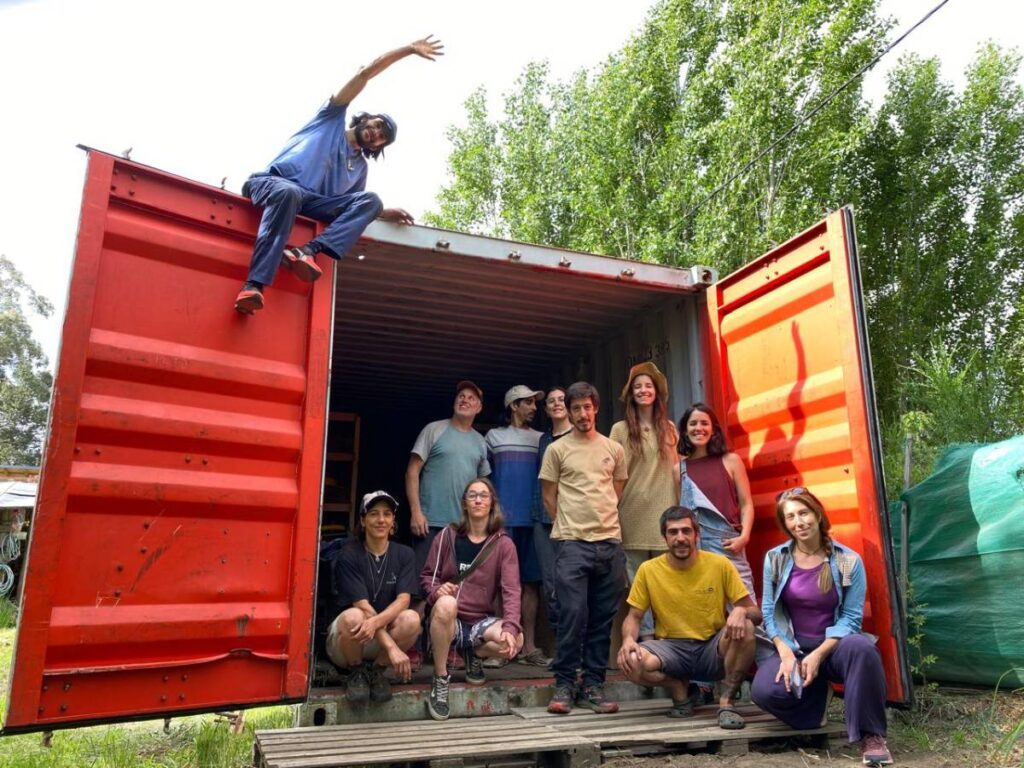
—It started about five years ago, in 2021, following some fires we had in the Cuesta del Ternero area. That year, the entire Golondrinas area burned down in March. We're friends who love the mountains, the place where we live, and we were overwhelmed by the helplessness of not being able to do anything. Seeing how completely out of control the situation was, we said, "Let's save the forest as much as we can, however we can." We saw that it was effective, that it made a difference, and that it was important.
Unofficial brigades used to be prohibited. You weren't allowed to participate because the official brigades were responsible for anything that might happen to you. But last year, when the fire spiraled out of control on a massive scale, without the self-organized brigades, thousands upon thousands more homes would have burned down. There's also a growing recognition of the community's efforts. Something truly remarkable is beginning to emerge between the official and unofficial firefighting efforts.
—How do you see the response of the national and provincial governments to the fires?
"You feel quite alone and abandoned. The fire reached my house three days later, and until then, there wasn't a single plane flying. There isn't the level of prevention that there should be year-round. Nor is there any work being done with the pine trees, which is a huge problem here because it's an invasive species that spreads through fire. We've been denouncing this for a long time, and there's no concrete action being taken. This year, in addition, the fire management budget was cut by 70%, and where there should be 700 firefighters, there are only 300, who are in very precarious working conditions."
—What do you think about the policy of going out to find culprits, directed particularly at the Mapuche people?
—I feel it's a complete farce to accuse the Mapuche people. They are people who live on and care for the land. In fact, their community burned down this year. It's a way of diverting attention from what really matters. They're looking for scapegoats to avoid taking responsibility for their own lack of education, the lack of maintenance of the forests, the power lines, and the lack of resources for the official fire brigades.
—What role is the help and action of the community playing?
"The grassroots organizing happening here is incredible. The solidarity network is unique. That's what's sustaining us today. It's the people helping the people. We're achieving a high level of quality. Each crew is starting to equip themselves, to train, to learn how to manage fire. We're learning; we have no other choice. Every bit of help is useful for continuing to fight the fire and for continuing to equip ourselves. Many new crews have emerged that need to be equipped."
—What do you want to happen to the forest? What do you envision for future generations?
—For them, it's very important to support them from a place of hope. Going to schools, doing educational outreach, following the three pillars of prevention, education, and reforestation. It's impressive what we're doing for our future and the future of others. We must continue to invest from that place of light, of life.
We are present
We are committed to journalism that delves into the territories and conducts thorough investigations, combined with new technologies and narrative formats. We want the protagonists, their stories, and their struggles to be present.
SUPPORT US

FOLLOW US
Related notes
We are present
This and other stories are not usually on the media agenda. Together we can bring them to light.