

Deo Molina: “Rest and pleasure are political acts”
The multidisciplinary trans artist talks about his sex work and how ableism stigmatizes disabled bodies.


Share

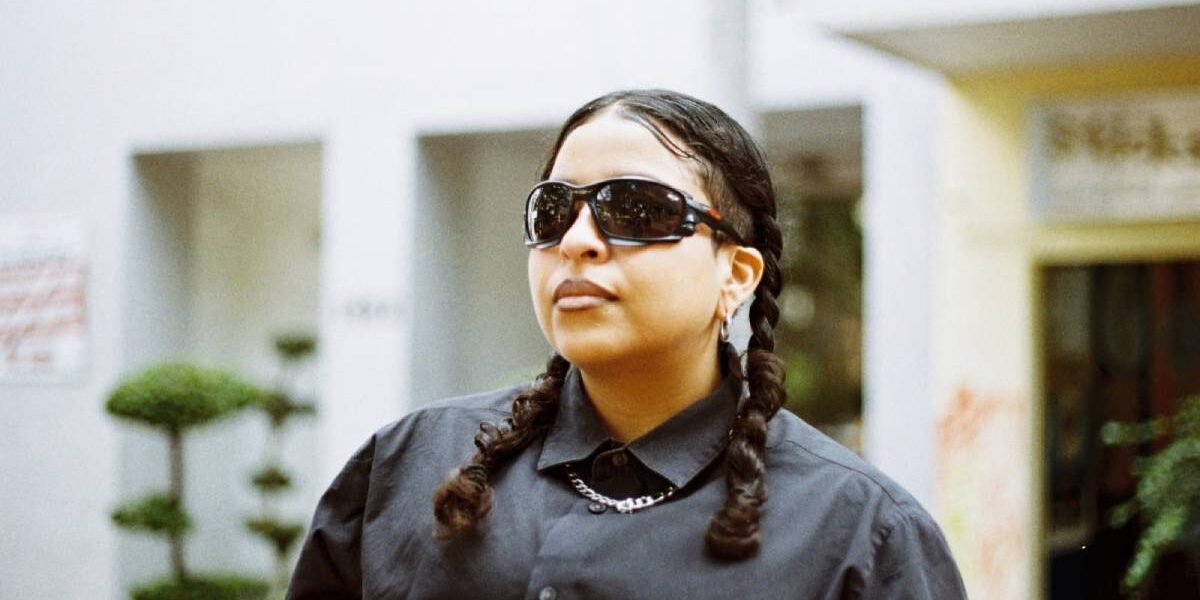
MEXICO CITY, Mexico. Deo Molina is a non-binary transmasculine person. They work as a sex worker, use a wheelchair, and are a multidisciplinary artist living in Guadalajara, Mexico. They use their own body as a tool for protest against a system that has historically rendered people with disabilities invisible, relegating them to a supposed "asexuality" or "infantilism." In their performances, they offer guided meditations to connect with pleasure beyond the realm of genitals.
Since the onset of the COVID-19 health crisis, Deo found in sex work a means of economic survival in the face of the pandemic's precariousness. It also became a space for personal exploration of autonomy, eroticism, pleasure, and rest as a political act.
In her artistic and performance interventions, she proposes moving away from viewing pleasure as something exclusively genital or productive, and instead understanding it as a state of rest and sensory connection. This path has also led her to create support networks that she builds alongside other sex workers.
This is how Sombrilla Roja (Red Umbrella) was born, which recently celebrated its third anniversary. This collective is a support network among sex workers where they share their experiences. They also have a care and monitoring group for those who provide in-person services.
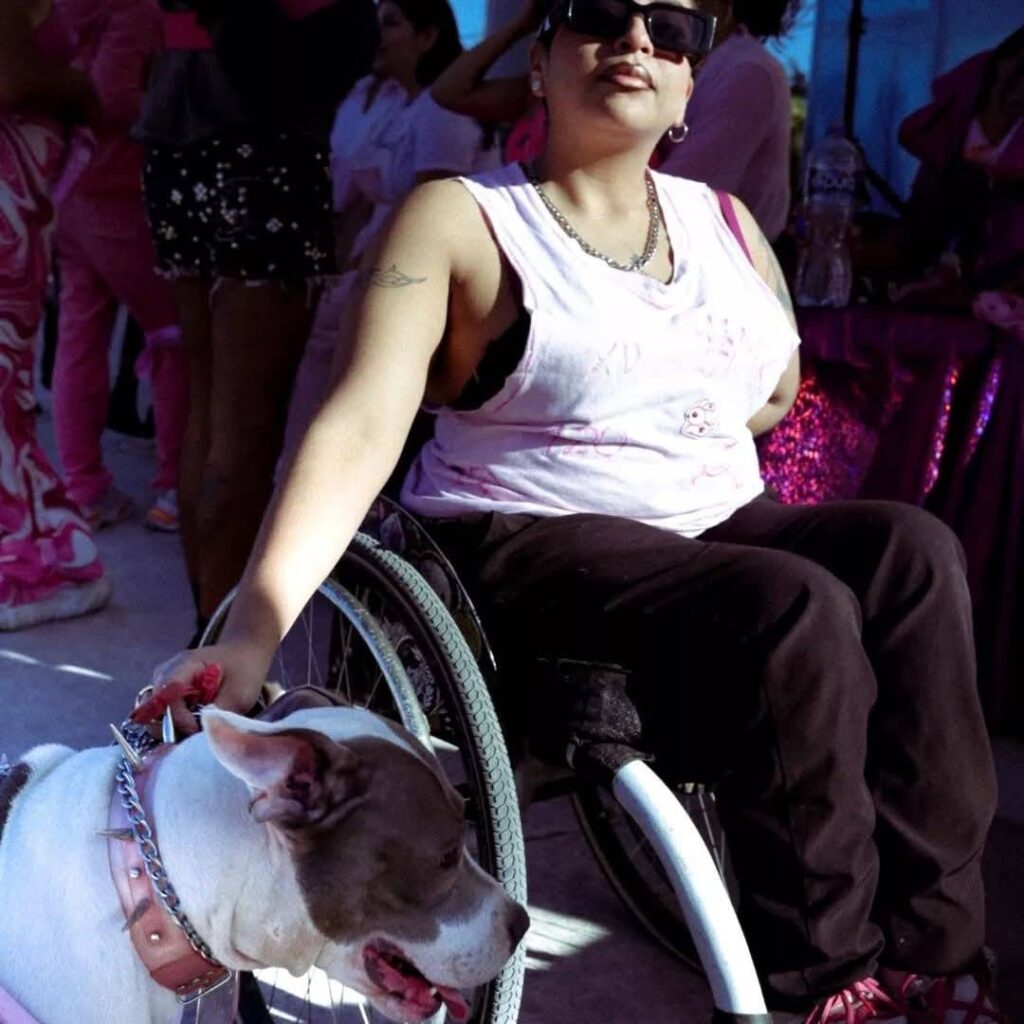
In this interview we explore a bit of his story, his experiences as a sex worker, his experience in ballroom dancing , and his quest to reclaim the right to pleasure.
-2020 was a turning point for many people. In your case, it meant starting to work in the sex industry. What was it like to begin this work, and what did you discover about the perception of bodies with disabilities?
I started in sex work in 2020 when the pandemic lockdown began. Before that, my main income came from the handmade jewelry I made, as well as street circus performances. But we were all locked down, and I couldn't find any other way to make a living. I had friends who were involved in sex work, from creating adult content to providing in-person services. Little by little, I gained confidence that I could do it too, and that's how I started.
I went into it somewhat blindly, because it's a whole personal process that leads a person to engage in sex work. I started to see both the pros and cons, because I realized that there would always be someone who found a disabled body attractive or who sexualized it. So that's when you also start to notice the stigma.
I've faced very ableist comments, with people trying to undervalue my services simply because I have a disability. I've even had comments from people who think someone "has me working," as if I didn't have the autonomy to make decisions about my own body and my work.
–You mentioned situations of exclusion within sex worker spaces. How does this ableism and "infantilization" you speak of operate?
"There's a lot of that going on. I've experienced situations in sales groups, which are spaces created by the workers themselves to advertise, where one of my strategies has always been to be very clear and explicitly state in my ads that I'm a person with a disability and a wheelchair user. At one point, a girl noticed that, went to the administrator, and I was removed from the sales group. She told me, 'My clients complained about how I have you working here.'".
It seemed very illogical to me. But you can see how strong the stigma is, and this ableist tendency to infantilize people with disabilities and deprive them of their sexual autonomy. It's serious because people think we're 'asexual' beings, like little angels, and that makes us more vulnerable.
In Mexico, the majority of people who experience harassment or sexual violence are children. And the vast majority of these children have disabilities, precisely because they lack access to sex education, and often this violence occurs within their own families. That's why it's vital to have role models and to make it clear that we are still sexual beings. That disability is not a factor that prevents you from enjoying pleasure.
-Given the lack of role models you mention, in what spaces have you found representation that truly resonates with your experience, not only as a disabled and transmasculine person but also as an erotic one?
I think the places where I've found something most similar to my own experience have been in post-porn and performance art. Also in the BDSM community and in alternative sexual practices through conscious fetishization.
—What do you mean by conscious fetishization?
-For me, it has to do with the consensual and conscious experience of assigning erotic value to a body that deviates from the norm. It's almost like a game, like kinky dynamics where the parties recognize that they share these desires and fetishes. And therefore, conscious fetishization is in itself an alternative sexual practice.
There is a community in Spanish known as "devotos" (devotees). These are people who specifically sexualize people with visible disabilities, such as quadriplegics or amputees.
Much of my process is influenced by figures like Malicia Sabina, one of my greatest mentors in post-porn and alternative practices. I've been reading about this (post-porn) for many years, and I've been reconsidering the vast concept of pleasure that can be when we become aware of it. Other influences include Liz Misterio and La Pornoterrorista; hearing them talk about a wide range of pleasure resonated deeply with me and helped me on my personal journey and when offering my services.
–As a sex worker, what rights still need to be guaranteed based on your experience?
-So much is needed. All sex workers lack labor rights and, above all, the right to public health. That would help us stop being such a vulnerable population. Sex education for children with disabilities is also urgently needed, to speak openly without taboos so we can provide proper support and prevent violence. We need a broad vision of the human rights of people who do sex work and who are disabled, one that recognizes that each experience is different, and that our experiences are not pathologized.
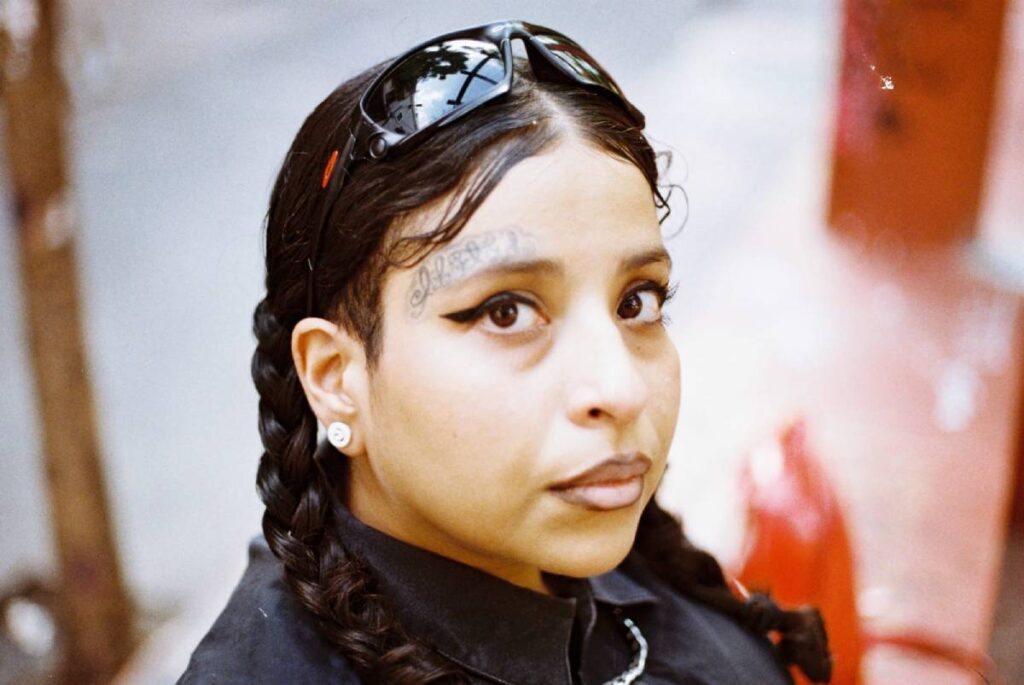
–You're also a leading figure in the Guadalajara ballroom scene. What did you find in ballroom and what has your journey been like?
I came to ballroom dancing here in Guadalajara after experiencing violence with a former partner, and the community rallied around me. Learning more about the story, I discovered that "sex siren" is a term that originated with sex workers; it was the space they had to celebrate the performance they used in their work. I found it incredibly interesting to see ballroom dancing as a stage you can use to make very specific experiences visible.
Ballroom was the place I found to say: 'there are also disabled bodies enjoying their sexuality, doing sex work, and they can also be beautiful and sensual.' I arrived before I lived as a transmasculine man, and it was really cool to be present on the catwalk to say that these bodies exist.
Sex Siren a bit to explore Old Way and performance categories like posing . But the particular experience of Sex Siren, in appropriating sexualization on my own terms, was fundamental.
– I met you when you were giving one of your presentations in a space about pleasure and enjoyment, a kind of guided meditation. There you were talking about decentralizing pleasure from the genitals and about rest as a political act. Why is this important to you?
-Yes, it was a guided meditation focused on rest and pleasure. The idea is to rethink rest as something political and pleasure not only as genital or penetrative sex, but as the different kinds of pleasure our bodies experience. Sometimes, when you consciously try to relax, you realize your jaw is clenched or your shoulders are tense; things you do automatically, almost as a survival mechanism.
In these sessions, I focus a lot on the sensory aspects, on touch and the rest of the skin. They stir up a lot of emotions for me; sometimes tears come to my eyes from pure relaxation, from being able to give thanks for reaching that point. Rest brings us pleasure, and being able to take that space to rethink ourselves outside the logic of production is something I always find important. Sex work has even given me the autonomy to decide my own schedule and prioritize rest as one of my main sources of enjoyment.
–What exercises would you recommend to reconnect with pleasure?
-As a daily exercise, I would recommend starting to be mindful of the moments we allow ourselves to rest or do activities that aren't purely productive. Sometimes days go by and we haven't really sat down to rest without worrying about messages or pending tasks; it's vital to know 'what I'm doing for myself'.
Personally, I reclaim spaces like food; the simple act of eating something I enjoy or sharing it with loved ones brings me great pleasure. And I allowed myself this after having spent a long time at odds with the violence that food inflicts on our bodies.
We are present
We are committed to journalism that delves into the territories and conducts thorough investigations, combined with new technologies and narrative formats. We want the protagonists, their stories, and their struggles to be present.
SUPPORT US

FOLLOW US
Related notes


We are present
This and other stories are not usually on the media agenda. Together we can bring them to light.