

What setbacks are HIV policies facing in the region?
Presentes spoke with HIV activists from six countries. Despite the laws, there have been more setbacks than progress.


Share

Latin America has one of the most progressive legal frameworks in the world for responding to HIV. However, the effective implementation of these rights faces structural barriers. Stigma, the centralization of health services, and the rise of far-right policies directly threaten the gains achieved by civil society over decades.
In Presentes we spoke with activists and politicians from six countries in the region to learn about the state of public policies, challenges and opportunities in the response to HIV.
Argentina: a cutting-edge model with obstacles
Argentina is positioning itself as a global leader thanks to Law 27.675 (Comprehensive Response Law to HIV, Viral Hepatitis, STIs and Tuberculosis), a regulatory framework that addresses HIV from a health perspective and integrates social justice.
“ It is one of the best laws in the world because of its ability to put the person at the center. Not only because it recognizes rights, but because it adopts a comprehensive approach: prevention, diagnosis, treatment, non-discrimination, and it strives for dignified living conditions,” explains Matías Muñoz, executive director of the Ciclo Positivo Association .
What distinguishes Argentine legislation is also the result of more than a decade of activism. It stems from the sustained work of organizations, people living with HIV, and technical teams who pushed for the State to take responsibility.
“ A very important component of this law is social security . Because it recognizes that living with HIV is not only a health issue, but also a labor, pension, and economic one. It provides for retirement benefits and pensions for people with HIV in vulnerable situations. This approach broadens the perspective and puts the person at the center, not the disease,” Muñoz adds.
This law is supported by other key laws, such as the Personal Data Protection , which upholds the right to confidentiality, the Act against Discriminatory Acts , and the Comprehensive Sexuality Education (CSE) Act . However, this legislative success is not without its challenges.
Matías Muñoz warns that the main structural problem is not the lack of laws, but access to justice. He points out that enforcing a right often involves "long, expensive, and exhausting" processes. Community and organizational work is key in this regard.
“We support people so they can access the healthcare system, maintain their treatments, and navigate bureaucratic procedures, discrimination, or highly vulnerable situations without being left alone. We play a key role in education, prevention, and generating reliable information, especially in populations that the healthcare system often reaches late or not at all,” explains Matías Muñoz.
This is compounded by a technological gap and centralism. For example, Muñoz explains that in Argentina, HIV self-tests and long-acting injectable treatments are not yet widely available, technologies that neighboring countries like Brazil have already adopted.
“Quality of life cannot depend on where a person lives. For that, we need more decision-makers committed to life and to supporting public policies based on rights,” says Muñoz.
Mexico: Between Budgetary Inclusion and Criminalization
In Mexico, the government is announcing a "new model of care" and the universalization of electronic medical records. Meanwhile, activists warn that the progress made in paper-based systems often doesn't translate into reality because the biggest obstacle remains social prejudice.
Congressman Jaime López Vela, president of the Diversity Commission, states: “The main problem continues to be stigma.” This barrier makes it difficult for people to access timely healthcare services.
Misael Muñoz, an activist with Inspira Cambio , defines Mexican legislation that protects the human rights of people living with HIV as "Gemini legislation, because it is full of contradictions: on the one hand, the Constitution protects against discrimination, but on the other, there are still figures of 'danger of contagion' in 28 of the 33 penal codes in the country."
Despite this, Mexico presents historic opportunities. López Vela highlights that “ for the first time in 2026, the LGBTQ+ community is explicitly included in the federal budget with 13 actions across five cross-cutting themes. Furthermore, President Claudia Sheinbaum is working to ensure that everyone has an electronic medical record so they can access any institution without losing track of their care. This will prevent people, in this case those living with HIV, from losing their treatment due to bureaucratic hurdles between healthcare institutions.”
However, Misael Muñoz observes other challenges related to mental health, discrimination, and narratives. “The emergence of substance use in sexual contexts, such as crystal meth, is being ignored by the traditional healthcare system. Crystal meth use is crossing all boundaries, but there are no specialized services; and access to psychiatric services in Mexico is extremely limited.”.
The political sphere presents another challenge. Muñoz denounces that the issue is "used as a bargaining chip in political discourse, where certain sectors use disinformation simply to justify political attacks." Added to this is the issue of centralization. "When we look at the states and what happens in rural areas, the realities are very different. And access is highly unequal.".
To overcome this, Muñoz concludes that it is vital for the State to recognize that the HIV response has been sustained by activism and community work. “If the State does not nurture civil society, if it does not create support or funding for civil society, this response will not advance,” Muñoz concludes.
Colombia: Rights that don't reach the territory
In Colombia, the response to HIV is defined by a profound contradiction: a legal framework that guarantees advanced rights versus a fragmented and centralized health system that leaves thousands of people in uncertainty.
In this country, HIV testing is prohibited for employment , anti-discrimination laws and a system of "enhanced job security ." Furthermore, the system guarantees that even if a person loses their job, the state must continue providing treatment without interruption. However, the implementation of these laws is highly unequal and depends on a person's geographic location.
“We don’t have a public HIV policy,” says Miguel Ángel López, a Colombian social communicator and activist, co-founder of the Más Que Tres Letras initiative and community. “Activist work today focuses on HIV education through social media and workshops as a public health tool.”.
The reason behind this void is the exhaustion of a civil society that must choose between political advocacy or saving lives on a daily basis, in an environment where the State also does not fund the organizations that have historically dealt with HIV.
This lack of state funding has brought many organizations to the brink of collapse. It has forced them to rely on international aid or to "invent" ways to stretch their money to avoid mass layoffs or permanent closures, explains Miguel Ángel.
The most critical challenge at present is the interruption of treatment. The Colombian healthcare system, a mix of public and private, depends on Health Promoting Entities (EPS), key organizations in the healthcare system that manage resources and ensure access to medical services for Colombians, whether they are in the contributory (paid) or subsidized (free) system.
Currently, thousands of people are facing a crisis with Nueva EPS, which has been experiencing serious failures in the delivery of medicines since November of last year.
Despite these challenges, Miguel identifies opportunities in peer-to-peer work and specific attention to vulnerable populations. Intersectionality (migrants, women, impoverished Black communities) allows for “providing more humane solutions,” he says.
“The great challenge facing the Colombian state is to invest in education to eradicate stigma. In some towns in the country, people are still expelled from the town for having HIV, a reality that cannot be solved with laws alone, but requires a change in social perspective funded by the government,” he adds.
El Salvador: the alarming setback and the “ climate of fear”
Of the six countries we discuss in this article, El Salvador faces the most hostile situation. Current policies have led to the dismantling of safe spaces and the closure of clinics specifically for the LGBT+ community, sex workers, and HIV prevention and information services .
Mario Campos is an activist and public health expert from El Salvador. He describes this situation as a "sad reality," where years of progress have been erased by the policies of Nayib Bukele's current government.
Activists are experiencing an unprecedented climate of censorship. They denounce that the persecution is hindering access to healthcare for people living with HIV.
Even access to PrEP (Pre-Exposure Prophylaxis) is severely limited and only available to sex workers. Mario explains that this “forces people to be labeled with social taboos in order to access prevention. Talking about the diagnosis has become, in practice, a dangerous topic. It is now a sadly criminalized subject,” Campos concludes, urging a public policy based on real information and not on fear.
Costa Rica: laws without “muscle” and the bureaucratic barrier
Costa Rica has a regulatory framework in response to HIV, established by Law 9797, which protects fundamental rights such as confidentiality and non-discrimination . However, Cristian Camaaño Chacon, a Costa Rican activist and human rights defender, comments that “there’s a big gap between law and practice. The law only really took shape last year, when the regulations were signed by the Ministry of Health; a law without regulations lacks the power to be implemented.”
This lack of effectiveness is exacerbated by a political environment that the activist describes as hostile. Under the current administration, which he characterizes as "extremely homophobic, misogynistic, and populist," HIV is no longer a priority.
This has led to critical economic barriers, such as the difficulty in accessing the 0.1% of the Social Protection Board's profits allocated by law to these organizations. "There's a lot of bureaucracy, a lot of difficulty in accessing these resources, and they simply leave them there as surplus in the institutions ," explains Cristian.
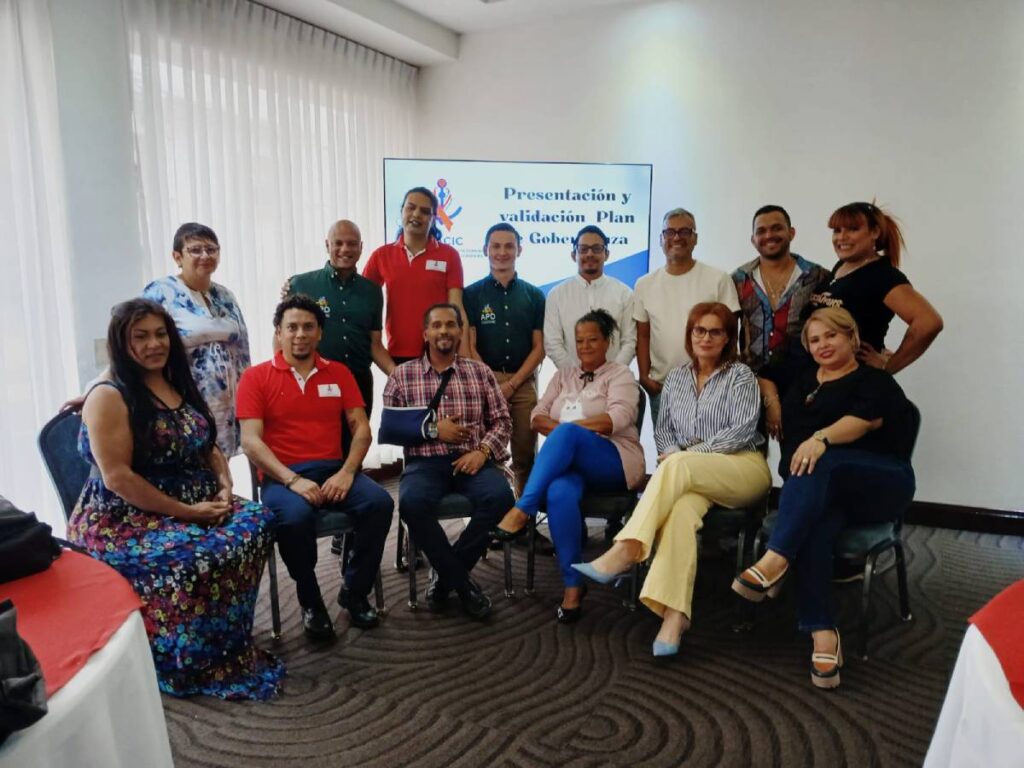
Cristian points out that people living with HIV also face "diagnostic violence," where they receive pathologizing information and suffer shortages of medication, especially in coastal areas. Many people with new diagnoses are evicted from their homes.
Despite this, activism has achieved significant milestones. One of these is the passage of National HIV Testing Day on June 27th, a law that aims to promote awareness and prevention as part of public health. Furthermore, advocacy efforts are now supported by community-led studies on violence and stigma.
“In Central America, we exist, we resist. HIV doesn't discriminate based on borders; it doesn't only exist on December 1st of each year. We have to work to ensure it's not seen as a death sentence, but rather that with treatment, one can live a real quality of life,” Cristian concludes.
Chile: outdated law and worn-out activism
Chile finds itself in an ambivalent position regarding its public policies on HIV. While there are well-established health guarantees, the current sociopolitical landscape, with the arrival of the far-right José Antonio Kast to the presidency, could put them at risk.
Guille Sagredo, an activist involved in sexual health and LGBTQ+ rights, comments that the progress made could be at risk. “In Chile, there isn't a universal right to healthcare, but there are some diseases that are covered. HIV is one of them; coverage includes therapy, testing, follow-up exams, and treatment. These guarantees are regulated by the Superintendency of Health, which means that complaints about lack of medication or late diagnosis are much more formally addressed,” Sagredo explains.
The HIV Law was created in 2001. In the last three years, social organizations have tried to articulate a reform to the HIV law but it has not happened.
One of the problems with the law is that it operates through civil proceedings. If a person sues another person or a company for disclosing their diagnosis or for workplace discrimination, the process can be lengthy, and the fines are usually "for the benefit of the tax authorities and not for the plaintiff," Sagredo points out.
Despite the fact that the State offers resources such as condoms and testing, Sagredo observes a significant gap in their use. “The central problem lies in the fact that most people don't get tested or don't use condoms because they don't perceive it as a risk . Data from the National Survey of Health and Sexuality reinforces this idea. They indicate that only a fifth of the population considers testing relevant, but without taking concrete action,” says Sagredo.
In addition to the HIV law, the Chilean legal system uses other legal tools to guarantee the rights of people living with HIV. These include the GES (Explicit Health Guarantees), which regulate the provision of medication, testing, and access to diagnosis. Also included are the Anti-Discrimination Law (Zamudio Law) and the Personal Data Protection Law.
“From an activist perspective, the truth is that the two constituent assemblies left us quite fragmented, worn down as a civil society in general. Not only regarding HIV or LGBT issues. Young people aren't very interested in raising these issues either. What is true is that in the last two or three years, social platforms linked to HIV have been gradually reorganizing. That has been incredibly interesting, thanks in part to the collaboration with members of parliament regarding a reform to the HIV law, which now seems impossible with the new government,” adds Guille Sagredo.
Opportunities in the region
Legislative innovation in Argentina with Law 27.675 demonstrates that it is possible to integrate HIV into social security. In Mexico, digitalization through electronic health records and a dedicated budget for diversity opens doors to more efficient care. In Costa Rica and Colombia, education and peer-to-peer work are emerging as tools to provide more targeted solutions to diverse and decentralized populations
The common factor across the region is that the response to HIV has historically been sustained by civil society. As the sources conclude, without a genuine state commitment that financially supports these organizations and eliminates stigma through education, even the most advanced laws in the world will remain "unfulfilled promises.".
This project is supported by the IAS ( International AIDS Society ) through the Community Project Grants , as part of the preparations for the AIDS Conference 2026.
We are present
We are committed to journalism that delves into the territories and conducts thorough investigations, combined with new technologies and narrative formats. We want the protagonists, their stories, and their struggles to be present.
SUPPORT US

FOLLOW US
Related notes



We are present
This and other stories are not usually on the media agenda. Together we can bring them to light.