

Mexico 2025: Little progress in LGBTI+ rights while violence does not decrease
Legislative advances on LGBT rights are slow to arrive. Meanwhile, crimes against these communities continue. The international context.


Share

In Mexico, 2025 has been a year in which public policies and progress on human rights for women and LGBTQ+ people have stagnated. While in recent years, legislation has recognized rights such as marriage equality and the right to identity, as well as the rights to health, work, and housing, these are not currently being guaranteed for Mexican women and LGBTQ+ people.
The first year of Claudia Sheinbaum's presidency in Mexico has passed. During that year, the majority of state legislatures were controlled by the National Regeneration Movement (Morena) party, whose platform, from its inception, focused on “social justice, national sovereignty, the fight against corruption, and the benefit of low-income communities through social programs.” Despite this, at the national level and in the states with this political majority, there has been no progress in public policies and rights for LGBTQ+ people and women.
“Cultural changes are not happening in our society. I also think that this is a sign of how legislation has failed to generate these cultural changes,” reflects Rocío Suárez, director of the Center for Support of Trans Identities (CAIT), Agencia Presentes . “And as organized LGBTI+ movements, we have perhaps stopped focusing on awareness, training, and information, and have instead concentrated too much on legislative, regulatory, and punitive issues,” she adds.
Legislative advances are slow to arrive
Guanajuato, a state historically governed by the right-wing National Action Party (PAN), approved same-sex marriage at the legislative level by reforming its Civil Code. This is a significant local achievement after years of activism seeking the legalization of this right.
, non-binary people were officially recognized under the Law for the Recognition and Care of LGBTI+ People. In Guerrero, the identity of trans and non-binary adults was recognized.
The Supreme Court of Justice of the Nation (SCJN), formed in September with new justices, reiterated that the right to identity of transgender children and adolescents must be guaranteed. It also stated that states that fail to guarantee this right are committing the crime of age discrimination.
He also mentioned that "sexual orientation cannot be considered a criminal behavior or a risk factor," after the state of Tamaulipas linked homosexuality to the crime of "corruption of minors and incapacitated persons."
To date, 18 states in the country recognize the gender identity of transgender adults. The six states that recognize non-binary people continue official identification documents recognized
Seven states recognize transgender children and adolescents, but only three have no age restrictions.
Jalisco was the first state to recognize transgender children and adolescents through a high-standard human rights administrative procedure. However, this year transgender families are reporting that they are facing obstacles and the denial of this right. Although there is no official position, the current governor, in 2024, mentioned transgender children using false information .
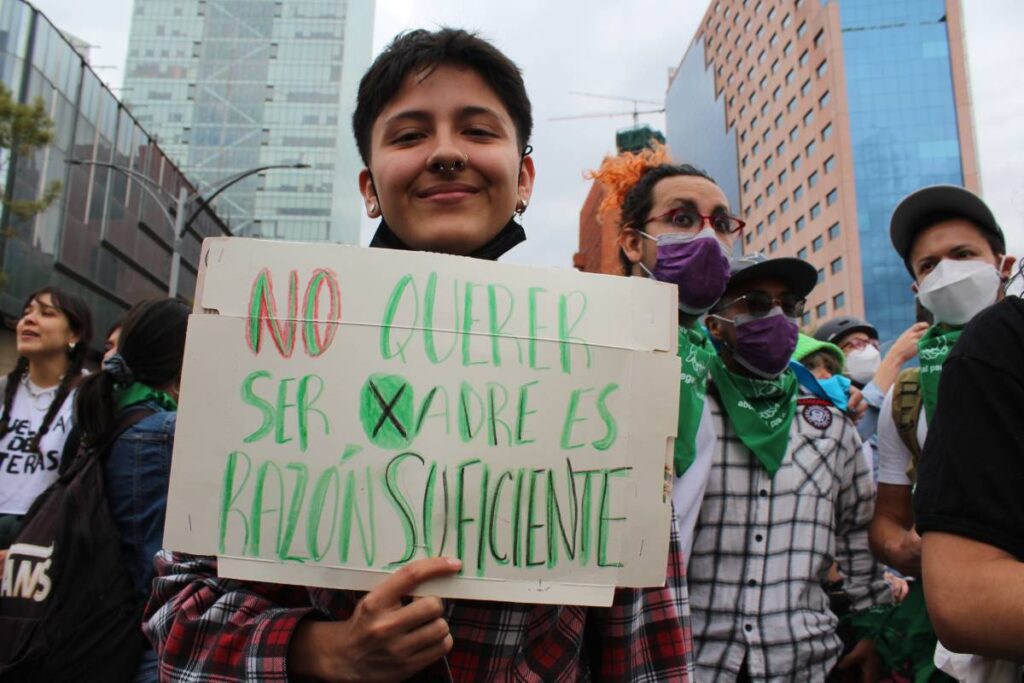
This year, in particular, organizations emphasized the urgent need for the complete decriminalization of abortion. This means "a scenario in which abortion is not classified as a crime in the penal code for women or people with the capacity to gestate." This implies viewing abortion as a safe and accessible medical procedure, like any other healthcare service, and removing the criminalization and police and judicial persecution of those who choose to have one, as well as the medical personnel who perform it.
So far in Mexico, 25 out of 32 states have partially decriminalized abortion
The right to housing and the city
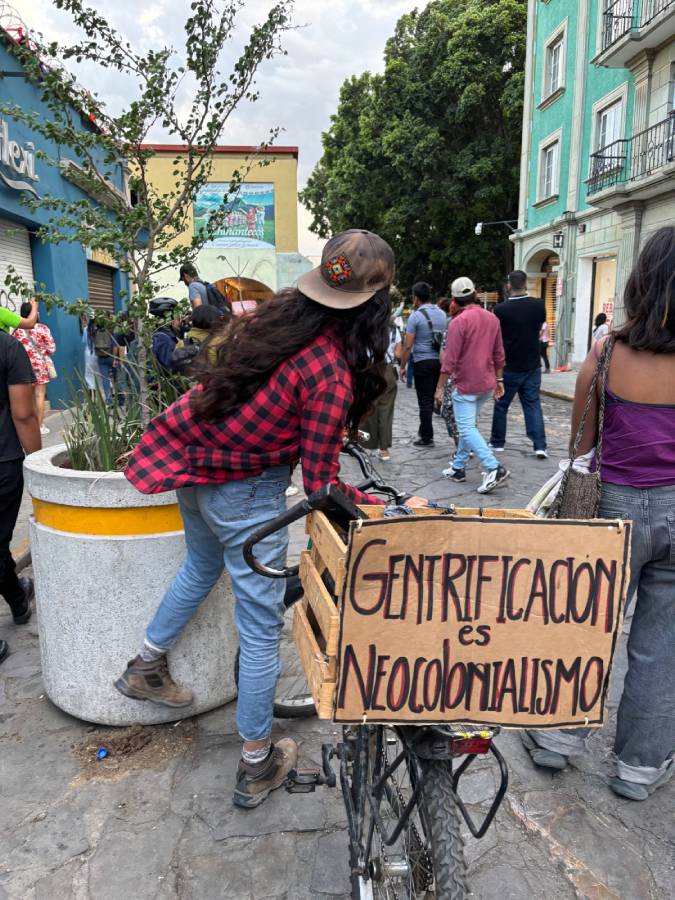
In the country, it has become more visible how LGBT populations are being affected by phenomena such as touristification, gentrification, and public works projects in the lead-up to the 2026 World Cup. Mexico will host the sporting event in three cities: Mexico City, Monterrey, and Nuevo León.
In the capital, independent sex workers on Calzada de Tlalpan are denouncing the displacement of their work areas , the increase in hotel prices, the decrease in work, and death threats.
The undersecretary of Mexico City, Fadlala Akabani, has not fulfilled what he promised since September: access to public spaces to carry out sex work, access to social programs, access to the national housing institute, and security for threatened female colleagues.
Due to over-tourism, six families, mostly composed of Afro-Mexicans, women, and gender-diverse individuals, are at risk of being evicted from Patio de la Estrella . This historic tenement courtyard, located in Córdoba, Veracruz, serves not only as a residence but also as an Afro-transfeminist cultural space.
LGBT-hating violence persists
This year, the National Observatory of Hate Crimes against LGBTI+ people, of the Arcoíris Foundation organization, registered at least 97 hate crimes, including disappearances and murders.
That's almost eight per month. Most of the victims are trans women who work in the sex industry and live in vulnerable and precarious situations.
In August, seven transgender women were murdered : Eli, Katia, Joseline, Michelle, Montserrat, Guadalupe, and Mónica. These hate crimes were characterized by violence against their bodies and the use of firearms. Only one person was arrested in the case.
Today, the 2024 Report of the LGBTI+ Crimes Observatory was presented at the Mexican Senate.
— @ObservatorioCrimenesLGBT (@ObservatorioCr3) December 3, 2025
Thank you to everyone who supported and continues to uphold this demand for truth and justice.
📄 See the full report: https://t.co/DJOOA73g7G pic.twitter.com/SE5ymIfCCj
Prosecutor's offices continue to fail to report on these cases in most instances. Activists are the ones documenting these crimes, demanding investigations that adhere to human rights, and supporting families in their pursuit of justice.
Violence was also reported, such as the denial of public spaces to trans women, including subway cars . This led far-right politicians to use social media to spread misinformation and criminalize trans women, particularly for using spaces designated for women, which are intended to be a protective measure and ensure safe access to transportation—a right that must be guaranteed to all women.
In this first year of President Sheinbaum's government, the human rights crisis remained in the increase of missing persons and the review by the United Nations Committee against Enforced Disappearances on the seriousness of enforced disappearances in Mexico.
According to data from Where Do the Disappeared Go , during the current presidential administration, 40 people fail to return home every day, an average of 1.6 per hour. A recurring issue during this six-year term is that Sheinbaum continues to refuse to meet with groups of mothers searching for .
The impacts of Trump: his narrative and the funding cuts
The arrival of Donald Trump's administration in the United States had immediate impacts on funding for human rights advocacy. Organizations defending the human rights of LGBTI+ people and migrants felt the effects from the beginning of the year.
For example, the Guatemalan Collective Trans-Formación lost the funding that supported the only clinic in the country focused on providing medical care to transgender people. In Mexico, the Casa Frida shelter lost more than 60% of its funding. Humanitarian assistance to LGBT migrants, asylum seekers, and refugees was already compromised, but now it is at an even greater risk.

Trump's anti-rights and interventionist rhetoric has had other impacts throughout the region. This is particularly true in this year's presidential elections in Bolivia, Chile, and Honduras , although after 16 days of voting, the presidential results in Honduras are still undecided. In these three countries, the far right, supported by Trump, gained ground.
In Mexico, this is happening with several public officials or candidates, such as Lilly Tellez, Verastegui, and the businessman Salinas Pliego , who has replicated ways of communicating or speaking about human rights, feminism, trans people, the left, and “wokeism.” His repeated slogans are: “get rid of the fucking leftists” and “life, property, and liberty.”
In this context, Rocío Suárez carefully observes the fragmentation of the LGBT movement and the defense of human rights. She warns that “LGBTI organizations, especially in Mexico City, are extremely fragmented. This will have repercussions at the national level because the capital is seen as a point of reference, and if there isn't a point of unity or common ground with other social movements, we will continue to see the struggle to gain rights viewed solely from a punitive perspective, rather than through the application of public policies that promote life and prevent violence and discrimination, for example.”
Regarding LGBT+ people, data is nonexistent or insufficient, despite the existence of protocols. So far in 2025, at least 31 LGBTI+ people are missing, according to official data from the National Registry of Missing and Unlocated Persons ( RNPDNO ).
One of them is María Mendoza Lucas, an Indigenous trans woman and activist and defender of the Mixe people's territory in Oaxaca. María was reported missing on Monday, October 27, in the state of Puebla, and there is still no trace of her whereabouts.
People close to María told Presentes that the young woman had been subjected to sexual violence on other occasions, both in the state of Oaxaca and in Puebla. “In September, she had posted that she was being harassed by police officers and public officials in Puebla.”
What's next?
This year, transgender children and adolescents were recognized by the Ministry of Public Education. A chapter was included in the School Technical Council guidelines that encourages teaching and administrative staff to make elementary schools safe spaces.
The most critical issue with the guide is that it is not legally binding. Furthermore, it suggests supporting materials such as a 2016 glossary that lacks definitions for trans and non-binary identities, for example. This material was not developed in collaboration with experts, families, or activists.
Trans families hope that this will be the case, so that schools are guaranteed to be spaces free of discrimination.
Furthermore, Claudia Sheinbaum's proposed electoral reform It is expected to include improved mechanisms for implementing affirmative action to ensure representation and guarantee the political and electoral rights of LGBTI+ people and other vulnerable populations.
“Resistance must come from within the communities themselves. And not just the idea of resisting, but of creating alternative models such as community kitchens and self-managed shelters. These are avenues that could be explored. We need to reaffirm the autonomy of the movement as part of the tools that must be generated for the times to come,” concludes Rocío Suárez of CAIT.
We are present
We are committed to journalism that delves into the territories and conducts thorough investigations, combined with new technologies and narrative formats. We want the protagonists, their stories, and their struggles to be present.
SUPPORT US

FOLLOW US
Related notes


We are present
This and other stories are not usually on the media agenda. Together we can bring them to light.