

Corrientes, a focal point of resistance by women and diverse groups to the anti-feminist agenda
At this 38th Plurinational Gathering, thousands of women and LGBTQ+ people filled the streets and hotels of Corrientes. The main themes were protesting setbacks in public policies, demanding more rights, and defending sovereignty. The first day featured a march against the murders of trans women, trans people, and lesbians.


Share

The coverage was done in collaboration with Agencia Presentes and Es tiempo de travestis de Mega 98.1 , from Corrientes.
Corrientes is ablaze. It's the heat of the Litoral region, the warm breeze of the Paraná River, and the fire of the thousands upon thousands of women, transvestites, and trans people that has historically ignited at each Plurinational Gathering. This time, after 31 years, it has returned to the province of the Argentine Litoral.
The 38th Plurinational Meeting of Women, Lesbians, Transvestites, Transgender, Bisexual, Intersex, and Non-Binary People was marked this year by several demands: against femicides, for an end to hate speech, against attacks on gender policies, and against the lack of funding. It also demanded the safe return of Loan (the child who disappeared in June 2024) and spoke out against extractivism and the exploitation of the Paraná River.
The chant “What a moment, what a moment, despite everything we held the Encuentro” took on a new dimension after two years of constant attacks by the national government against the transfeminist movement. This is the second time it has been held under the fascist-leaning government of Javier Milei. The president was also remembered at the opening of the Encuentro with the chant “Milei, trash, you are the dictatorship.”
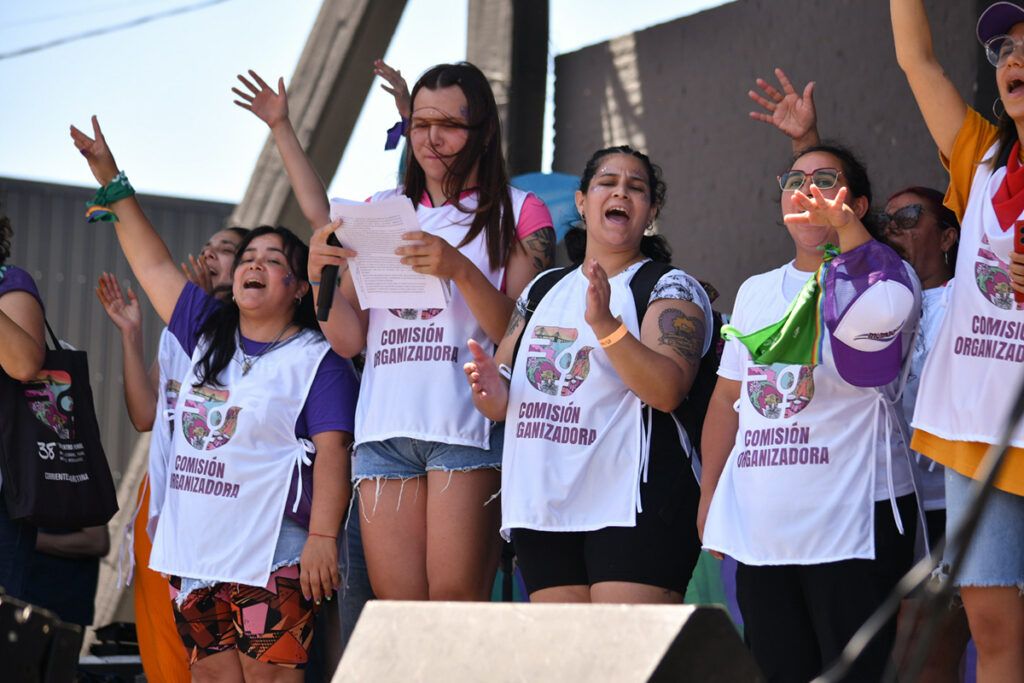
Buses carrying dozens of people from all over the country arrived in the early morning hours at the Tránsito Cocomarola Amphitheater. There, the opening speeches took place, marking the start of the discussions for the 116 workshops organized for 2025.
Among those women was Pilar, 28, who works in the Gender Policy department of San Fernando, Buenos Aires. For years she has rearranged her schedule to attend the Encuentros (Meetings). “It’s important to be present, to raise our voices here and everywhere. This isn’t the only thing that brings us together. It’s also the everyday struggles, and in this adverse, violent, and harsh context, it’s necessary to be here.”
From Cutral Co, Neuquén, Ailín Churrarin, a member of the Women and Diversity Secretariat of Mujeres Encuentristas (Women's Encounter), attended the meeting for the first time. “We hope to renew our energy to face the difficult times we are experiencing nationally due to budget cuts affecting all groups, but especially ours.”
“We made an effort to come here,” says Daniela Baigorria, also from Cutral Có. “It’s a moment where we connect with women and comrades from all over the country who continue the fight against violence. Neuquén is the province with the highest rate of femicides; we’re on the red line. I work in the office that addresses gender violence, and we’re on high alert every day. These gatherings allow us to renew our energy to continue the fight in every corner of our country,” she says.
Another worker from the Secretariat for Women and Diversity in Cutral Có told Tiempo that she and other colleagues from her town have been coming to these gatherings for over 30 years. “It’s a strength to be able to come to these meetings; they keep us energized. We see that our problems sometimes seem so small compared to so many other women who suffer violence, neglect, and poverty. The situation the country is going through is very difficult for everyone,” she says. In the case of Cutral Có, she emphasizes that they still “provide resources for our women, so that when we remove them from their homes we can offer them rental housing, and so that we can place them and their children in shelters to protect them from the violence they are suffering when the situation warrants it,” adds the woman, who is part of a group of 12 people.
No one backs down
In the amphitheater, as the document is read, a banner of the Lifeguard Network is unfurled. Among them is Eugenia de Socorro Rosa, who came from Necochea.
“We are a network of support workers who have been organizing for years to accompany people with the capacity to make decisions about abortion. The organization is grassroots, from the left wing of the leadership. It is essential that women and gender non-conforming people continue to be active in order to have decision-making positions at a time when our perspectives must continue to exist. We are not going to be outdone. The legalization of abortion must be defended,” she concluded.
Women and diverse people in the face of the crisis
Luci Cavallero, a leading figure in the Ni Una Menos movement, emphasized that this gathering is “the second we’ve held under a fascist government. The important thing is to sustain the organization, to connect with each other, to overcome any differences that may exist among us. I believe this gathering will help us return energized for the battles ahead. For many of us, there won’t be a break, but rather a very strong fight against the labor, pension, and tax reforms being proposed by the IMF, even with the direct intervention of the United States government.”
Organized women workers stood out this year for their participation. “Women and diverse working people are going through a very complex situation due to the critical economic reality we are experiencing. Our work is increasingly precarious, and we need multiple jobs to support our families. Even so, we are still in debt,” stated press worker Carla Gaudensi, general secretary of the Argentine Federation of Press Workers and Gender Secretary of the General Confederation of Labor.
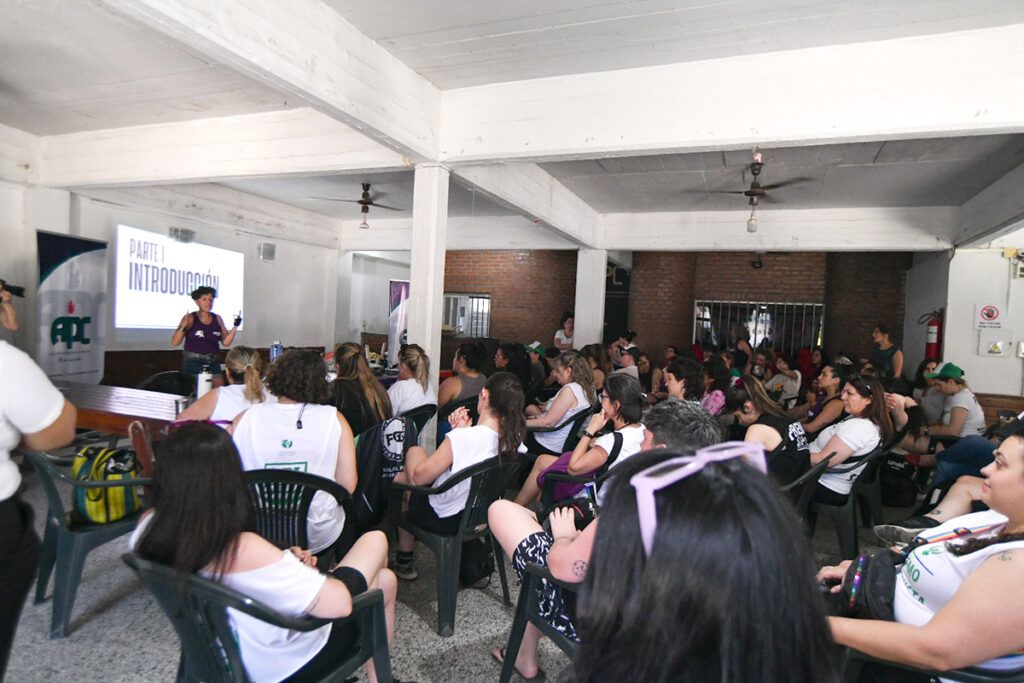
As organized workers, we face the added challenge of confronting a government that has targeted women and diverse groups as enemies. “Especially organized women, because today the enemies are the unions as workers' organizations. With this plan of surrender, of plunder, they are really trying to steal rights won through many years of struggle by all workers,” she added.
Samantha came from Roque Pérez, in the province of Buenos Aires. She is part of Patria Grande and speaks about the fundamental importance of being organized in the face of this government. “The right wing is encroaching on our bodies and our lives. When the State withdraws, we are the ones who provide care, who work long hours, who hold multiple jobs, who take care of all areas: disability, childhood. This year more than ever, we have to stand together and find a collective solution. But we also have to organize the struggle because this is an attack, I think one of the cruelest we have ever suffered.”
Against violence and imperialism
Among the feminist activists was Myriam Bregman, from the Left Front. She stated: “This gathering is deeply affected by the alarming femicide figures, which in the province of Corrientes alone numbered at least five. This is happening under a government that not only uses hateful and misogynistic rhetoric but has transformed it into ideology and state policy, with Minister Patricia Bullrich blaming women and feminism themselves for the femicides. In the province of Corrientes, we must demand justice. Stop the femicides! Not one more woman!” She added: “Let it be everyone’s fight to transform the anger at this harsh reality into organization, into mobilization, into becoming a powerful force once again to confront sexist violence.”
Andrea D'Atri, legislator for the FITU and founder of the international socialist feminist movement Pan y Rosas (Bread and Roses), stated: “An important debate that will take place in the plazas and workshops concerns the country's increasing subordination to imperialism and its consequences, such as the labor reform proposed by Milei and his accomplices, including those who were on opposition lists. Emerging from the Encuentro (Meeting) with the strength to expand organization in unions, workplaces, neighborhoods, and the student movement will be fundamental.”
Migrants at the Meeting
Delia Colque boards the public bus to go to the workshops. She is a Bolivian migrant and has lived in Argentina for over 20 years. She was at the main event with her fellow activists from Ni Una Migrante Menos (Not One Less Migrant).
“We are concerned about everything that is happening to migrants. It is a time of many setbacks; our access to health, education, and even documentation is being restricted, and there are many deportations. This meeting helps us to spread awareness about what is happening specifically with the modifications to the Migration Law through Decree 366. We return from these meetings strengthened because we are building networks, getting to know colleagues from other groups, and collaborating with these other groups gives us great satisfaction,” she says.
By Loan
“Raise the flag!” shouted a group of women from below, holding a banner with the face of Loan, the 5-year-old boy who disappeared in June 2024 in this province. The demand for Loan's safe return was taken up at the Plurinational Gathering, where human trafficking was also discussed. Rosario Aguirre is one of the women who insisted on raising Loan's banner. She is from Goya, Corrientes, and is a member of the Mothers of the Plaza de Mayo Warriors.
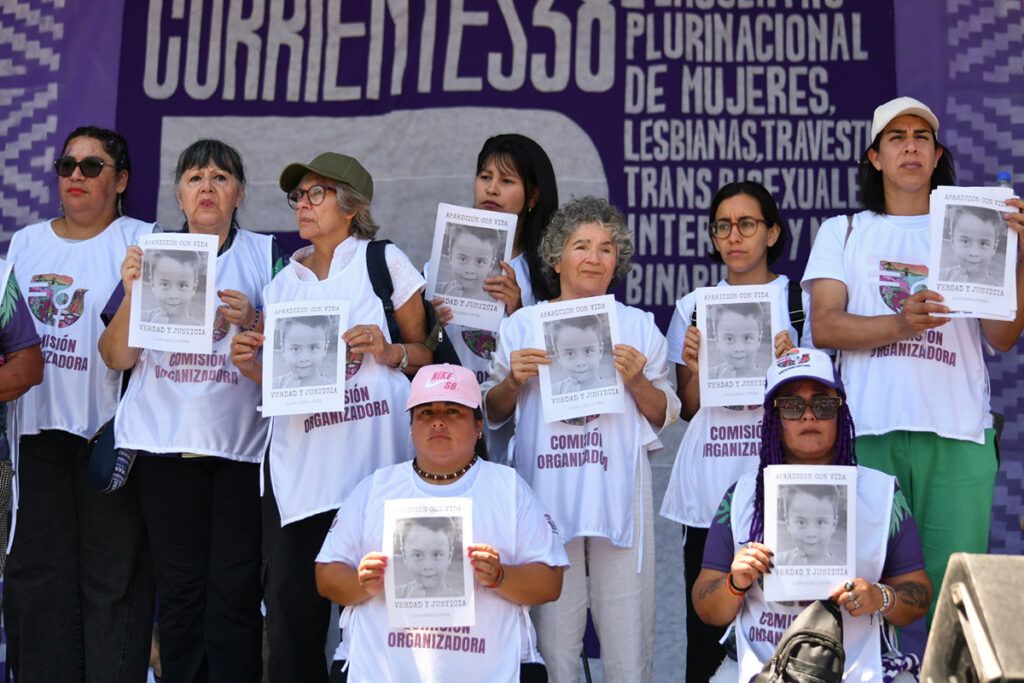
“Since Loan disappeared a year and eight months ago, we’ve gathered in Plaza Mitre on the 13th of every month to demand justice for him. And we’ll keep protesting until he reappears. Especially now that we know they want to close the case. There are many vulnerable mothers in Goya, in 9 de Julio, in all the towns in Corrientes. They try to take advantage of us, but now, after Loan’s case, know that we won’t stay silent and we’re going to fight for our children,” said Rosario.
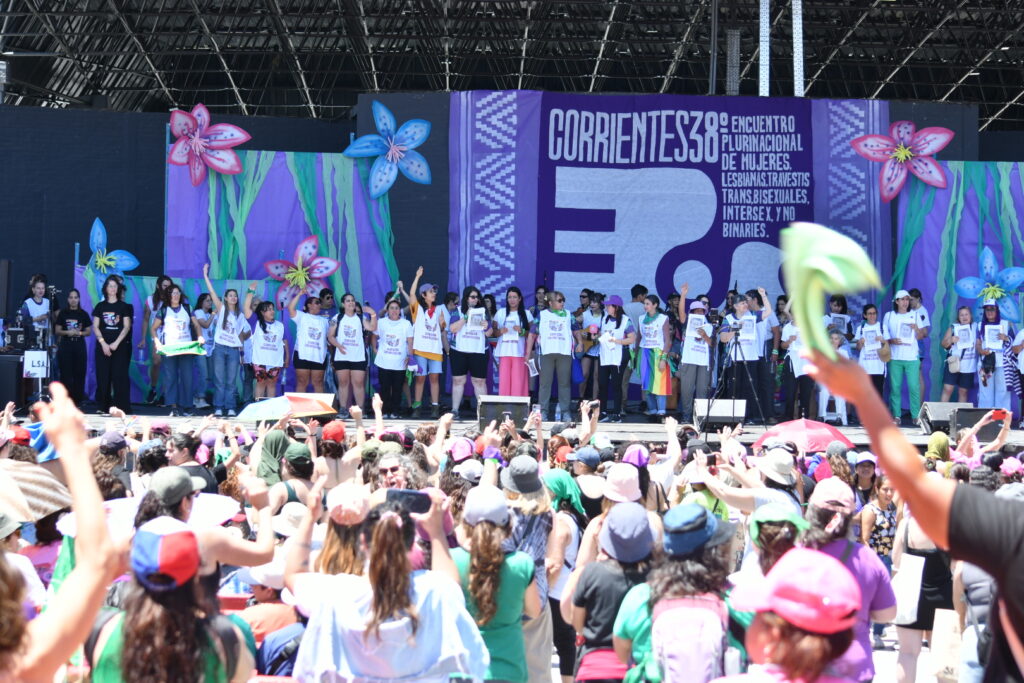
The 38th Plurinational Meeting of Women and Diversities doubled down on its commitment in a year marked by increased gender violence and attacks on diverse communities. The organizational power that responds to hate speech, the denial of femicides, and the dismantling of rights takes on a new dimension in Corrientes. It remains to be seen where the next meeting will be held.
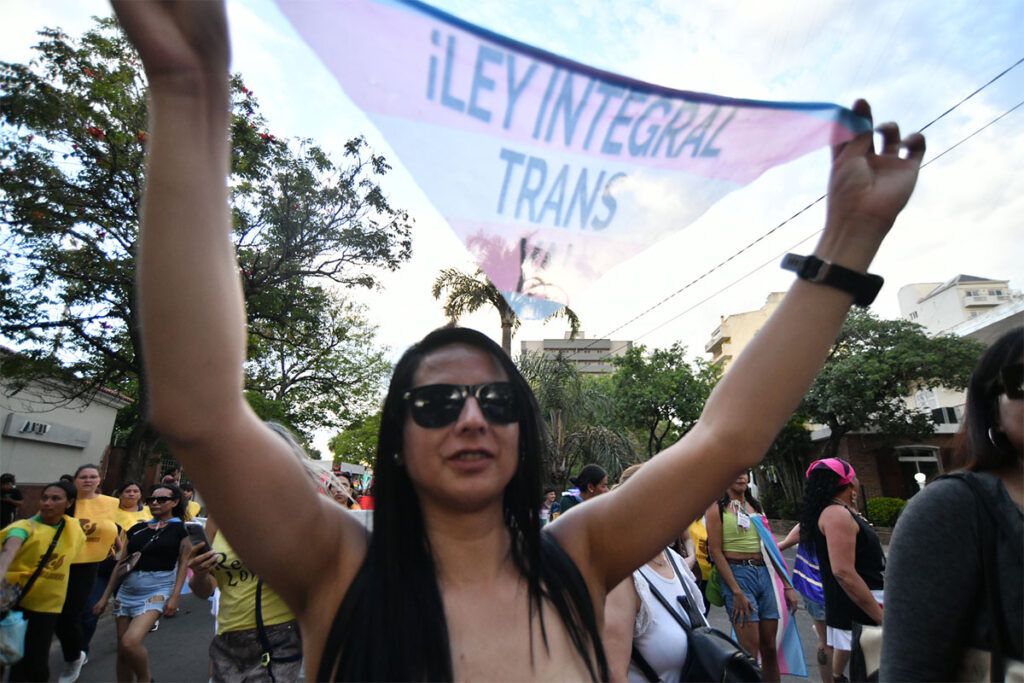
Trans women putting their bodies on the line against violence
“If we don’t fight together, they will kill us separately,” read one of the signs at the 8th March Against Trans Murders , which departed Saturday afternoon from Parque Mitre. “We believe it is extremely important to reaffirm the fight against trans murders in Argentina. I also think it is important to highlight the work that our comrades have been doing with Diana Sacayán for the recognition of her trans murder. To prevent further trans murders, we must make these murders visible and confront this society, always united and fighting for historical redress and for an end to trans murders in Argentina.”
The transfeminist movement of Corrientes also remembers activist Patricia Ramírez, a victim of transvesticide in 2022.
Sofía de Chaco is a trans artist and activist. "We are here at the march against trans murders at the 38th Plurinational Meeting of Women and Diversity of Corrientes, marching for the deaths of all our sisters so that it doesn't continue to happen. We are marching against a completely absent state. Against all hate speech, against all the violence perpetrated against our trans bodies, and we are here putting our bodies on the line," she expressed.
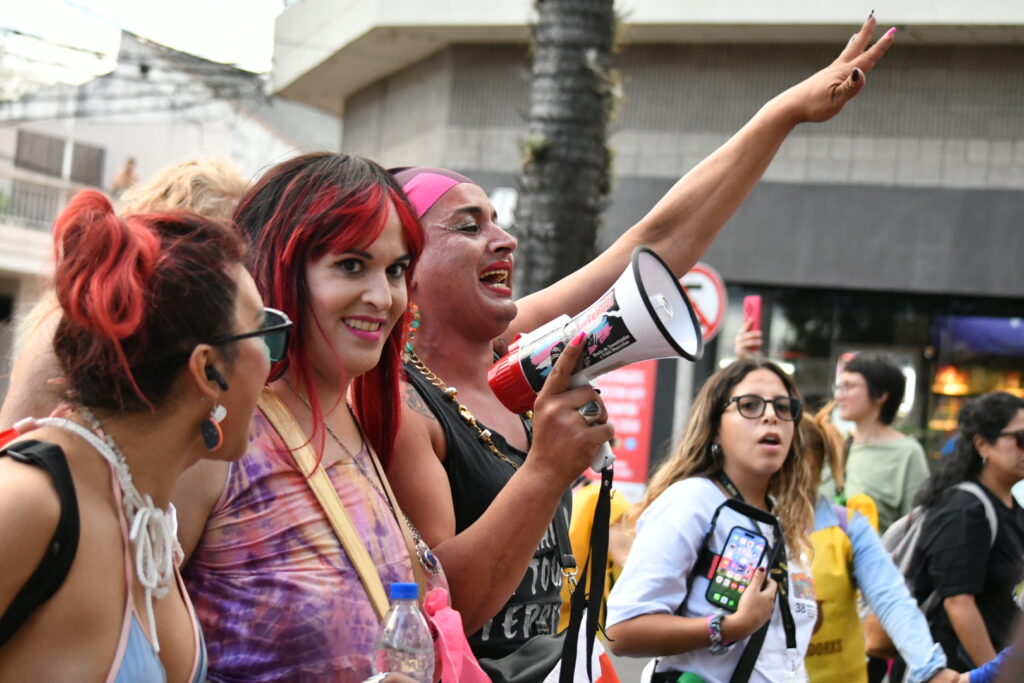
"Here in the city of Corrientes we are still saying goodbye to our comrades, especially to our leader Patricia Natividad Ramírez, who was taken from us two or three years ago, and we are still demanding justice," Sofía concluded.
We are present
We are committed to journalism that delves into the territories and conducts thorough investigations, combined with new technologies and narrative formats. We want the protagonists, their stories, and their struggles to be present.
SUPPORT US

FOLLOW US
Related notes


We are present
This and other stories are not usually on the media agenda. Together we can bring them to light.