

Kiya: the Bolivian trans rapper with ghost skin
We present the artistic and chameleon-like journey of one of the most interesting musical proposals on the Bolivian scene in recent years.


Share

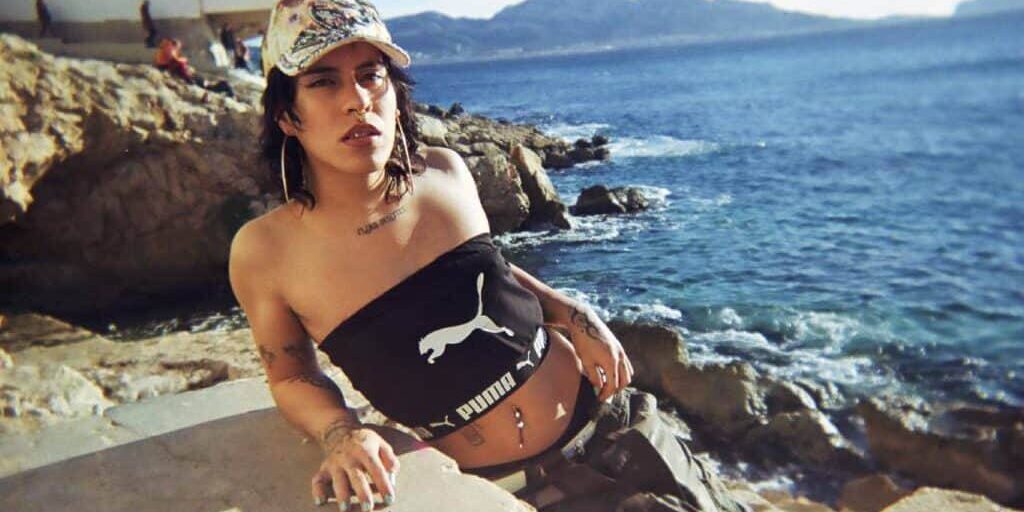
Kiya is a Bolivian trans artist, from Cochabamba and La Paz, a "chotita" (a term used to describe a trans woman). A few months ago, she released a compilation album called Todo lo que fui (Everything I Was ). It's an archive of the sounds, emotions, and impulses that once inhabited her.
Everything I Was is a collection of songs from all her previous projects, her dead names, her shed skins: Taparaku, Boka Esquina, Hyena. A gallery of phantom skins that accompanied her until she became who she is now: Kiya, the evolution of the first Bolivian trans rapper/trap artist.
Kiya, formerly Taparaku-Boka Esquina-Hyena, embodies one of the most interesting artistic projects of the Bolivian music scene in the second decade of the 21st century.
"(The compilation) is everything I've been and it's really a selection of songs from those different stages of projects that have stayed with me," he says.
And there's something unsettling about that phrase. The songs that stayed with her . As if the others had vanished in the whirlwind of her own will.
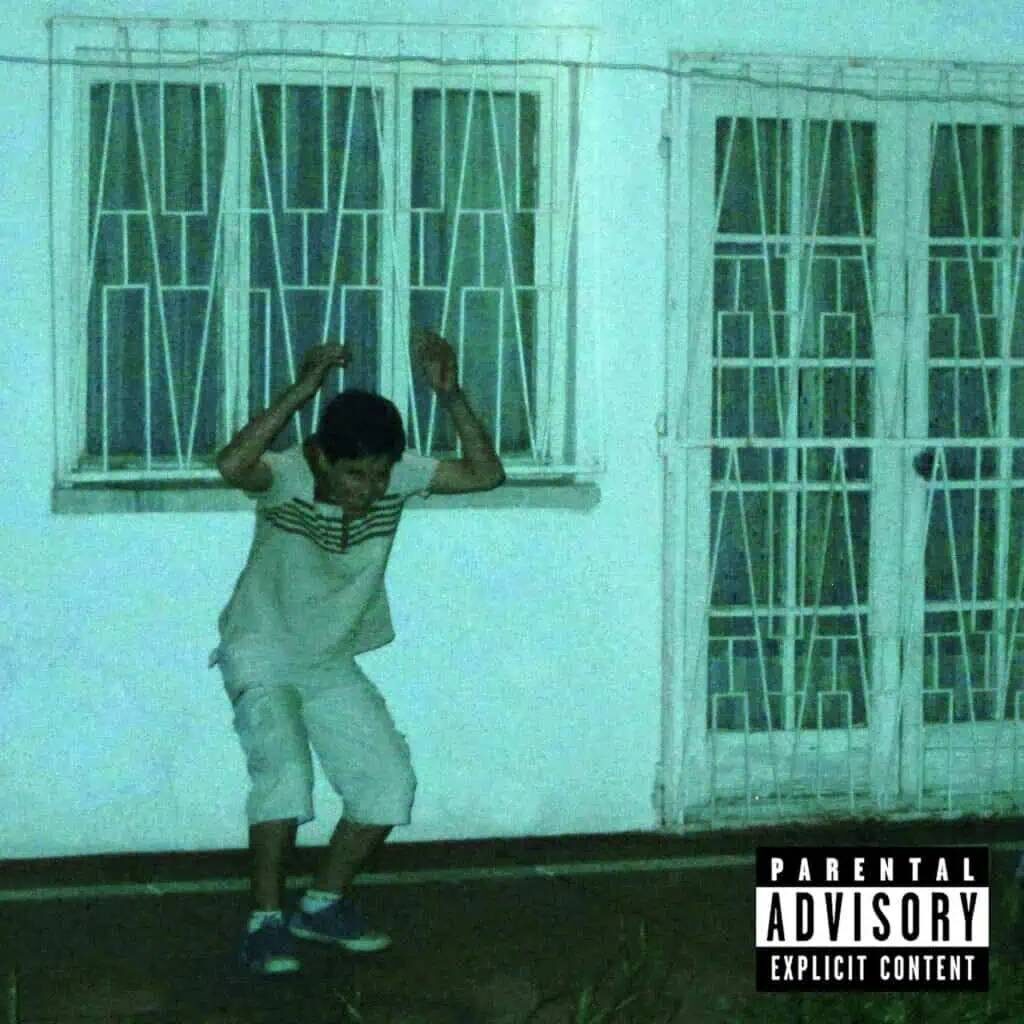
Everything that was: the songs he personally likes the most, the ones that were best received by his audience, or the ones his friends prefer.
Her real name is Nayra Kamila Killari.
Kiya comes from there, but it took her years to find this new name, this new skin.
She had to go through other bodies, other voices, to arrive at "this body, this person, this little soul," as she says.
The journey left behind complex and beautiful ghost skins.
First ghost skin
Taparaku (2020-2021) was born when Kiya was returning to Bolivia from Europe, where she had been left without papers, “clandestine”.
"Shitty Europe ," he says, laughing, recalling the emotions that accompanied that transatlantic incursion... and, later, the return.
Kiya had gone to study film in Belgium - from a position of some privilege, she admits - but that European academic world could not contain her.
He soon left the Belgian university classrooms and spent three years among the streets and squatter (a social protest movement that advocates the collective occupation of abandoned houses and buildings). Thus began a journey of politicizing a new identity: from a kind of clandestinity and uprootedness.
During those years in Brussels, she also shared spaces and friendships with some of those who later formed the Belgian art collective Gender Panik .
But the problem with Taparaku, back in Bolivia, was that people referred to the project using masculine pronouns: "el Taparaku." Kiya quickly grew tired of it. She decided that all her future names would be feminine.
It was another crucial decision on a path full of transformations. One more among many changes.
Phantom second skin
Boka Esquina (2022-2023) appeared shortly after the return, as an even deeper immersion into the La Paz underground rap scene. The streets, the hillside neighborhoods, the freestyle workshops.
A movement with a complex and long genealogy. A universe full of masculine codes, so to speak, where Kiya had to learn to occupy her space being who she was: a trans artist.
His music at that time was fueled by a certain social effervescence; it sounded raw, let's say like a pamphlet.
"My first jobs were like 'down with capital' and conveying these political messages that I loved at the time," he recalls.
Direct lyrics, without nuance. The kind of songs that emerge when you're determined to take down the world with beats and rhymes.
But identities and convictions crack; they are not static, nor should they be.
Third phantom skin
The musical project under the name Hyena (2023-2025) was different.
"It was a moment where I was completely lost and thought I had found myself," says Kiya.
Therein lies the paradox that, perhaps, defines every search for identity: finding oneself in loss, defining oneself in confusion .
It was the period that marked her the most. Perhaps because it was when she understood that identities are not fixed destinations but processes. Movements. Constant transformations.
During this period, a disruptive musical project emerged in terms of sounds, lyrics, forms, and images.
There, one of the songs he's most proud of remains: "Trans Piketera ." The first song he mixed and mastered himself. And which, moreover, is complemented by a music video that encapsulates a distinctive aesthetic and artistic universe.
Between 2023 and 2025, Kiya, still under the skin of Hyena, left songs and music videos that time will help us to value even more.
The body that changes, the skins that mutate
Many things happened during the transition between Hyena and Kiya.
A hormonal treatment, for example.
Kiya explains that, creatively, she always had "a very close relationship with her head."
But then, thanks to the changes in my body, "I have also come into closeness with my pelvis, with my chest, with my abdomen, with other parts of the body that have also pulled me to other sound and lyrical spaces .
Bodies shaping the music, cracking the skin, finding new crevices from which to resound.
Kiya says she found new sounds because she discovered new parts of herself.
He moved towards more trap-like and experimental atmospheres. He left behind the codes of "bass drum," boom-bap, to explore sonic territories that were previously off-limits to him.
Among his influences, he highlights the name of Frank Ocean. Especially for how he conveys "these feelings (like sadness) more from the depths, more from the pelvis."
Now she sings from there too.
The politics of intimacy
With Kiya came another change, a new return: from the propagandistic to the personal. A transformation that was already hinted at in some of Hyena's songs.
Kiya doesn't want to tell people how they should feel, think, or live. "I don't feel in a position to talk about that," she says.
Instead, she prefers to convey her "observation of reality (...) which will politicize itself." She understood something that is sometimes forgotten: that the personal is already political . That showing one's own vulnerability can be more revolutionary than any prefabricated slogan.
Now he writes sentimental songs. Love, heartbreak, anger. "A more intimate project," he says.
Kiya is finishing "Sin tubo, sin cpu, sin ti" (Without Tube, Without CPU, Without You ), an album born from a specific loss: when, on a recent trip to Europe, her cell phone, her computer, all her belongings were stolen. It's six or seven songs that she plans to release in 2025.
Worlds that do not touch
Being a trans rapper in the underground meant navigating worlds that sometimes reject each other. In hip-hop, some accused her of using her identity to sell music.
In the trans community at first they said with distrust: "Who is this girl? A rapper, a streetwalker, a lesbian .
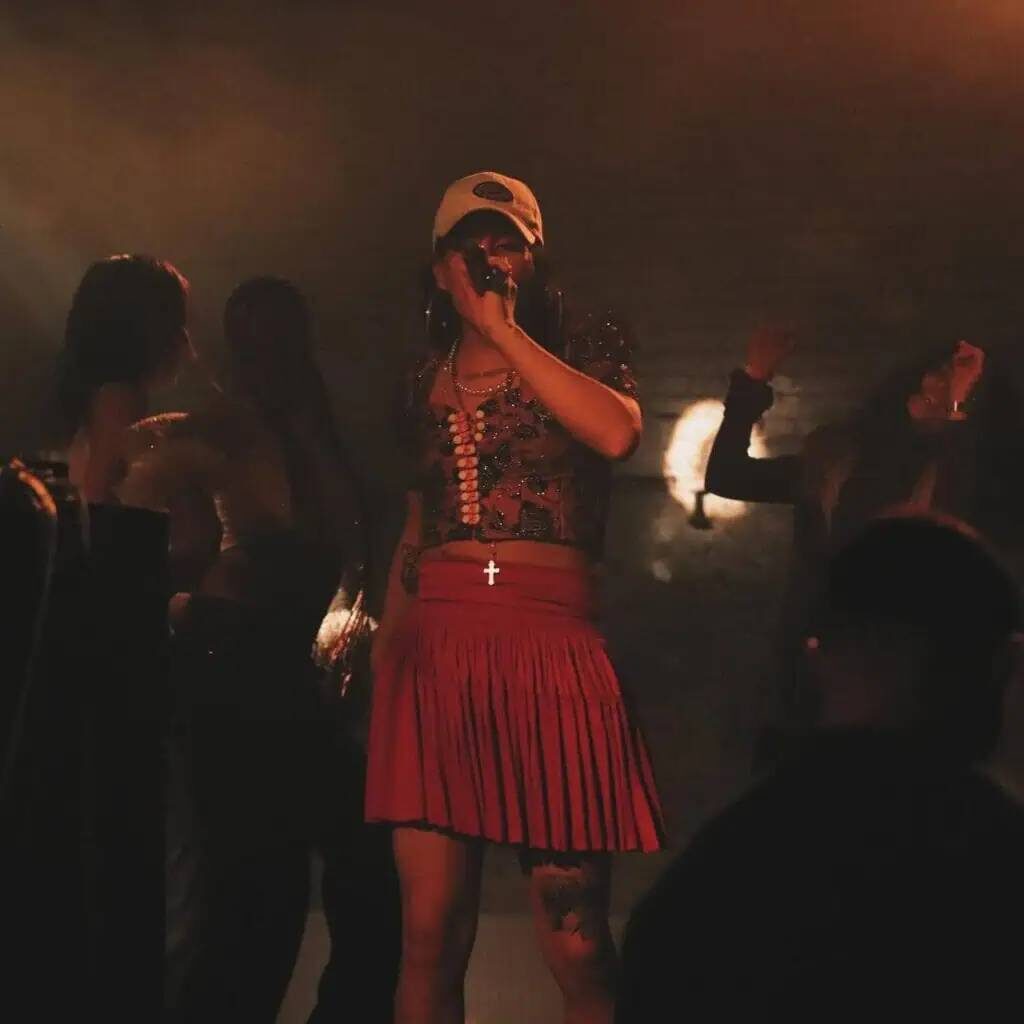
Photo: Courtesy
Kiya could have chosen one of the two worlds. Instead, she decided to create a third. “My goal is to reconcile these two things,” she says. Now she has what she calls “a microcosm, a micro-community” where those contradictions are resolved in music.
The present continuous
Kiya knows she is paving the way for other trans artists.
Her advice is simple: “You have to be good at what you do. If you back down, people will notice.” Some won’t listen to you because you’re trans, “but who cares,” she says.
"For every one who doesn't listen to you, there will be ten who do."
Thus, Kiya builds her career and her identity without much fanfare. Subtle yet powerful. In September, between the 9th and 12th, she will participate in the Bogotá Music Market .
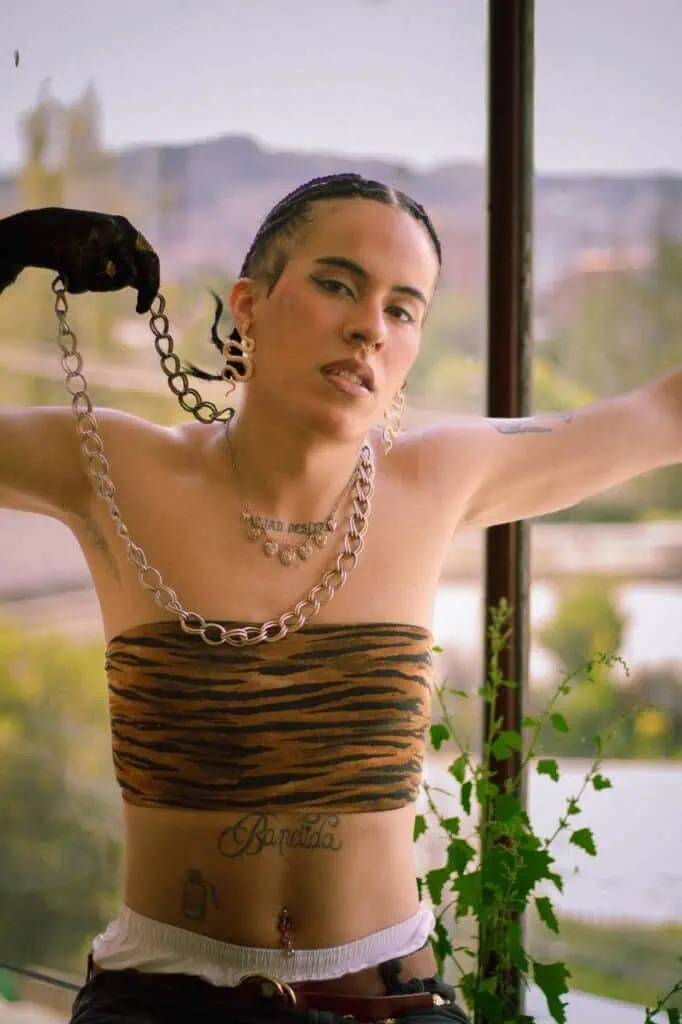
Photo: Courtesy
The ghost skins of the past are archived in Everything I Was , an exercise in artistic memory, a musical and audiovisual legacy.
But Kiya, the artist who inhabits this new skin, continues to mutate. She continues to discover new parts of herself, new sounds, new ways of inhabiting her body and her music.
Identities are never complete. Luckily.
*This article was originally published in our partner publication Muy Waso
We are present
We are committed to journalism that delves into the territories and conducts thorough investigations, combined with new technologies and narrative formats. We want the protagonists, their stories, and their struggles to be present.
SUPPORT US

FOLLOW US
Related notes


We are present
This and other stories are not usually on the media agenda. Together we can bring them to light.
2 Comments