

"Double femicide with ideology": from United Men to state antifeminism
The double femicide of Luna Giardina and Mariel Zamudio at the hands of Pablo Laurta brings to the forefront the implications of antifeminism and political power. We spoke with Nicolás Pontaqarto, from the Institute of Masculinities and Social Change, about violence, identities, misogynistic discourses, and digital spaces.


Share

The double femicide of Luna Giardina and Mariel Zamudio in Córdoba, at the hands of Pablo Laurta, a men's rights activist, adds to the long list of gender-based violence. The news in this case also highlighted the perpetrator's ties to far-right figures like Agustín Laje and Nicolás Márquez, friends of President Javier Milei. These connections surfaced alongside the anti-feminist messages he posted on the account of Varones Unidos, the organization he founded in Uruguay.
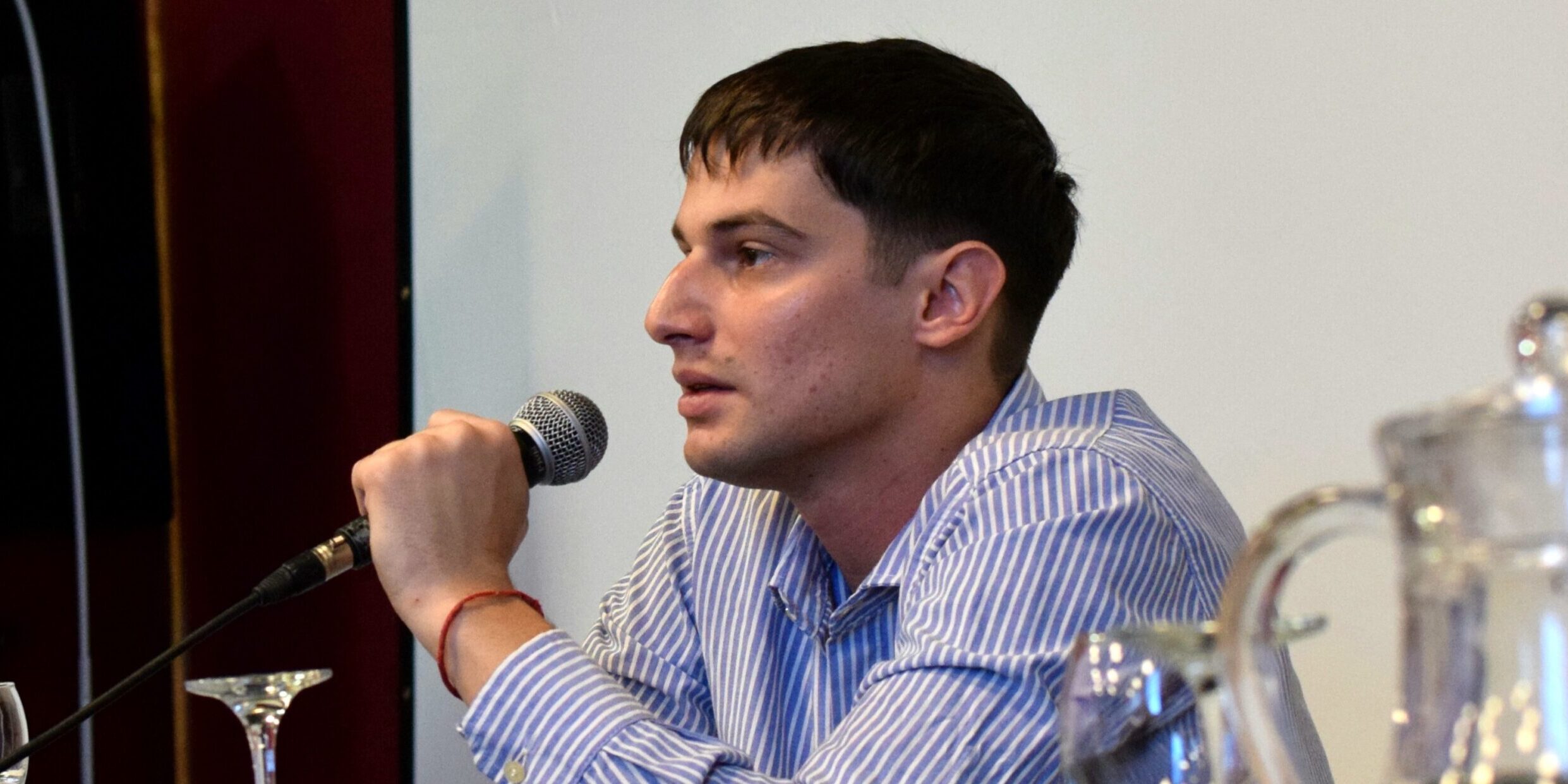
For Nicolás Pontaquarto, a member of the Institute for Masculinities and Social Change , this crime has a particular characteristic: it speaks to a political ideology behind the attack. And at the same time, it embodies the current climate, where hate speech is taking root.
“I think there’s a normalization of these extremist, hateful, misogynistic groups being part of the public debate. What I find problematic is that these are also the ideas of the national government,” he says in an interview with Presentes .
Twelve femicides in eight days
From the beginning of 2025 until September 29, there were at least 178 femicides in Argentina: one every 36 hours, according to the Observatory "Now That They See Us ." This week, femicides increased. Twelve occurred in eight days : one every 16 hours.
One of the crimes was a double homicide: after entering Argentina from Uruguay on Saturday afternoon, Pablo Laurta entered the home of his ex-partner, Luna Giardina, and killed her . He also killed her mother, Mariel Zamudio, and kidnapped her five-year-old son. Luna had previously reported him for harassment and assault.
From Presentes we spoke with Pontaquarto, a secondary school teacher and worker at the Directorate for the Promotion of Masculinities for Gender Equality (Ministry of Women and Sexual Diversity of the Province of Buenos Aires ), to analyze the case in relation to a context of discourses that deny gender violence, and the impacts of anti-feminist activism in digital territories.
“All femicide is political”
-This double femicide is especially shocking to us because of the perpetrator's convictions. What do you think this case tells us?
-In principle, I think we need to continue discussing the political nature of femicides. Every femicide is a political crime in the sense of an existing inequality. But on the other hand, what I find unprecedented in this case is that the perpetrator is a person who founded an organization, United Men, which promoted not only “men’s rights,” in many quotation marks, but also discouraged reports of gender-based violence or reports of domestic violence, considering them “false.” This political narrative provides him with symbolic support or moral justification for carrying out what he ultimately did.
In September of this year, a father kidnapped his children in Uruguay, killed them, and then committed suicide . Laurta, from the Varones Unidos (United Men) account, posted something like, "Well, ultimately, he tried to restore the justice that feminist justice wasn't giving him." I think there's an ideology, a "justification," and a political motivation behind femicide that we weren't used to seeing. For me, that's unprecedented.
-What problems do you find in talking about these aggressors as "crazy" or "monsters"?
-In principle, it turns it into an individual, pathological issue, and that seems worrying to me. I think feminism has taught us what gender violence is and its relationship to how men are socialized. It seems to me that these terms erase all that learning that society has made in terms of understanding gender violence.
-Do you know of any organizations like United Men that operate in Argentina?
This morning I was tracing the history of several similar groups in Argentina, some of which are related to the organization Varones Unidos (United Men). Around 2009 or 2010, a group called Padres del Obelisco (Fathers of the Obelisk) emerged in Argentina. It was a group of fathers who complained that since their separations, they hadn't been able to see their children due to lengthy legal proceedings, some accused of violence and others not. Following the release of the documentary "Borrando a papá" (Erasing Dad), which included interviews with some of these fathers, journalist Jorge Lanata interviewed one of the group's leaders on Radio Mitre . This brought them out of obscurity and into the public eye. So, roughly since 2015, when the interview took place, something similar has been happening in Argentina as well.
I think there's a degree of kinship with organizations like "Don't Mess With My Kids," as a way of reacting to the "Ni Una Menos" movement in 2015 and the debate about legal abortion. It starts to generate a kind of fusion of different causes that later converge in more radicalized groups and some influencers, libertarian public figures, with (Agustín) Laje and (Nicolás) Márquez having the strongest international connections. But there are a lot of media personalities, those on the Carajo stream, for example. And many come from those circles, from the online manosphere, and they start to take up all those causes.
State antifeminism
-What happens when these discussions move from a niche space in internet forums to the public sphere?
– I think there's a normalization of these extremist, hateful, misogynistic groups being part of the public debate . What I find problematic now is that these kinds of ideas are also the ideas held by the national government. Verónica Gago and Luci Cavallero talk about " state antifeminism ." For me, that concept is key to explaining that today there's an organic relationship between these groups and national government officials. Then comes the dismantling of the Ministry of Women , INADI , and the 144 hotline, but before that, there are all these radical and anti-rights narratives that have been brewing for years.
-Do you think that these ideas embodied by Laura are part of isolated events or do they have a social basis today?
-Yes, absolutely. In the workshops and exchange spaces we have with men, we began to see in 2022 that some of that resistance, that discomfort that was perhaps to be expected from men talking about gender, care, and violence, began to transform into a more political resistance. Directed at, for example, the existence of the ministry, the effectiveness or lack thereof of these kinds of activities, even at boycotting activities. The idea of false accusations was one of the central themes that men raised with us in our conversations last year. It's starting to emerge as a concern, whereas two or three years ago the concerns were different.
When (Javier) Milei took office, things they were careful not to say, things they thought twice about, started to come out. It was like a can of worms being opened. There's less awareness of how what you say or do can affect others. There's a lot of cynicism and cruelty coming from below.
We are working to rebuild some of that intergender connection or dialogue that we believe was at least challenged, strained, and in crisis after 2018, when we experienced a period of public shaming and questioning of men for the violence they had perpetrated. It's difficult because there isn't much willingness on the part of men to change anything. We even see a similar phenomenon in women, when they become spokespeople for what men cannot say. We see it in Representative Carolina Losada (of La Libertad Avanza) presenting the bill against false accusations, or in Vice President Victoria Villarruel making a post for World Day Against False Accusations.
-What happened to the men after 2018?
In general, I think the balance is positive for men over 35 or 40 years old.
However, we sometimes see workplace conflicts escalate because men don't know what to say or how to handle themselves with women; they prefer to talk to or ask their male colleagues for things rather than their female colleagues. And then there are self-preservation mechanisms: they go out with a woman and send her a message like, "Hey, is everything okay?" They're trying to confirm that everything was fine, that nothing happened. But we also see that many younger men, under 30, tend not to interact with women.
“Masculinity is also a scam for men”
-Why do you think this is happening?
For me, something from that time remained unresolved, not fully understood. A certain uncertainty lingered. These are conversations that men didn't have among themselves . There's a tendency to blame feminists for everything, but there's also the issue of men not wanting to leave their comfort zone. These are subjective effects, also a product of the pandemic, isolation, being alone, and socializing digitally. There are many reasons.
-And personalities were created in those digital spaces.
Yes, and communities of belonging. These are groups where no one judges you because you enter with an avatar, a fictitious name, or anonymously. In this way, communities begin to form that are no longer specific to a particular topic, but rather groups of belonging. We've largely lost social connection and community participation in civil society organizations, clubs, cultural centers, even churches. The internet today is the great school of identity, and where we also become men .
The state doesn't enter those spaces, but neither do organizations; in other words, there's almost no adult presence there. I think the state needs to acknowledge, once and for all, that the digital realm is another place where young people socialize. There's a territory there that needs to be inhabited, and we need to start intervening, addressing it, and taking it a bit more seriously.
-How did LLA pick up this phenomenon?
-Those radical or fringe discourses grew during the pandemic, increasing their visibility and reach. Eight years ago, these discourses were just a meme on Twitter that nobody shared. Then a community formed on Discord, and men started joining. During the pandemic, we were at home, and the places where we met others were digital. This began to grow. I think Milei's communication style—his cynicism, his meme-like nature, his bizarreness, and his indifference—has more to do with that internet language than with the language of institutional politics.
-What message do you have for men who see feminism as a threat or an enemy?
-Our interpretation is that it's necessary for men to start getting involved in gender discussions because it also concerns us. The mandates of masculinity create pressures for us, expose us to risks, make us live less fulfilling and less fulfilling lives, and make us precarious . Masculinity is also a deception for men . And this is more the responsibility of the patriarchy than of feminists. In fact, feminism is also an opportunity for men to have a healthier relationship with the construction of identity and with our own lives.
We are present
We are committed to journalism that delves into the territories and conducts thorough investigations, combined with new technologies and narrative formats. We want the protagonists, their stories, and their struggles to be present.
SUPPORT US

FOLLOW US
Related notes

We are present
This and other stories are not usually on the media agenda. Together we can bring them to light.