

Mexico: Why a protocol for transgender children and adolescents in schools
Various groups are working to include a protocol that allows trans children and adolescents to freely live their identity in educational settings.


Share

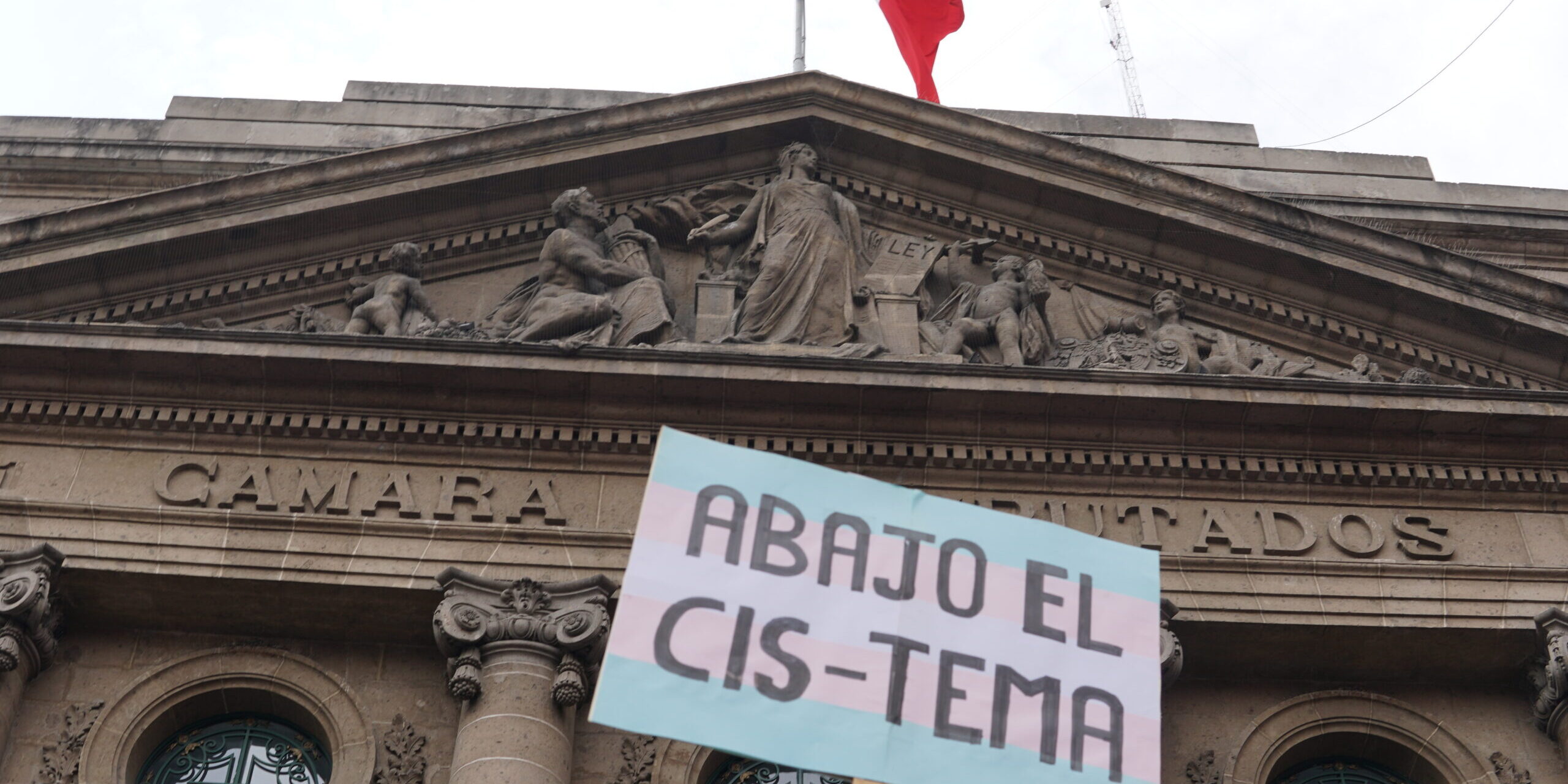
MEXICO CITY, Mexico. While the Association for Trans Children has been working since 2019 to provide Mexican schools with a guide for an educational environment free of discrimination, rejection and prejudice persist.
The stories of Umi* and Mario, two trans children aged 6 and almost 9, show how protocols can make the experience of trans children and adolescents more welcoming. Their identity is recognized from the moment they are called on roll, wear the uniform, have access to the bathroom, and their name and pronouns are respected.
The Mexican State must adopt and create measures in all schools, and it should not be the mothers who have to obtain respect for their children.
*We use another name to protect your identity.
Good practices from activism
The Protocol for Action in School Settings in Cases of Trans and Non-Binary Children and Adolescents , whose first version was published in 2019, arose from the need to fill a gap: many schools do not know how to talk about trans identities in children and adolescents. They fear conflict with educational authorities, or simply approach it with rejection, considering it "just a phase."
This protocol, while not a legally binding document because it does not originate from a public institution, serves as a guide of recommendations. It has a legal basis in the Mexican Constitution and international human rights instruments that address the best interests of the child. Its main objective is to remind educational institutions of their obligation to guarantee an education free from discrimination and violence.
The updated version, to be published at the end of October this year, aims to address practical experience and will include examples. This seeks to dispel basic and persistent fears among teaching staff. For example, the misconception that writing a chosen name in pencil on an attendance list constitutes a modification of official data that could be a federal crime. It will also address situations where administrators or teachers are afraid to take action if the family is not informed or actively supporting their trans or non-binary child's identity.
Bureaucracy and risk of desertion
Since 2019, efforts have been made to engage with the Ministry of Public Education (SEP). However, Jennifer Blanco, director of the Association for Trans Children , told Presentes that “progress has been stalled due to bureaucratic issues (…). The response we receive is that 'so many areas would have to be involved' that there isn't enough time for the SEP to adopt and issue a document of this kind.”
Another justification put forward by the SEP was that “they were first interested in having a social change through the New Mexican School , so that these instruments would be better received,” Blanco adds.
This stance creates a significant time lag, as the impact of the New Mexican School model is estimated to take about 10 years to materialize. The demands of trans families and organizations advocating for trans children are clear: “We can’t wait 10 years for anything to change. Children and young people are having a hard time in school today,” Blanco adds.
The lack of comprehensive sex education and mandatory resources, coupled with a lack of acceptance in schools, has consequences for transgender youth. In all cases where there has been no acceptance from the school, students end up changing schools.
“If the experience is quite traumatic, families often decide to take a few months off, which contributes to school dropout rates. To avoid conflict, some families with corrected legal documents choose not to disclose their child's identity when registering them, prioritizing their safety over visibility,” Blanco emphasizes.

Prejudices about the bathroom and the false myth that "children do not know their identity"
The protocol has been more widely implemented at the primary and secondary school levels. Although the training is generally well-received, the issue of bathroom use continues to be seen as problematic.
In secondary school, the perception is that the gender identity of transgender teenagers is 'just a phase'. And they consider it an age when they are "easily influenced" by social media or their families.
The truth is that in Mexico, 39.2% of the trans population knew their identity before the age of 7 , according to the National Survey of Discrimination by Sexual Orientation and Gender Identity (ENDOSIG 2018).
Regarding bathroom use among pre-teens and teenagers, the fear centers on the possibility of some kind of sexual activity taking place there. In younger children, the fear shifts to the worry that the families of classmates will say something.
One of the recurring solutions school authorities use to "avoid conflicts" is to suggest using the principal's or teachers' restroom. But this measure, Jennifer Blanco emphasizes, "continues to isolate transgender children and adolescents and is completely discriminatory."
Umi's experience
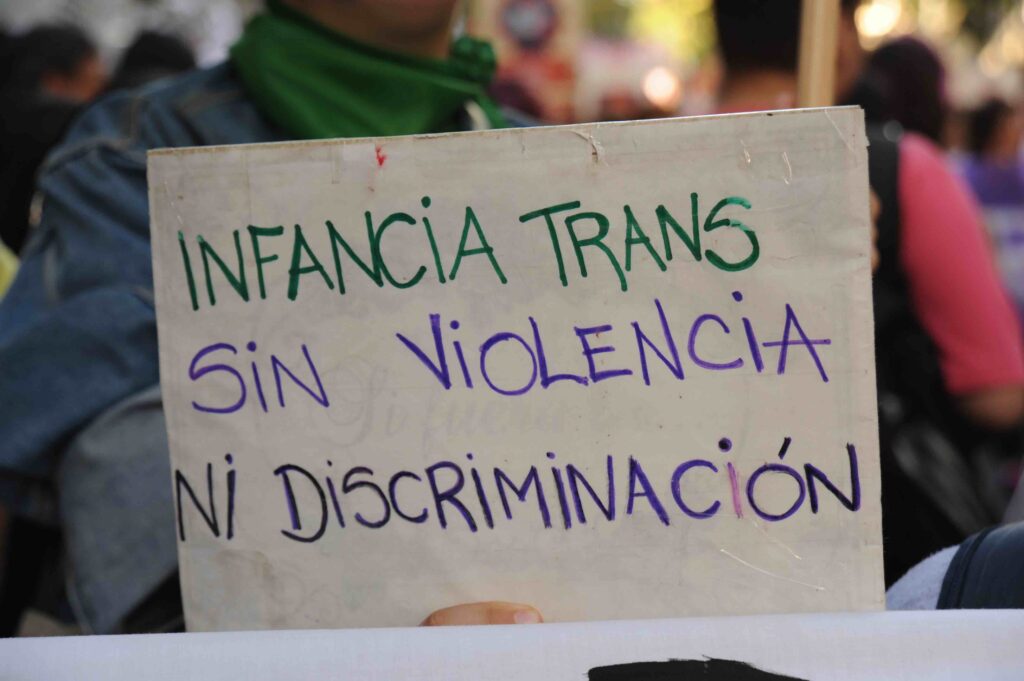
Umi is a six-year-old trans girl. She began choosing clothes and toys that identify her as a girl from the age of 18 months. At age three, she asked her mother to tell her teacher "that she is a girl," or as Umi understands it, "that she is a girl with a penis."
At five years old, Umi was able to obtain her birth certificate, which recognized her identity. This meant that the trans protocol at her school "was not optional," her mother explains. The school readily adopted the protocol.
Despite the openness, Umi and her family decided not to reveal her identity to the entire student body. This, according to her mother, has allowed her to be “just a child.”
But the strategy of remaining invisible creates an emotional burden for Umi. “My daughter anxiously asks, ‘And who knows? And who doesn’t know?’” says her mother. She also emphasizes that Umi doesn’t go to school just to study, but has “many other things on her mind, she has friends and many more worries and responsibilities like any other little person.”
Umi's mother shares that, in addition to adopting a protocol like this, she believes it's necessary to modify the curriculum. "Every class where the different possibilities of bodies aren't mentioned is a class where my daughter is erased (...) bodies are bodies and belong to different genders regardless of what they look like," she says.
Mario's experience: his school opened a mixed-gender bathroom
Mario is a visibly transgender boy of almost 9 years old. The conflict at his elementary school escalated when he cut his hair. “The girls would kick him out of the bathroom because they said he was a boy,” and the teachers wouldn't let him use the boys' bathroom for “safety reasons.”
Gabi, her mother, had to confront the school authorities, who questioned her, accusing her of being the one "putting ideas in her head." Gabi followed the proper protocol and managed to get the principal to sign a statement acknowledging receipt, an act of openness that doesn't always happen.
The mother insisted to the principal that she only wanted Mario to have “the same guarantees as everyone else,” such as the right to use the restroom. The solution was to convert one of the restrooms, normally for teachers only, into a “mixed-use restroom” in a school where the majority of the faculty are women.
Mario is called by the name chosen by his teacher, and when asked how it makes him feel, he said in an interview, "Good, I feel good." His mother emphasizes the importance of this visibility: "We need to give him more exposure so that people know that being trans is nothing bad."
We are present
We are committed to journalism that delves into the territories and conducts thorough investigations, combined with new technologies and narrative formats. We want the protagonists, their stories, and their struggles to be present.
SUPPORT US

FOLLOW US
Related notes

We are present
This and other stories are not usually on the media agenda. Together we can bring them to light.