

Persecution of the Mapuche people: The Justice system sentenced two members of Lof Pailako
In a trial marked by irregularities, the Federal Oral Court of Comodoro Rivadavia sentenced Cruz Ernesto Cárdenas to three years of suspended imprisonment and María Belén Salina to one and a half years for aggravated damage and usurpation.


Share

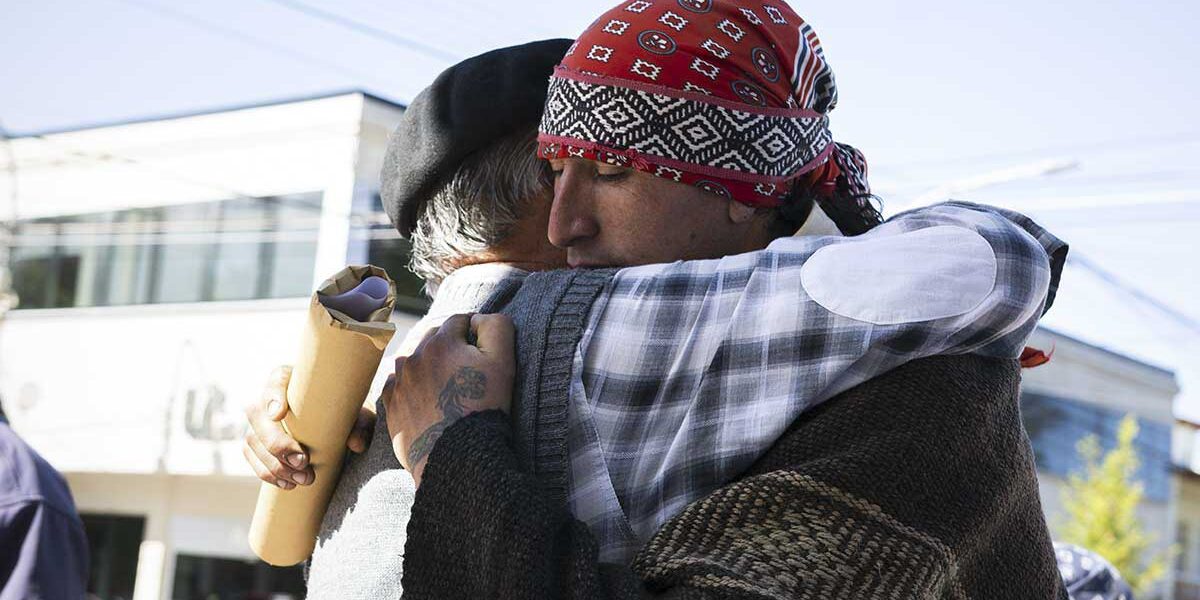
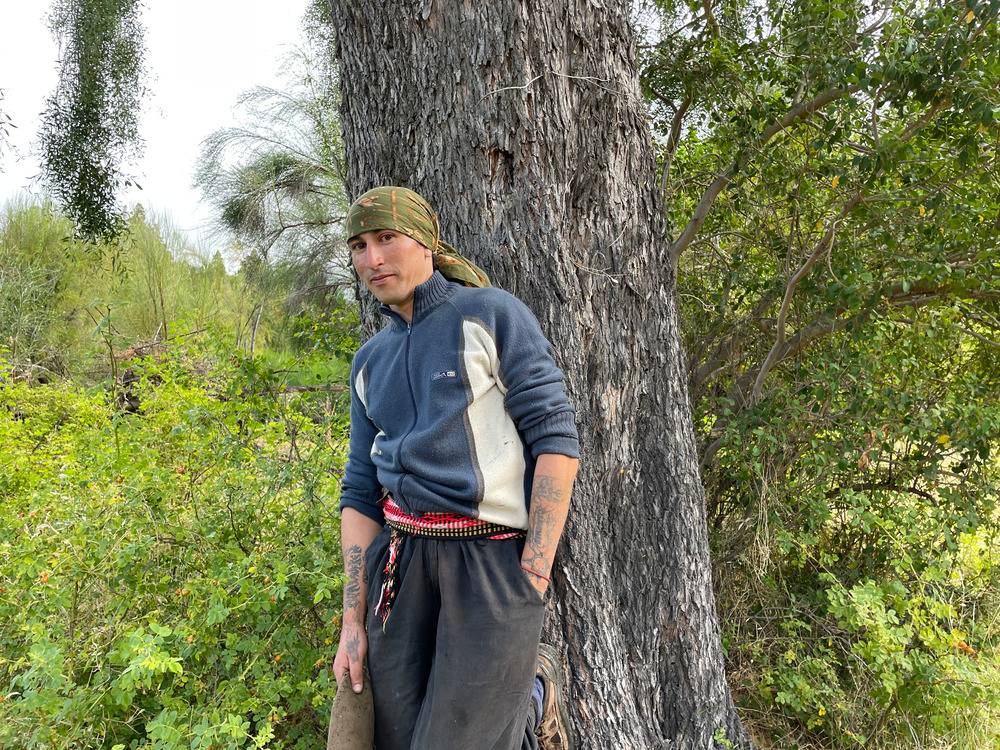
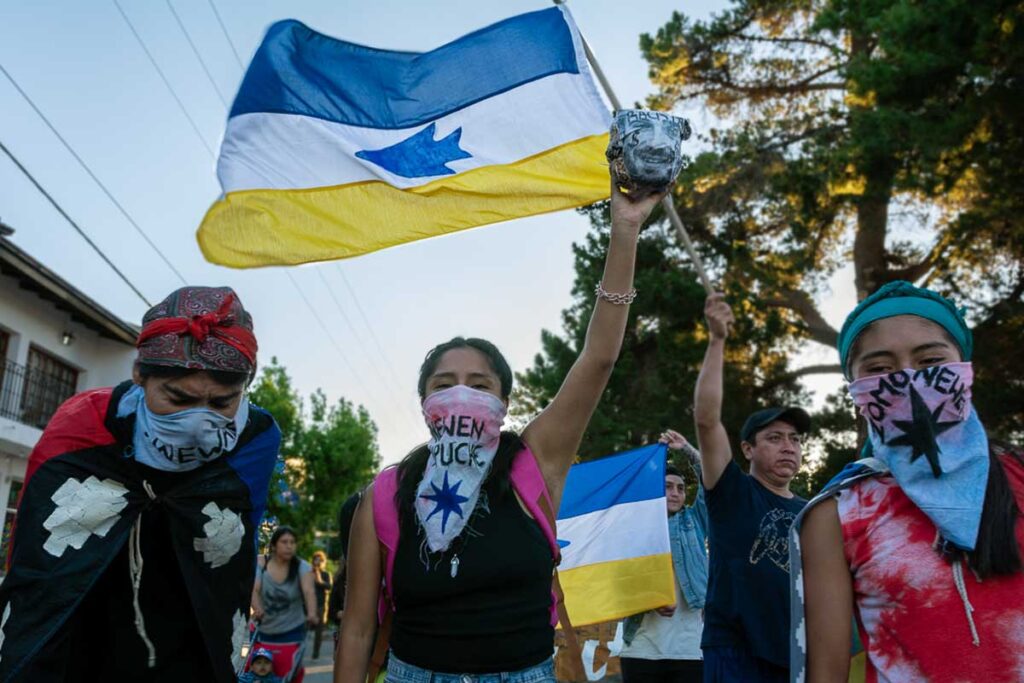
On Thursday, August 21, Cruz Ernesto Cárdenas and María Belén Salina, members of the Lof Paillako, a Mapuche community that claimed a territory within Los Alerces National Park in 2020, . The Federal Oral Court of Comodoro Rivadavia, presided over by Judge Enrique Baronetto, sentenced Cárdenas to three years of probation for trespassing, aggravated damage, and aggravated assault on a public official, while Salina received a one-and-a-half-year suspended sentence solely for aggravated damage. The Salina family (often incorrectly referred to as Salinas) has historically lived within what is now the National Park. In fact, the area is known as Paraje Felidor Salinas, named after Belén's great-great-grandfather. Therefore, she was not charged with trespassing, while Cárdenas, her partner, was.
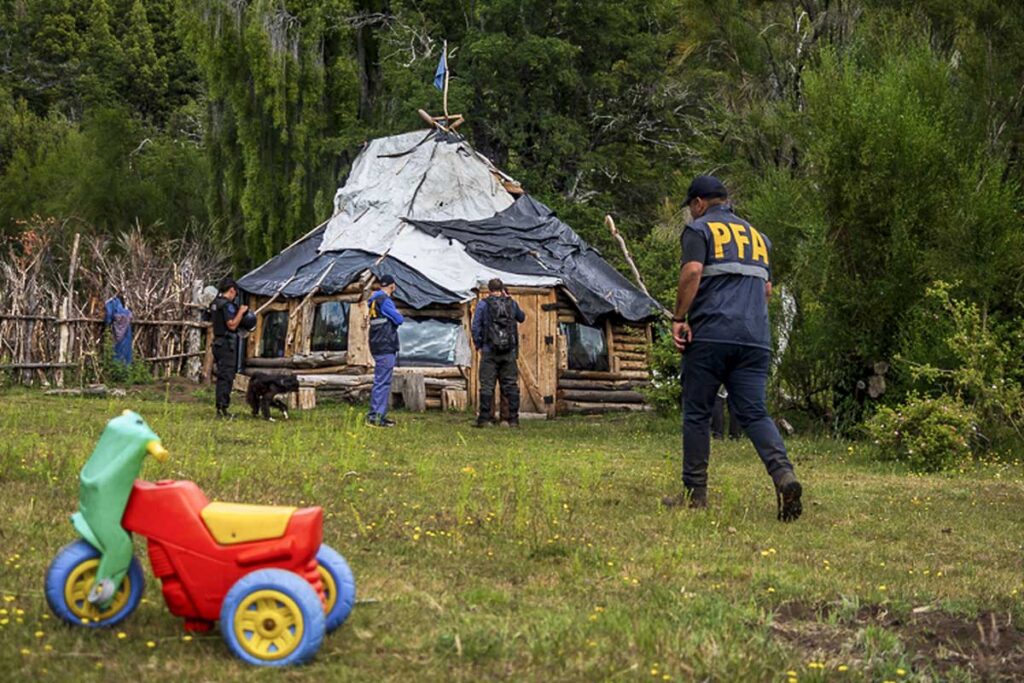
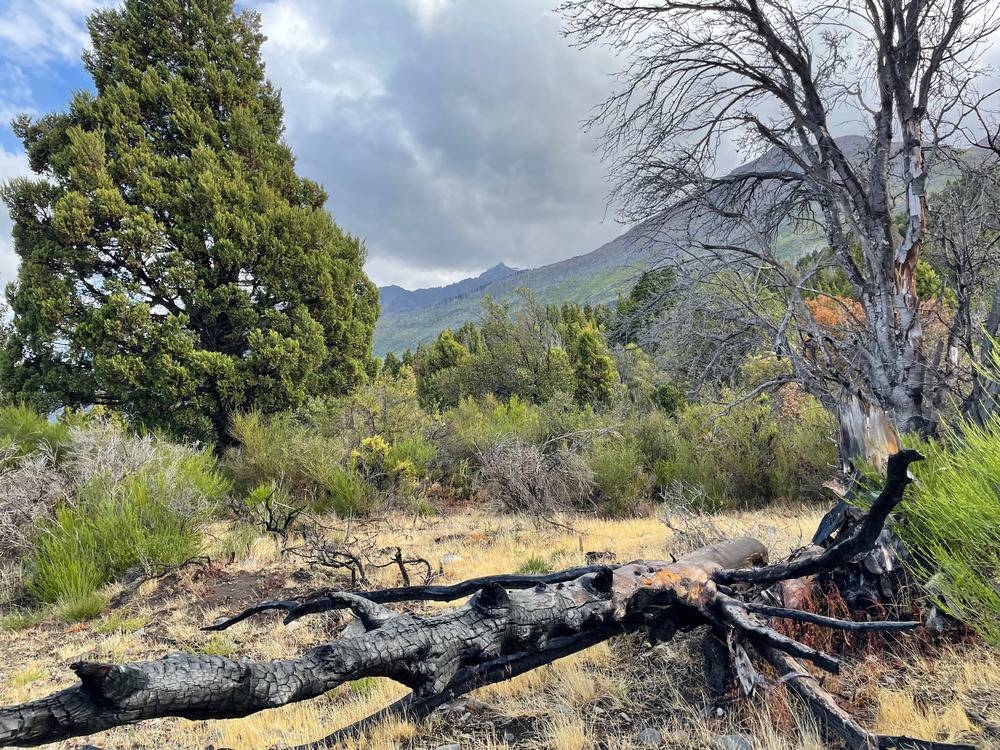
However, while only one person was charged and convicted of trespassing, the entire community was evicted last January. The operation was personally overseen by the governor of Chubut, Ignacio Torres, the then-president of National Parks, Cristian Larsen, and the Minister of Security, Patricia Bullrich. Hundreds of federal officers were also present, but upon arriving at the disputed territory, they found no one.
The Lawyers' Association, the team that led the community's defense, stated in a press release that, once again, there was no impartiality in this trial. They characterized Judge Baronetto as "absolutely controlled by the Federal Prosecutor's Office, which effectively ran the trial from the beginning. This explains why they rejected all of our evidence and accepted everything presented by the Prosecutor's Office."
A trial ends with the final statements of the accused, followed by the verdict. However, after that point, the judge gave the prosecution and the plaintiffs the opportunity to speak again. “An unprecedented decision that some of us veteran lawyers with over 40 years of experience have never seen,” reads the statement from the defense team.
Long drag chase
Belén Salina stated in a press release, “Why so much animosity towards Lemu (Cruz Cárdenas), against us? We never had problems with anyone, you can verify that by talking to the people here. Even the park rangers who are accusing us, we never had any problems with them.”
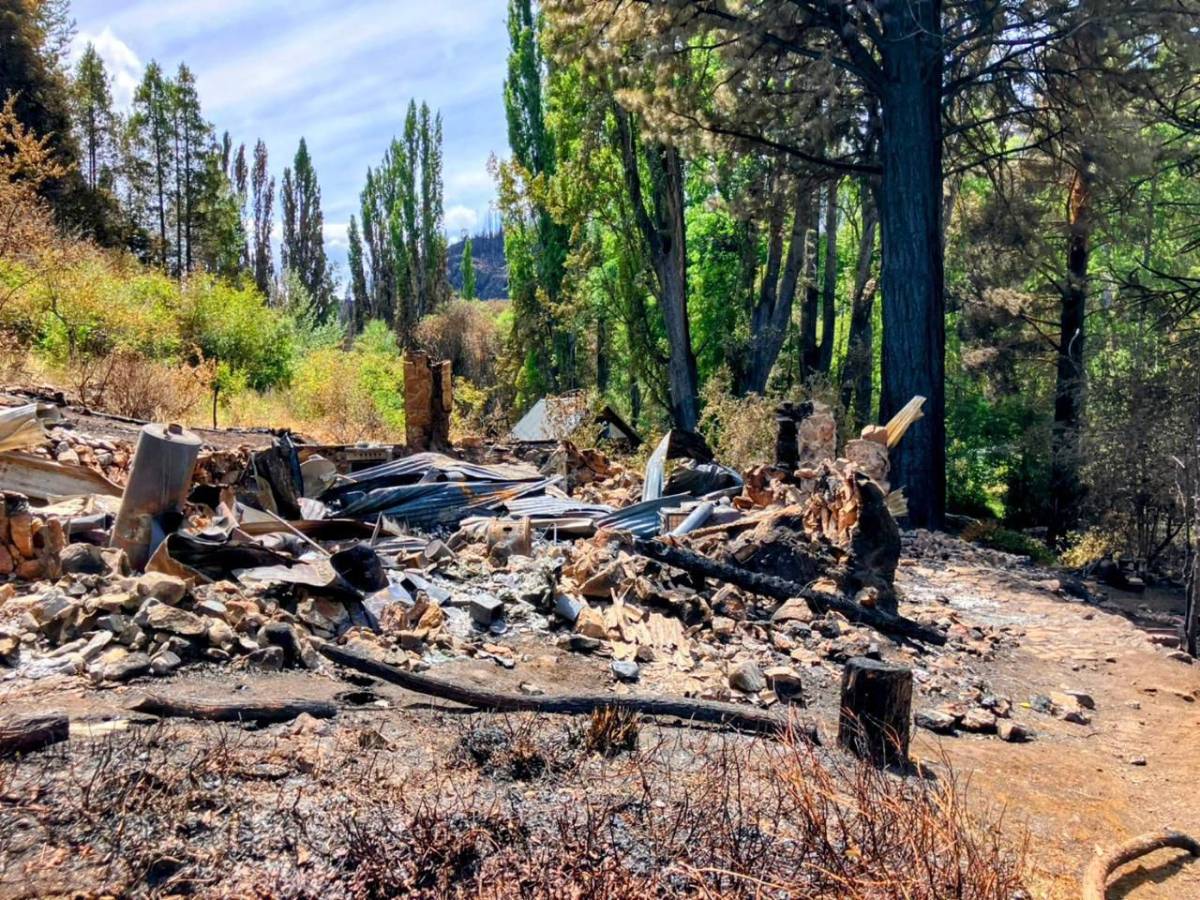
The viciousness he refers to has a long history. In January 2024, during the fires that ravaged Los Alerces National Park, Governor Torres publicly named him by name as the perpetrator, while also offering a reward for information that would clarify the cause of the fire. And he never brought charges against him in court, where, unlike in the media, evidence is required. Salina continues: “The problem is our Mapuche identity, the problem is denouncing the authoritarianism and subjugation that National Parks exercises in this area and the privileges of those with money.”
Eduardo Soares, a lawyer for the Gremial, agrees with this view: “While they were in that place without invoking their Mapuche identity, everything proceeded normally. When they reconnected with their historical memory, their ancestry, their worldview, and made it known, the conflict was immediate.”
Gustavo Franquet, also a defense attorney, says: “We always say that the Mapuche people are clearly being treated as enemies under criminal law.” The problem begins from the outset because the conflict is being handled in the criminal justice system. “In civil court, the judge has to say, ‘Let me see your arguments, and you show me yours, and then I’ll compare them.’ But in criminal court, there’s no comparison of rights. The community is simply judged for an alleged crime.” From there, the judicial imbalance continues to escalate.
During the proceedings, Cárdenas was held in pretrial detention due to alleged "flight risk," despite having voluntarily appeared before the court to participate in the trial. Before the trial began, the defense team warned that of the 21 witnesses they had proposed, the court would only accept five. The argument was that redundancy should be avoided and that many of the Mapuche witnesses would essentially say the same thing. The same criterion was not applied to the prosecution. The prosecution presented 19 witnesses, all of whom were accepted without any suspicion that their testimony would be redundant simply because they were all white.
Discrimination at all levels
Discriminatory treatment and the denial of Mapuche identity permeate all levels of government: judges, prosecutors, and public officials. Franquet recounts the questioning of former park superintendent Ariel Rodríguez Albertani, who filed the initial complaint in 2020: “We asked him, ‘Did you participate in the dialogue?’ His response was, ‘I wasn’t going to participate in any dialogue. I’ve known Cruz Cárdenas my whole life, and I say, he’s not Mapuche.’” A park ranger testified that “Being Mapuche is an ideology.” The prosecution argued that the conflict began when the couple “started to identify as Mapuche.”.
History of dispossession
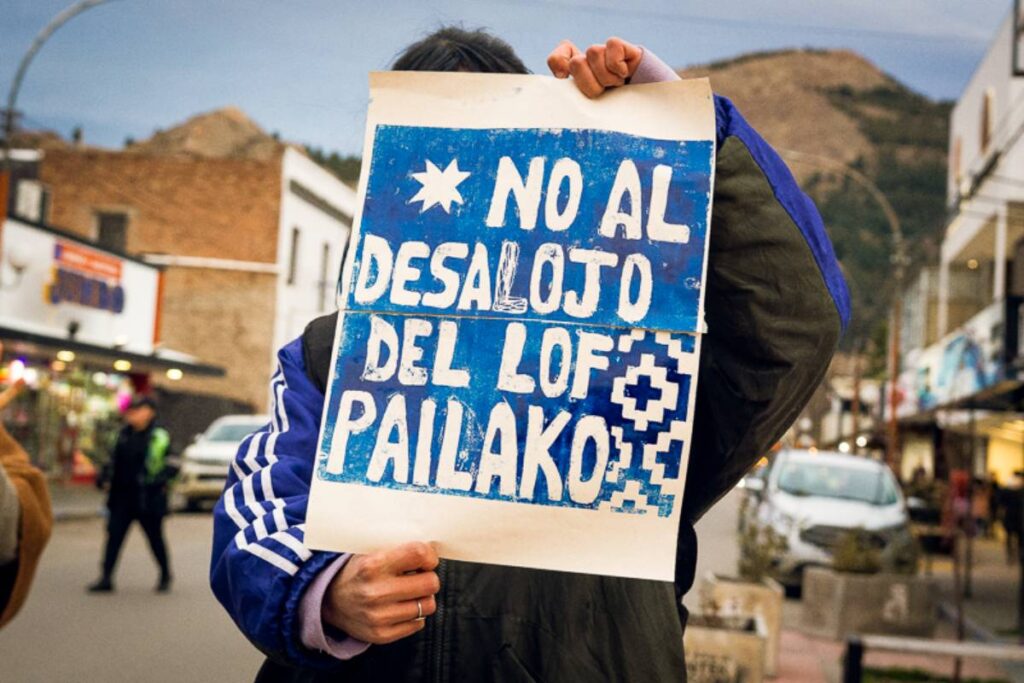
This denial of Mapuche identity is linked to the history of both the place and the people now condemned. Kaia Santisteban is an anthropologist with the Research Group on Altered and Subordinated Memories. She prepared a historical-anthropological report on the community and testified as a witness in the trial.
Santisteban told Presentes that in the first censuses, “the only registration categories were Argentinian and Chilean, and there was no mention of, for example, Indigenous or Mapuche identity. So, to remain there, people understood that they didn't have to identify as Mapuche. And it is from these experiences of inequality that today, the young people of the Paillako community are deciding to begin this process of reclaiming their Mapuche identity in the territory. The day before I was due to testify in court, a National Parks official said publicly, 'Ah, now they put on a headband and suddenly they're all Mapuche.'” This idea of exploiting Mapuche or Indigenous identity to obtain territory is something that needs to be dismantled, because it's what they use to delegitimize these processes. There's a contradiction, because while they use this discourse to say, 'Ah, now they're Mapuche,' they also say, 'But they don't dress like Mapuche and they wear urban clothing, use cell phones, etc., so they aren't.'"
Santisteban recounts that the current settlements in the Lake Futalaufquen area date back to between 1890 and 1920, when many families displaced by the Argentine military conquest of Patagonia were looking for places to settle and rebuild their lives. The border between Chile and Argentina was still not clearly defined, and this was decades before the province of Chubut was created.
“Many of the older residents we spoke with alluded to a life before and a life after the arrival of the National Parks Administration. Specifically, from 1937 onwards (when the Parks Administration arrived), for example, the prohibition of certain ceremonies began, restrictions were placed on free movement through the territory, grazing fees began to be charged, and the Parks Administration's policy of recognizing precarious permits for squatting meant that only one member of the family was recognized, and the rest of the family members were not recognized in those permits and had to leave the area.”
"A semi-feudal situation"
Gustavo Franquet says, “The situation in Los Alerces National Park, to me, has vestiges of a semi-feudal system. When the National Park arrived, it found a lot of people who had always lived there. These people were told that they had no rights to the land they lived on. And that from then on, these lands belonged to the National Parks Administration, to the National State, and that they could be granted the right to live there. To this day, these people live there without being owners at all. The famous concept of private property, which is supposed to be above everything else, isn't enough for them. These people are just borrowing the land. The thing is, of course, because they are Indigenous, because they belong to native communities, they weren't granted any rights, nor were they expropriated, nothing.”
Belén Salina's statement also reflects this: “Sometimes I try to understand and think, why so much injustice? Why this circus? So many questions and I can't find an answer. I think it's the same thing they did to our ancestors, that's why they hid, because of the exhaustion, the weariness, and the pain that all this generates. We can't freely be who we are.”
No way out
As is typical in trials involving Mapuche land disputes, the court avoids applying current Indigenous law by focusing instead on the legal process. It states that Indigenous peoples have constitutional rights but should demand them through the appropriate channels.
Regarding this, defense attorney Franquet referred to the testimony given at the trial by Gabriel Nahuelquir, of the Lof Nahuelpan community and a member of the Provincial Indigenous Participation Council. “We asked him, ‘If you follow the state procedures to obtain land, do you succeed?’ And he said, ‘No, I don’t know of any cases.’ Was that Nahuelquir’s opinion alone, or ours? No, the Inter-American Court, in a ruling against Argentina, said exactly the same thing. It stated that, 30 years after the 1994 Constitution, Argentina does not have a law that regulates and makes effective the right of Indigenous peoples to access land. It’s the same old debate. They say, ‘No, well, the right isn’t being discussed, but rather the method, the process, the facts.’ Well, what is the correct process? There isn’t one.”
We are present
We are committed to journalism that delves into the territories and conducts thorough investigations, combined with new technologies and narrative formats. We want the protagonists, their stories, and their struggles to be present.
SUPPORT US

FOLLOW US
Related notes


We are present
This and other stories are not usually on the media agenda. Together we can bring them to light.