

Mexico: Why trans women have the right to use priority subway cars
After a trans woman was prevented from using a women-only carriage, a protest is being called in front of the Mexico City Metro.


Share

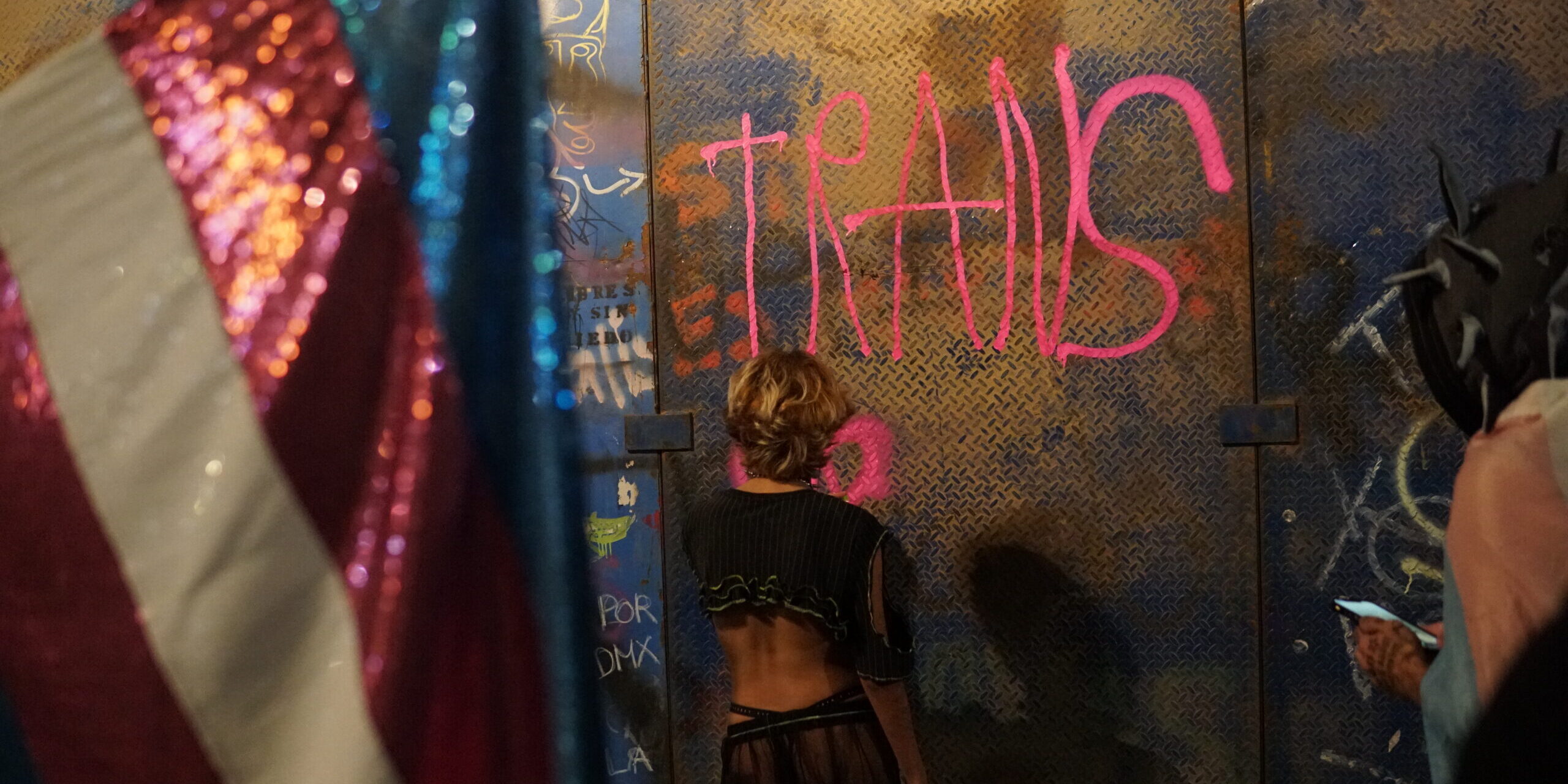
MEXICO CITY, Mexico. Alexa, a trans woman, reported on social media that a police officer prevented her from accessing the women-only car on the Mexico City subway.
The incident was seized upon by far-right politicians and trans-exclusionary feminist groups. All expressed support for the police action and posted transphobic and criminalizing messages against trans women on social media.
On Saturday, an LGBT organization will hold an action to protest the act of discrimination by the police.
The rights of trans women
Women-only cars on the Mexico City Metro have existed since 2000. Their creation responded to an undeniable reality: the high rates of harassment and sexual violence that women face on public transportation. These spaces aim to be a protective measure and provide safe access to mobility, a right that must be guaranteed to all women.
Trans women also have the right to access those train cars. Because they experience similar vulnerability in both public and private spaces. 78% of trans women in Mexico City experience verbal and psychological violence, according to the 2025 Survey of Trans Women in Mexico City, conducted by the Center for Support of Trans Identities.
In 2011, following complaints of discrimination, the Mexico City Human Rights Commission ordered subway authorities not to deny transgender women access to priority cars. And in early 2025, the Supreme Court of Justice of the Nation (SCJN) recognized that excluding transgender women from spaces designated for women constitutes discrimination.
These are not isolated incidents
These are not isolated incidents: the same thing happens with access to restrooms and other gender-segregated spaces. These acts are illegal, cause moral harm, and send a collective message of exclusion to the entire trans population.
“An act of discrimination is not only an attack against the person who suffers it, it is also a message to the community that shares those characteristics for which they were discriminated against,” emphasizes Jessica Marjane, lawyer and coordinator of Trans Youth, an organization that provides legal support to trans people, Presentes
Exclusion impacts not only trans women, but also anyone who doesn't fit hegemonic standards of femininity. Transmasculine and non-binary people also experience these dynamics of surveillance in public spaces.
In 2018, the National Survey on Discrimination based on Sexual Orientation and Gender Identity found that in Mexico, 51% of trans and non-binary people were excluded from using bathrooms according to their gender identity.
“The right wing rewards discrimination and those who practice it.””
The political reaction to Alexa's experience of discrimination was swift. Far-right sectors and trans-exclusionary feminist groups seized upon the incident to spread the idea that trans women are a threat: a rhetorical device that seeks to reinstate surveillance over bodies, dictating who "can" or cannot occupy a space in the name of security, when in reality it legitimizes discrimination and prejudice.
But they forget that this surveillance also impacts women and people who don't conform to their hegemonic ideas of femininity. This is already happening in the field of sports at the school level in the United States, affecting cisgender girls and women , for example.
“The right wing rewards discrimination and those who practice it. That’s why Eduardo Verastegui and Lilly Telléz (two right-wing politicians) publicly showed their support for it, saying it’s okay to ‘correct’ a person. They take advantage of the surveillance of bodies and at the same time normalize the matrix of how a person should look, which undermines the free development of personality,” Marjane explains.
Even Senator Lilly Tellez of the National Action Party (PAN) exploited Alexa's experience to promote her proposed law seeking to amend the Constitution so that "man and woman" are legal terms "based on biological sex." The aim of her proposal is to legally exclude transgender people from their rights and from public spaces.
Discrimination is a crime and causes moral harm
Denying transgender people access to a priority subway car or a restroom constitutes discrimination. Discrimination involves “ treating people differently, affecting their rights without valid justification, which perpetuates social inequality and can have collective effects ,” according to the Council to Prevent and Eliminate Discrimination in Mexico City (Copred) .
From COPRED we inform you that we are addressing the acts of discrimination that recently occurred in the Mexico City Metro, which we strongly condemn.
— COPRED CDMX (@COPRED_CDMX) August 15, 2025
In 2025, the Supreme Court of Justice of the Nation (SCJN) ruled on direct appeal 15/2020 , filed by the organization Trans Youth, and the ruling was clear: preventing trans women from accessing women's restrooms is a discriminatory act. It also recognized that there is moral and punitive damage of an economic nature for companies and individuals.
This ruling sets a precedent by recognizing the structural impact of these types of discriminatory acts.
“There is an emotional impact that disrupts a person's development and damages their perception of what they consider a safe space. And above all, it alters their way of relating to public and private spaces. These are traumatic acts that persist and generate anguish and anxiety; I say this as a survivor of one of these acts of discrimination that left me with lasting effects,” Marjane shares.
Prevention is repair
The Secretariat of Citizen Security reported that the police officer who discriminated against Alexa will receive training on gender equality and respect for the rights of LGBTQ+ people. She will also face disciplinary action.
Trans Youth believe that prevention is also part of the reparation for structural violence against trans people.
“Sentences and training cannot be the only measures of redress. We need preventative models, healing models, and other educational approaches that explain how transphobia affects not only trans people,” Marjane emphasizes.
Priority carriages were not created to exclude
Ensuring that trans women have access to women-only train cars is to recognize their identity, their right to safety, and their right to move through public spaces free from violence. These cars exist because sexual harassment against women is real and persistent; excluding trans women from this space not only exposes them to greater risks but also reinforces the idea that their identity is questionable.
@abcnoticias.mx 🔴⏯️At the Merced station on Line 1 (pink line) of the Mexico City Metro, a security guard prevented Alexa Andrade, a trans woman, from entering the women-only car. According to Andrade's testimony, the security guard denied her entry, saying, "You're a gentleman." The incident has sparked outrage on social media. 📹: Alexa Andrade
♬ Original sound – abcnoticias.mx
The right wing and trans-exclusionary feminist groups exploit cases like Alexa's because they allow them to reinstate old fears, prejudices, and moral panics under the guise of safety. However, the true purpose of priority train carriages was never to exclude trans women.
When trans women are expelled from these spaces, not only is their right to exist and be safe violated, but the reason why the priority carriages were created is also weakened.
On Saturday, August 23, at 12, organizations are calling for a "massive entry" to the metro at the Glorieta de los Insurgentes.
We are present
We are committed to journalism that delves into the territories and conducts thorough investigations, combined with new technologies and narrative formats. We want the protagonists, their stories, and their struggles to be present.
SUPPORT US

FOLLOW US
Related notes


We are present
This and other stories are not usually on the media agenda. Together we can bring them to light.