

Queer Opera, a stronghold for sexual diversity, popular music and operatic singing
The artistic project of twins Luchi and Ferni de Gyldenfeldt, Queer Opera, has arrived on the Buenos Aires theater scene to expand the boundaries of a genre with a binary tradition. Self-management as an option so that no one is left out.


Share

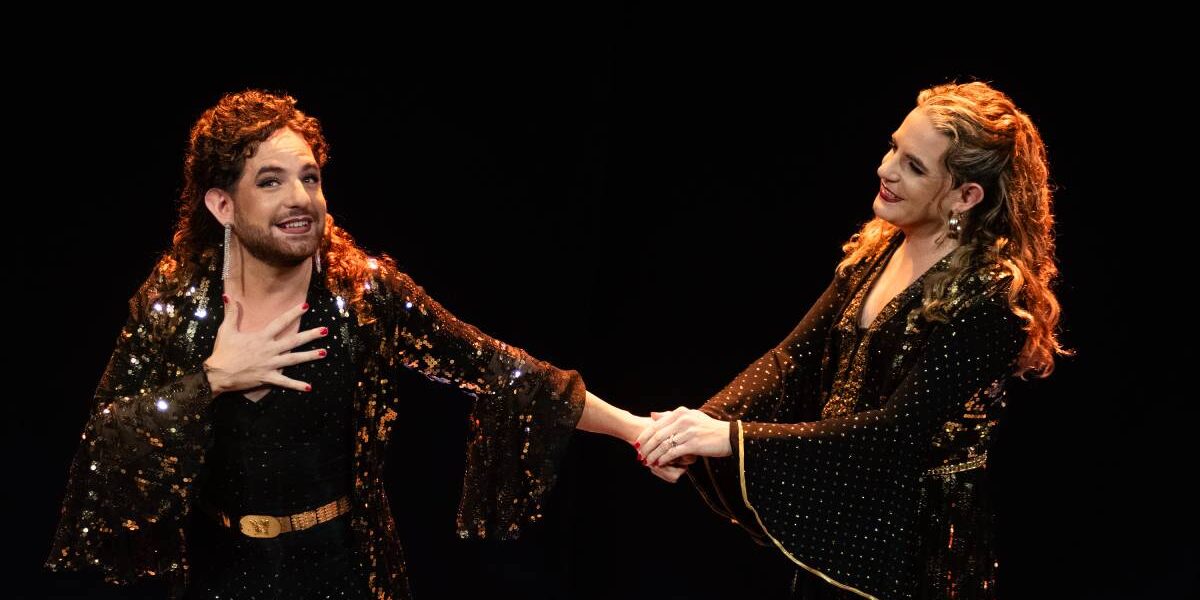
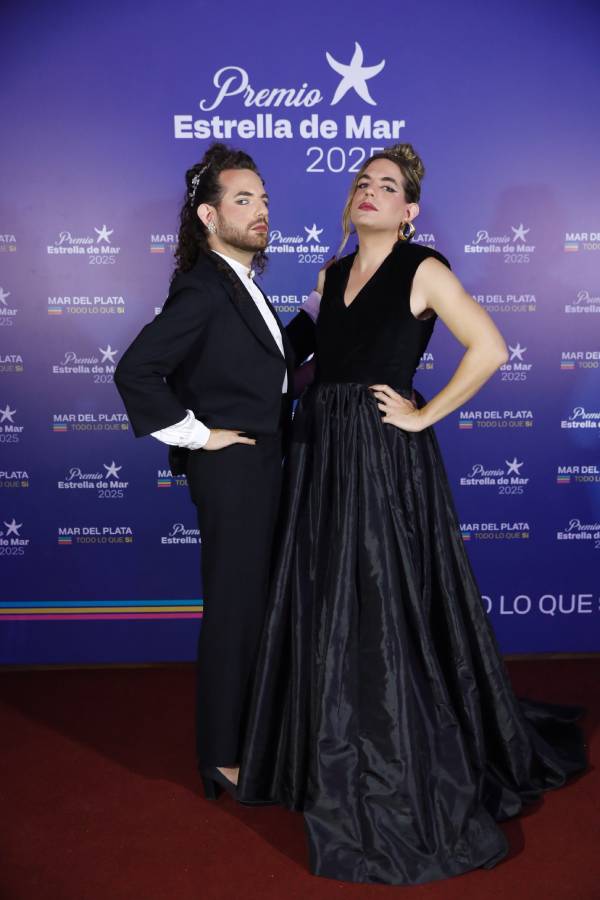
BUENOS AIRES, Argentina. “And the award goes to… Queer Opera !” announced the host of the Estrella de Mar awards ceremony. Twin sisters Ferni and Luchi de Gyldenfeldt, creators of the show, took a moment to hug each other before rushing to the stage to receive the award for Best Alternative Show of the 2025 theater season in Mar del Plata.
“We want everyone to know that sexual and gender dissidents are making their presence felt on every stage, from Cosquín to the Teatro Colón! We exist and we are legitimate performers and artists! Here we are producing and creating the most beautiful things for our country, and for the world!” exclaimed La Ferni, holding the award high, in front of an audience of figures and leading figures from the artistic field gathered at the Gran Hotel Provincial that night of February 5.
In August, the sisters will premiere Queer Opera at the Picadero Theater in Buenos Aires
Voices with identity
The idea for Queer Opera began to emerge in 2016 at a series of events at the cultural center for diversity, Casa Brandon . There, at some point during the evening, the sisters were invited to go on stage to sing. They surprised the audience by performing opera arias and duets.
At that time, the project hadn't yet taken the form of a full-fledged performance. It was a playful space where La Ferni and La Luchi—both trained in operatic technique—recreated scenes from their childhood, singing opera together at home. They were encouraged to share their art in a different context, with greater freedom to choose their stage presence, and before an audience that enthusiastically applauded their performances.
Performance after performance, that experimentation took shape. It became a structured work that questions gender roles not only in culture but also in artistic expression. And it does so through a traditional and highly regulated language like opera, where vocal performance has historically been linked to biological sex.
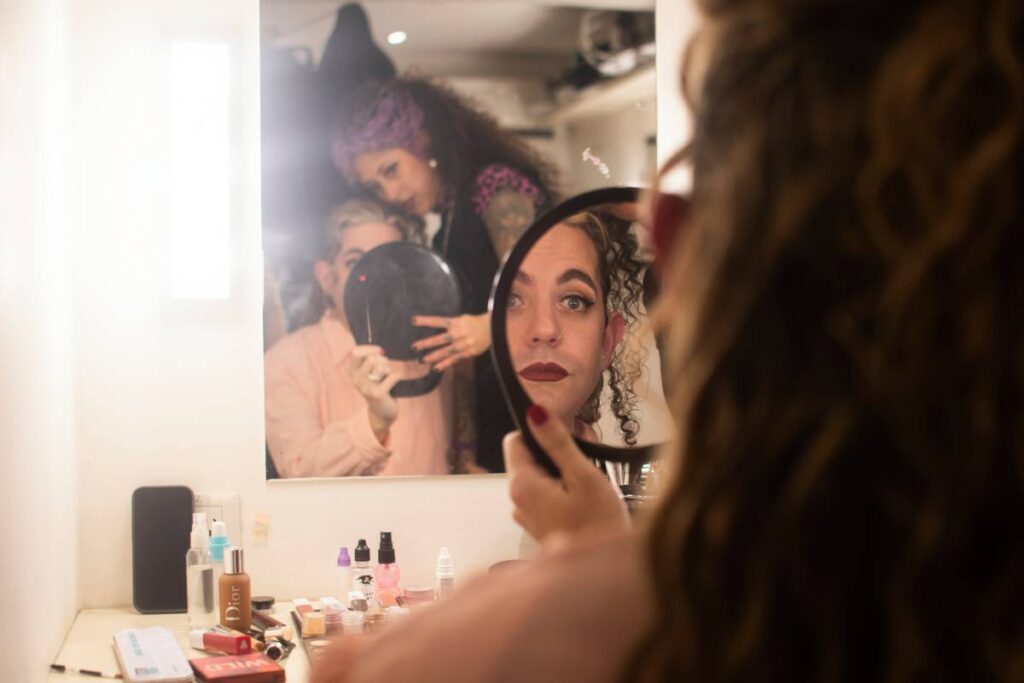
While Queer Opera was giving its first performances in small independent venues, Luchi was graduating with a degree in Musical Arts from the National University of the Arts (UNA) . For her, the project shared with her sister was a vehicle that allowed her to channel a personal search for identity through singing.
“It was in this show where I allowed myself to be La Luchi before I was La Luchi. I think it’s important to mention that I also needed to transition vocally and, after a lot of study, this countertenor that I am now appeared, with specific teachers who collaborated in this research of how to deal with my sensitivity, my vocality, and my expression that was developing and began there.”
A game between sisters, a paradigm shift
At the beginning of her training as an opera singer, Luchi Gyldenfeldt was assigned the baritone vocal range—one of the lowest voices in the spectrum—without the possibility of considering the higher register she felt she possessed. Her experience with Queer Opera encouraged her to explore that other possibility with greater confidence.
Today, she is perfecting her countertenor vocal range—a high-pitched voice—in the Baroque singing specialization at the Higher Institute of Art of the Teatro Colón , where she will make her solo debut in the main hall at the end of August. She is also the head professor of the first Chair of Dissident Lyric Singing , a space for vocal exploration created in 2021 as part of the academic offerings of the university where she trained.
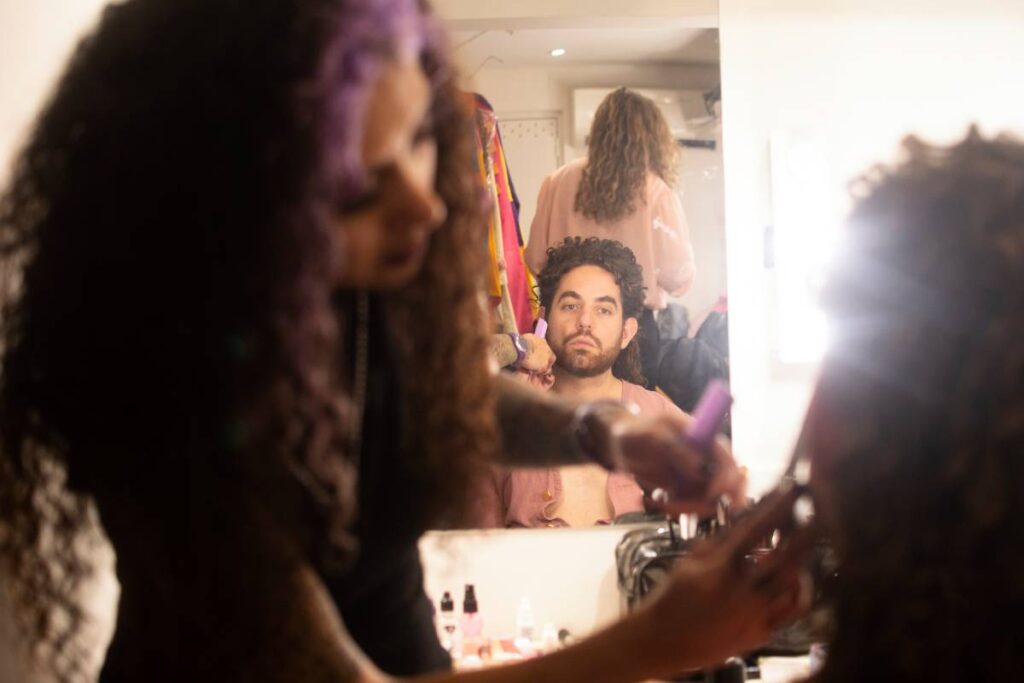
“Taking on the role of a professor at the university seemed crazy to me at first. Later I understood that it was incredibly important and that I could open up a space—a trench—within the UNA (National University of the Arts) and within classical music to explore the issues surrounding dissident identities. In my vocal transition, I felt the need for support from the community, and that's something that's still lacking. Not only in classical music: there's a shortage of trans professionals, psychologists, lawyers… ”.
Her sister, La Ferni, is a folk singer, teacher, and communicator. She also faced challenges in another musical sphere: that of traditional folk music. This led her to become the first non-binary solo artist at Argentina's most important Folklore Festival in the city of Cosquín, Córdoba . Despite initially winning, in order to complete her participation in the competition with her gender identity, the artist had to file a complaint with the National Institute Against Discrimination, Xenophobia, and Racism (INADI)—an organization dissolved in 2024 by the government of Javier Milei. This resulted in the modification of the festival's statutes, created in 1965, which only distinguished between male and female soloists.
“ Queer Opera was the place where I could begin to show who I wanted to be,” La Ferni recalls. “At the time, it was about moving away from the binary, from an imposed place, a single way of being. It was pure play and exploration.”
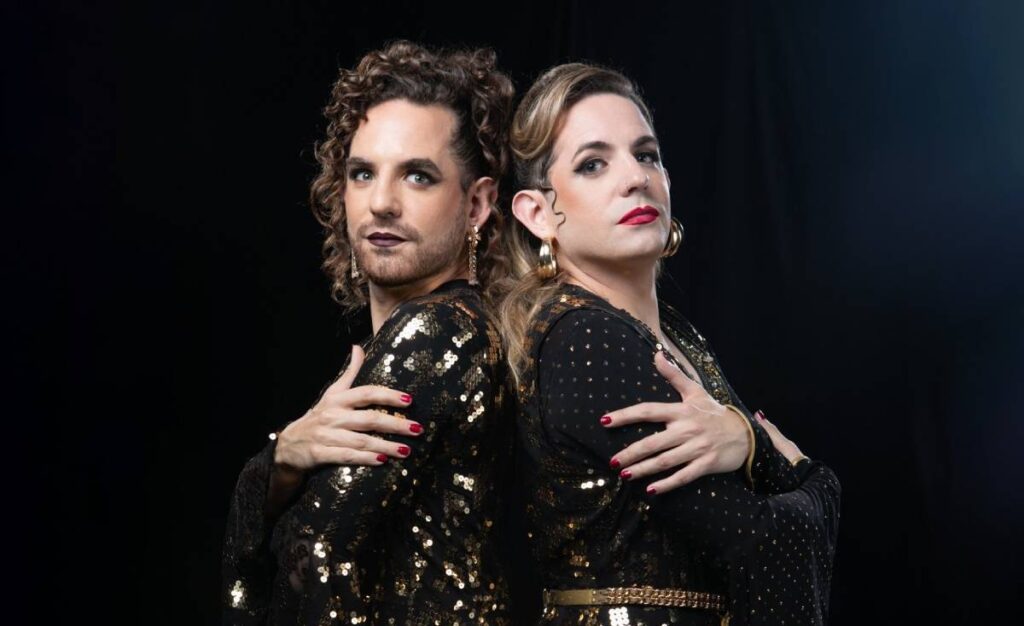
“ Queer Opera is our way of being, both of us, in music.”
Ferni, like her sister Luchi, comes from a 'lyrical cradle' – as she calls it – but decided to dedicate herself fully to popular and folk music.
“I distanced myself from the world of opera by choice. It’s very exciting for me, these days, to embrace the fact that my vocal identity, within the popular singer that I am, is that of a lyric singer. I wouldn’t be La Ferni if I weren’t this popular baritenora ( Editor’s note: a term coined by La Ferni to merge the low vocal range of a baritone and the high range of a tenor ) with a background in Italian bel canto that allows me to create nuances, projections of sound, colors with which I also paint my interpretations of the popular songs I choose to sing.”
Alongside her solo career and the project she runs with her sister, La Ferni produces the “Peñas Arcoiris” ( in dirt courtyards and at festivals in various provinces across the country. Meanwhile, she is producing her first album and planning her second tour of Spain.
While some of the twins' personal stories are brought to life in their joint project, La Ferni clarifies that the work doesn't represent their entire lives, nor the entirety of their bond as sisters. "Today, Queer Opera is our way of being together in music," she explains.

New scenarios for the fight
The night they won the award in Mar del Plata, the sisters were on stage like never before: honored, for the first time, with an award for their dissident lyrical show. A few months earlier, the show had been nominated in the Best Music Hall, Café Concert and/or Musical Variety category at the Hugo Awards for musical theater.
“We’re surprised that Queer Opera has established itself, in recent years, as a musical theater spectacle in the world of ‘spectacular’ entertainment, something unrelated to folklore or opera. Even though our work has elements of both genres,” says La Luchi . “Receiving the Estrella de Mar award showed us that what we do is connected to Moria Casán in Brujas , to Flor Peña in Mamma Mia , to Ricky Pashkus… That was a real surprise for us.”
Dissidents on stage
In 2025, the twins arrive at a new venue for Queer Opera : the Teatro Picadero, a historic 300-seat theater in the heart of Buenos Aires. There, the show shares the bill with renowned figures from Argentine theater and television.
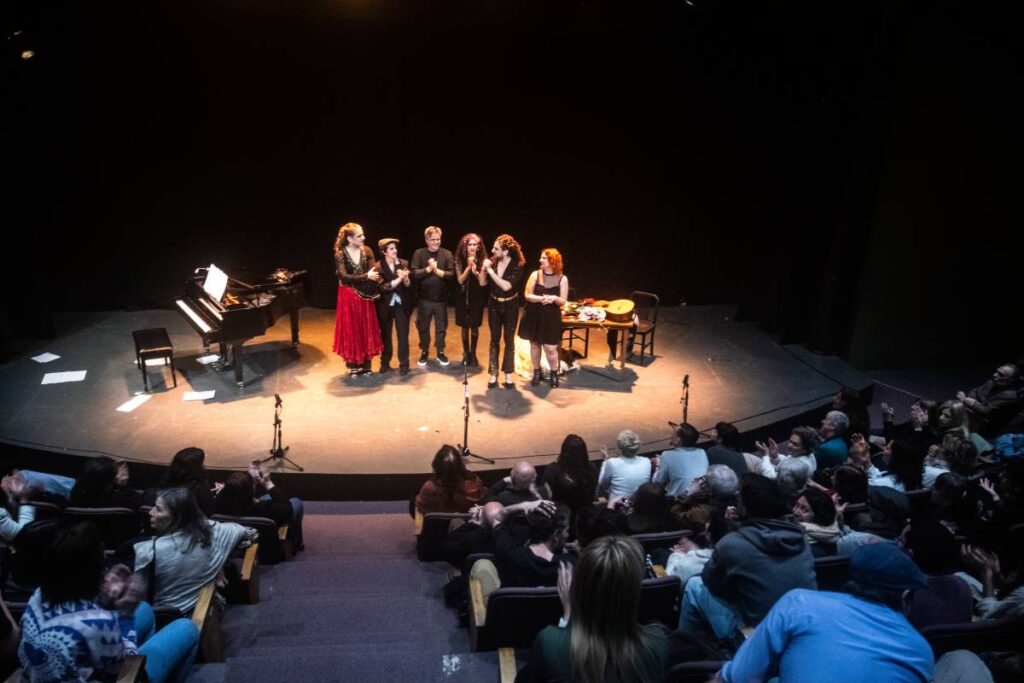
For La Luchi, the fact that Queer Opera is being presented in a venue of this magnitude expresses a political stance. “In a context where so many rights are being taken away and hate speech and online violence are being legitimized—and real-world violence, because hate crimes against the LGBTQ+ community have increased dramatically— the fact that our show isn't in a basement but displayed in a shop window is both a gamble and a provocation. Although we're not doing this to provoke. But what did they think? That we were going to go back to where we were? To just gathering in homes? The fact that this is happening in the second year of this disastrous government also seems to me to be a response. It's a reassessment, a way of saying: 'Here we are.'”
Embrace, joy, and resilience
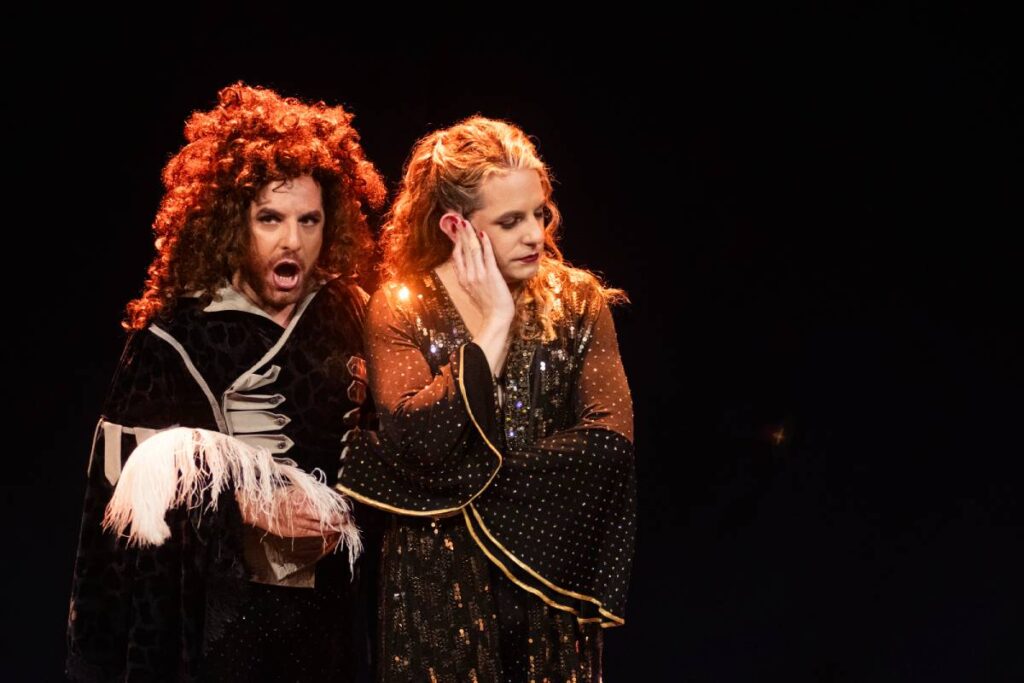
Just as Queer Opera is an artistic endeavor imbued with a critical perspective, it also serves as a refuge through humor. “This project continues to be an alternative for generating relaxation through enjoyment and pleasure,” says La Ferni. “ Queer Opera is an embrace and a haven that people choose to have a good time. In these times we are living in, it’s good to let ourselves be embraced, to let ourselves be moved in a loving space , one that isn’t flooded with violence, a lack of empathy, or the normalization of things we no longer want to normalize.”
Another characteristic of this project is its self-management, an even more challenging form of production in a context where public institutions dedicated to promoting arts and culture in Argentina are being dismantled. Regarding this, La Luchi states: “I like the show to be both genuine and professional. The singers are professionals, the pianist is professional, the lighting is professional, and it’s a self-managed show with an affordable ticket price.””.
For both of them, it's "a self-managed and independent project for our dissident popular culture ." The twins not only star in and direct their show, but also produce it and coordinate the team that accompanies them at each performance.
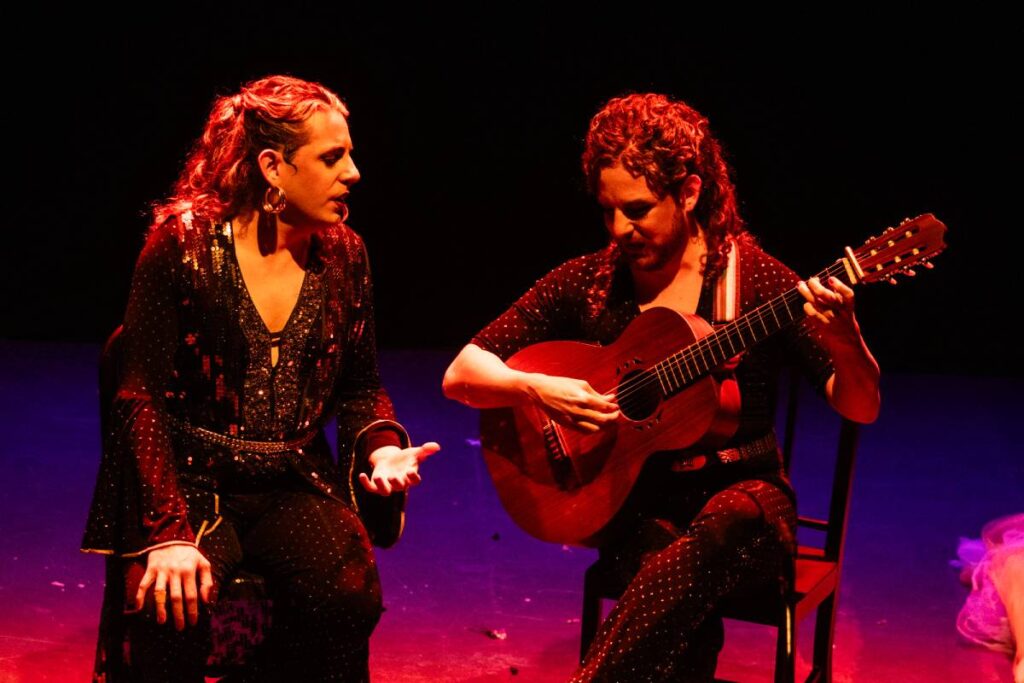
“Being on the Picadero program is a huge undertaking, requiring us to live up to the demands of a late-night winter season, with the challenge of making it accessible to everyone who wants to see it,” says La Luchi. She concludes: “I like to think that Queer Opera opens up a world where two trans sisters—one a transvestite and the other a non-binary trans woman—can legitimately occupy an important place in the cultural battle we are waging right now, here and around the world.”
Queer Opera will be presented at the Picadero Theater (Pje. Santos Discépolo 1857, CABA) on Saturdays, August 16, 23, and 30 at 11:59 PM. Tickets can be purchased through PlateaNet.com , and promotions are available from the project's Instagram account .
We are present
We are committed to journalism that delves into the territories and conducts thorough investigations, combined with new technologies and narrative formats. We want the protagonists, their stories, and their struggles to be present.
SUPPORT US

FOLLOW US
Related notes



We are present
This and other stories are not usually on the media agenda. Together we can bring them to light.