

Explainer: What are hormone blockers?
Scientific evidence supports their use in treatments for transgender youth, but governments criminalize them. What are hormone blockers? The risks of denying access to gender-affirming healthcare.



Share

Several studies demonstrate that gender-affirming medical treatments for transgender adolescents are crucial in improving their psychological and emotional well-being, reducing levels of depression, self-harm, and suicide . The use of hormone blockers is among these treatments. However, political efforts to prohibit gender-affirming healthcare for transgender people, especially youth, are intensifying and jeopardizing their access.
Misinformation about what constitutes gender-affirming care is used as a political weapon to criminalize not only trans people and their families, but also healthcare professionals who provide this support.
In Argentina, access to gender-affirming healthcare services for young people was the first target chosen by Javier Milei's government against transgender people. He modified the Gender Identity Law by decree to prohibit it for adolescents, although this was later declared unconstitutional by the courts. Now, a group of members of parliament from the PRO and La Libertad Avanza parties have introduced a bill in Congress to amend the Gender Identity Law . This bill seeks to remove coverage for gender-affirming interventions and prohibit treatments for people under 18.
To understand what blockers are, it is necessary to understand the concept of gender-affirming health .
What is gender-affirming health?
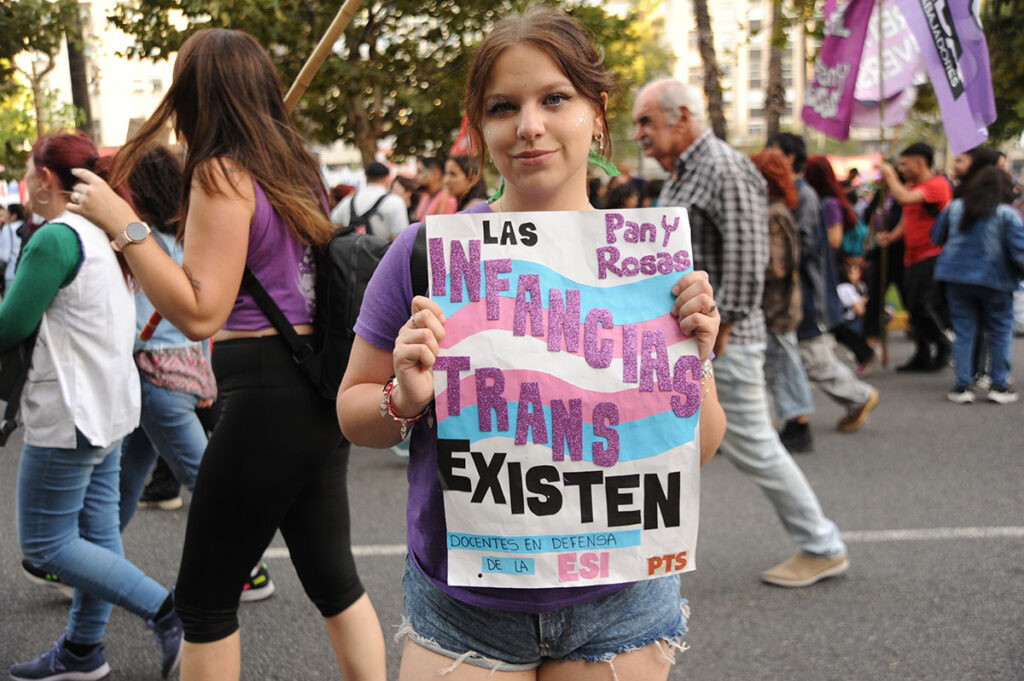
From a medical perspective, gender-affirming health is a multidisciplinary process that, in the case of adolescents, may involve suppressing puberty with the use of hormone blockers to delay or pause the development of secondary sexual characteristics typical of that stage. This is a reversible process.
Puberty suppression is a component of medical care supported by scientific evidence from the American Endocrine Association , the World Association for Transgender Health ( WPATH ), the American Medical Association , the American Academy of Pediatrics American Psychological Association , and the American Academy of Child and Adolescent Psychiatry .
In the case of trans youth, the Endocrinology Association states that “gender affirming health care involves the participation of a multidisciplinary team in endocrinology, physical and mental health that accompanies peripubertal youth (encompassing the physical and hormonal changes that occur just before and after the onset of puberty) to determine if they can access hormone blockers.”
What are hormone blockers?
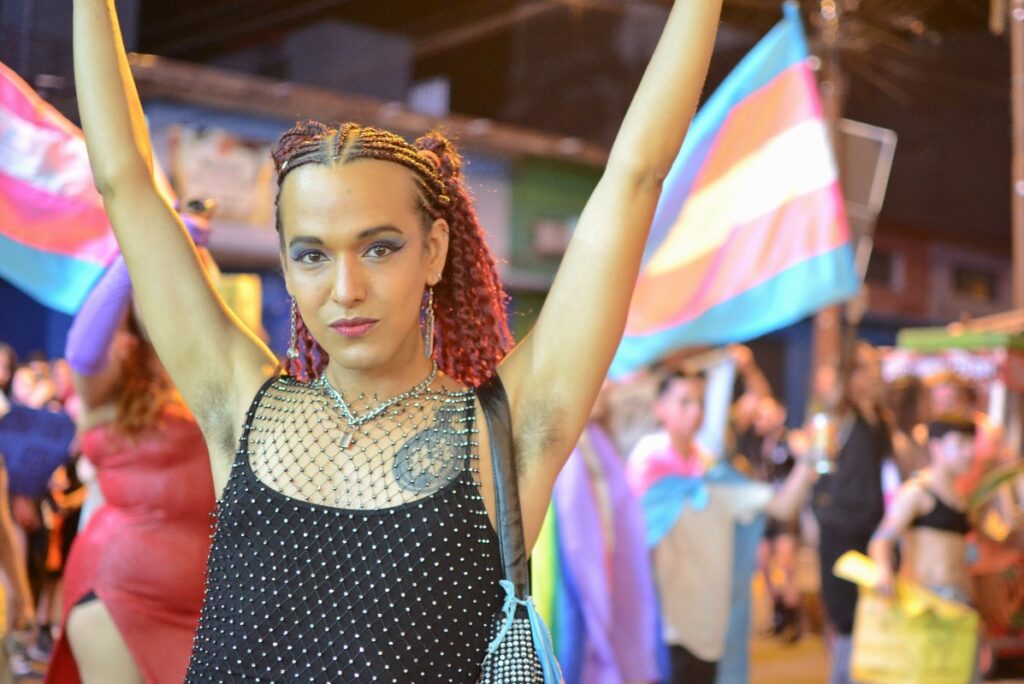
For trans and non-binary youth who become aware of their gender at a young age , going through puberty can cause distress and dysphoria. This is an emotional state characterized by profound discomfort, dissatisfaction, or distress that a trans person may experience as their body develops in a gender that is not their own.
A medical team may prescribe hormone blockers, in consultation with parents and therapists. The goal of these medications is to temporarily halt the physical and developmental changes that accompany puberty. In fact, they are also called "puberty blockers."
Puberty blockers: how they work
Hormone blockers interrupt the production of follicle-stimulating hormone (FSH) and luteinizing hormone (LH). This blocks the production of estrogen or testosterone. As a result, transgender adolescents do not develop unwanted secondary sex characteristics; for example, transgender boys do not develop breasts, and transgender girls do not develop facial hair.
Puberty blockers do not stop an early stage of sexual maturation called adrenarche, which can cause acne, growth of pubic and underarm hair, and changes in body odor.
Stephen Rosenthal, medical director of the Child and Adolescent Gender Center at the Benioff Children's Hospitals of the University of California, San Francisco, and co-author of the Endocrine Society's 2017 guidelines for the medical care of transgender people , recommends starting treatment with puberty blockers as soon as possible, when breast budding or testicular enlargement begins.
“They are not an experimental treatment”
“These puberty-pausing drugs are widely and safely used in many different populations. They are also used in adolescents to treat endometriosis, adjust hormone levels in people with prostate and breast cancer, pause menstruation in those undergoing chemotherapy, and assist with in vitro fertilization. This wealth of beneficial clinical uses and data, dating back to the 1980s, shows that hormone blockers are not an experimental treatment,” said Simona Giordano, a bioethicist at the University of Manchester, in an article published in Scientific American .
What the evidence says about blockers
Scientific evidence has shown that trans people who access hormone blockers during their puberty period experience better well-being in relation to their mental health.
Although the research is contextualized in countries of the global north, especially the United States, some observations can shed light on our territories in Latin America to understand the relationship between access to gender affirmation processes (social, legal and health) in trans children and youth, mental health and the prevention of suicidal ideation.
In January 2020, The Trevor Project that works to prevent crises and suicides in the United States and other countries around the world, conducted research on the social, medical, and legal impacts on transgender children and adolescents regarding gender affirmation through various studies.
In general terms, the analysis is conclusive : “gender-affirming care, including gender-affirming health care, has been shown to reduce suicidal ideation and attempts in trans people, along with social support, family support and the reduction of discrimination.”
Further data and sources along the same lines found that:
- Trans people who desired and received puberty suppression in adolescence have significantly lower lifetime suicidal ideation compared to those who desired it but did not receive it, according to this article published by the Amsterdam University Research Center for Medicine and the Washington University Department of Human Development .
- A study from Stanford University School of Medicine found that positive mental health outcomes increased in trans people who accessed gender-affirming hormone treatment as teenagers, compared to those who accessed it in adulthood.
- A third study, published in the New England Journal of Medicine , found that two years after starting gender-affirming hormone therapy, trans youth reported “higher levels of life satisfaction and positive affect, and lower levels of gender dysphoria, depression, and anxiety.”
These same benefits are also evident in adult trans people.
Hormone blockers in the United States
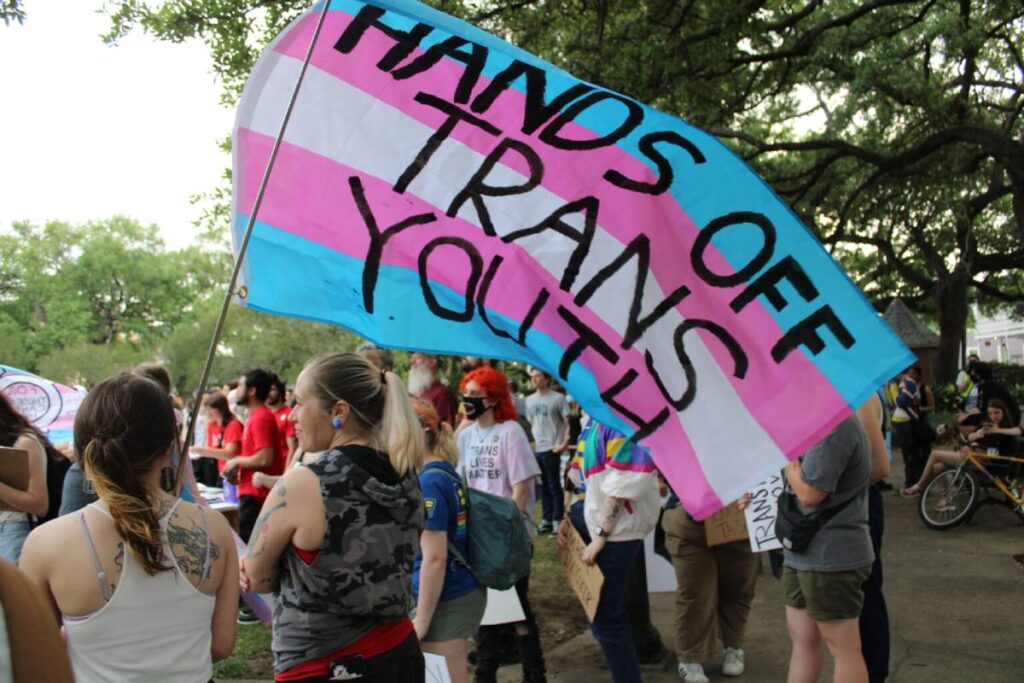
However, in countries like the United States, and under the current administration of Donald Trump, restrictions on hormone blockers are being legislated based on misinformation and falsehoods. Currently, 25 states deny transgender minors access to gender-affirming healthcare. This is driving families to migrate to states that protect this right. It is also leading to harassment and direct sanctions against medical personnel who provide this support.
According to ILGA Europe, restrictions on gender-affirming healthcare “invalidate years of established medical guidance and expertise and are based on divisive public discourse and misinformation, rather than on the recommendations of leading medical authorities. It threatens the well-being of vulnerable trans youth, whose lives depend on timely, comprehensive, and individualized healthcare.”
Juntes Narramos is a project by Malvestida , Volcánicas , GirlUp , Balance and Presentes to strengthen and amplify the voices of young people through narratives of diversity.
We are present
We are committed to journalism that delves into the territories and conducts thorough investigations, combined with new technologies and narrative formats. We want the protagonists, their stories, and their struggles to be present.
SUPPORT US

FOLLOW US
Related notes

We are present
This and other stories are not usually on the media agenda. Together we can bring them to light.