

March against transphobic murders: “On this Pride Day, all struggles intersect.”
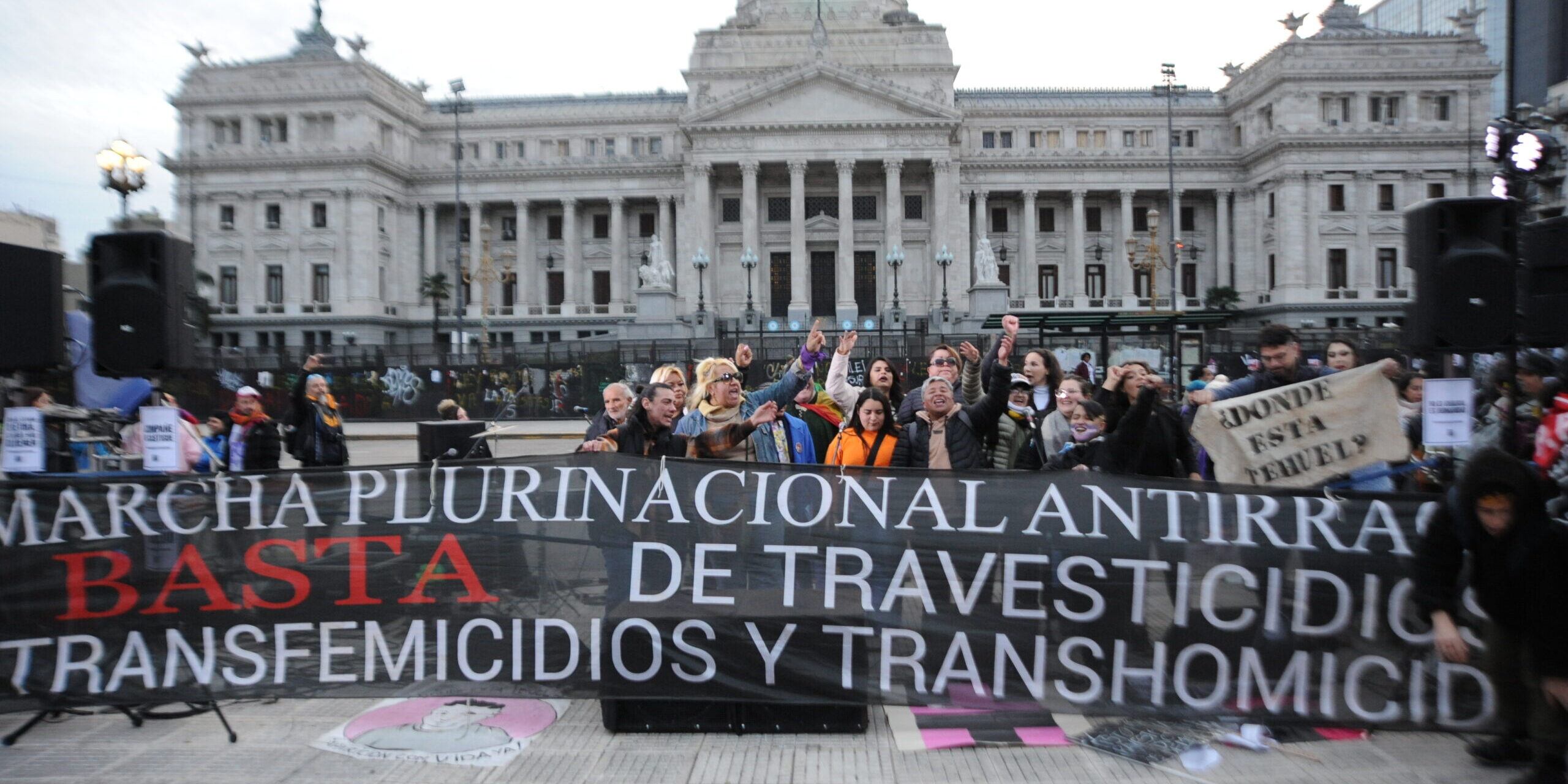
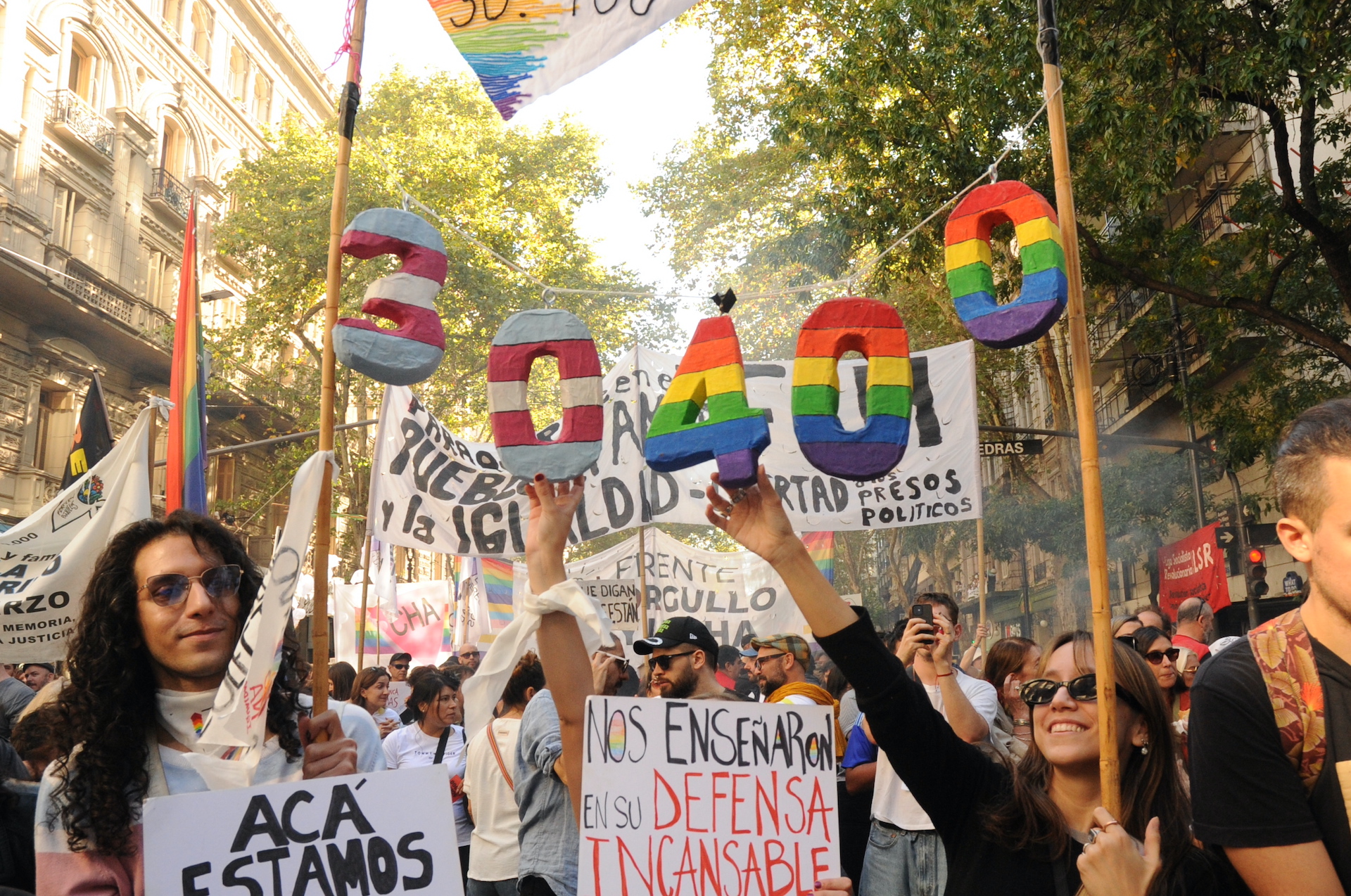
Hundreds of people demonstrated in front of the National Congress to protest, resist and embrace each other in the face of the anti-rights advance in Argentina and the world.


Share

Coverage in Buenos Aires: Ana Fornaro, Lucas Fauno Gutiérrez, Agustina Ramos, Maby Sosa and María Eugenia Ludueña.
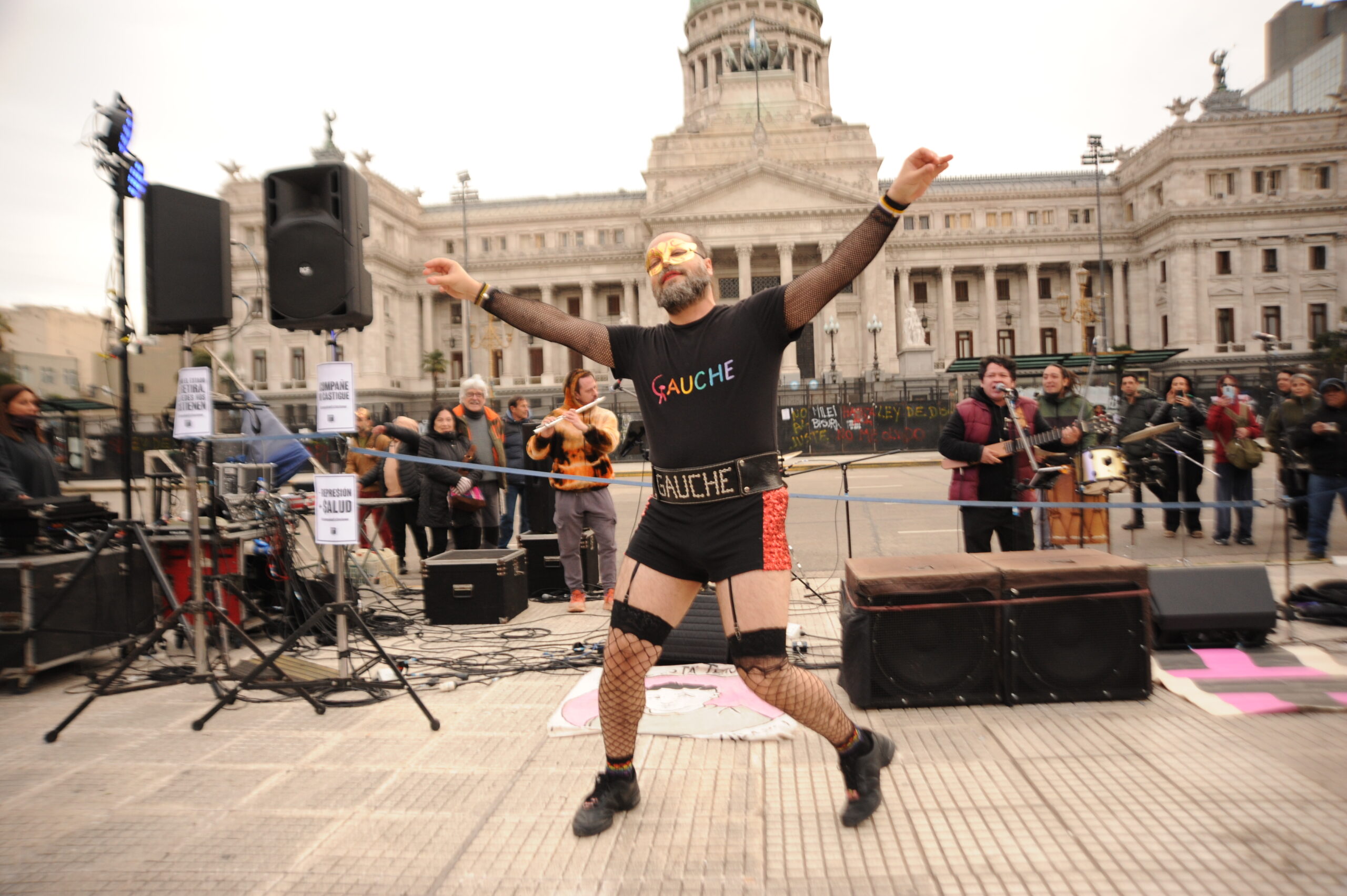
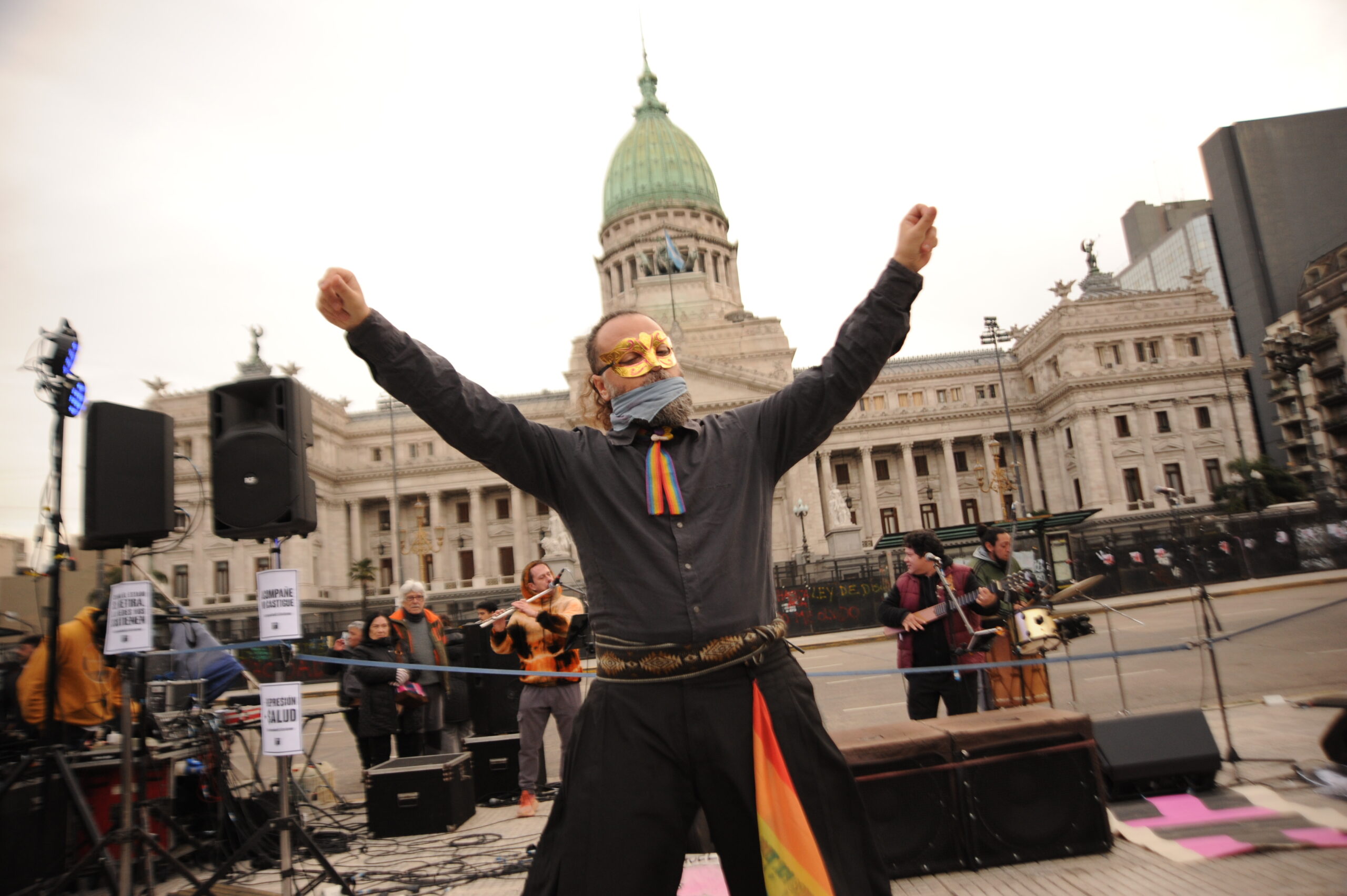
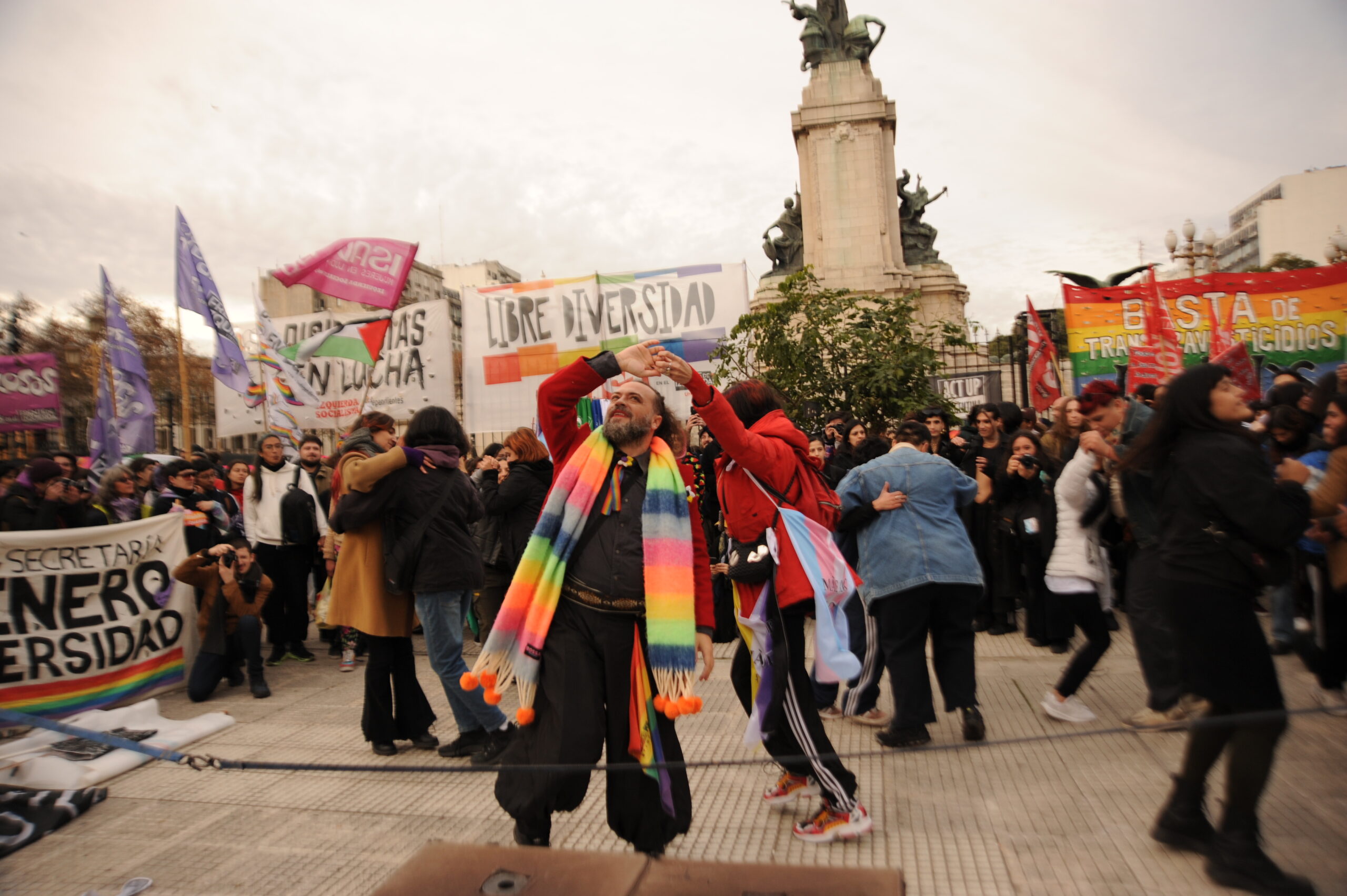
BUENOS AIRES, Argentina. On the day when much of the world celebrates Pride, in Argentina the commemoration was experienced through a local lens. Nine years ago, LGBTQ+ groups decided that the important thing on this day is to make visible the violence suffered by the most vulnerable members of the LGBTQ+ community. The flag of the Plurinational Anti-Racist March against Transvesticide, Transfemicide, and Transhomicide, which has been the central demand of the march every June 28th since 2016, was raised on Saturday in front of the National Congress. It was accompanied by other flags, such as the Palestinian flag, and other national and global causes.
This year, the attack on LGBTIQ+ rights experienced in many countries had a special impact on the document, in line with the hostility that diverse groups face in Argentina since Javier Milei's government took office.
“For nine years, we have decolonized Pride Day by saying 'Stop the transvesticides', after the cruel transvesticide of Diana (Sacayán),” recalled Geraldine “Sher” Lescano, a trans activist, in the Plaza de los Dos Congresos.
“Today we also feel it’s important to talk about international issues, about what’s happening, for example, in Gaza. Who better than us, as the transvestite, transsexual, and transgender community, who know what genocide perpetrated by a state is and have been experiencing it for decades?” the activist added. “We are here demonstrating that unity is the answer. Because we are also fighting for the doctors at Garrahan Hospital, for the professionals who work for the national government, for every single retiree.”
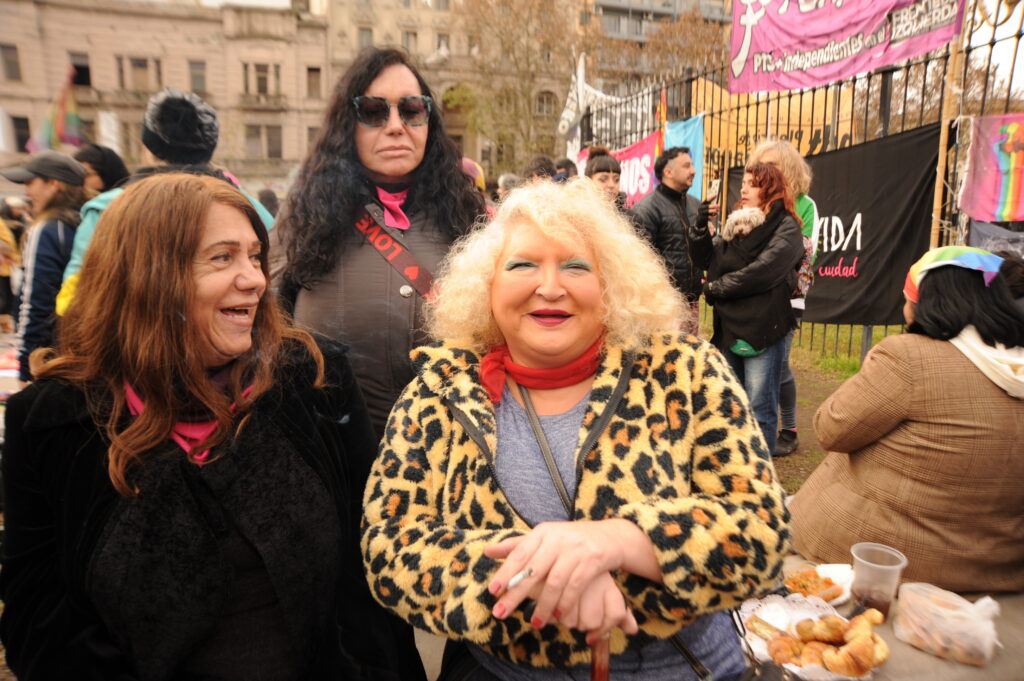
Marlene Wayar, a transvestite activist, was walking around with a banner from the Las Históricas group in one hand and a cane in the other, and on her chest a green scarf brought from the Basque Country that calls for Stop Genocide.
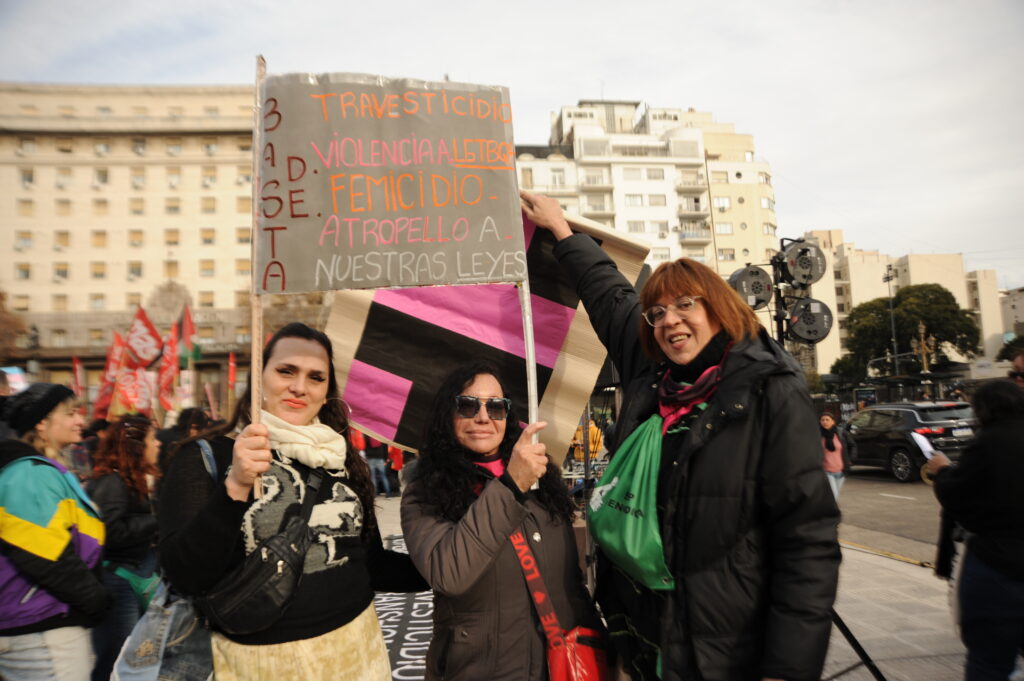
“We are united by all struggles, we are transversal, especially Latin American and Argentinian. And the Argentinian tradition is to be in the streets, even if it's just to embrace each other, us, something fundamental at this moment,” said Marlene. “Perhaps we can't stop the transvesticide, transfemicide, and transhomicide; we can't touch their hearts. But we know that in community we take care of each other, that we have to be in the streets and find meaning in the community.”
Marlene adds: “Sometimes it’s a little scary because I see all of Latin America looking to us as a reference point for Argentine trans activism. We’re fully immersed in our imagination, in reinventing ourselves. Not only in defending the democracy we have, but in demanding more. That’s why the historical reparations bill is about that. The only actor isn’t the one in power, which is the right wing here today. There’s a whole opposition in positions of power that has to make the institutions work. Congress isn’t a charade to pass laws for the government. The institutions have to preserve the democratic process so that all voices and interests are represented, and no one is left out.”
Memory and Pride
On June 28, the world celebrates International Pride Day. It commemorates the Stonewall Riots (United States, 1969), where LGBTQ+ people resisted violent police raids. In Argentina, the first Pride March was held on July 2, 1992, with around 300 participants. Many wore masks to protect their identity. In 1997, the march was moved to November to protect people with immunodeficiencies from the cold, and to honor the founding of the Nuestro Mundo collective.
The first March Against Transvesticide was on June 28, 2016. On October 11, 2015, the transvestite activist and human rights defender, Amancay Diana Sacayán, had been murdered in the Buenos Aires neighborhood of Flores, and transvesticides were on the rise.
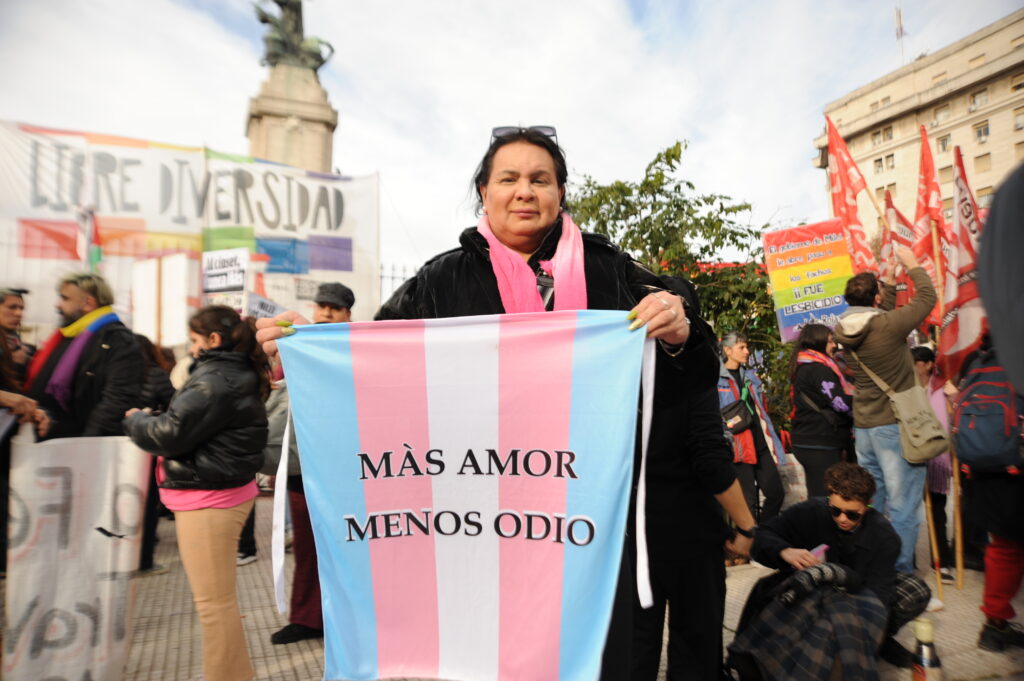
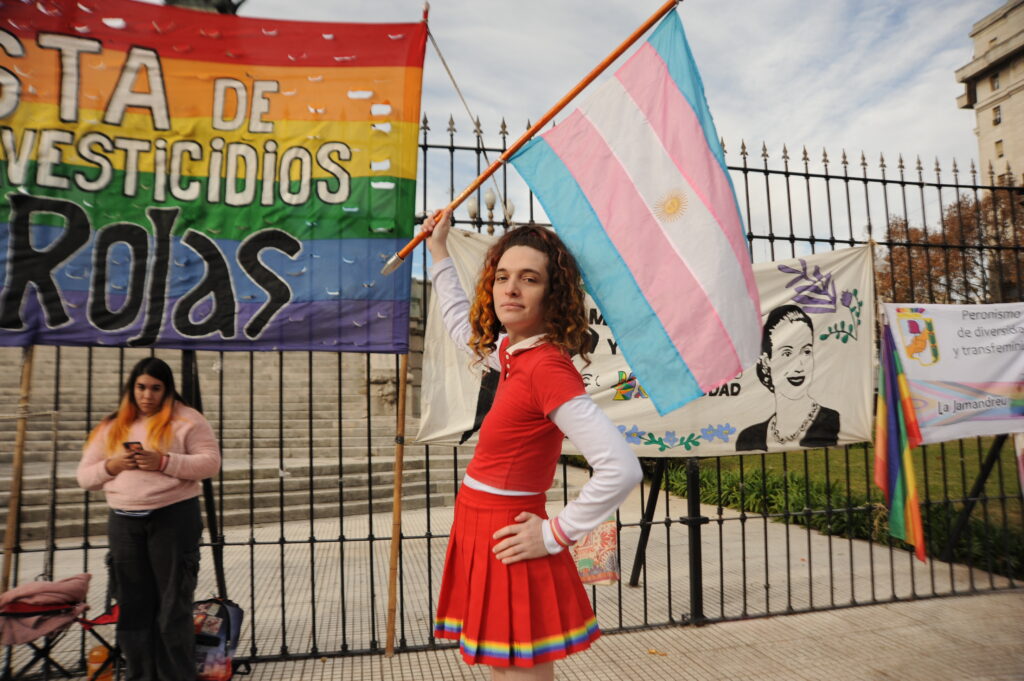
In February of that year, another historical figure had also passed away: Lohana Berkins, founder of the Association for the Struggle for Transvestite and Transsexual Identity and a driving force behind the Gender Identity Law. “As Lohana and Sacayán said, we’re never going back to jail,” has been sung ever since. That Pride Day in 2016 marked the beginning of a powerful movement in Argentina, one that paved the way for similar movements throughout Latin America and the world.
“The physical disappearance of Diana and Lohana marked a turning point for trans feminism. We took to the streets and began to empower ourselves. The visibility and strength of trans and travesti people grew. We were able to make a series of demands and advance agendas that have received a response,” said activist Say Sacayán, 10 years after the travesticide of his sister.
Last year marked another milestone in the struggle of the trans community for the recognition of hate-motivated violence. For the first time, a court ruling addressed the issue of trans homicide . Luis Alberto Ramos was sentenced to life imprisonment for the aggravated homicide of Tehuel de la Torre, committed in a hate crime based on gender identity.
“We keep asking ourselves where Tehuel is. Trans masculinities have always existed. We need visibility not to be a danger,” said Bartolo, a trans activist and writer, who hosted the event.
The trans and travesti community has been suffering attacks from the Milei government, both in its rhetoric and in the dismantling of public policies. In addition to eliminating government departments responsible for implementing public policies aimed at women and sexual diversity, the Executive Branch dismissed more than 150 trans and travesti workers. President Javier Milei delivered a speech to the international community in Davos filled with misinformation about the LGBTIQ+ community. And finally, he attacked the national law that is a global landmark: the Gender Identity Law, won through protests in the streets in 2012.
Violence accompanied the dismantling. During 2024, there were at least 140 hate crimes against LGBTIQ+ people, according to the latest report from the ombudsman's offices of the city and province of Buenos Aires and the Argentine LGBT Federation. 64% of the victims were trans women.
“There is specific violence directed at certain communities, primarily trans and non-binary people. There are decrees that directly attack trans and non-binary children and adolescents. Non-binary people don't have the right to a pension because there is still no regulation for a specific document. There is a ban on using our pronouns in schools. And these hate speeches end up endorsing other forms of violence that result in more deaths!” Ari Lorenzo, a non-binary artist from Invisibles, told us.
“I’m here for my trans sisters and brothers because we understand that it’s always been a very difficult context, but lately the situation has worsened. Not only is the State in extreme retreat, which we see in access to health, education, and work, but we also see a State in a position of very strong persecution towards the LGBT community, and especially towards the trans and travesti population,” shared Fiordi LaBeija, a mother from Kiki House of Bakeneko.
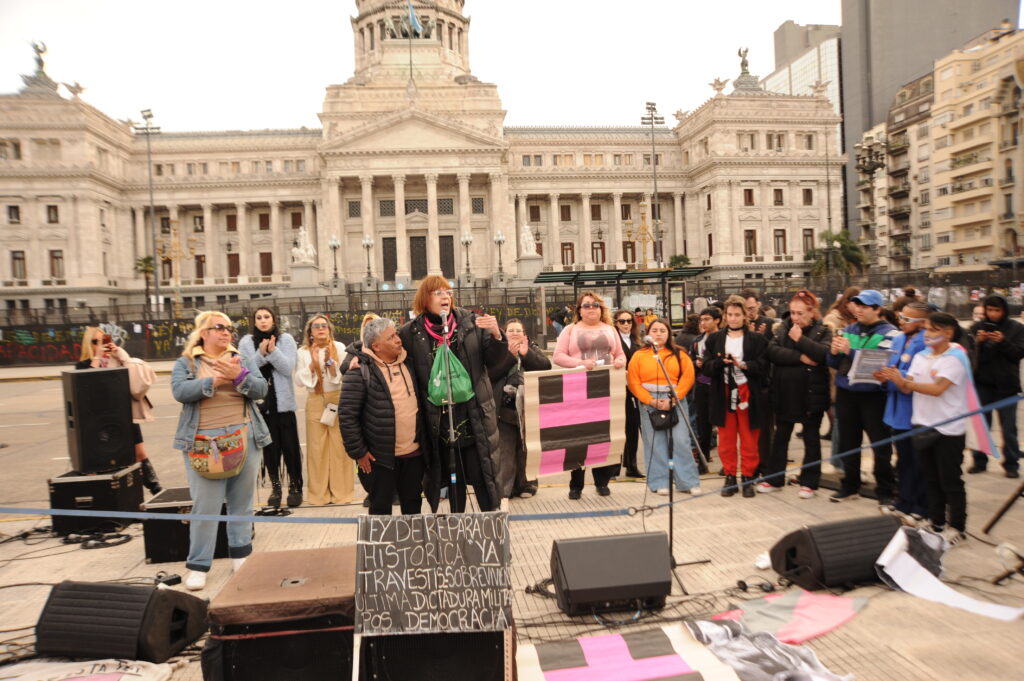
Throughout the day, the call for justice for Zoe López García , Sofía Fernández , Diana Sacayán, and Tehuel de la Torre, among others, was loud and clear. “On May 30th, they released the last person still charged in Sofía's murder, which was quite hard because we weren't even notified,” said Mabel, Sofía Fernández's sister, who joined the June 28th march for the third time.
In front of hundreds of people, activists read a statement . They called for an end to violence, the defense of comprehensive sex education and a trans employment quota, and a law for historical reparations for transvestite and transvestite survivors. “On June 28th, we will meet again in the streets, 55 years after the historic Stonewall uprising, where trans women led the revolt,” began the 10-point statement, which also addressed the conviction of Cristina Fernández de Kirchner.
In Argentina, we condemn the Supreme Court's reactionary ruling against the former President. We know it is an anti-democratic attack, an expression of the double standard of justice that protects the corruption of the Macri family, Caputo, Sturzenegger, and Milei, and that grants the corrupt judiciary the power to interfere in the electoral process and ban candidates. It is a power grab by the regime that strengthens Javier Milei's government in its anti-worker and anti-popular offensive. From this square, we demand: Down with the reactionary ruling against CFK!
>>>
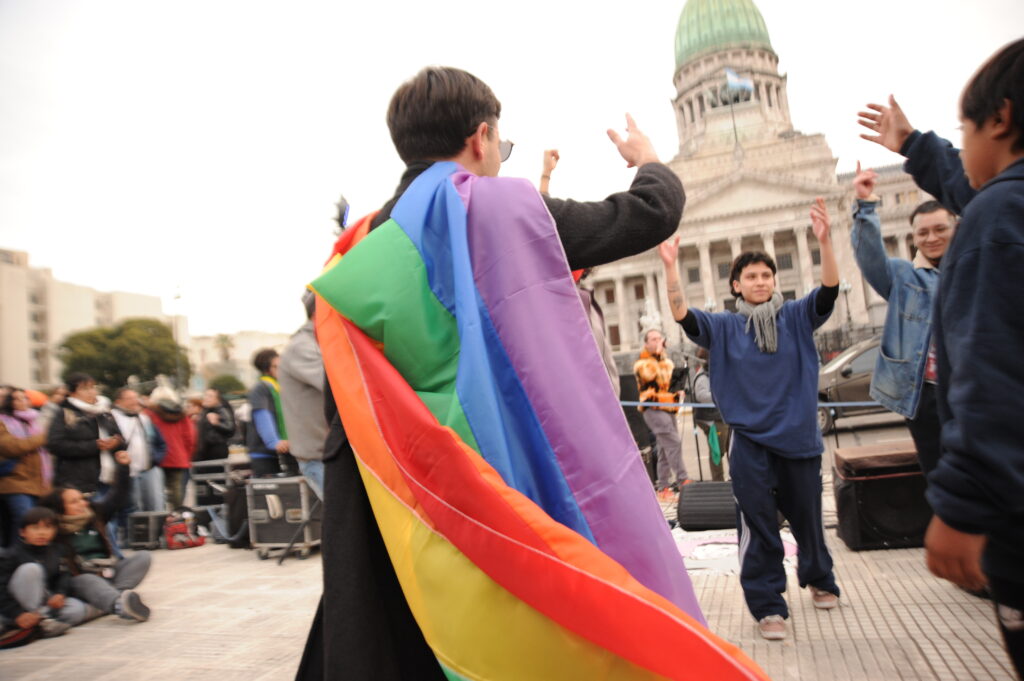
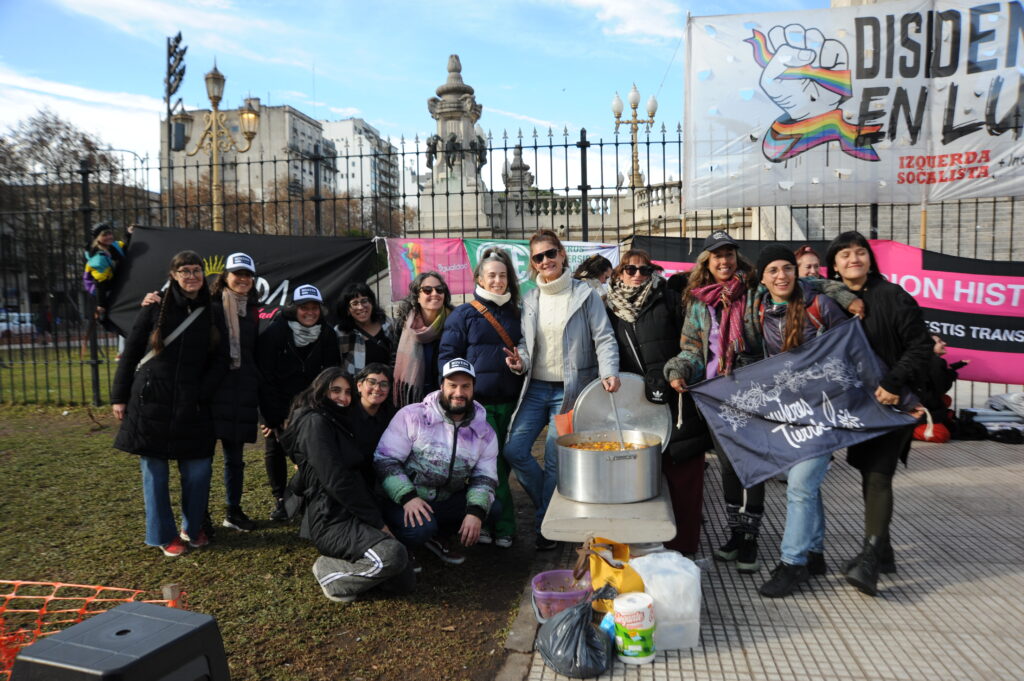
Throughout the afternoon there was music, dancing, shows, and a community meal. “This day is not for celebration but for demanding our rights and fighting back. Especially now, when the right wing around the world maintains that we shouldn't be part of this society,” emphasized Virginia Silveira, president of the Mocha Celis Civil Association. “We have to stay in the streets, resisting and fighting so that people's lives improve every day.”
Towards the end of the day, a large musical gathering took place, culminating with Sudor Marika.
The article was produced collaboratively by Tiempo Argentino and Agencia Presentes..
We are present
We are committed to journalism that delves into the territories and conducts thorough investigations, combined with new technologies and narrative formats. We want the protagonists, their stories, and their struggles to be present.
SUPPORT US

FOLLOW US
Related notes


We are present
This and other stories are not usually on the media agenda. Together we can bring them to light.