

Ni Una Menos united all the struggles with the cry: “Out with Milei!”
Sectors punished by the government of Javier Milei came together on the tenth anniversary of Ni Una Menos, in a massive march that marks an unprecedented unity.


Share

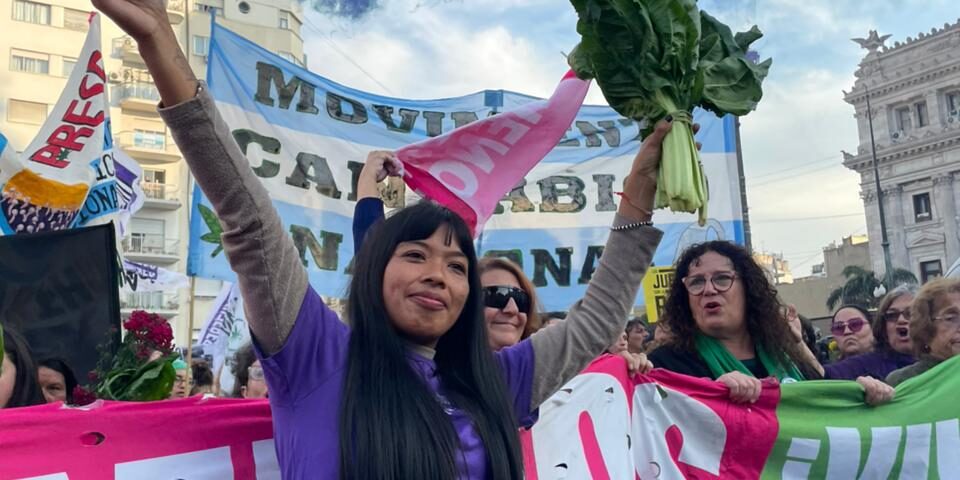
BUENOS AIRES, Argentina. It doesn't matter if the National Congress is surrounded by fences or if the City Police discreetly occupy a few corners on the other side. This June 4th, the cry of "Not One Less" converged with the weekly struggle of pensioners. Today was a day that left no room for fragmentation and perhaps a cornerstone for unity against Javier Milei's austerity and repression policies.
Although feminist groups called for a demonstration starting at 4 p.m., the disability rights movement had already begun occupying part of the plaza in front of the black fence surrounding Congress by midday. The timing of the demonstration is particularly relevant, as the Chamber of Deputies voted on the Emergency Disability Bill this Wednesday. After 2 p.m., a group of people with disabilities, their families, and disability workers intermittently occupied the street at the intersection of Hipólito Irigoyen and Callao.
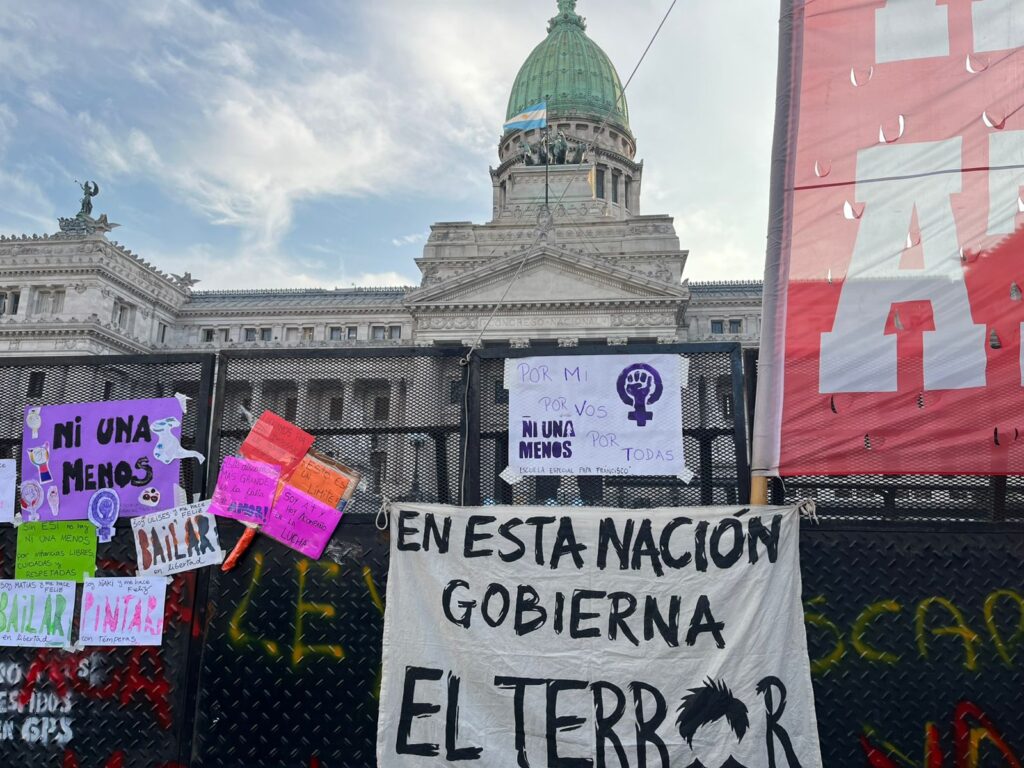
While the traffic light is red, they stand on the pedestrian line, sing, whistle and show signs to drivers that say "Not one step back, not one right less" or "Stop the adjustments for disability.".
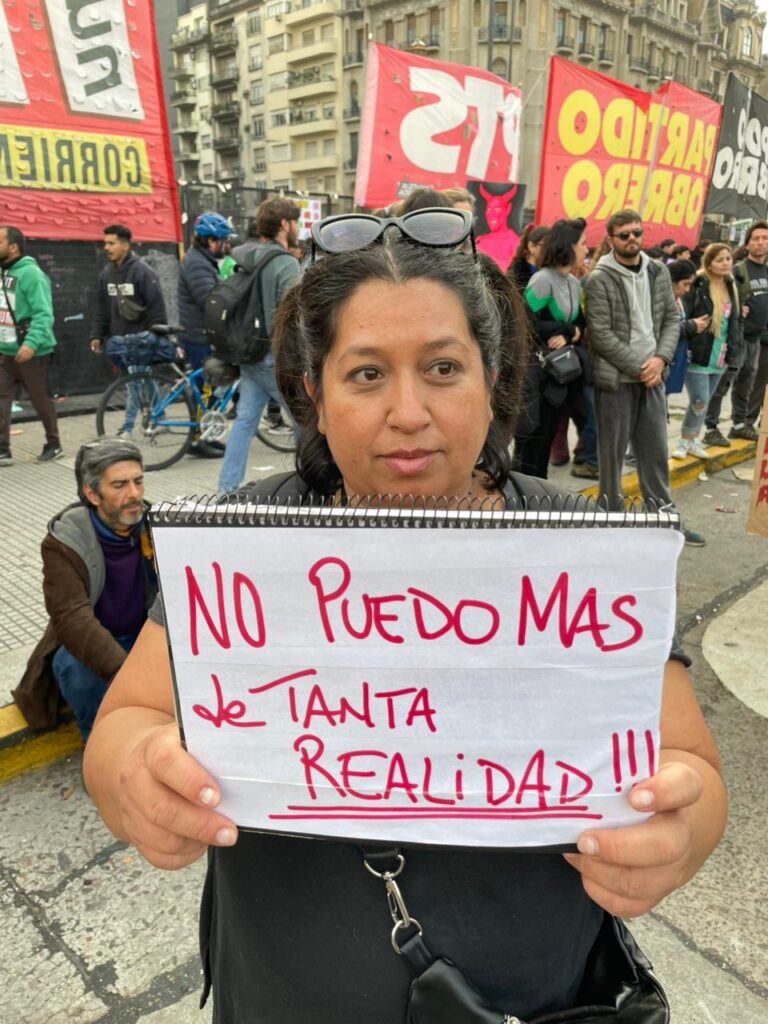
One of those participating in the protest is 25-year-old Verónica Donatelli. She comes from Munro and has been a therapeutic companion since 2019. “ It’s important that today is also the NUM march, that we unite our struggles; that’s something that touches my heart because the president’s austerity measures are affecting us all ,” she says.
“Flags are never lowered”
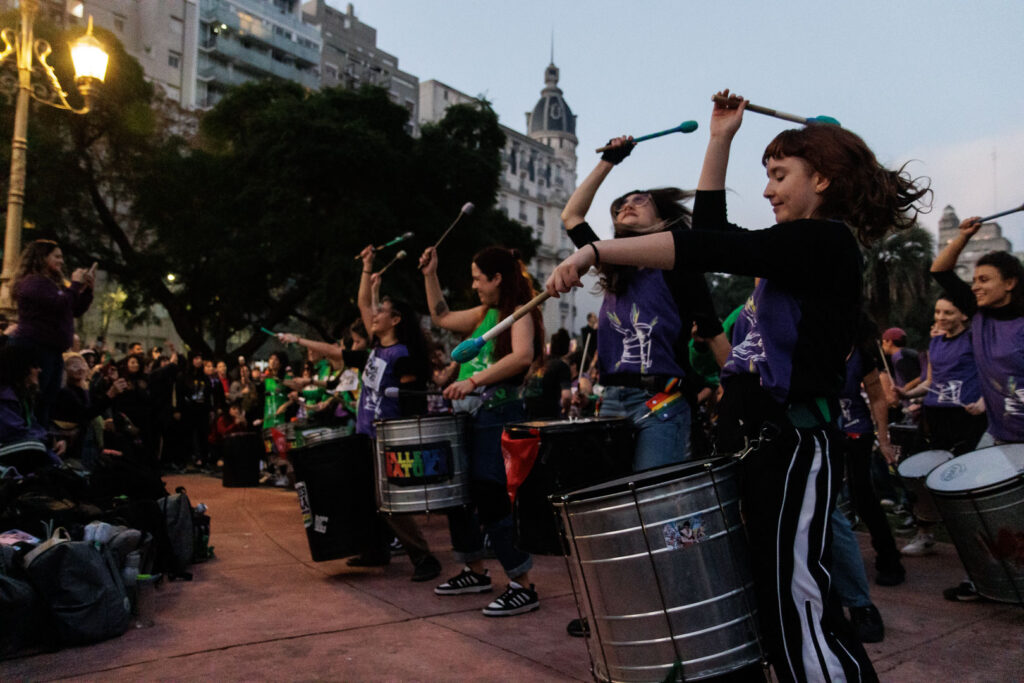
As the Plaza de los Dos Congresos begins to fill up and flags are raised on both sides, a liturgy takes place in the center of the square. A pastor is heard saying: “We can combine our faith with the feminist struggle.”.
There is singing, bread is shared. When it ends, Andrea Bodoira, 49, who helps out at a chapel in Merlo with Father Paco Olveira, explains that the prayer time during the demonstrations only recently began to be organized. But for some time now, the ecumenical table has accompanied the weekly Wednesday march of retirees.
“ We fight against the patriarchal structure and its hierarchies , for equality and liberation, which are not compatible with a woman with her head bowed or hunched over. That is not what God wants for us,” she asserts. She recounts that she also participated in the fight for the Voluntary Termination of Pregnancy Law (IVA), and that that night, a friend pointed to her green scarf and told her that with the law in place, it was no longer necessary to wear it. “ I told her no, that the flags are never lowered, that the struggles are never abandoned. We are at a moment of regression; there is no other option but to fight. And we want it to be known that we are also in this small field of faith; we embrace each other and call to action,” she expresses.
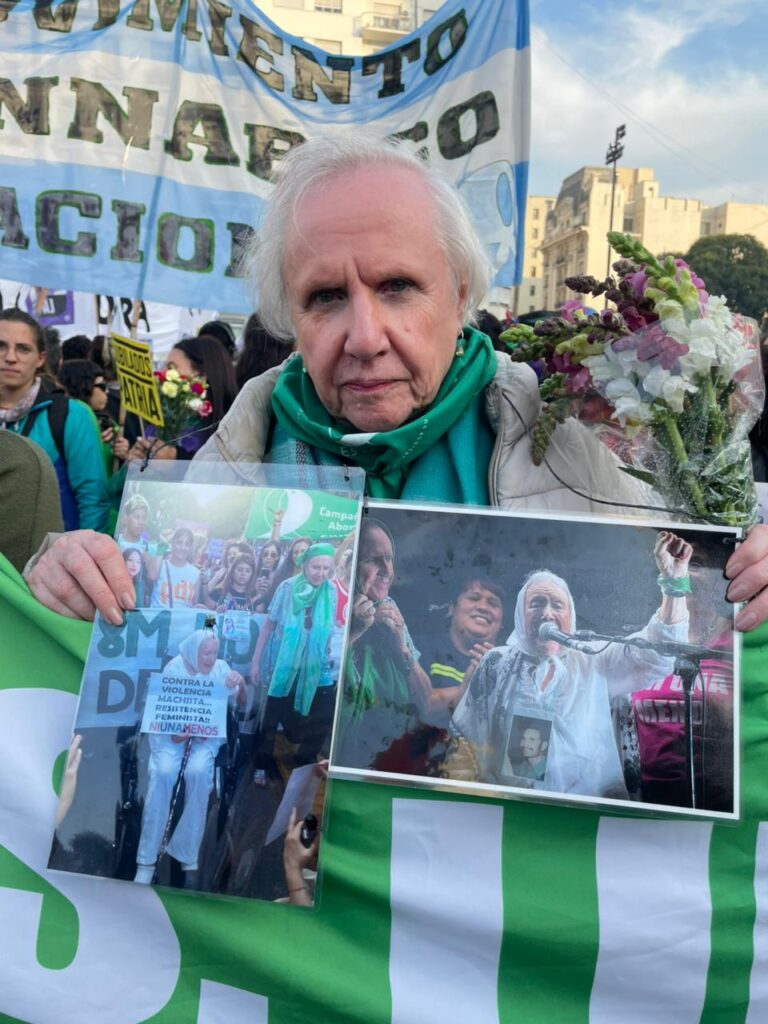
“I’m here so that there won’t be one less retired woman.”
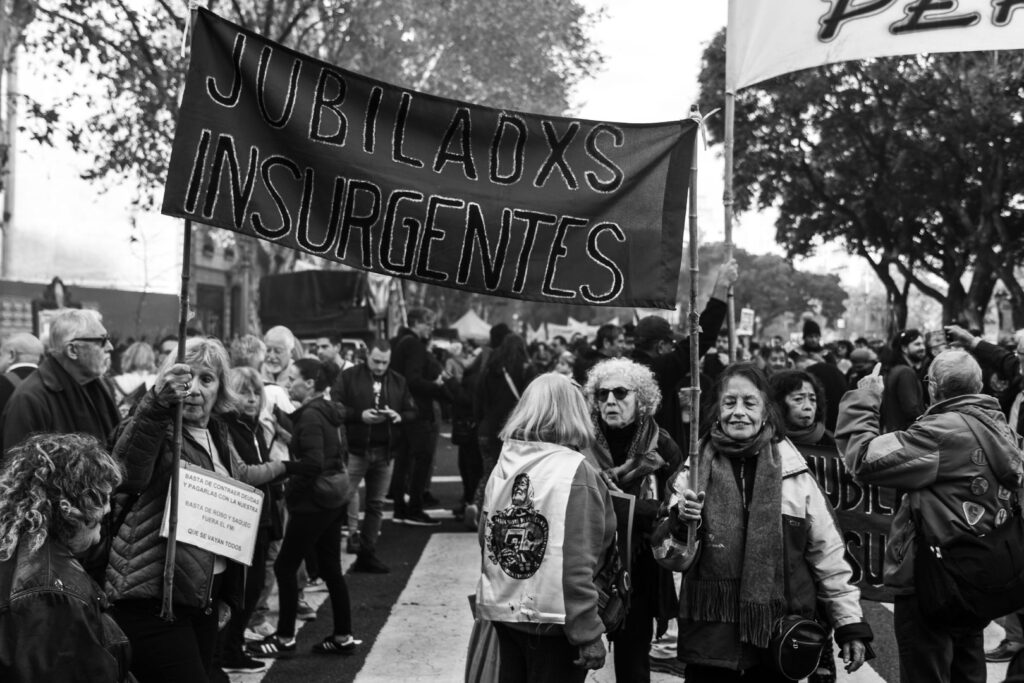
It's 3 p.m., and the weekly march of retirees bursts onto Rivadavia Avenue, heading towards Congress. They carry signs demanding a dignified pension and chant slogans like, "Here's a retiree fighting for their rights." Graciela Blanco, 69, comes from Libertad and says she's out on the street because she prefers fighting to starving at home. She has six children, 18 grandchildren, and three great-grandchildren who now help her put food on the table. "Do you want to know how much my pension buys me? I can buy medicine, a kilo of bread, a liter of milk, and that's it. My children support me now; it used to be the other way around," she says sadly.
Silvia Flores is 66 years old and retired thanks to the pension moratorium. She receives the minimum pension and every Wednesday she goes to Congress to demand her rights. “The importance of today, of bringing together all these struggles, which are many, is that it’s the first time in so long. It’s a unique force when we all come together because the causes are just. For me, it’s incredibly important to see all the support I feel today. It’s essential to be in the streets and fight,” she says. “ Today I’m also here so that there won’t be one less pensioner.”

Feminist movements moved the historic date of Ni Una Menos (Not One Less) to June 4th to support pensioners in their weekly Wednesday marches. Minimum pensions—which are mostly received by women—suffered a 13.3% loss in the first quarter of 2025 compared to the last quarter of the previous administration.
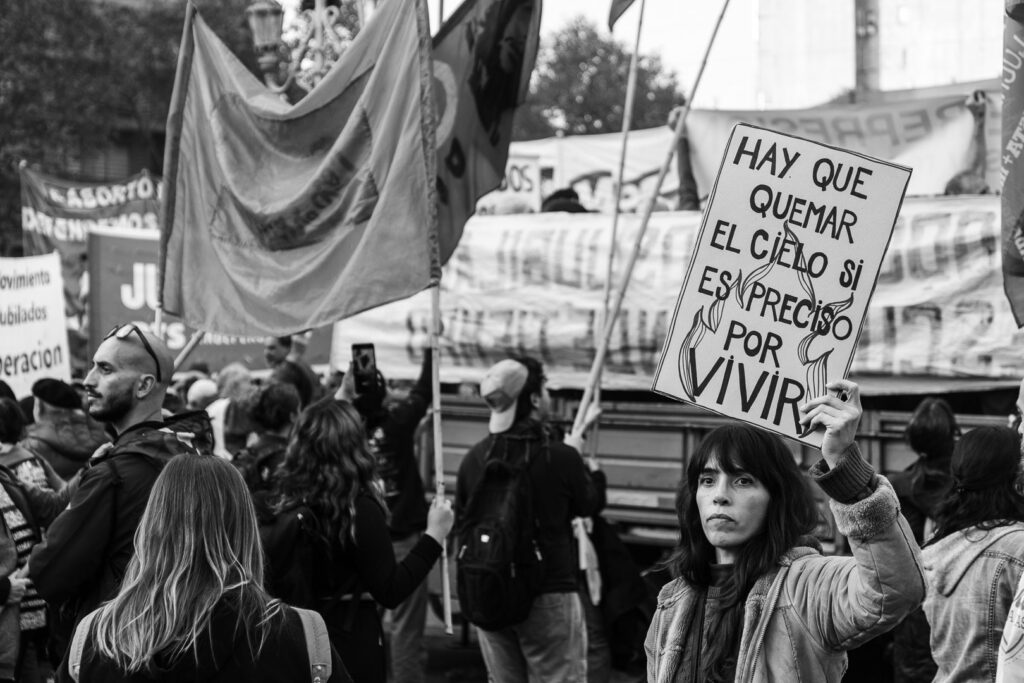
Furthermore, retirees have seen their 70,000-peso bonus frozen since March 2024. Had it been adjusted, next month's bonus should have been 158,620 pesos. Adding to this, the moratorium, which allowed those without 30 years of contributions to access a minimum pension, ended on March 23. This means that 9 out of 10 women will not be able to retire at the minimum age of 60. Congress is currently debating the reinstatement of the moratorium.
💚 "Legal abortion everywhere!" chants the @CampAbortoLegal #NiUnaMenos (Not One Less)
— Presents (@PresentesLatam) June 4, 2025
Collaborative coverage with @tiempoarg pic.twitter.com/mao8QbLPEJ
Diversity in the streets
Led by the banner of Las Históricas Argentinas and the Antifascist and Antiracist column, LGBTQ+ people marched, chanting “Not One Less, We Want to Live.” Erika Moreno, a trans activist from Córdoba who lives in Tierra del Fuego, told Presentes : “It’s important to make visible the collective transfeminist struggle we have throughout the country. We are committed to historical reparations so that at some point the bill to recognize us and repair all the harm that has been done to us will be debated. We will continue fighting and winning.”
📢🌈 "It's important to make visible the struggle we're waging at a trans-feminist level throughout the country," says Erika Moreno, a long-time trans activist from Tierra del Fuego. #NiUnaMenos #10YearsNotOneLess pic.twitter.com/tKAL7o0bQN
— Presents (@PresentesLatam) June 4, 2025
In the same column, the chant “Lohana and Sacayan said it, we’re never going back to jail” was heard. This year also marked the 10th anniversary of the murder of Diana Sacayan, a trans activist and human rights defender.

“One of the slogans in this Ni Una Menos document is the demand for recognition of the crime of transvesticide. For ten years we have been fighting not only for Diana’s murder, but also for the entire trans, travesti, and non-binary population,” commented Say, an activist and Diana’s brother.
Denounce hate
The mobilization came after another lesbian murder in Argentina. On Wednesday, June 3, Gabriel Fernando Danielo murdered Marcela Heredia, who was the partner of his ex-girlfriend. The murder took place in the Buenos Aires town of Moreno. During the reading of the statement, feminist groups demanded justice for Marcela.
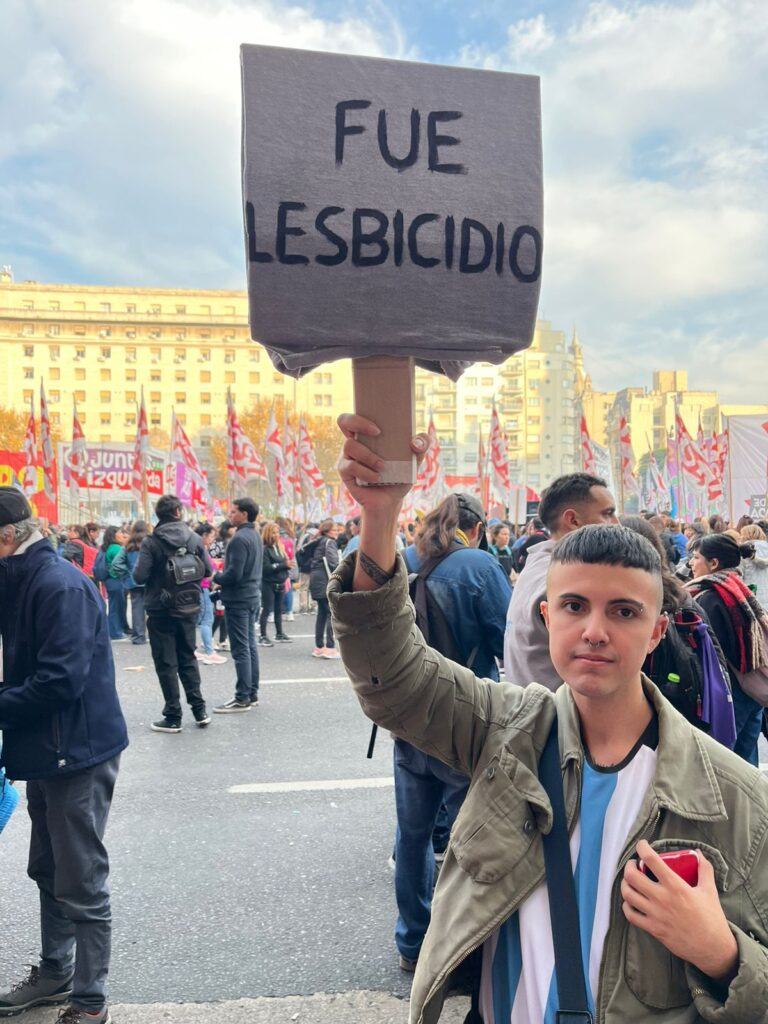
This crime occurs within a context of escalating violence against the LGBT community, especially against lesbians. This year alone, there have been four attacks and attempted attacks against lesbians in Argentina. In 14 days, between February 11 and January 29, Mariana Oliver was attacked in her home in Orán (Salta), a couple was assaulted in the street in Buenos Aires, a lesbian activist was stalked in La Plata, and Orlando Alcides Lutz Fogar set fire to the home of a lesbian couple in Cañuelas.
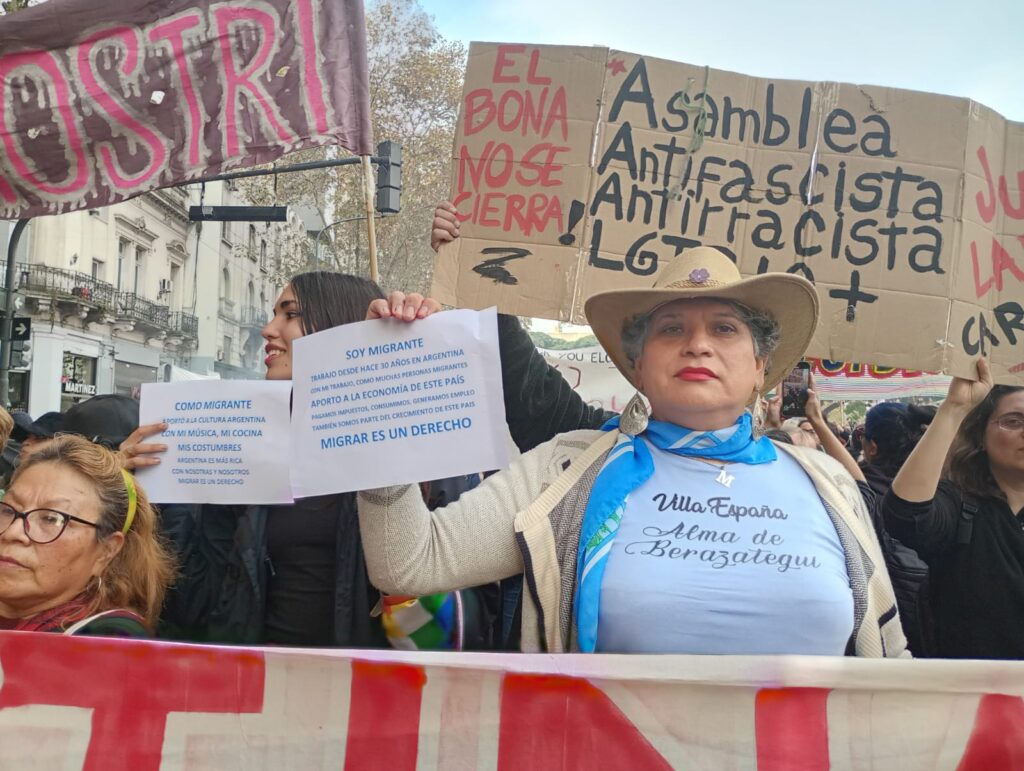
This march also took place after the publication of Decree 366/2025, which substantially modifies the Migration Law and restricts the rights of migrants. “This Decree 366/25 criminalizes a population that has been marginalized and continues to be marginalized. It is time for all struggles to unite, and this is the moment for students, retirees, people with disabilities, those in the informal economy, Afro-descendants, Afro-Argentinians, Africans, and Indigenous communities to stand together with migrants,” stated anti-racist activist Sandra Chagas.
Ten years of a powerful movement
It's almost 4 p.m. and Representative Julia Strada (UP) is on Rivadavia Avenue, talking with social activists. “Right now, they're voting on a pension increase, an adjustment to the bonus. Later, they'll vote on the pension moratorium, which we know the government deliberately abandoned and doesn't want to reinstate,” she tells Tiempo .
Strada noted the significance of NUM's 10th anniversary march coinciding with the pensioners' mobilization. "It's a sad moment, but it's still a struggle that unites all of us who are suffering under Milei's austerity measures. This means we have to stop this government, and we have to do it at the ballot box," she said.
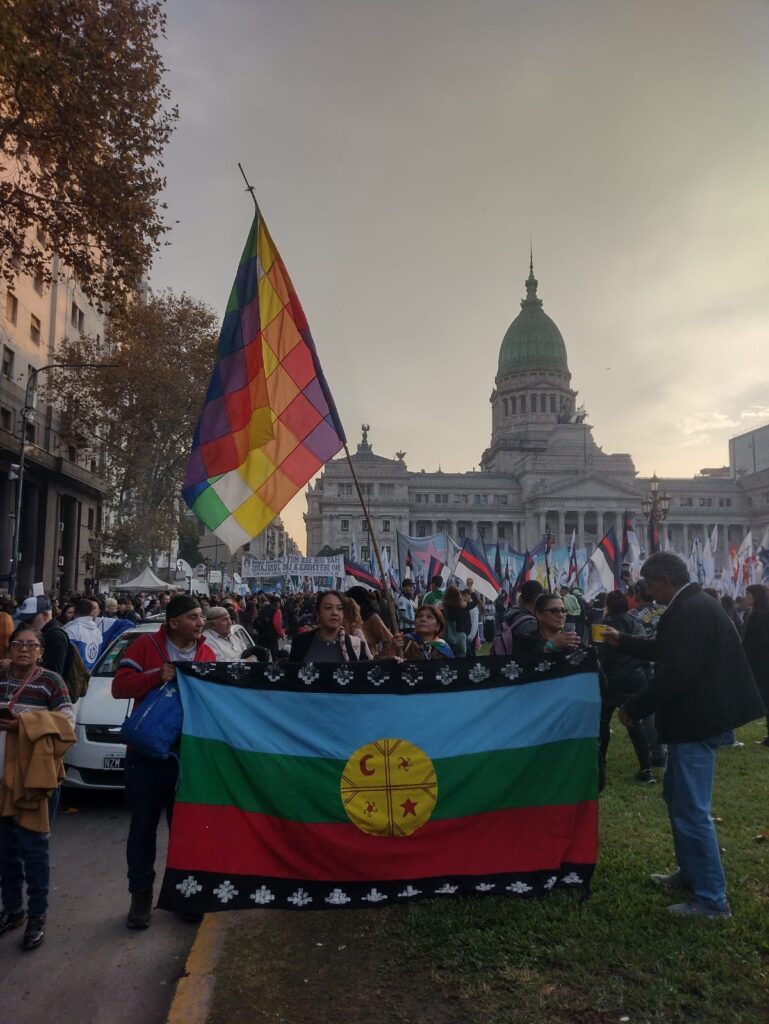
In agreement, sociologist and legislator Victoria Freire, a leader of Patria Grande, highlighted to Agencia Presentes the power of the organized struggle over these ten years. “Ten years after the first Ni Una Menos (Not One Less) march, which transformed the scene in our country and the general psyche by placing gender violence on the agenda, the contexts have changed enormously. We can also recognize that during all this time we managed to build a very strong movement. It achieved the right to abortion, to speak out about femicides, transphobic murders, and femicides. It managed to generate organizational networks, and today we have the opportunity to look at them, recover them, and know that it makes sense to be in the streets.”
One same struggle
Elsa Schvartzman is 74 years old, originally from Paraná (Entre Ríos), but has lived in Buenos Aires for over 50 years. She is holding one of the poles of the flag of the National Campaign for the Right to Legal Abortion, Buenos Aires regional branch.
“We thought it was a good idea to change the day of the march to Ni Una Menos, unifying and bringing together the struggle, because at this moment resistance is fundamental in order to move forward and the only possibility of connecting with the people is in the street, that is active resistance,” she said.
Schvartzman finds it moving that people are taking to the streets in such a difficult context, where fear of police repression is a constant threat. As a retiree, she stated that the current situation is dire. “There is a great deal of vulnerability; pensions are meager, the cost of living is skyrocketing, and there is no accessible healthcare, no medicine, no hospitals—everything is cut back,” she added.
Ten claims, the start of a program
The first Ni Una Menos assemblies of this year had a specific mandate: to stand with pensioners. This was summarized in a discursive shift that became a reality on Wednesday, June 4th: uniting all struggles.
After 5 p.m., Liliana Daunes read the document prepared at the Ni Una Menos (Not One Less) assemblies, which began with demands. “We celebrate 10 years since we first took to the streets with the cry of Ni Una Menos, against femicides, transvesticide, transfemicide, and transhomicide,” the text begins. “We celebrate having maintained, expanded, and radicalized the mobilization for a decade, giving collective form to a cycle of struggles historic for its massive scale and radicalism.” They also celebrated the 20th anniversary of the Campaign for the Right to Legal, Safe, and Free Abortion.
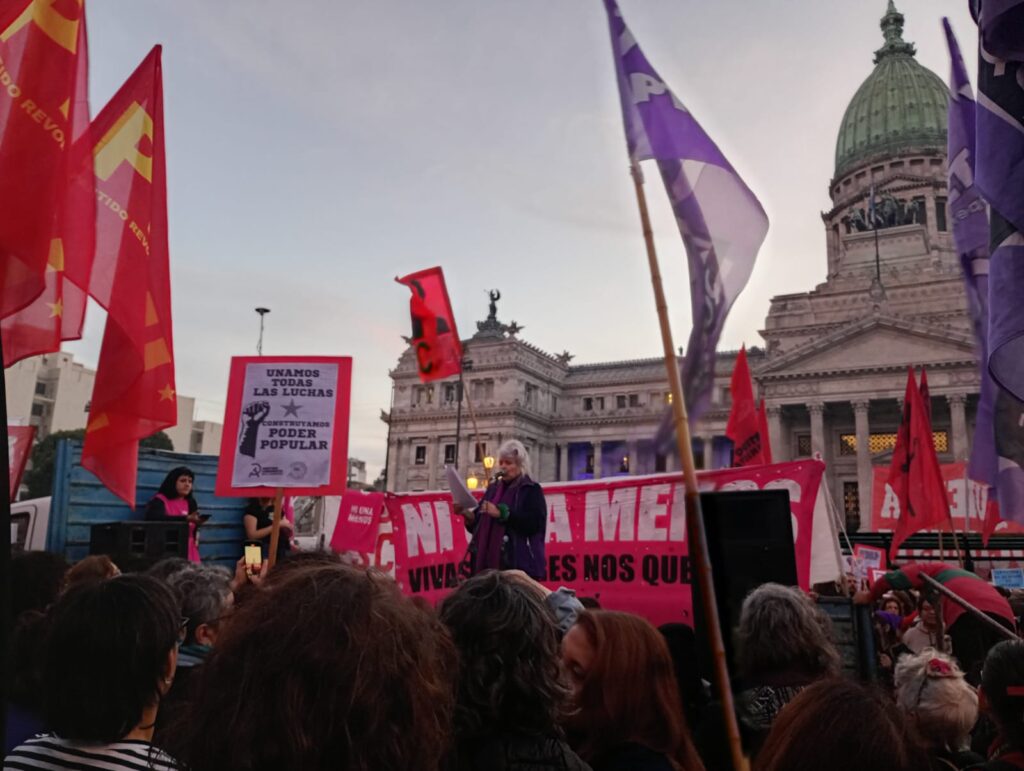
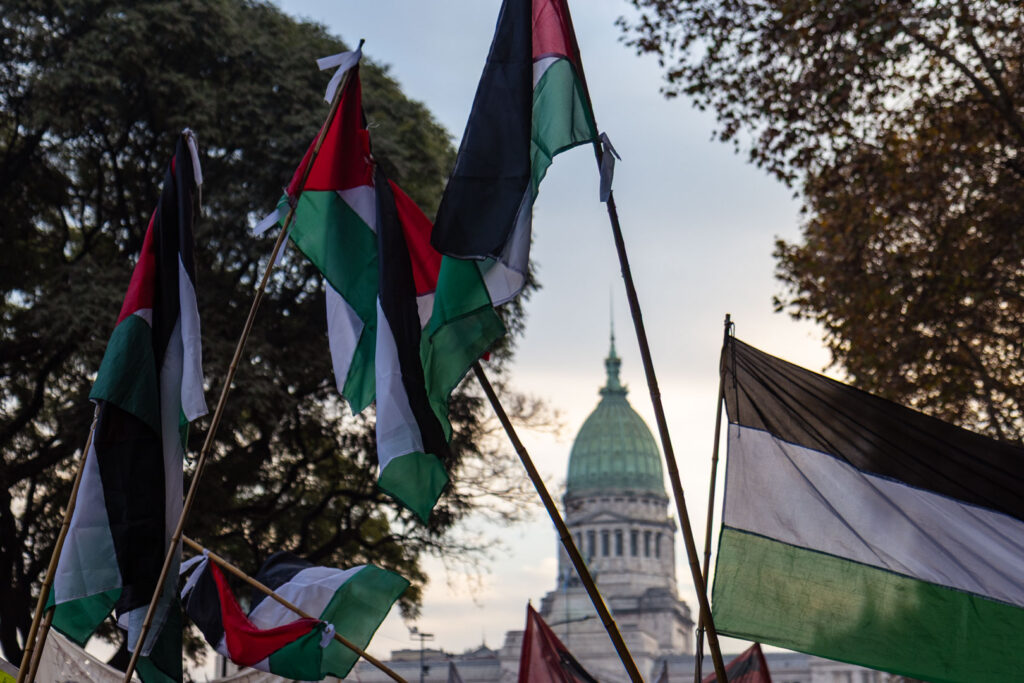
“Ten years after Ni Una Menos, today we say Milei Out!” expresses the text, which also raises ten demands ranging from proposals against patriarchal, fascist and racist violence to the denunciation of the genocide in Palestine.
After the reading of the document, all those present - students, feminists, retirees, children, health and popular economy workers, people with disabilities - accompanied the retirees in their classic circle, this time, since there were so many of them, without repression.
The following people participated in the collaborative coverage between Agencia Presentes and Tiempo Argentino: Aldana Somoza, Clara Pardi, Lucas Gutiérrez, María Eugenia Ludueña, Ana Fornaro, Nadia Díaz and Eugenia Siman.
We are present
We are committed to journalism that delves into the territories and conducts thorough investigations, combined with new technologies and narrative formats. We want the protagonists, their stories, and their struggles to be present.
SUPPORT US

FOLLOW US
Related notes

We are present
This and other stories are not usually on the media agenda. Together we can bring them to light.