

In Peru, transgender people are prohibited from using public restrooms that align with their gender identity: "It's a transphobic law."
The government of Dina Boluarte enacted Law 32331, passed by Congress, which prohibits transgender people from using public restrooms that align with their gender identity. Congresswoman Susel Paredes is facing an unusual lawsuit over the same issue.


Share

LIMA (Peru). In a new blow to the trans community, the government of Dina Boluarte enacted Law 32331 which, among other points, “prohibits the entry and use of public sanitary services to any person whose biological sex does not coincide with the sex for which the service has been designated.”
Law 32331 claims to strengthen the right to sexual integrity for children and adolescents; however, its true intentions appear to be quite different. The legislative initiative was introduced by the Popular Renewal (RP) party, which includes evangelical pastors among its members. These individuals have already expressed opposition to the rights of the LGBTQIA+ community and, since 2021, have been introducing a series of bills that directly affect the human rights of the LGBTQIA+ community.
For Taki Robles, a trans woman and director of the Peruvian Association of Trans Women, Amigas por Siempre (Friends Forever), this law is full of prejudice and also an act of discrimination against trans gender identities. “It’s a transphobic law that not only violates our right to use public services, such as restrooms, but also exposes us to violence and places us in a vulnerable position,” Taki tells Presentes. She gives an example: “If I, with a female identity, enter a men’s restroom, following what the law says, and there happens to be a minor there, I would also be violating the objectives of this law. And therefore, I would also be subject to penalties,” the activist warns.
The use of the bathrooms , over and over again
In 2023, following a complaint from a Christian citizen about the bathrooms at Jorge Chávez airport, Admiral Jorge Montoya (RP) proposed prohibiting the placement of ambiguous signs in public spaces and places that could mislead or confuse users regarding access to men's and women's restrooms.
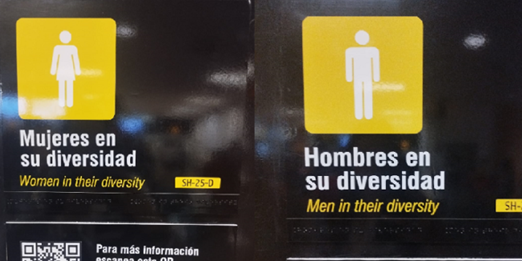
This was in reference to airport signs that specified that the women's restroom was open to "any person with a female identity," while the men's restroom was open to "any person with a male identity." The proposed law did not pass at the time. However, under media pressure, Lima Airport Partners, the company that operates airports in Peru, changed the signs, though not in the way conservatives had demanded. Since November 2023, they have stated that the restrooms are for "women in all their diversity" or "men in all their diversity."
The debate surrounding the use of restrooms by transgender people was reignited in February of this year when the Women and Family Commission, chaired by María Córdova Lobatón (RP), placed on its agenda the discussion of the bill that strengthens the right to sexual integrity of children and adolescents. The initiative was presented by evangelical Christian congressman Alejandro Muñante (RP).
After presenting a statement of reasons based primarily on religious beliefs, prejudices, and stigmas surrounding the trans population, the Commission approved the bill. It did so without presenting any data or figures to support its fallacious and discriminatory argument: that trans people are potential sexual aggressors and that, therefore, children and adolescents must be protected from them.
In this way, the bill was ready to be debated and voted on in the plenary session of the Peruvian Congress.
The unusual complaint against Congresswoman Susel Paredes for defending rights
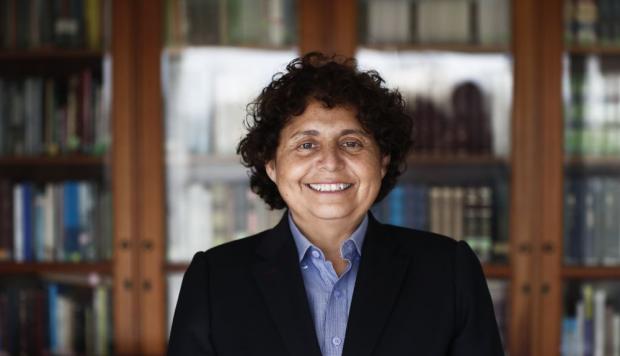
On March 31, as part of Trans Visibility Day, Congresswoman Susel Paredes held an event with the participation of 50 trans women activists, who were in the Congress chamber discussing legal and community actions to implement to prevent their rights from being violated.
At the end of the meeting, several attendees used the restrooms adjacent to the area where they had been. Upon identifying themselves as women, they used the restrooms designated for women. However, officials from the office of Congresswoman Milagros Jaúregui de Aguayo (RP) "alerted" to this. Jaúregui is a pastor and, as a congresswoman, has previously made discriminatory remarks toward LGBTQIA+ people.
“An unacceptable act and a lack of respect for women's rights has occurred once again. For the second time, men were allowed to enter the restrooms designated exclusively for female employees. This incident represents a clear violation of the privacy and dignity of the women who work at this institution,” said Pastor Jáuregui de Aguayo. She filed a complaint against Susel Paredes with the Congressional Ethics Committee for the men's use of the restrooms.
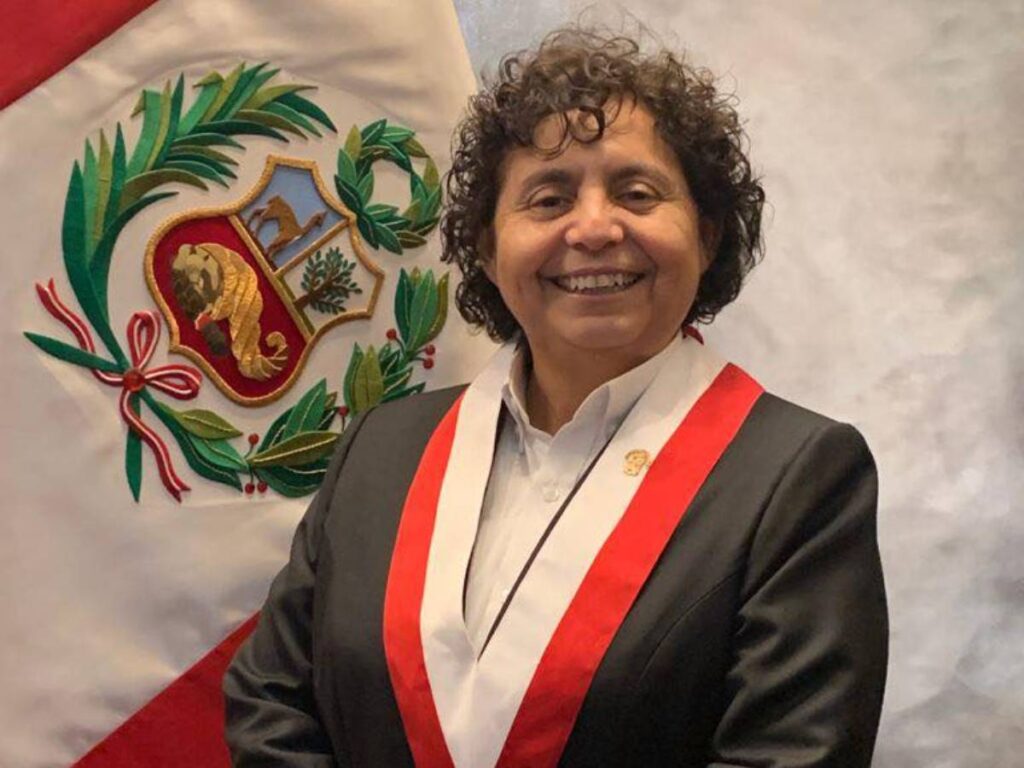
The complaint was successful. An investigation into Paredes Piqué was approved for allowing transgender people to use restrooms that differ from their biological sex, and a 120-day suspension without pay was requested. Susel Paredes is also an openly lesbian member of parliament and an activist for LGBTQ+ rights. In 2019, after a long struggle, she and her partner Gracia Aljovín were recognized as the first same-sex couple to be legally married in Peru.
What does the law say and why does it violate the rights of trans people?
Encouraged by Jáuregui's statement, several conservative congressmen, former military officers, and religious figures expedited the voting process for the bill, which had been introduced a month earlier and passed two days after the event. On April 2nd, it was debated in plenary session, where it received 104 votes in favor, 5 against, and 5 abstentions. Finally, the law was signed and enacted by Dina Boluarte on May 13th.

The approved Law has 5 articles: (1) object of the Law, (2) right to sexual integrity, (3) obligations of the State, (4) protection of sexual integrity in media and advertising, and (5) access to and use of sanitary services in buildings for public use.
Specifically, Article 5 is the one that exclusively affects trans people, as it prohibits them from using a bathroom different from their biological sex.
Various civil society organizations and allies have spoken out against the measure against parliamentarian Susel Paredes, and against the attack that the trans population, one of the most vulnerable in Peru, is receiving.
We are present
We are committed to journalism that delves into the territories and conducts thorough investigations, combined with new technologies and narrative formats. We want the protagonists, their stories, and their struggles to be present.
SUPPORT US

FOLLOW US
Related notes


We are present
This and other stories are not usually on the media agenda. Together we can bring them to light.