

Triple lesbian murder in Barracas: “We must begin to make hatred visible, name it, and not normalize it.”
Women who are part of Lesbianes Autoconvocades por la Masacre de Barracas (Self-Organized Lesbians for the Barracas Massacre) recount what that brutal crime meant and how it impacted activism.


Share

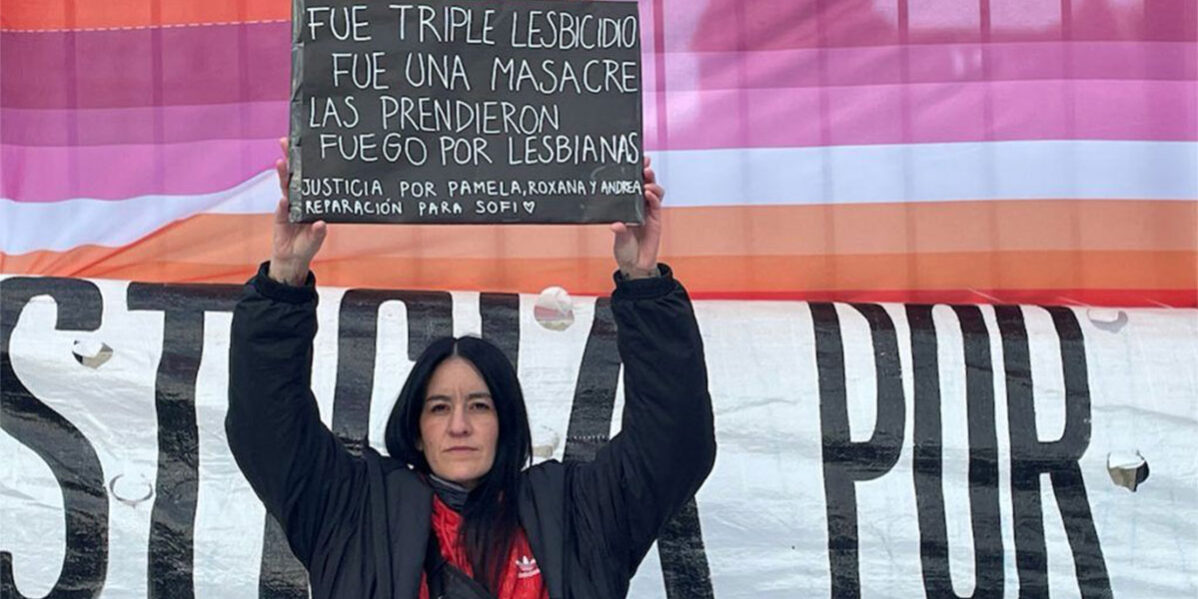
BUENOS AIRES, Argentina. On Monday, May 6, 2024, four lesbian women were set on fire by a neighbor while they slept in the hotel where they were staying. Two of them were taken to the Burn Unit, where they died: Pamela Cobbas hours after the attack, and Mercedes Roxana Figueroa two days later. Andrea Amarante died on May 12 at Penna Hospital, where she had been taken along with the only survivor, Sofía Riglos Castro, who remained hospitalized for several weeks. The attacker, Juan Fernando Barrientos, after insulting them for a long time, attacked them that night with a Molotov cocktail. He burned them because they were lesbians. It was a horrific hate crime that, despite the evidence, the justice system refuses to classify as such.
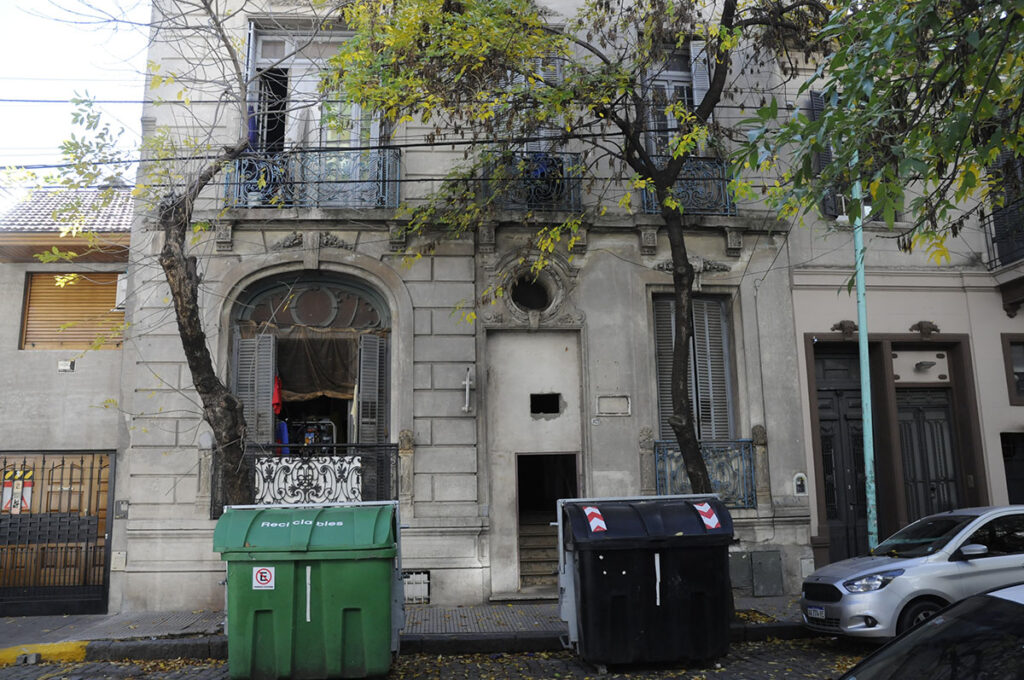
As soon as the news broke, a group of lesbian women quickly activated support networks and calls for justice, culminating in a large march through the streets of the neighborhood . That group is now known as Lesbianes Autoconvocades por la Masacre de Barracas (Self-Organized Lesbians for the Barracas Massacre), comprised of, among many others, Jesi Hernández, Gabriela Acosta, and Soledad Oilhaborda. “It was the girls from Barracas, but it could just as easily have been Sole, Gaby, me, anyone,” Jesi Hernández told Tiempo Argentino . “It was very powerful when we all started talking about our experiences, and we all suffered violence related to our identity.”
-It's been a year since this triple lesbicide, one of the most violent events of last year, how did it affect you?
Jesi Hernández: – Personally, it was a very powerful piece of news, an event that marked a turning point in my life. Not only because they were lesbians and we share an identity, but also because it mobilized the lesbian community, bringing us together. There was a huge mobilization that was organized the next day through social media, and we met in a Zoom meeting with people from all over the country. We gathered there to discuss what we could do about this case and how to bring it to light, because no media outlet wanted to cover the story simply because it contained the word "lesbian," and they didn't want to mention it. We were able to set a clear objective, which at that moment was to break the media blackout and ask the media to please contact us to report the story.
It could have been any of us. Literally. And I think that was the most powerful thing: we all started talking about our experiences, and we all suffered violence related to our identity. It was the girls from Barracas, but it could have been Sole, Gaby, me, anyone.
And also to take a stand against hate speech, to start mentioning what hate speech is and explaining it so that society understands that what is said and what is repeated has consequences and that it is nothing more and nothing less than our lives .
Gabriela Acosta : – Personally, I was deeply affected by the idea of saying, “Hey, they set fire to four lesbians.” Four poor lesbians living in a community, building a family. What happens in the community is that many people are excluded from their biological families because they aren't accepted and seek refuge in other networks. And in this case, it was four lesbians living in a community, in precarious circumstances. When I heard the news, I immediately started looking for ways to raise awareness about what happened.
I contacted some friends who went to the Book Fair where Milei's biography, written by Márquez, was presented. Márquez had already exposed his hate speech. We wanted people, society, and the media to start spreading the word about what happened. We couldn't allow hate speech to continue. I'm a lesbian, I'm a mother, I'm a state employee, and I want to be able to say it and be proud of it without having to hide.
The risk of being a lesbian
-Until that terrible event, was there awareness of the risk?
MSO: – We knew that this fascist, right-wing government wasn't going to empathize with diversity, quite the opposite. But we weren't aware that this could happen, that they could set four lesbians on fire. We see violence every day, but we see more of it after hearing the hate speech from government figures , from Mondino and Márquez to the journalists themselves .
JH: – We always knew the LGBT community was in danger, but I think that being lesbian, gay, bisexual, trans, a person who is visible with their identity, in this political and social context means being at risk. But I'm not just talking about direct violence, but also the rise of hate speech and the lack of public policies that protect us, and the systematic erasure of our existence. But this made it clear that there is a network, that there is a struggle, and self-organized groups of people that we sustain. Faced with this, we responded with organization, with pride, with resistance, with community.
-What did you notice happening in society in relation to this event?
GA: -We've worked quite a bit on breaking the media blackout, and for a while it stayed in the media, and when it stays in the media, it stays somewhat in the public consciousness. I think there is solidarity, from the more committed segment of society, from the LGBTQ+ groups that are out in the streets, the groups most sensitive to human rights. But yes, keeping it on the agenda to raise awareness in society is a difficult task.
JH: – Argentina has a very advanced level in terms of laws and rights, and one would think that there would be no backsliding on that. It was a very hard blow to discover that there is still a lot of work to be done at a social level. People were very outraged about this event, but we have to keep communicating about our existence. Comprehensive sex education is essential so that everyone knows about our identities. We took for granted something that wasn't so taken for granted.
MSO: -Many people tell you, “Well, they weren’t killed for being lesbians, they killed three people.” And then you try to educate them, but sometimes the fight is a bit of a losing battle, because you know those people aren’t going to think differently anymore . However, you keep fighting, and you keep insisting on speaking out, on transmitting the message, and on making sure it really gets through. It’s important, besides the media, to wage the cultural battle one-on-one. To talk to a comrade on the street. That’s also fantastic. And I think that as a community and as an assembly, that’s happening, and has been happening from the beginning.
Diversity in the streets
-Do you think the Federal March of Antifascist Pride was a setback for Milei's government?
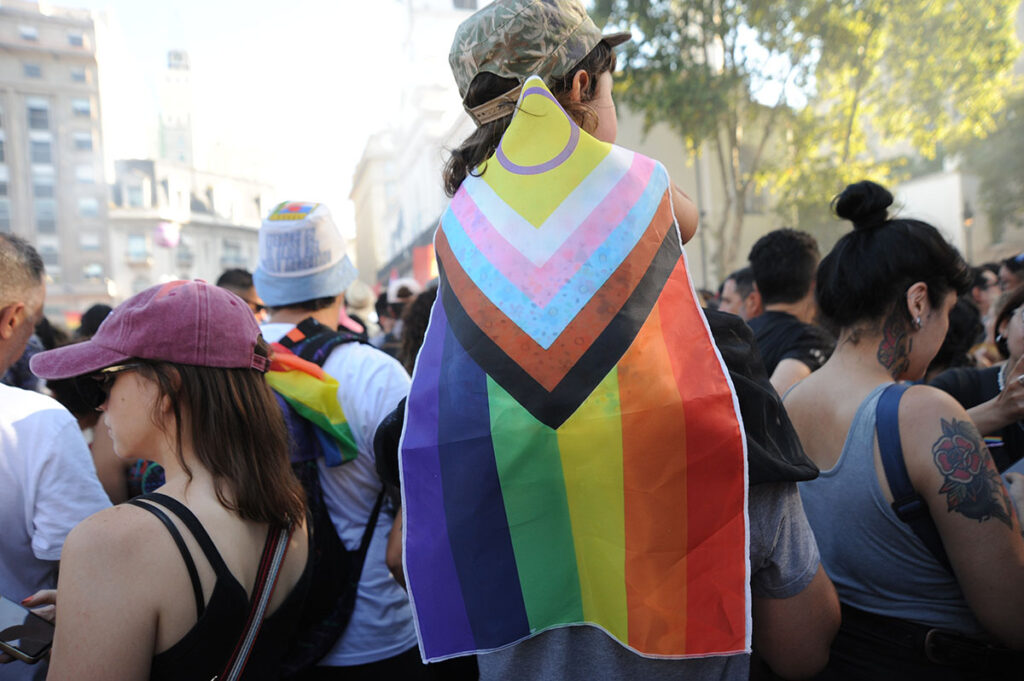
JH: -The LGBTQ community has always been characterized by its fighting spirit because I think it's inconceivable to anyone that simply being who we are should cause us harm . Through struggle and pride, taking to the streets and inhabiting them, we are reminded of the full potential of who we are. And I think the most important thing is seeing that massive turnout and showing them the way, paving the way for those who come after us, so they have a clear path. The streets reflected that: our strength, our convictions. It's something that remains intact and will never be taken from us.
MSO: – With the statements made in Davos, we felt we had to go back out into the streets. Beyond the economic aspect, which obviously affects us all, many people came out to support us at the march on February 1st. In my case, my family was telling me, "This is getting out of hand. It can't be that just for being a lesbian, you're accused of being a pedophile when we know who the pedophiles are." That march served to say, "Here we are, and it won't be so easy for you to make us invisible."
GA: – I suppose the march didn't change anything about this government. They're not officials with even the slightest social sensitivity; the fact that we fill the streets doesn't faze them. They have a new way of doing politics, it's somewhat individualistic and destructive. They create a virtual world based on their networks, their echo chambers, their misogynistic rhetoric, and they act accordingly as if that were the truth. They don't care about what happens in the streets, but we do.
The significance of the February 1st march lay in gauging our numbers and, if we can agree, how much we are willing to resist and continue resisting. At some point, perhaps the rhetoric will shift slightly, but their true intentions remain unchanged. They need to establish a public enemy to blame for all their failures, and they have chosen the feminist and LGBTQ+ communities as the cause of all the ills they claim to be solving.
Now we're in the streets, and for us, things have changed, and we saw it in the anti-fascist assemblies. We saw it, just like what happened in 2001 with the neighborhood assemblies. Finding strength in the collective and in what's close to us does change us.
-What urgent work needs to be done to stop hate speech?
MSO: – We must continue to maintain these networks, ensure the assemblies endure, raise awareness, and prepare for what may come. And we must vote wisely, because we need allies who can defend us from within. If we continue voting this way, we will have fewer and fewer of those people. And we must continue to maintain the networks, continue to go out, and continue to train ourselves, prepare ourselves, and prepare others so they know what this is all about and how to defend themselves against hate speech.
JH: -That work is fundamental and it's collective. It begins by naming hate, making it visible, and not normalizing it. And by educating about diversity, creating spaces for listening. We have to humanize, and that also means setting boundaries, knowing how to detect and denounce when someone is acting with hateful rhetoric. We have to actively build a culture of care so that everyone can live free and without fear.
GA: – We are a resilient collective. And the Argentine people are resilient too. We have reversed dark histories; there is a precedent of struggle that we always take as a reference, and that was the struggle of the Mothers and Grandmothers. A peaceful struggle, a struggle that had its ups and downs, and in that sense, I don't allow myself to be pessimistic. We have tools. When they say that history is always written by those who are winning or those who win… We may not be able to write the official history, but we write it with our weapons. Activism today is about coming together, about words, about standing shoulder to shoulder.
Tributes and march
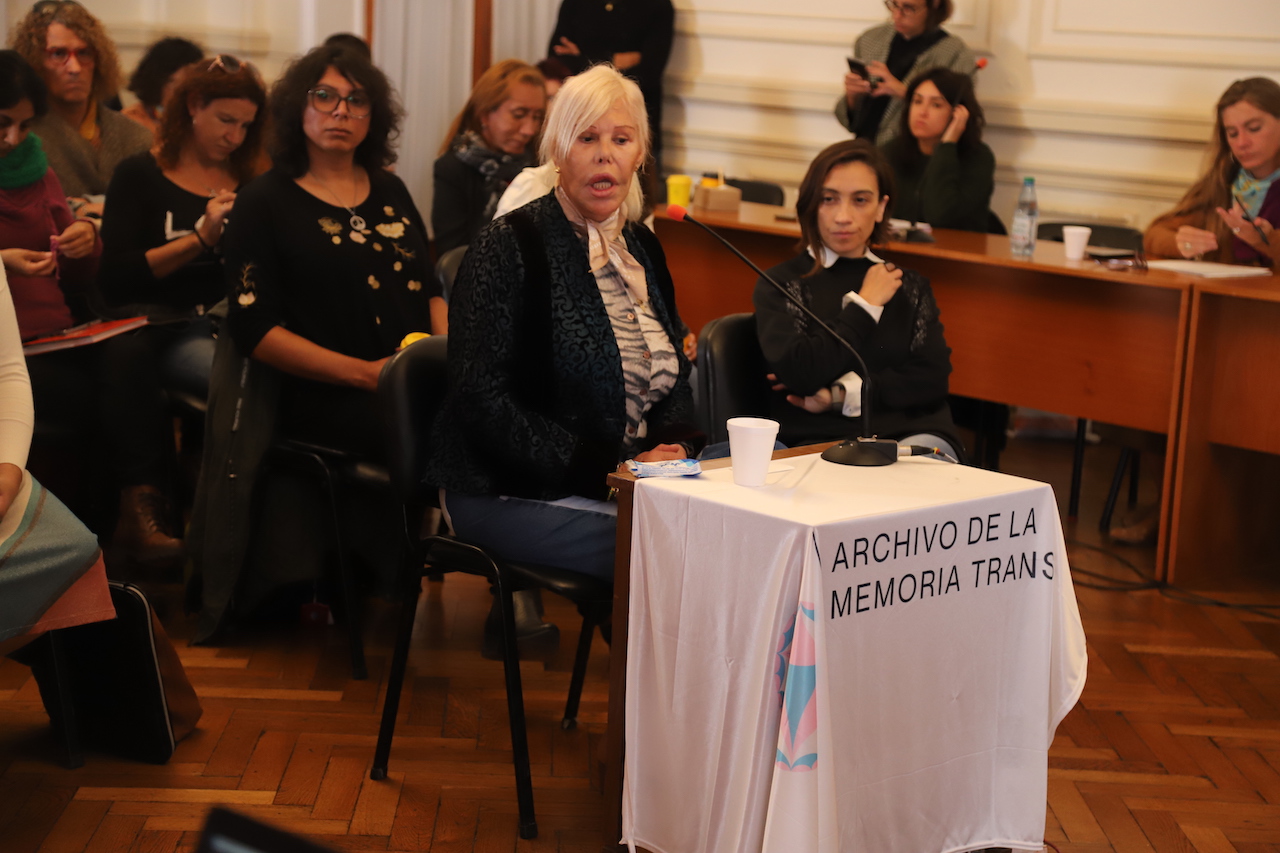
On Monday, May 5, the group Lesbianes Autoconvocades por Barracas organized a discussion on hate crimes and hate speech at the Buenos Aires City Legislature, located at Perú 160. It was an open event attended by LGBT leaders, members of parliament, and victims of lesbophobic attacks.
On Tuesday, May 6, the date on which the first anniversary of the triple lesbicide is commemorated, the call is to Plaza Colombia (Montes de Oca and Pinzón avenues) to "remember, embrace and demand justice" for Pamela Cobbas, Mercedes Roxana Figueroa, Andrea Amarante and Sofía Castro Riglos, the only survivor.
We are present
We are committed to journalism that delves into the territories and conducts thorough investigations, combined with new technologies and narrative formats. We want the protagonists, their stories, and their struggles to be present.
SUPPORT US

FOLLOW US
Related notes


We are present
This and other stories are not usually on the media agenda. Together we can bring them to light.
1 Comment