

Mistreatment of LGBT people in Sierra Chica Prison “is a systematic practice”
On April 14, at the Sierra Chica Penitentiary in Buenos Aires province, some 45 people were abruptly and violently transferred from the Diversity pavilion to the isolation sector, many of them half-naked.


Share

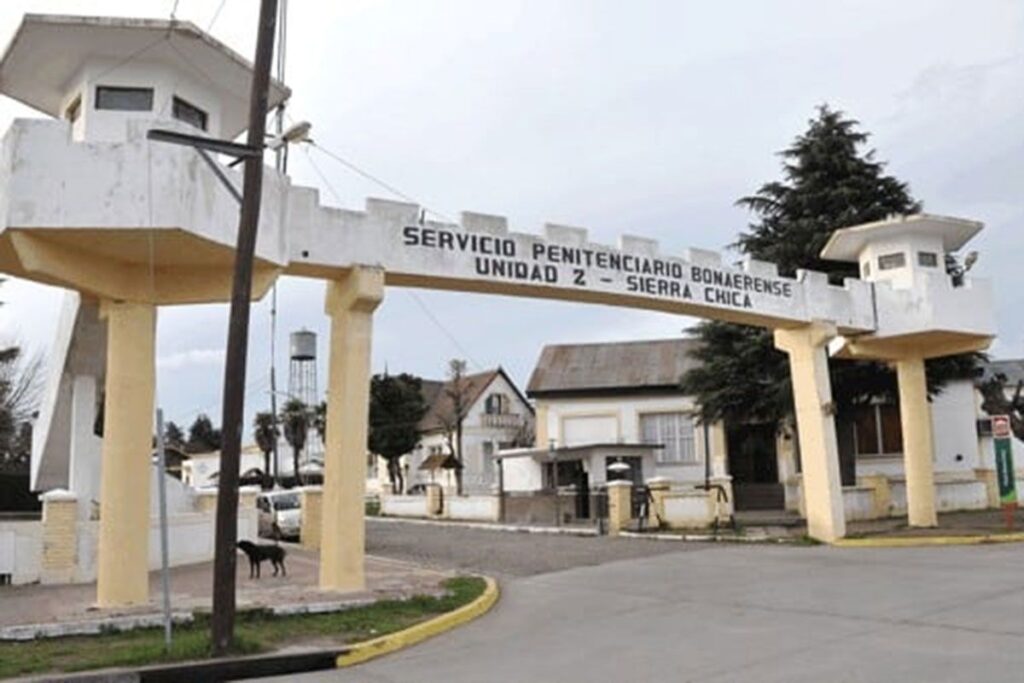
Social organizations are demanding an end to the mistreatment in the Diversity Pavilion of Prison 2 in Sierra Chica (Olavarría, Buenos Aires Province). They are seeking to clarify why approximately 45 people were taken to isolation cells, many partially undressed and while being beaten. The Provincial Commission for Memory (CPM) has filed a habeas corpus petition regarding the incident, and the Azul Execution Court No. 2 is handling the case.
“What happened in Sierra Chica is a systematic practice. We, as a civil society organization, have been denouncing it since 2012. But what is particularly striking this time is that there were more than 40 people involved. This is a mechanism of discipline,” said Claudia Vásquez Haro, a trans activist and president of the civil association Otrans Argentina Presentes .
On Monday, April 14, at approximately 4:30 a.m., prison authorities stormed Pavilion 9 of Penitentiary Unit No. 2 in Sierra Chica, where LGBT+ individuals, primarily transgender women, are housed. They abruptly and violently transferred about 45 people to the isolation area, many of them partially undressed, according to testimonies gathered. They did so without explaining to the detainees the reason for their actions.
“I don’t know what happened. They dragged me out, practically naked, just slapped clothes on me and dragged me out. I thought it was a search, and they ran me out through the rain and mud. They beat me. I don’t understand why … Honestly, I don’t understand why. The whole cellblock has changed. The girls are being held captive. They took all the girls to solitary confinement for three days. Some are still there. They won’t let them use their phones; they have no contact with their families. (…) I’ve been in that cellblock for fifteen years,” Jorgelina “Mimí” Leiva Ochoa, who until then had been the cellblock’s leader, told the Provincial Commission for Memory after her isolation. She was later transferred to another prison.
Unexplained blows and isolation
Several people reported being beaten during the procedure. Their cell phones were also confiscated, leaving them incommunicado. They remained in this situation for three to four days in the mailbox area. Some of them remained there for even longer. Meanwhile, some of those who returned to the cellblock were kept in solitary confinement, meaning they were isolated in their cells all day. Currently, none of the detainees are in this situation.
Also, “the provision of medicines to people with chronic conditions has been interrupted, and some whose health has been affected by being forced to remain semi-naked in the cells of the mailbox sector have not received health care . They point out that the prison authority took more than a day to allow clothing to be brought into the cells,” as denounced by the CPM.
Criminal complaint
The Commission filed a criminal complaint to investigate the incident and a writ of habeas corpus to demand an immediate end to the situation and special protection for the victims to prevent reprisals . The case is being handled by the Enforcement Court No. 2 of Azul, based in General Alvear, presided over by Judge Adriana Bianco. The judge ordered investigative measures and a hearing, which took place on Monday, where 15 detainees testified. She also ordered medical attention for all those affected, the return of their missing medications, and the restitution of their belongings.
“The people who went through that are very frightened, they fear for their lives, that they will be attacked. The system always operates through violence, and this was a wing that had been structured this way for many years. We are in constant contact with all the detainees to see what they need,” lawyer and social psychologist Roberto Cipriano García , a member of the CPM, told this agency.
Presentes contacted the Buenos Aires Penitentiary Service for this article, but so far there has been no response.
Form of torture
The CPM recognized that this constitutes a form of torture. “The use of isolation as a prison management technique and the material conditions in which it is carried out – lack of lighting, access to water, presence of humidity, deficiencies in sanitary facilities, deficiencies in food, etc. – constitute a form of torture and/or cruel, inhuman or degrading treatment prohibited under Article 5 of the American Convention on Human Rights and constitute a violation of Article 7 of the International Covenant on Civil, Economic and Cultural Rights,” the habeas corpus petition states.
They also emphasized that the procedure occurred without any explanation from the officers justifying their actions. "This blatantly violates the principle of legality in the execution of sentences, depriving the victims of their right to defense and directly contradicting the limits placed on arbitrary prison practices by the penal execution law," they stressed.
She also considered that the case should be investigated with a gender perspective since "the existence of a differentiated control regime for transgender women and people from the LGBT community housed in a penitentiary unit has been verified, which implies an abusive practice, seriously harmful to rights and discriminatory.".
Otrans Argentina issued a statement condemning the “violence and inhumane treatment inflicted by personnel of the Buenos Aires Penitentiary Service, under the command of the Unit Director, Chief Prefect Carlos Alberto Silva.” In the statement, they demanded that the provincial government clarify the situation.
They also considered it to be "a clear example of the 'iron fist' policy that has been implemented nationwide, which seeks to discipline and punish those who are considered 'different' or 'dissidents'.".
Both organizations acknowledged that this event is part of a prison emergency and a serious violation of human rights in the context of punitive confinement.
In jail for being trans
In this regard, the 2024 Annual Report recorded more than 67,000 human rights violations in the Buenos Aires Penitentiary Service in 2023, of which 50,430 were acts of torture. Among these, 31.7% involved lack of or inadequate healthcare; 27%, disruption of family and social ties; 13.8%, poor material conditions; 11.4%, isolation; and 4.1%, physical assaults.
Furthermore, the Otrans association published a comprehensive study in 2019 on the situation of the trans population in prisons . The report found that in Buenos Aires province prisons, 82% had no criminal record, and among those who did, less than half had been convicted. Meanwhile, 70% of the incarcerated individuals interviewed were foreign nationals, compared to 55% in federal prisons. Additionally, 73% suffered from some type of illness in Buenos Aires. “Conditions that contribute to the deterioration of health are observed: the housing situation exacerbates the problems, and the palliative measures addressing deficiencies in adequate food and medication provision,” the report explains.
We are present
We are committed to journalism that delves into the territories and conducts thorough investigations, combined with new technologies and narrative formats. We want the protagonists, their stories, and their struggles to be present.
SUPPORT US

FOLLOW US
Related notes



We are present
This and other stories are not usually on the media agenda. Together we can bring them to light.