

Fires in Chubut: those responsible have been identified, but the government remains silent
The fires that broke out on February 16 and 19 in Trevelin and Los Alerces are out of control, with little response from the authorities. The Nahuelpan Mapuche community is in danger. Three of the people responsible for the January fires have been identified.


Share

Cover photo: Courtesy of the Nahuelpan Community
CHUBUT, Argentina.
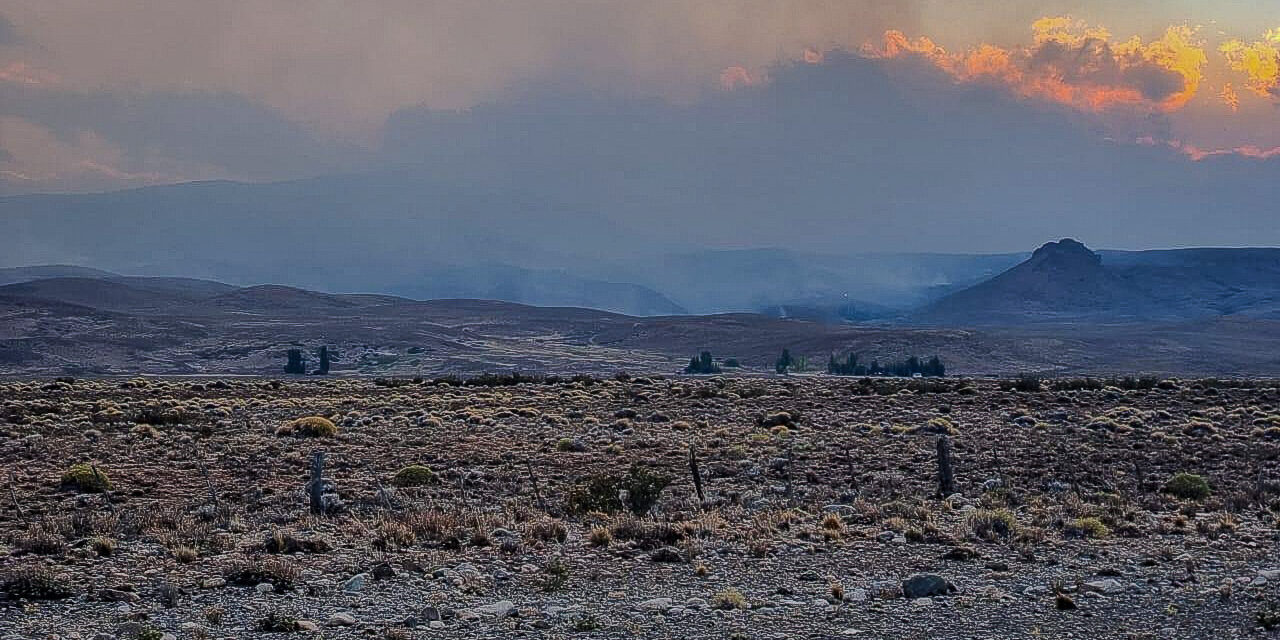
The fire that broke out on February 16th on Provincial Route 34, known as the "Riflemen's Road," in Trevelin (and which has now spread to Nahuelpan Hill) is out of control and the response from Chubut provincial authorities has been inadequate. The same situation is occurring with the fire that started on February 19th, 45 kilometers away, in the area of Ex Población Bustamante in Los Alerces National Park.
On February 20th, five raids were carried out, identifying three people as responsible for the fire in Atilio Viglione, a town in the Andes Mountains 250 km south of Esquel, which consumed nearly 5,000 hectares in mid-January. It was established that the owner of the private property where the fire started, "Establecimiento La Batea," and his two employees were responsible. The fire was allegedly started "with the approval and consent of the owner of said property, for the purpose of generating livestock grazing and selling firewood." In addition, firearms and ammunition of various calibers were seized during the operations. Accelerants, fuels, cell phones belonging to those involved, and footwear were also confiscated, according to local media outlets that obtained the report from the Police Investigation Division.
Double rod
More than a week has passed since the media blitz in which the governor of Chubut, national and provincial officials, and representatives of the Public Prosecutor's Office (MPF) accused members of Mapuche Tehuelche communities of being responsible for the fires in Patagonia.
It is noteworthy that there is a double standard in the media and judicial treatment of suspected and accused individuals, taking into account their "ethnic affiliation", social commitment or political positioning.
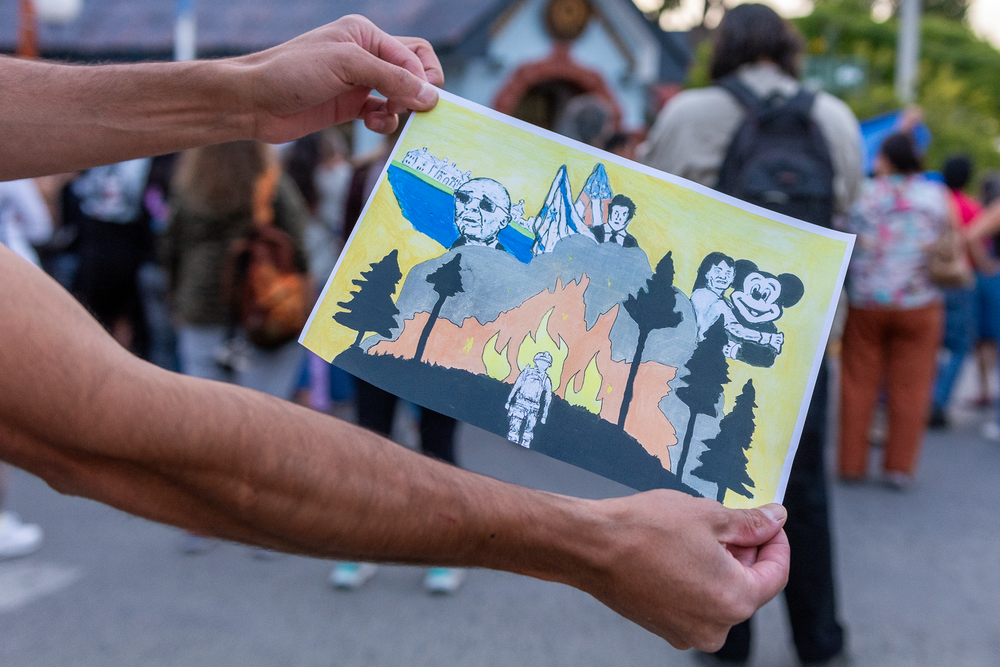
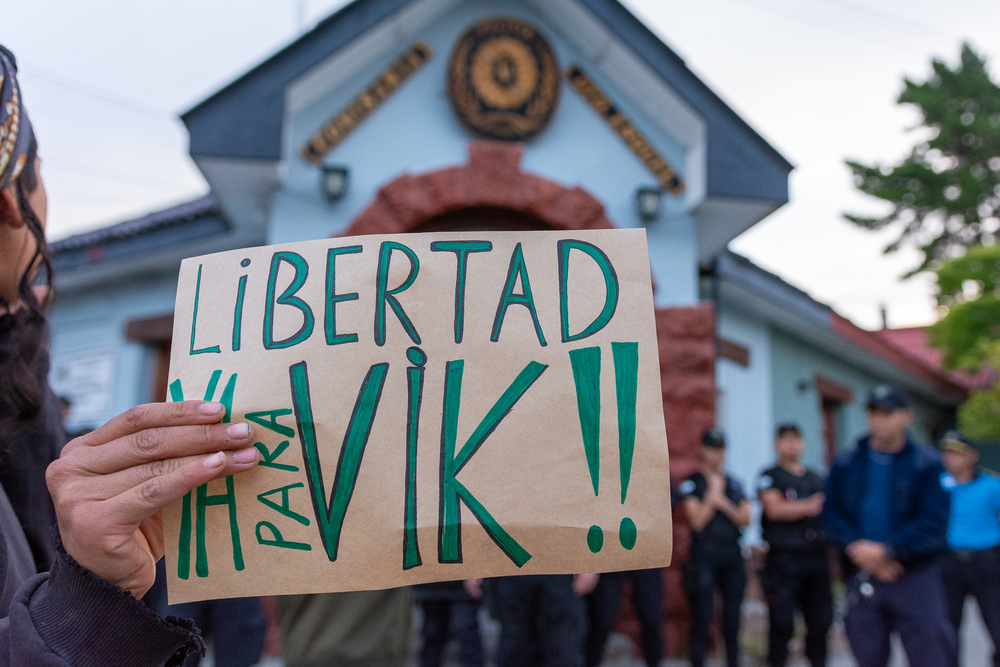
Victoria Núñez Fernández, a member of the Lof Pillan Mahuiza community, has been deprived of her liberty since February 12. She is under house arrest, accused of setting fire to the Amancay ranch, despite having presented compelling evidence (through georeferencing) proving that in the days leading up to and at the time of the incident, she was in Corcovado, approximately 90 km away.
His identity and photos of his face were replicated in every possible media outlet, confirming a biased hypothesis and disregarding the presumption of innocence. Hours after the hearing in which Judge Jorge Criado ordered his pretrial detention, the governor, along with prosecutors and other officials, held a press conference. There, he accused, by name and with photographs, individuals who were allegedly being investigated for their supposed responsibility in the fires in the Andes Mountains. None of them have been formally notified of any charges to this day. Nevertheless, the accusations were disseminated throughout the country.
Businesses that burn
The treatment regarding the investigations into the fire that broke out in mid-January at the La Batea Establishment, a few kilometers from Atilio Viglione, is very different.
In this case, the Public Prosecutor's Office, headed by Dr. Maria Bottini (the same one investigating the fire at the Amancay ranch), did not request pretrial detention, as it did with Victoria Nuñez. Judge Carlos Richeri only ordered a travel ban for those involved.
Another important fact: the news center of the Public Prosecutor's Office of Chubut published in detail the procedures, hearings and press conferences of officials regarding the accusations against members and associates of the Mapuche Tehuelche People, but so far, nothing about the investigations into private and commercial individuals and interests.
The Nahuelpan community in danger
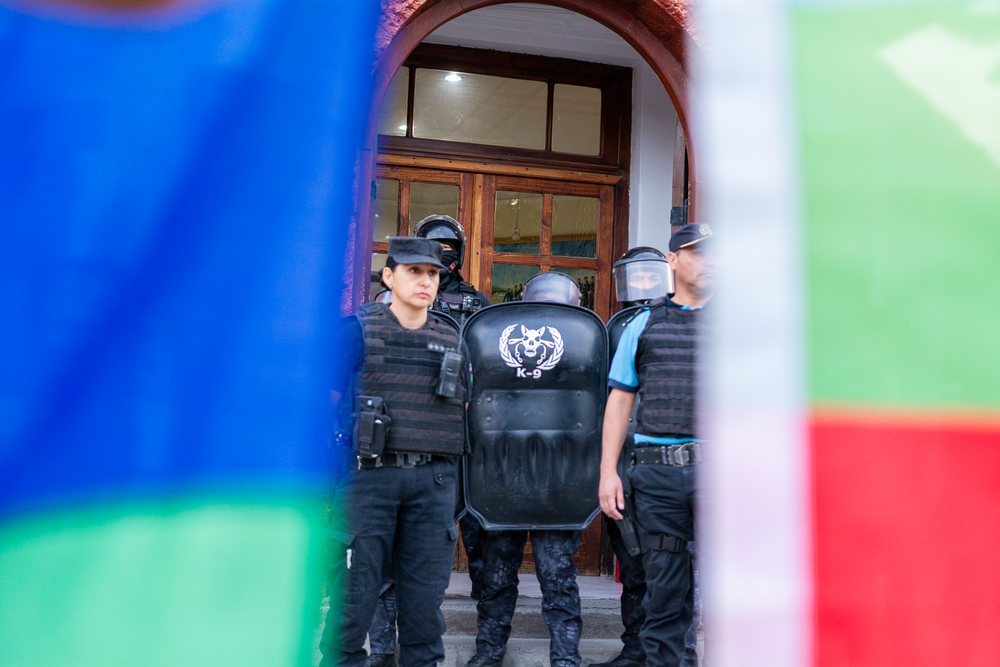
The Mapuche Tehuelche Nahuelpan Community, located 20 kilometers from Esquel, was one of those raided on February 12 and identified as part of a plan to "set Patagonia on fire".
On Sunday, February 16, a fire broke out on private land in an area known as "Camino de los Rifleros" in Trevelin. Over the following days, the fire continued to spread, reaching Nahuelpan Hill. At the time of this report, the fire borders the community of the same name and has already burned more than 2,300 hectares.
Accused without evidence of belonging to a terrorist organization, of having a shooting range on the territory, and of being fake Mapuche, the members of the historic Lof community ask in a statement: “Where is Torres now regarding the fires? When the fire broke out in Trevelin, it was due to an ‘accident’ on a private farm. Now that it has reached the Mapuche-Tehuelche territory of Nahuelpan, there are no statements from the governor regarding these events. But there were statements, naming names, accusing a peñi (Mapuche man) of starting another fire.”
In this regard, they publicly denounced that Governor Torres “ only comes to the Cordillera region to make misinformation videos or to check on his real estate deals in the Laguna Carao area. His presence exists only virtually, through publications paid for by the provincial government—that is, with money from all the people of Chubut.”
The situation in Nahuelpan is desperate; the work of municipal staff and Civil Protection is insufficient in the face of the gusts of wind and lack of rainfall typical of the dry season, but exacerbated by climate change, which is so denied by the national government.
Speaking to local media, Ayelén Garrido, a non-commissioned officer at the Trevelin Fire Station, stated, “We are operating on two fronts, one in Nahuelpan and the other in the National Park. Currently, we have 21 people on the ground and 15 more ready to deploy.”
Aylen Suarez, a member of the Lof Nahuelpan, observes the fire and asks herself: “Who are we in the end? Who are we in this hostile system that wants us submissive and enslaved? Who are we when our reflection shows us that history is reincarnated in the features of our skin? Who are we while the spirits weep, while nature weeps, while that ancient mountain full of life weeps? What the hell are we? Unreachable, unconscious, selfish. We are nothing, we are nobody. We are simple and useless mortals who tread this world carelessly, without respect. We are just flesh and bone that thinks it thinks, but it doesn't. We are incapable of feeling the sadness of Ñuke Mapu, the anger of the Ngen, we are incapable of hearing the voices of the Kuifikecheyem. What good is it to us? What good is it to stay here? Without commitment, without affection, without love, we are nothing, we are nobody.”
The firefighters: lack of personnel and resources
Hernán Mondino, a firefighter at Los Alerces National Park, expressed his concern about the precarious working conditions and low wages in the sector: “ We do what we can with what we have. The managers don't know the terrain; they don't understand that a lack of basic equipment can mean losing a day's work or that it means redoubling our efforts to protect the fire lines built up by the mountain range. They don't know about climbing the slopes with hoses or water pumps, they don't know about the rocks rolling downhill, or the burning trees that collapse, or about thirst and hunger, because we don't eat when we want to, but when we can. They don't know about taking risks so that the fire doesn't win, they don't know about the tension when things get bad, they don't know about being choked with smoke, they don't know about the knee pain, or the smell of smoke in our own homes. They don't know about waking up the next day and seeing that the fire has consumed all the effort of the previous day. They know nothing about wildfires.”
Currently, approximately 400 firefighters make up the workforce dedicated to combating wildfires across the country. The situation has worsened with recent layoffs and the resignation of around 40 workers due to low wages, which do not exceed $500,000 as a base salary. These positions have not yet been filled.
Uncertainty is growing. Under the previous administration, the firefighters had annual contracts, but since Javier Milei took office and Cristian Larsen was appointed head of the National Parks Administration, they only have a verbal promise of three-month contracts. None of the firefighters are permanent state employees.
Amid escalating wildfires in Patagonia, the government has moved forward with transferring fire management to the Ministry of National Security, headed by Patricia Bullrich. This measure calls into question the effectiveness of environmental crisis management and the protection of natural areas.
Criminalization
Simultaneously, a worrying trend of criminalizing members of Indigenous communities and self-organized firefighters has been observed. An emblematic case is that of Nicolás Heredia, arrested in Río Negro while volunteering to fight fires. Despite the lack of conclusive evidence, Heredia remains in pretrial detention, which has generated outrage and accusations of arbitrariness within the judicial system.
Businessmen who set fires go free, defenders of the territories go imprisoned.
Recently, Justice Minister Mariano Cuneo Libarona posted on social media: “ Our proposed reform of the Penal Code toughens the penalties for terrorists who start fires, with no possibility of release under ANY circumstances. If Congress approves our bill, the self-proclaimed Mapuche could face up to 25 years in prison if they continue to set fire to our Patagonia .”
The minister of the climate change-denying government makes no mention of the case of the rancher Atilio Viglione or of the fires that get out of control accidentally, as happened in 2021 in Cuesta del Ternero, where the experts showed that around 6,000 hectares were consumed by a poorly extinguished barbecue, for example.
These actions appear to be part of a single plan that prioritizes private interests over nature. The criminalization of Indigenous peoples and environmental defenders, and the dismantling of fire management systems, jeopardize the preservation of territories and the environment. Meanwhile, those responsible for developing fire prevention and control policies are looking for scapegoats.
As Mondino stated: "What I find macabre and meticulous is the development and communication strategy, designed to allow those responsible to go unnoticed. Since December 25, when the first major fire was detected in Patagonia, they have tried to cover up the smoke with their bare hands."
The fire that broke out on February 16th on Provincial Route 34, known as the "Riflemen's Road," in Trevelin (and which has now spread to Nahuelpan Hill) is out of control and the response from Chubut provincial authorities has been inadequate. The same situation is occurring with the fire that started on February 19th, 45 kilometers away, in the area of Ex Población Bustamante in Los Alerces National Park.
On February 20th, five raids were carried out, identifying three people as responsible for the fire in Atilio Viglione, a town in the Andes Mountains 250 km south of Esquel, which consumed nearly 5,000 hectares in mid-January. It was established that the owner of the private property where the fire started, "Establecimiento La Batea," and his two employees were responsible. The fire was allegedly started "with the approval and consent of the owner of said property, for the purpose of generating livestock grazing and selling firewood." In addition, firearms and ammunition of various calibers were seized during the operations. Accelerants, fuels, cell phones belonging to those involved, and footwear were also confiscated, according to local media outlets that obtained the report from the Police Investigation Division.
Double rod
More than a week has passed since the media blitz in which the governor of Chubut, national and provincial officials, and representatives of the Public Prosecutor's Office (MPF) accused members of Mapuche Tehuelche communities of being responsible for the fires in Patagonia.
It is noteworthy that there is a double standard in the media and judicial treatment of suspected and accused individuals, taking into account their "ethnic affiliation", social commitment or political positioning.
Verónica Heredia Núñez, a member of the Lof Pillan Mahuiza community, has been deprived of her liberty since February 12. She is under house arrest, accused of arson at the Amancay ranch, despite having presented compelling evidence (through georeferencing) proving that in the days leading up to and at the time of the incident, she was in Corcovado, approximately 90 km away.
His identity and photos of his face were replicated in every possible media outlet, confirming a biased hypothesis and disregarding the presumption of innocence. Hours after the hearing in which Judge Jorge Criado ordered his pretrial detention, the governor, along with prosecutors and other officials, held a press conference. There, he accused, by name and with photographs, individuals who were allegedly being investigated for their supposed responsibility in the fires in the Andes Mountains. None of them have been formally notified of any charges to this day. Nevertheless, the accusations were disseminated throughout the country.
Businesses that burn
The treatment regarding the investigations into the fire that broke out in mid-January at the La Batea Establishment, a few kilometers from Atilio Viglione, is very different.
In this case, the Public Prosecutor's Office, headed by Dr. Maria Bottini (the same one investigating the fire at the Amancay ranch), did not request pretrial detention, as it did with Victoria Nuñez. Judge Carlos Richeri only ordered a travel ban for those involved.
Another important fact: the news center of the Public Prosecutor's Office of Chubut published in detail the procedures, hearings and press conferences of officials regarding the accusations against members and associates of the Mapuche Tehuelche People, but so far, nothing about the investigations into private and commercial individuals and interests.
The Nahuelpan community in danger
The Mapuche Tehuelche Nahuelpan Community, located 20 kilometers from Esquel, was one of those raided on February 12 and identified as part of a plan to "set Patagonia on fire".
On Sunday, February 16, a fire broke out on private land in an area known as "Camino de los Rifleros" in Trevelin. Over the following days, the fire continued to spread, reaching Nahuelpan Hill. At the time of this report, the fire borders the community of the same name and has already burned more than 2,300 hectares.
Accused without evidence of belonging to a terrorist organization, of having a shooting range on the territory, and of being fake Mapuche, the members of the historic Lof community ask in a statement: “Where is Torres now regarding the fires? When the fire broke out in Trevelin, it was due to an ‘accident’ on a private farm. Now that it has reached the Mapuche-Tehuelche territory of Nahuelpan, there are no statements from the governor regarding these events. But there were statements, naming names, accusing a peñi (Mapuche man) of starting another fire.”
In this regard, they publicly denounced that Governor Torres “ only comes to the Cordillera region to make misinformation videos or to check on his real estate deals in the Laguna Carao area. His presence exists only virtually, through publications paid for by the provincial government—that is, with money from all the people of Chubut.”
The situation in Nahuelpan is desperate; the work of municipal staff and Civil Protection is insufficient in the face of the gusts of wind and lack of rainfall typical of the dry season, but exacerbated by climate change, which is so denied by the national government.
Speaking to local media, Ayelén Garrido, a non-commissioned officer at the Trevelin Fire Station, stated, “We are operating on two fronts, one in Nahuelpan and the other in the National Park. Currently, we have 21 people on the ground and 15 more ready to deploy.”
Aylen Suarez, a member of the Lof Nahuelpan, observes the fire and asks herself: “Who are we in the end? Who are we in this hostile system that wants us submissive and enslaved? Who are we when our reflection shows us that history is reincarnated in the features of our skin? Who are we while the spirits weep, while nature weeps, while that ancient mountain full of life weeps? What the hell are we? Unreachable, unconscious, selfish. We are nothing, we are nobody. We are simple and useless mortals who tread this world carelessly, without respect. We are just flesh and bone that thinks it thinks, but it doesn't. We are incapable of feeling the sadness of Ñuke Mapu, the anger of the Ngen, we are incapable of hearing the voices of the Kuifikecheyem. What good is it to us? What good is it to stay here? Without commitment, without affection, without love, we are nothing, we are nobody.”
The firefighters: lack of personnel and resources
Hernán Mondino, a firefighter at Los Alerces National Park, expressed his concern about the precarious working conditions and low wages in the sector: “ We do what we can with what we have. The managers don't know the terrain; they don't understand that a lack of basic equipment can mean losing a day's work or that it means redoubling our efforts to protect the fire lines built up by the mountain range. They don't know about climbing the slopes with hoses or water pumps, they don't know about the rocks rolling downhill, or the burning trees that collapse, or about thirst and hunger, because we don't eat when we want to, but when we can. They don't know about taking risks so that the fire doesn't win, they don't know about the tension when things get bad, they don't know about being choked with smoke, they don't know about the knee pain, or the smell of smoke in our own homes. They don't know about waking up the next day and seeing that the fire has consumed all the effort of the previous day. They know nothing about wildfires.”
Currently, approximately 400 firefighters make up the workforce dedicated to combating wildfires across the country. The situation has worsened with recent layoffs and the resignation of around 40 workers due to low wages, which do not exceed $500,000 as a base salary. These positions have not yet been filled.
Uncertainty is growing. Under the previous administration, the firefighters had annual contracts, but since Javier Milei took office and Cristian Larsen was appointed head of the National Parks Administration, they only have a verbal promise of three-month contracts. None of the firefighters are permanent state employees.
Amid escalating wildfires in Patagonia, the government has moved forward with transferring fire management to the Ministry of National Security, headed by Patricia Bullrich. This measure calls into question the effectiveness of environmental crisis management and the protection of natural areas.
Criminalization
Simultaneously, a worrying trend of criminalizing members of Indigenous communities and self-organized firefighters has been observed. An emblematic case is that of Nicolás Heredia, arrested in Río Negro while volunteering to fight fires. Despite the lack of conclusive evidence, Heredia remains in pretrial detention, which has generated outrage and accusations of arbitrariness within the judicial system.
Businessmen who set fires go free, defenders of the territories go imprisoned.
Recently, Justice Minister Mariano Cuneo Libarona posted on social media: “ Our proposed reform of the Penal Code toughens the penalties for terrorists who start fires, with no possibility of release under ANY circumstances. If Congress approves our bill, the self-proclaimed Mapuche could face up to 25 years in prison if they continue to set fire to our Patagonia .”
The minister of the climate change-denying government makes no mention of the case of the rancher Atilio Viglione or of the fires that get out of control accidentally, as happened in 2021 in Cuesta del Ternero, where the experts showed that around 6,000 hectares were consumed by a poorly extinguished barbecue, for example.
These actions appear to be part of a single plan that prioritizes private interests over nature. The criminalization of Indigenous peoples and environmental defenders, and the dismantling of fire management systems, jeopardize the preservation of territories and the environment. Meanwhile, those responsible for developing fire prevention and control policies are looking for scapegoats.
As Mondino stated: "What I find macabre and meticulous is the development and communication strategy, designed to allow those responsible to go unnoticed. Since December 25, when the first major fire was detected in Patagonia, they have tried to cover up the smoke with their bare hands."
We are present
We are committed to journalism that delves into the territories and conducts thorough investigations, combined with new technologies and narrative formats. We want the protagonists, their stories, and their struggles to be present.
SUPPORT US

FOLLOW US
Related notes



We are present
This and other stories are not usually on the media agenda. Together we can bring them to light.