

The potters: women who support homes and families in Paraguay
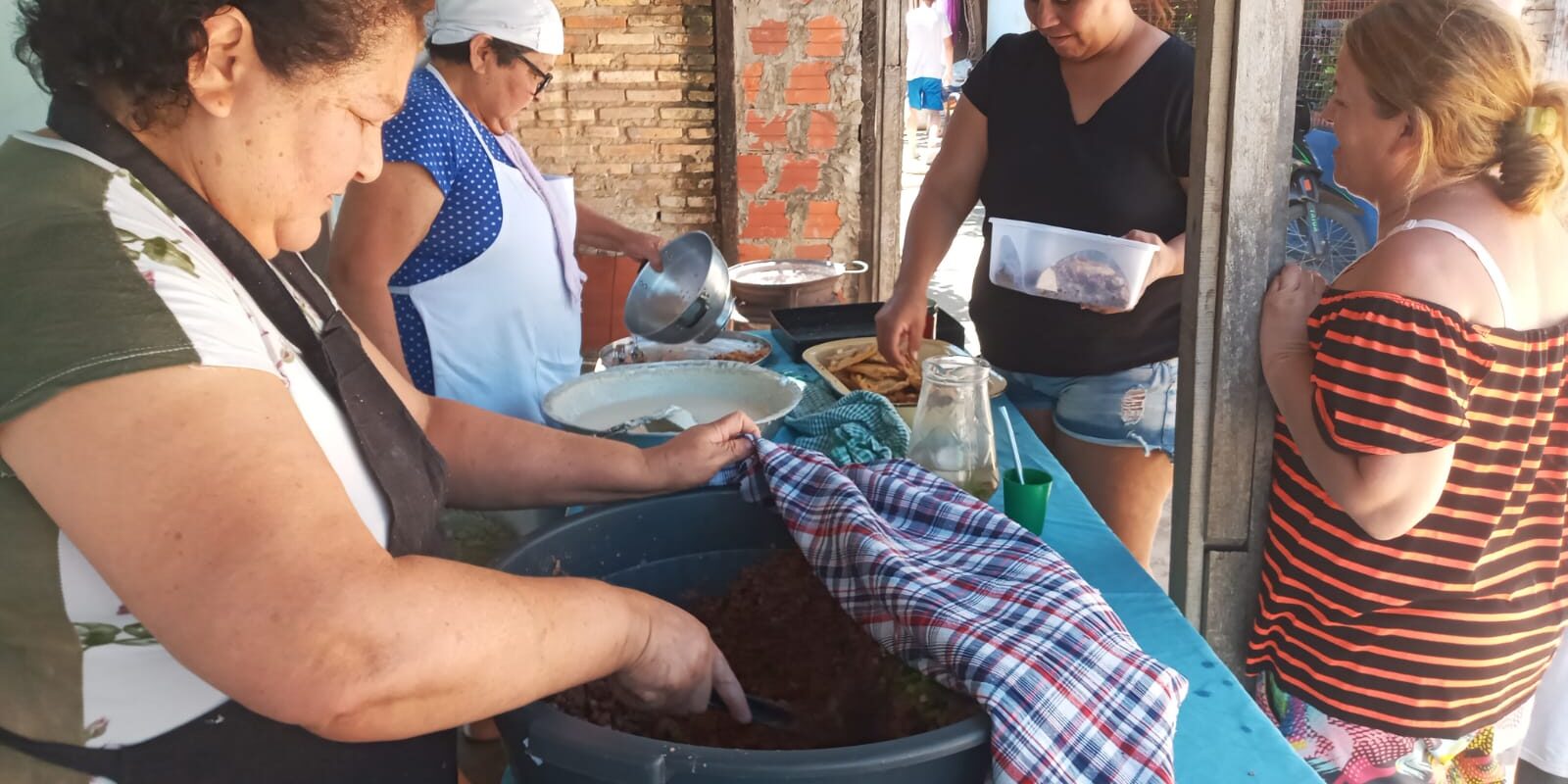
In Paraguay, community kitchens have historically been a grassroots response to hunger, an act of resistance and solidarity. During times of greatest economic and social crisis, women in neighborhoods and communities organize these kitchens, using a wood or charcoal stove and a large pot to prepare the food.


Share

“The Paraguayan woman is the most glorious in Latin America,” say grandiloquent speeches every February 24 (which take up the poem by Carmen Soler) with the image of the Kuña Guapa but without showing the voices of the women who build the country day by day.
"They only respect her on paper," Emilia Medina (Ña Eme) and Severina Insfran (Ña Seve) tell Presentes. Both proudly and with conviction lead community kitchens in their territory.
On February 24th, Paraguayan Women's Day, it is important to remember how women, often overlooked, have been the driving force behind various processes, including access to food. This is intertwined with the fight against social injustices and the struggle for the right to land and territory, to decent housing, health, education, and fair prices for peasant produce.
Ña Eme, 68, has been part of this community resistance for over two decades. She cooked for various community kitchen initiatives in the Bañado Norte neighborhood of Asunción and is currently a member of Pykui, the Community Kitchen Coordinator of the Bañado. A mother of 10, she was born in Asunción, but the great flooding of the Paraguay River in 1978 forced her entire family to relocate to Liberación, San Pedro. There, she and her family spent part of her childhood helping to plant and harvest tobacco to help cover family expenses.
“We used to plant cassava and corn on our land, and we would work together—we’d go with our father to harvest and exchange our earnings for food. When my mother got pregnant, she got sick, and we had to return to the Bañado when I was 14. We left everything behind and came back with just a few clothes. We had a very hard time; we were better off in the countryside,” she recalls wistfully. She says that if she could, she would like to return there, to those lands where they worked so hard to produce food.
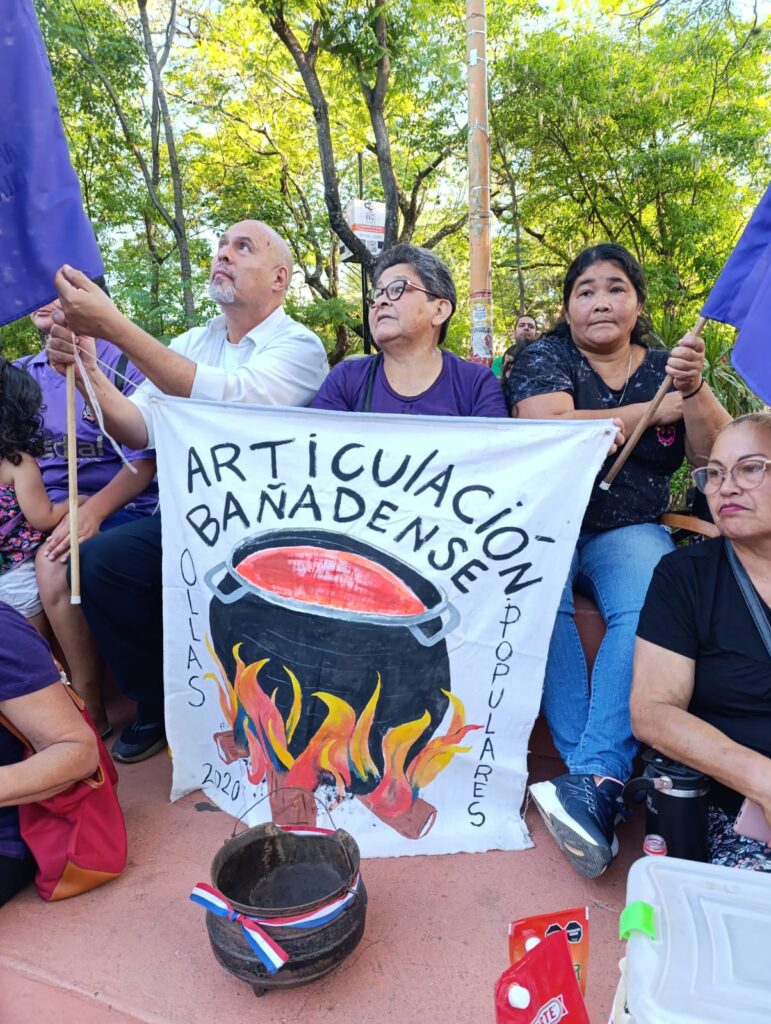
For her part, Ña Severina Insfran is a guardian of the seeds for the peasant women's organization CONAMURI. Their stories intersect, as she is also from Liberación San Pedro. She is a mother of 11, is 57 years old, and is part of a committee of peasant women producers that has been organizing since 1989. “We came to Liberación with my mother and father and have always worked on the kokue (farm).”
Both recall that they began participating in organizational spaces at a very young age, driven by the desire to contribute to improving the living conditions of their families and communities. Ña Emi started at age 19 in the organization “Pelopincho for Land and Housing,” and Ña Seve began as a catechist before forming the Committee of Peasant Women in Liberation.
“My thought is that my children shouldn’t suffer from the cold. I wanted them to live well, and I had children when I was 19. I suffered through the river flooding and being homeless, and I didn’t want my children to suffer what I suffered. When we returned to Asunción, we experienced hunger and poverty. We didn’t have a house and slept on the floor in other people’s homes. I was only able to study up to the fourth grade, but I like to be organized,” says Ña Emi.
A story of solidarity in times of crisis
In Paraguay, community kitchens have historically been a grassroots response to hunger, an act of resistance and solidarity. During times of greatest economic and social crisis, women in neighborhoods and communities organize these kitchens, using a wood or charcoal stove and a large pot to prepare the food.
“Pykui was born in 2020. At that time, we called it the Community Kitchen Coordinator, and we started in the neighborhood. With the pandemic, nobody was working, and my children told me to stay home, but I told them I couldn't stay home, that I had to do something. We asked companies for chicken scraps and cookies, and that's how we started cooking. I had a friend who teaches Guarani in another neighborhood, and he suggested we start community kitchens in our communities, and that's how we began. People in Bañado Sur were also organizing, and that's how Cira visited me so we could all get together to request supplies from the SEN (National Emergency Secretariat). The more of us there are, the more we get.” Now there are 180 meals a day, and sometimes even more people come,” says Ña Emi.
The COVID-19 pandemic didn't end the crisis, and the needs in the communities deepened. In Liberación, Ña Seve and her companions also started organizing a community kitchen that provides 75 meals every Tuesday and Thursday for the families of the 17 members of the Women's Committee. "We started working every two weeks after the pandemic. Now we have supplies for the community kitchen, and it's gotten a little complicated because we have to buy vegetables and meat; we don't have shade to keep the vegetables out all the time," Severina explains.
Although they now receive supplies from the Ministry of Social Development through the Community Kitchens and Soup Kitchens Law, they continue to contribute vegetables like tomatoes and bell peppers from their own production. During harvest season, they gather between 4 and 5 kilos per member, which they blend and freeze. They also organize chipá sales, bingo games, and other community activities to raise funds to purchase the supplies they need. In the Bañado neighborhood, they hold food fairs at farmers' events and during the March 8th and November 25th marches to raise money.
The products they receive from the State for two months: 10 packages of beans of 1 kilo, 10 packages of locro, 5 [packages of fine salt, 5 containers of oils of 5 liters, 120 containers of milk of 1 liter, 5 packages of sugar of 5 kilos, 10 packages of peanuts of 1 kilo, 10 packages of yerba mate of 2 kilos, 5 packages of flour of 5 kilos, 4 packages of short noodles of 5 kilos and one package of tallarín noodles.
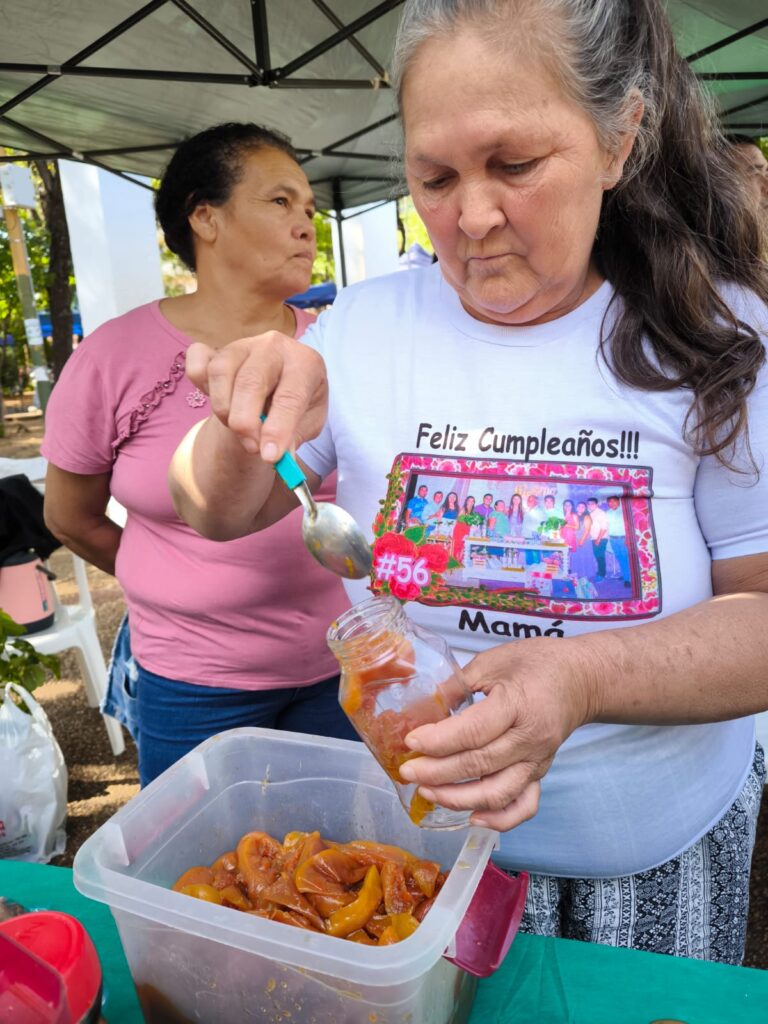
Through their work, these women not only support their families but also build a network of mutual support that confronts economic and political challenges. They don't seek the limelight or public recognition, but their struggle is present in every act of solidarity and every meal served to families in need. Their work has been fundamental in times of crisis and continues to be crucial in ensuring the survival of many families, building a fairer future from the ground up, starting with everyday actions.
Community kitchens are not just a place to cook food; they are also a meeting place for women in the community to talk about their daily lives, their needs, and their concerns. “It’s a space where we share, drink tereré, vent, and think about how to help spiritually or financially. Through this, we also attend training sessions and talk among the members. Sometimes people visit us, and we discuss how to work in the kokue,” emphasized Ña Seve, elaborating on the importance of the space.
The law achieved
One of the biggest victories for women organized in community kitchens was the passage of Law 6380/19, which officially recognizes and supports community kitchens in Paraguay. This law, championed by women who don't necessarily identify as activists, guarantees state funding for the purchase of supplies and the training of those who work in community kitchens.
Emilia, who was involved in the struggles that led to the creation of this law, recalls: “I was so happy, I learned that if we organize ourselves we can get our government to give us what we demand, they will listen to us more and we will achieve our rights. There were 48 soup kitchens in 2020 and we protested even in the rain, although they give us little, we got the law.”
While the approval of the Law on Community Kitchens and Soup Kitchens was a historic milestone spearheaded by the women who run the soup kitchens, its transfer to the Ministry of Social Development has made access more bureaucratic. It now requires infrastructure and provides fewer products than were previously included, such as meat, vegetables, and eggs. “To get supplies, they ask for paperwork and everything. Luckily, we had a space we'd previously acquired for a bakery, and with that, we've now created our soup kitchen. And in the end, it's not for the poor. Many committees don't have a place to live; it's not easy to get supplies, and anything is hard to come by. They don't give anything away, just the bare minimum,” said Seve with concern.
This precariousness and limited access to supplies is nothing new in the country; it adds to the fact that before the existence of this Law, indigenous communities were already denouncing that they were not receiving any support in the midst of the pandemic.
Request for recognition
The challenge faced by women who lead community kitchens is, in many cases, being recognized for the impact they generate, without receiving the visibility they deserve. “International Women’s Day is for us as volunteer women workers. If the government, senators, and the president are listening, I ask that we, the volunteer women, be granted our right to a salary. We don’t have any financial support, neither at the soup kitchen nor at home,” stated Emi.
The work of women in community kitchens is also linked to the struggle for food sovereignty, a fundamental right that many women have defended throughout the years. The recognition of food sovereignty is not only related to food production, but also to fair and equitable distribution, in a context where large agribusiness corporations attempt to control food production and consumption.
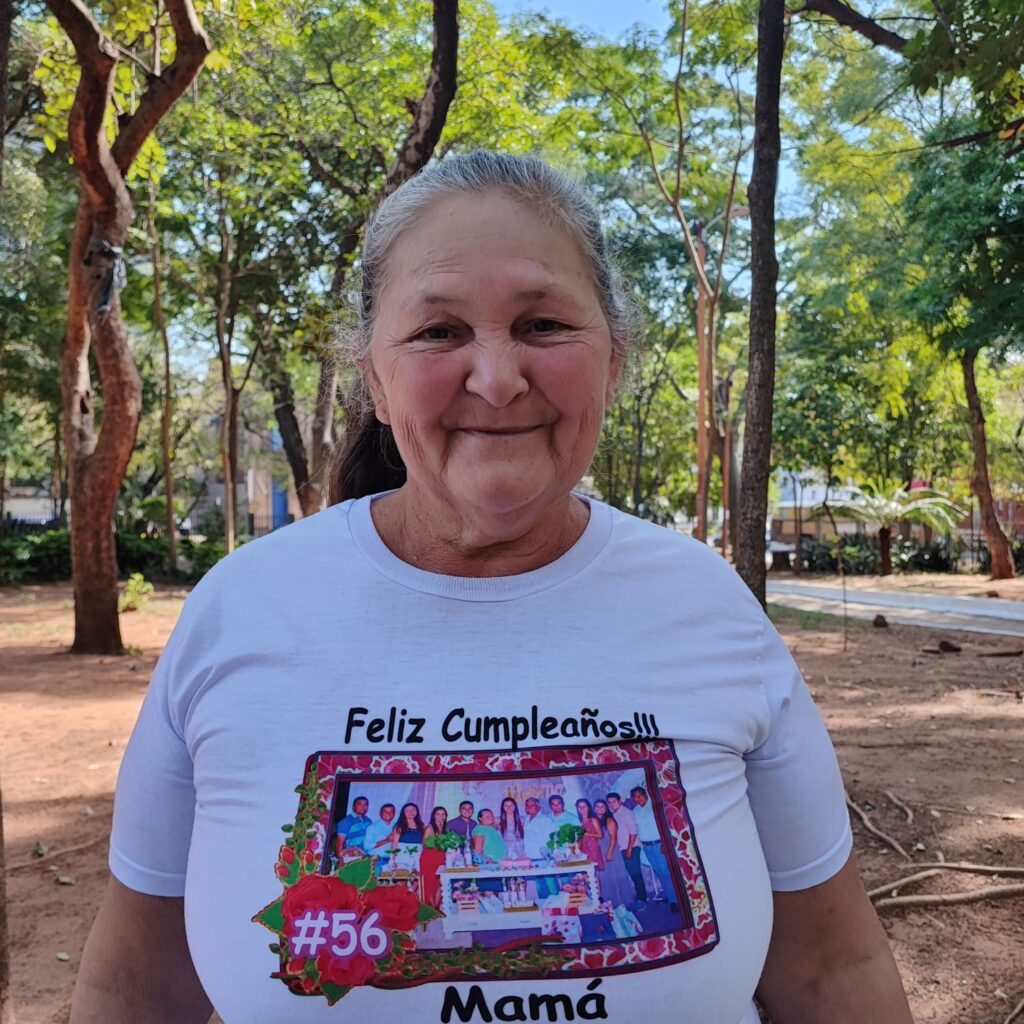
The women who lead community kitchens are, in many cases, the main defenders of food sovereignty and security, as they are organized to produce, distribute and ensure that their communities receive food fairly.
“Children proudly come to eat, and that makes us happy. You serve them stew with milk and they are happy. For me, it is important to organize and demand our rights, and it is important that you can do something impressive in your community that the people who worked with me will never forget. I have a young man who tells me that he will never forget that he is proud, and that makes me cry,” says ña Emi.
We are present
We are committed to journalism that delves into the territories and conducts thorough investigations, combined with new technologies and narrative formats. We want the protagonists, their stories, and their struggles to be present.
SUPPORT US

FOLLOW US
Related notes

We are present
This and other stories are not usually on the media agenda. Together we can bring them to light.