

The true meaning of being woke and its relationship with Latin America
In the United States, the anti-woke movement was formed to oppose the rights agenda.


Share

For several months now, the idea that woke culture is outdated , along with claims of setbacks in human rights internationally. At times, it seems like just another formulation of the "feminists have gone too far" or "progressivism has exaggerated" . For those unfamiliar with the term or these debates, here's a brief summary.
Woke is an American English term meaning "to be awake" or "aware," and it became popular in the United States during the 1960s due to the struggle for civil rights for Black people. It's a message, a way of reminding people that they were fighting. In 2010 in the United States, thanks to the Black Lives Matter , the term gained renewed relevance and its meaning broadened. In the 21st century, with the hashtag #StayWoke, for example, it encompassed not only anti-racist stances but also feminist positions and the defense of LGBTQ+ rights, among others.
As is typical of current social media debates, and particularly in the United States, woke movement formed to oppose the agenda of demands that the woke movement more or less represented. The anti- woke is based on more conservative discourses and is a reaction to certain debates that took place in the early decades of this century.
What does this have to do with Argentina and Latin America?
First of all, we're talking about this because we live in a hyper-connected world where certain topics and words are shared globally. But above all, because we have a deeply ingrained tendency to take words, phrases, or entire ideas from the Global North and use them in our own context. Even back in the old MSN Messenger days, it was clear that anything, no matter how unoriginal it may seem, gets a bit more attention and prestige when said in English. I like to call this tendency the Santiago Artemis syndrome , where every other word is replaced with a third in English, as if announcing that one is bilingual and thinks in those terms.
While many issues are the subject of international dialogue, they don't manifest in the same way or carry the same weight in every country or region . For example, a few years ago, the world saw #MeToo as a movement originating in the Global North to denounce sexual assault. Many people in this part of the world began using #MeToo to discuss these issues, as if the Ni Una Menos movement hadn't started two years earlier in our country. And that's not even mentioning the lack of acceptance by a large part of our society of acknowledging the structural racism in which we live.
Moreover, there are significant differences between #MeToo and #NiUnaMenos, from their contexts of emergence and the spheres of political representation to the paradigmatic cases that gave rise to the movement. This may seem obvious, but when we try to lump together massive experiences under single categories, we often end up oversimplifying to the point of completely altering the meaning of those experiences.
In Argentina
It is important to evaluate which meanings are diluted in our recent history when we equate struggles and replicate disputes. Something similar happens when everything is debated under the term progressivism-anti-progressivism, as if the meanings of equality, freedom, rights, and countless other issues that arise in our lives have not always been in dispute.
At the risk of sounding exactly like Dr. Polo, saying no "hello" or "afternoon," and "Spanish is spoken here," it's necessary to be able to put our history into words, to take those categories and forms of social and political organization that help us and leave aside those that don't. During the 678 vs. Clarín dispute, the expression "cultural battle" became popular, a term that even in our present has shown its limitations.
The selective use of Anglicisms to describe our reality often reflects a class perspective, the aspirations and desires of a particular sector, rather than the whole. In Argentina, as in the rest of the region, profound contradictions and diverse cultural expressions coexist.
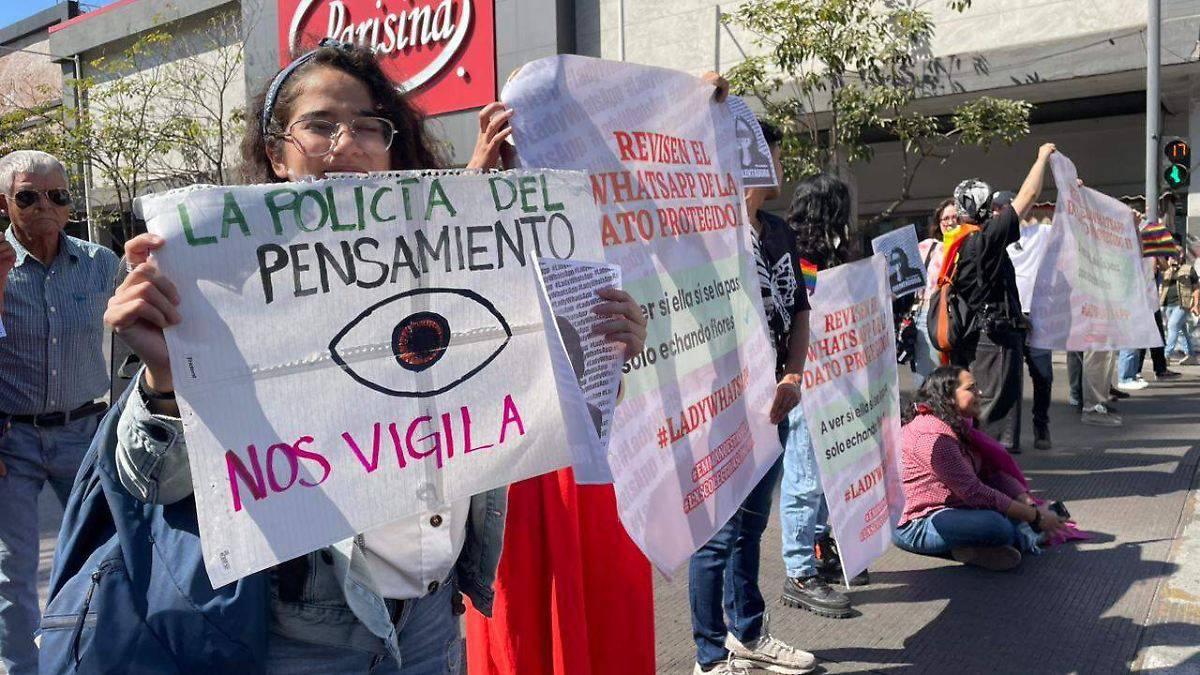
In times when ultraconservative right-wing rhetoric is gaining traction globally, we cannot interpret this rightward shift solely through the lens of other regions. While the United States announces the end of woke culture at Disney, eliminating visibly LGBTQ+ or racialized characters, in Argentina, the most-watched TV program featured a moving moment with a transgender person as its protagonist.
Luciana's mother, a trans contestant, entered the house to hug her daughter for the first time after learning of her transition . A small woman, with a large cross hanging from her chest, entered the reality show to hug her daughter and tell her, " I love you ." The scene of a relationship between a mother and a trans daughter becomes universal because, more or less, we all go through life seeking the love and approval of our parents.
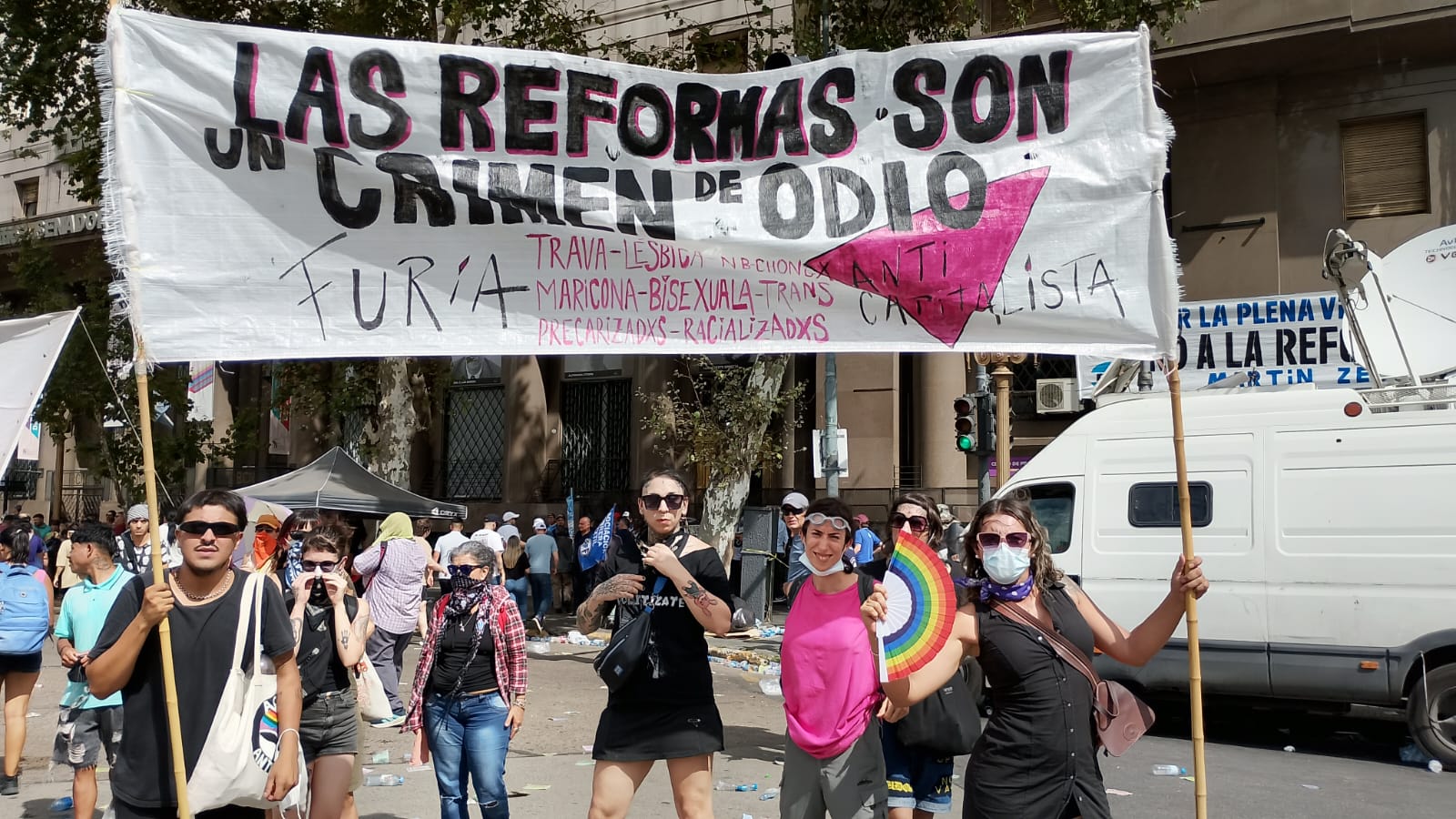
This scene doesn't erase the regression our country is experiencing in terms of human rights . Nor does it allow us to say that we are better off than the United States; it simply shows that cultural transformations are always complex.
The Trump effect
On the same day we saw the emotional scene on Big Brother and Donald Trump assumed the US presidency, declaring that there are only two genders, male and female, Gabriel Lucero , comedian and creator of “Broken People,” brought back to the forefront on X a clip from an interview with a non-binary trans person in which the word “xadre” or “sadre” was used. Many people heard that word for the first time. There was rejection, mockery, and contempt, and many also said it was woke . Personally, I've known the expression for a long time, but I don't use it because I don't like how it sounds, and I believe I have the vocabulary and tact to respect identity without speaking in the language of a certain segment of the LGBTQ+ community. And because in every movement, there have always been debates and different ways of seeing the same thing. There were debates at the National Women's Meetings since the 1980s, there were debates in the Pride March organizations, in networks of teachers, actors, and professionals, and there surely will continue to be.
Making this complexity evident also helps us see that it's not all about certain battles that seem more important than others , and that there is resistance and creation that exceed what any organized group defending rights tries to project. Several generations who grew up with Disney content didn't need much to twist its meaning and become boys or teenage boys who dreamed of being princesses, or vice versa . We created our LGBTQ+ culture by taking what we liked and discarding other things. Millions of people found freedom in the editions of Dancing with the Stars," where, amidst the fighting and exuberance, dancers appear, and every now and then iconic figures like Florencia de la V.
We build ways of living, of making families and of inhabiting the world together with our loved ones, and that is not exhausted by being categorized as woke , much less by understanding ourselves as a fad.
This article was originally published in La Nota . It is reproduced here thanks to a republication partnership.
We are present
We are committed to journalism that delves into the territories and conducts thorough investigations, combined with new technologies and narrative formats. We want the protagonists, their stories, and their struggles to be present.
SUPPORT US

FOLLOW US
Related notes
We are present
This and other stories are not usually on the media agenda. Together we can bring them to light.