

What is Lof Pailako, the Mapuche community that the Justice system and the government want to evict?
The Lof Pailako community faces another eviction attempt. What is it like and who lives there?.


Share

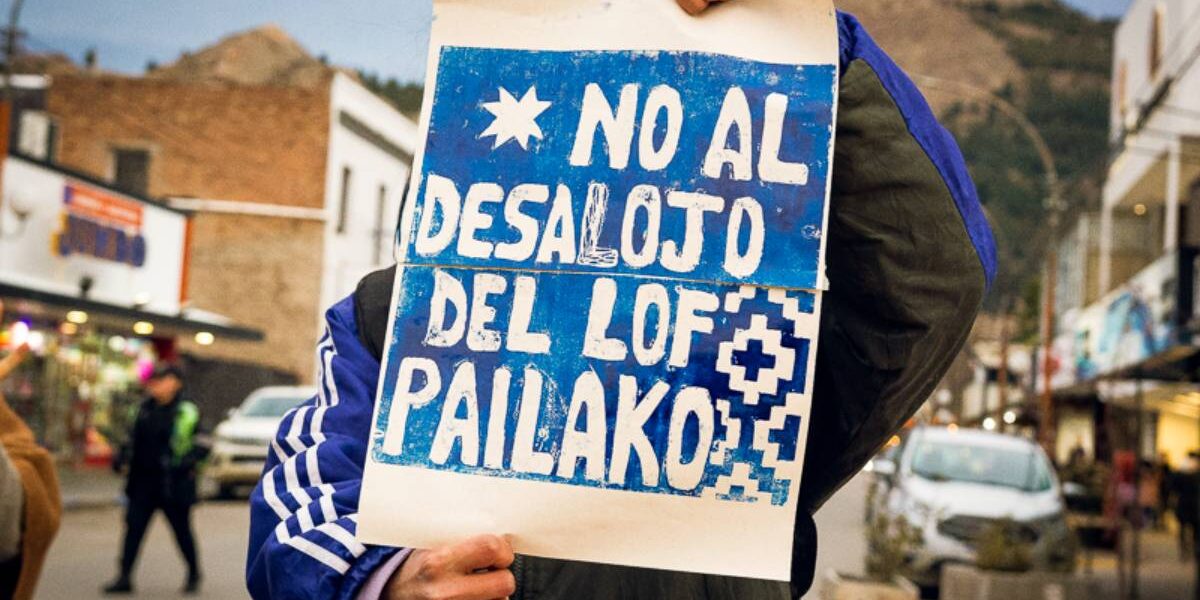
For months, the Mapuche community of Lof Pailako, which claims territory in Los Alerces National Park – 35 km from the city of Esquel (Chubut province) – has been under scrutiny from the courts and the government of Javier Milei. The threat of evicting a group of families living there is neither new nor the only legal case its members face. The legal dispute is full of twists and turns, but above all, it is marked by setbacks and rejections of the community's requests, which continue to demand a dialogue, a peaceful solution, and protection for the children who live there.
Everything accelerated in the last few days. At the end of December, Federal Judge Guido Otranto authorized the National Parks Administration to evict the community. On the first business day of 2025, at 8:00 a.m. on Thursday, January 2, Federal Police personnel toured the Pailako territory along with the National Parks Superintendent, Danilo Hernández Otaño, and delivered a notification. The document states that they have five business days to leave. If they do not vacate before January 9, “ force will be used.”
“The Supreme Court never ruled on the appeal we filed, and the judge understood that he would wait for the Court's decision, but the Comodoro Court ordered the immediate eviction. Now we have to see how the community organizes itself,” Gustavo Franquet, from the Lawyers' Association, which represents them in court, Presentes
The community is not alone. It is accompanied by many others, including the Third Peace March of Jujuy, social organizations, and a solidarity network that has been growing since Pailako called on the entire community to stop the eviction.
Last weekend, various activities in support of Pailako took place throughout the country. A survey of the territory and a press conference at 11 a.m. at the Melipal Cultural Center in Esquel were announced for Wednesday the 8th.
The communities' request
Pailako, the communities they support, and the Lawyers' Association vulnerability of the children in the community, on social media and in the press for months .
A technical report prepared in November by psychologist Ruth Vargas highlighted that “a forced eviction involves the participation of state officials and militarized police officers, all with the knowledge and acquiescence of their superiors. This action could potentially generate horror in children and adolescents, which can have a perverse effect on the developing bodies and minds of Mapuche children and adolescents, as well as on their families and community. It is also relevant to understand the subsequent cumulative harmful effects in the medium and long term on the cognitive, emotional, and maturational development of children and adolescents.”.
Behind the legal battle lies a political conflict with Indigenous peoples, a situation that was already brewing and intensified under Milei's government. It's worth recalling that on November 11, 2024, Argentina was the only UN member state to vote in the General Assembly in New York for a resolution against the rights of Indigenous nations. Furthermore, on December 10, a decree repealed Law 26.160 , which had declared a state of territorial emergency until 2025 and mandated the National Institute of Indigenous Affairs to conduct land surveys and suspend evictions.
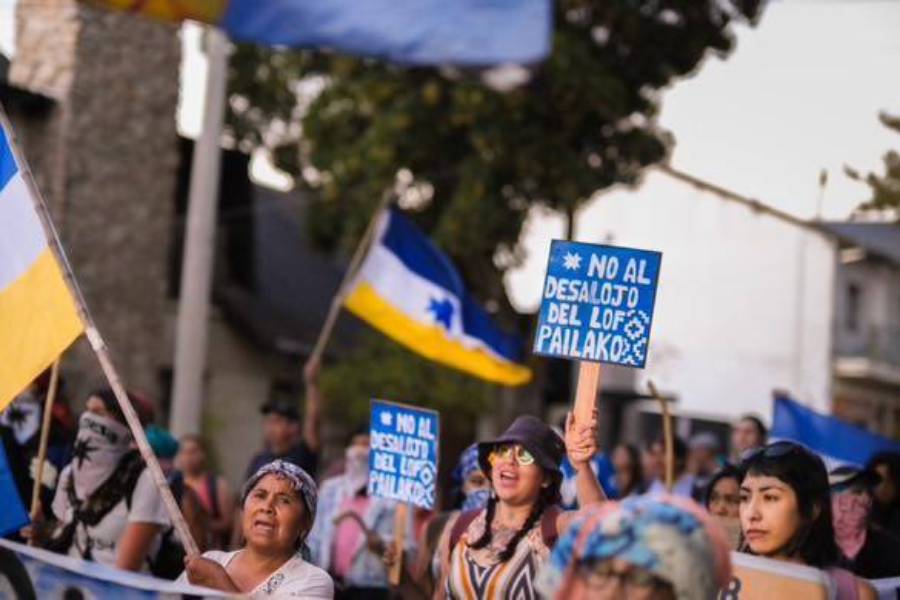
Photo: Federica Pellegrinotti / Facebook Lof Pailako
These days the indigenous movement is demanding from the State, through a statement signed by more than 130 communities, respect and fulfillment of the constitutional obligations towards indigenous peoples.
In the statement signed by the communities, the Argentine State is accused before international organizations of committing crimes against nature, humanity, and culture against Indigenous peoples, in collusion with transnational extractive companies. The statement urges the Argentine government to fulfill the commitments it made upon signing ILO Convention No. 169 and to issue community land titles for Indigenous territories.
Lof Pailako: where, how, when
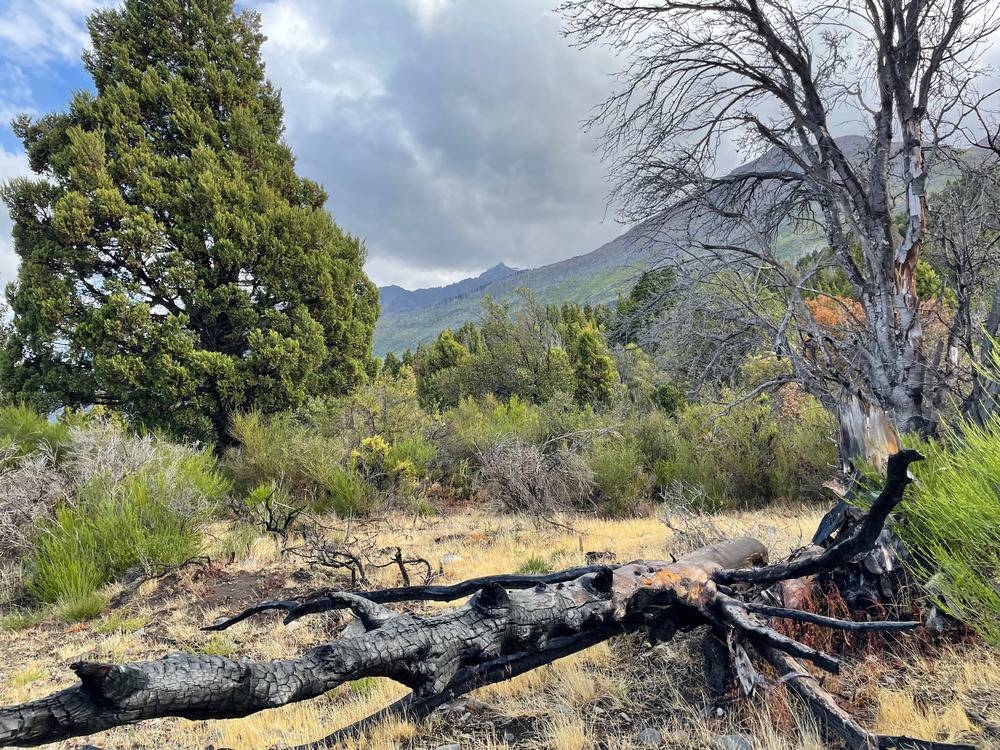
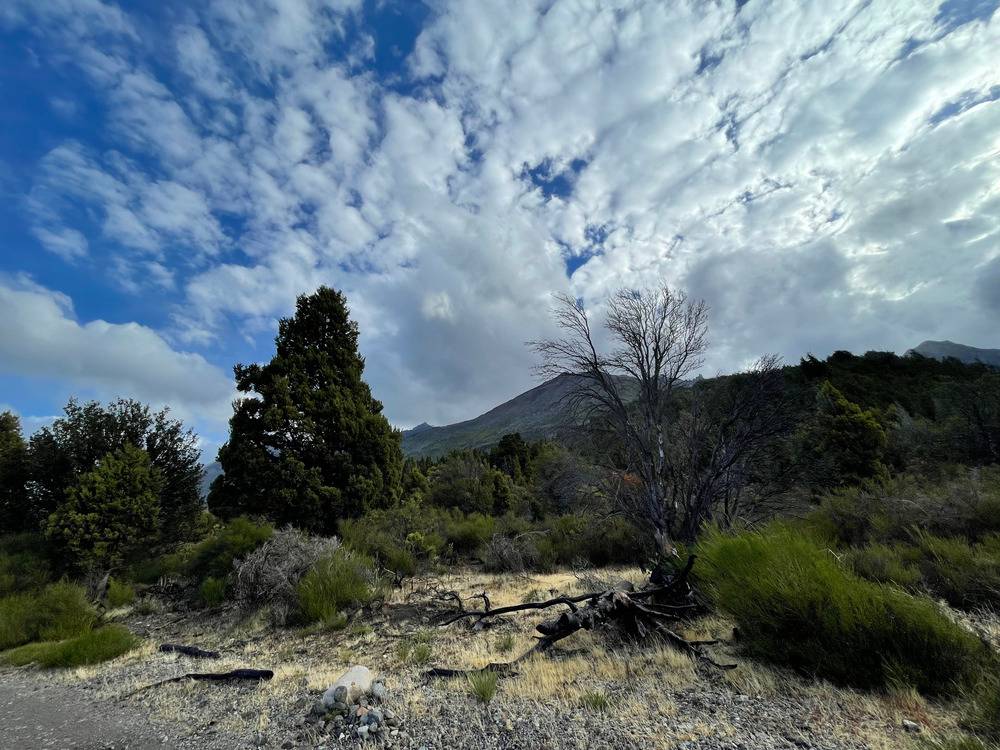
Presentes visited Lof Pailako a few months ago. To get there, you have to venture into Los Alerces National Park and cross its forests. During our visit, the remains of ancient trees, destroyed by the fires of last summer , were part of the landscape. Members of Lof Pailako have also been accused in connection with those fires, and statements to the press by Governor Ignacio Torres and the Director of National Parks, Cristian Larsen, have implicated the community.
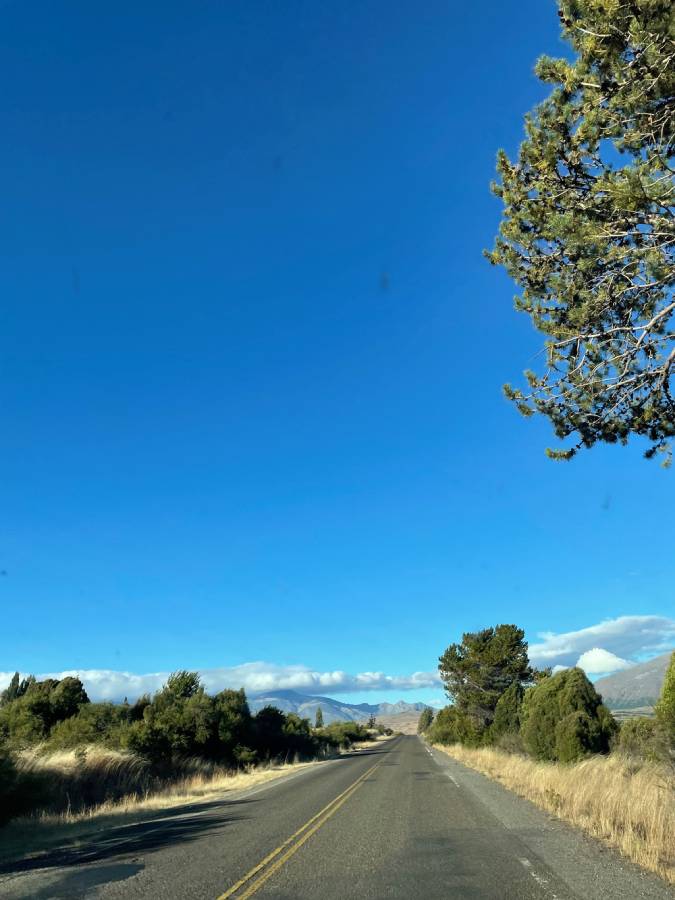
For security reasons, only one of the people we spoke with one afternoon around the fire and mate in one of the rukas (houses) will be named. The names of the other two people will not be published. They are all young and wear colorful silk scarves covering their heads. A baby born in this same ruka was also present at our meeting.
The Lof Pailako is made up of about twenty people, mostly families with children, who have been claiming this territory since 2020. In the midst of the pandemic, the community in formation settled on a plot of land in the Andean mountain range in Los Alerces, where they built their rukas (houses) and an educational center.
They are in constant communication. They use solar power even though the batteries are ruined by the cold. They try to communicate in person. "That way, many misunderstandings are avoided." They all agree on a time to sit down and talk.
To reach the house where we meet, you have to climb the hill and pass through a gate where the Mapuche flag flies. Now, that flag (the Wüñellfe) and the Wiphala have been banned since May by Larsen through a resolution. “No flag other than the Argentine flag will fly in the National Parks,” said presidential spokesperson Manuel Adorni on May 3. In June, the National Parks Administration intensified its racist practices by requesting, in a message sent by the Head of Communications, Iael Gueler, the promotion of Indigenous festivities such as the Mapuche New Year, which was celebrated that month.
Lemu
One of the first to claim the territory of Lof Pailako was Lemu Cruz Cárdenas, a 35-year-old Mapuche man. For seven years, before the land claim, he was a firefighter with the National Parks Service. Today, he says, he faces harassment from the authorities of the institution he worked for and from the provincial government. In addition to the crime of trespassing, he was accused, with the support of the local press, of being behind the fires.
When we met him in person, eviction was on the horizon, but not as imminent as the recent fires and the accusations that held him responsible. “The real cause is the land reclamation; the fire thing is a lie. They're making it up. They called me the pyromaniac,” Lemu told us, having become the community's scapegoat.
In the Mapuche language, Pailako can have several interpretations. “For us, it means a peaceful stream,” Lemu explains. The stream that gives the community its name is formed by several smaller streams that flow down from the hill and combine to form a larger one. “We used to live on the banks of that stream,” he recalls.
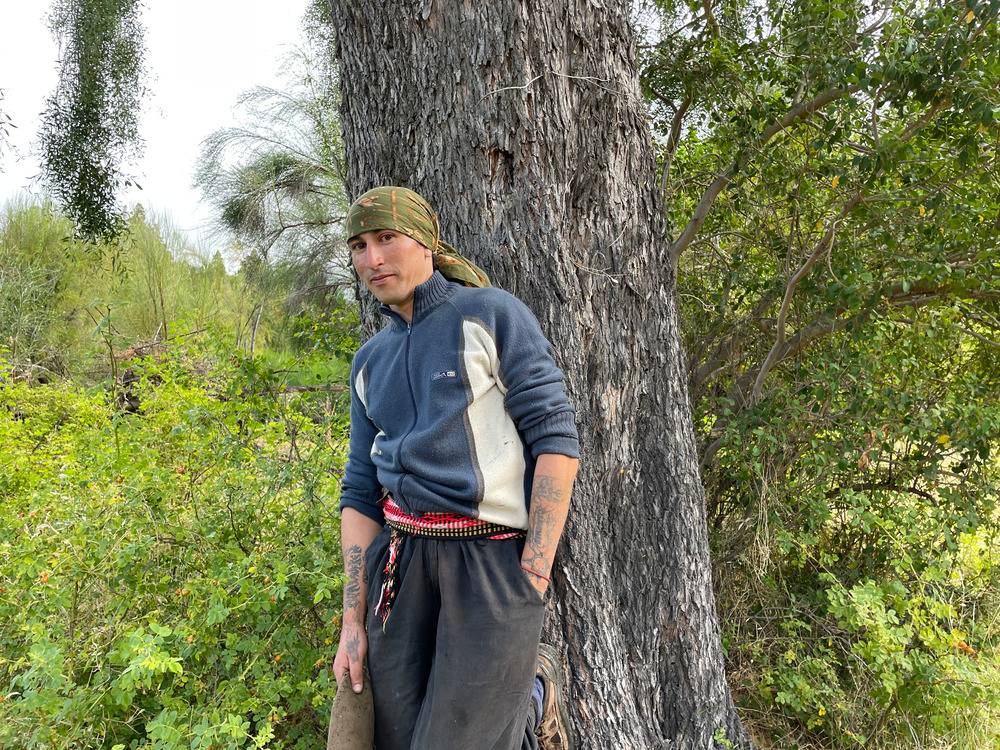
Lemu knows he has to tread carefully. His presence attracts attention and arouses suspicion. When he worked in the Parks Department, he says, he refused to sing the national anthem or raise the Argentine flag. Like other young people in Bariloche or Esquel, he began his Mapuche identity journey several years ago. “At that time, the Mapuche struggle was becoming more prominent in all the regions here, like a resurgence, a recovery of their lands, and I had been hearing all of that. But it hadn't crossed my mind yet.”.
Until a niece of hers on the Chilean side of the Andes declared herself a machi—a spiritual authority. The family was compelled to seek this knowledge in Chile, where several machis still practice. These machis guided them, and one thing led to another. “I began to accompany the machi process, to bring lahuen (medicine). This forced me to deepen my knowledge as a Mapuche.” The machi reminded Lemu that she had Mapuche blood.
Lemu's grandfather came from Gulumapu, Chile, in a time before borders. He arrived at Lake Futalaufquen. He had a gaucho mindset. As a boy, Lemu, who grew up in that area, was fascinated by the cave paintings. He dropped out of school to work odd jobs in the surrounding towns. And when he met his partner, the mother of his children, he decided to settle down.
“Even though I don’t have a Mapuche surname, I have the blood. From that confirmation onward, I became fully aware of my identity. It was a complete change. We were in the process of being recognized as Mapuche, accompanying people from other communities, with the machi (Mapuche healer). And that's when, out of fear of the Mapuche being seen as bad, terrorist, or criminal, many people in the surrounding area turned against us. Family acquaintances, neighbors, park rangers. Even my own father-in-law, who works in the National Parks,” he says.
It was another machi whom Lemu consulted who predicted the recovery of the territory. “The spirits will guide you. You have to go out and walk,” she told them. “And that was the beginning, let’s say, of a long story,” says Lemu.
They entered with determination. It was a matter of entering, blocking the roads, building a place to sleep, and deciding to confront the security forces. And that was also the beginning of the problems with the neighbors and the park rangers. “The problem wasn't that we lived here, but that we called ourselves Mapuche,” he told Presentes when we visited his community. “We are protected by the land,” he told us. The flames of the fires, presumed to be intentional in a highly coveted area where all kinds of interests intersect, didn't reach the houses, but they came close.
Lemu worked in the fire brigade. He knows the wind fuels the fire. In Los Alerces National Park, the wind blows from the northwest. And a delicate line separates provincial and national jurisdiction. “The fires always drift into the provincial zone; they start them knowing they’ll spread there. And almost always at night. The fire creates an imbalance. It was and is very stressful. They named me. They make things up, repeat them, and add to them; there are a lot of racists here,” Lemu says.
Strange things happened. In Lof Pailako, they believe it's related to projects seeking to expand in the area, linked to names like Joe Lewis, and ventures such as a hydroelectric turbine. They also mention mountain ranges coveted by the mining industry. "Sustainable tourism in the area is just a smokescreen," they say.
To be born again
W was born in another town in the Andean region. He is 40 years old and has a grandmother who spoke to him in Mapudungun since he was a child. “In my family, there was always this clarity that we are Mapuche. Although I feel that being Mapuche in the village, the town, or in the countryside or territory is different, because there are other practices within the village that are predetermined and socially imposed, for example, work, schedules, and even vacations. On the other hand, in the territory, there are other practices for being Mapuche, such as holding ceremonies, knowing what is around you, sustaining yourself in that territory, relating to the forces that inhabit it. I didn't have all those things in the village; perhaps there are people in the village who did, this is what happened to me.”.
About 15 years ago, after her mother passed away, W felt the weight of a legacy, “which I somehow accepted,” a turning point—she says—in her way of life. She set out to explore Mapuche territories in conflict. “I began to understand what it means to be Mapuche more deeply. My mother couldn't receive that kimu , that wisdom from my grandmother. My grandmother is about 90 years old according to her documents, but for me she's over a hundred. She speaks the language and knows the spirit, but she denies it. Because there wasn't that generational transmission of the language and culture, I had to make the effort to recover it, to learn to relate to and navigate that world. It was like being born again.”
On his journey to reclaim his Mapuche identity, W became a nomadic man for a time. He traveled along the coast and the plateau, returned to the region, and crossed into Gulumapu to meet other communities on the Chilean side. W says that it wasn't just the journey itself, but also the decisions made by others before him that accompanied the process, that led him to Pailako.
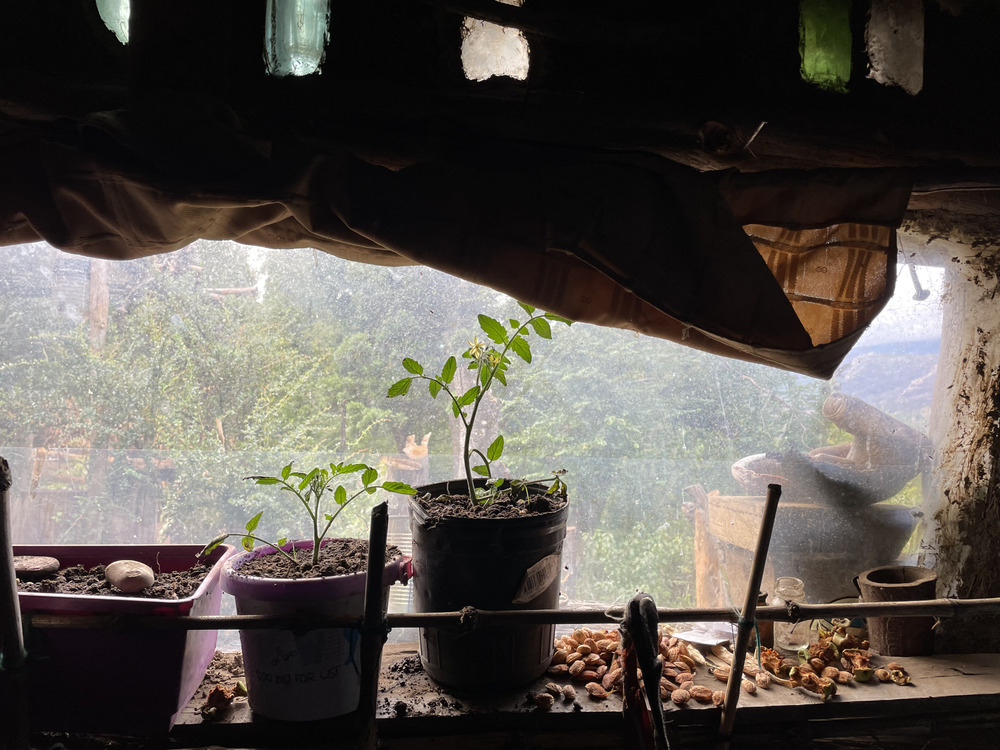
First, he received an invitation from the Lof, came to a trawn (traditional gathering) , then arrived with his partner and they began to participate, trying to build a life in community. Later, they had a son, L, born in this ruka (traditional dwelling) in the middle of winter. “It’s part of what the territory also proposed, that Pichis (children) be born again, but in freedom, not in a hospital and not in an institutional setting,” says M, W’s partner.
“The ideal proposed as a political basis is to live with what nature, the land, offers us . But there is a gap between the political ideal and what is actually happening. This means that we can obtain some of our food from the land and some from the town, until we can sustain ourselves completely from the land,” W. summarizes.
M highlights a difference between environmental and indigenous movements because their defense also has a spiritual dimension. “National Parks arrived in 1937. It promotes conservation. But protecting the forest also means supporting the natural forces. These forces came before us. We respect them and want them to continue. We ask their permission for everything we do; in other words, this isn't simply about housing or just living in a natural way.”.
“Why does our presence bother them so much?” the members of Lof Pailako were recently asked. They paused to think. “Those who are here have the mindset of military officers or businessmen, because it’s a business they’re missing out on. They talk about protecting ancient trees, but they have them surrounded by steel. This is a native forest, and as long as the community is here, they won’t be able to set it on fire or profit from it. And that’s what bothers them the most.”.
The governor of Chubut, Ignacio Torres, has already said he will be on the ground on the day of the eviction. So will Larsen, the president of National Parks. “Torres went to speak with Otranto to have us evicted.”.
The Lof has a strong network of support from indigenous communities and national organizations, but also from other countries.
"We need to stop the eviction of Lof Pailako," says the document that calls for national and international solidarity "with the Mapuche-Tehuelche people, to make visible the violence of the Argentine and Chilean states, extractive corporations and National Parks." The statement circulating on social media demands “the opening of a dialogue with the authorities of the National Parks Administration. The civil lawsuit that could resolve the ancestral rights of the members of the Lof (Mapuche community) is languishing in a drawer of the Argentine justice system, thus preventing the traditional occupation of this territory by some of its members, who are the fifth generation of families who lived there long before the creation of the National Parks Administration, from being brought to light. The eviction order stems from the application of an internal law regulating the operation of the Parks Administration, enacted during the last civic-military dictatorship. The area is coveted by real estate, mining, forestry, and hydroelectric interests. Today, the Lof constitutes an obstacle to the advance of capitalist extractivism.”.
On Wednesday, January 8th, there is a conference at the APDH (Permanent Assembly for Human Rights) regional of Esquel, the League for Human Rights and the Committee for the Freedom of Mapuche Political Prisoners in Puelmapu.
“Here we have always been very protected by the forces of the earth. In this territory, the Mapuche protect us. There are many who want us removed and evicted. There are Parks employees who, although they don't say so publicly, agree with the claim, but they can't express it,” they say.
“We are protecting an ancient forest, the water. We want our children and grandchildren to recover the Mapuche way of life. Part of that way of life is protecting the land from any threat. It's like a mission, and people need to know that, because if they believe what others say, they'll think we're usurping the land. It's like a witch hunt. The criminalization of the Mapuche is happening in all the communities.” Lof Cayunao. Lof Winkul Mapu. Buenoalo. These are just a few. In Pailako, so far, two people have been charged, Lemu and his partner, “who was forced into the legal system for being with me.”.
“They want to imprison most of those leading the struggles to instill fear in other communities through legal action. They know that what they are doing is completely legitimate under the Constitution. What should happen is that this area remains Mapuche territory.”.
We are present
We are committed to journalism that delves into the territories and conducts thorough investigations, combined with new technologies and narrative formats. We want the protagonists, their stories, and their struggles to be present.
SUPPORT US

FOLLOW US
Related notes



We are present
This and other stories are not usually on the media agenda. Together we can bring them to light.