

Bolivia 2024: 4 hate crimes and for the first time a murder against a trans woman was tried as femicide
2024 is the year with the highest number of publicly recorded hate crimes in Bolivia. Concern over regulatory stagnation.


Share

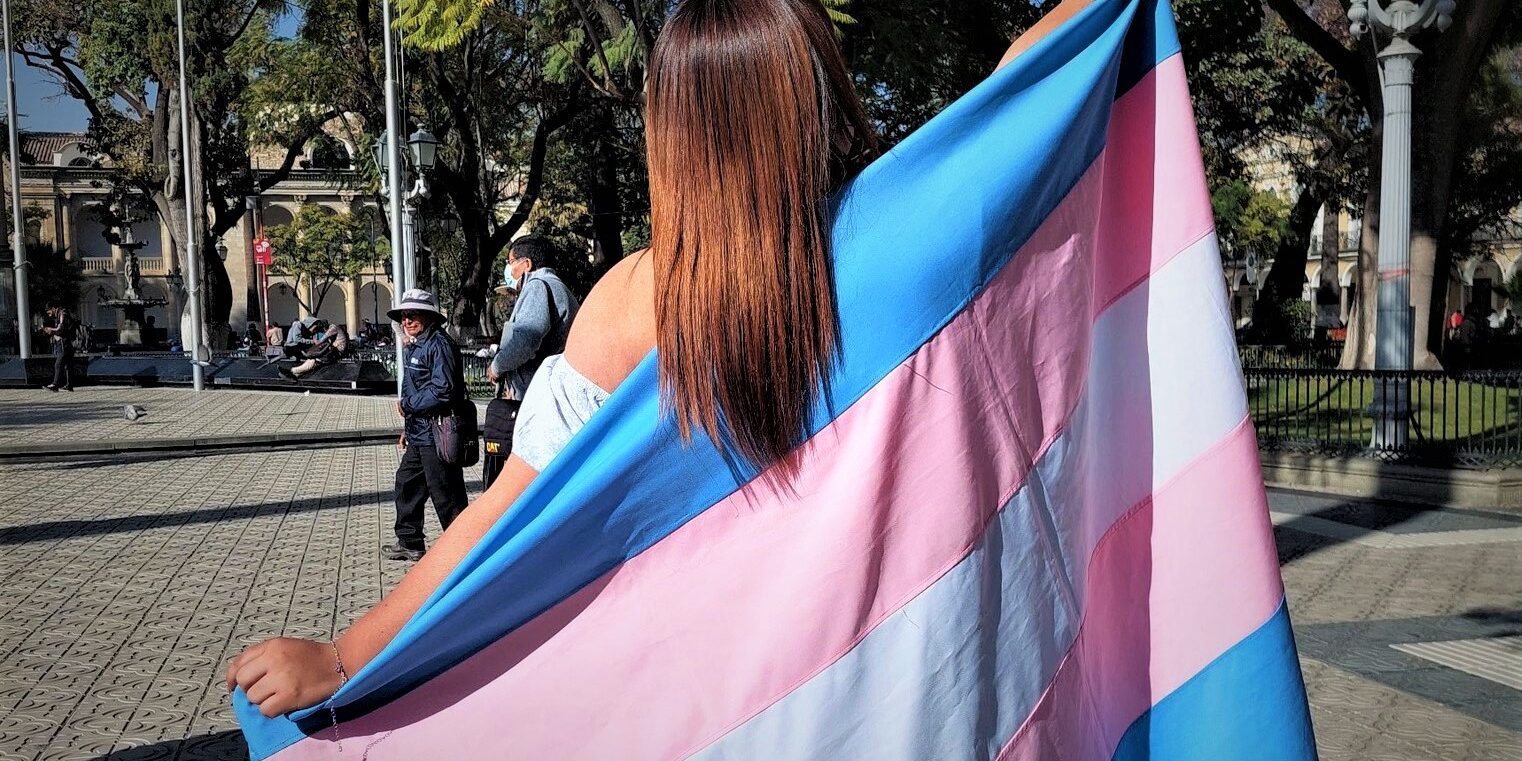
With four violent murders of trans women, 2024 has become the most violent year on record, and the first time such crimes were classified as femicide. Among the few advances under this administration are administrative measures, such as securing health insurance coverage for trans women in common-law unions. However, there is concern about the lack of progress in legislation and the ongoing violence, which are a sign of regression.
Bolivia is experiencing a political, economic, and social crisis that deepened in 2024 due to shortages of dollars, fuel, medicine, and food. These problems are compounded by protests and blockades fueled by internal divisions within the ruling party. The effects are being felt most acutely by the population, particularly the most vulnerable sectors, including the LGBTQ+ community.
2024, the most violent year, a symptom of regression
On the night of October 28, Yumiko was walking through the streets of Cochabamba, Bolivia. She was going to work, just like many other women. But along the way, she encountered a group of people who approached her and attacked her.
It wasn't a robbery or a fight. The beating was carried out with such viciousness, hatred, and extreme violence that it caused brain death, which days later shut down his entire body.
“Regarding the human rights of the LGBTI population, we have seen no progress in 2024. On the contrary, we are regressing, returning to situations experienced in previous years. This year we have witnessed firsthand very serious cases of physical violence against the LGBTI population, including murders. Together with the Ombudsman's Office, we are exploring what we can implement in 2025 to stop this,” stated Moira Andrade, general director of the Trebol Network of Bolivia and national representative for the Latin American and Caribbean Network of Trans People.

According to data collected by Red Trebol, nearly 70 complaints of violence and discrimination against the LGBTI community were filed this year. For the community, this is a sign of setbacks rather than progress.
Yumiko, like many trans women, turned to sex work due to a lack of opportunities. Her case didn't make the news agenda, which at the time was focused on the social crisis. All that remained of the crime was the call for justice from her peers on social media and the search for help to bury her.
The murder of Yumiko is the fourth hate crime recorded in Bolivia in 2024 and the third transfemicide of the year, according to the LGBT Rights Observatory . This number is the highest publicly recorded in the annual figures reported over the last 15 years, which total 28 hate crimes, 21 of which are femicides.
But these are only the cases corroborated by witnesses or media reports. In the collective memory of the lesbian, gay, bisexual, transgender, and queer (LGBTIQ+) population, the number of those murdered due to prejudice against their sexual identity exceeds 70. And the fact is, the State as such does not have an official database; the only ones known are those compiled by collectives with the support of NGOs.
“This data is not broken down by orientation or gender identity by the public prosecutor's office, the police, or any other state entity. That's why we have the Observatory,” stated Stephanie Llanos of the Association for Social Development and Cultural Promotion ( ADESPROC ) Libertad GLBT.
On April 10, “Yessica,” as her coworkers knew her, was lured by two men to a cemetery in Santa Cruz under false pretenses, ostensibly for sex. There, they forced her to undress, stole her belongings, and then brutally attacked her. They cut her hair, broke her teeth, slashed her face, and cut her throat.
Despite the signs of brutality used, her case was not classified as femicide , nor as a murder based on her gender identity, much less as a hate crime. The perpetrators were found, and the authorities stated that the motive for the murder was robbery .
The victim was not presented as a trans woman, but as a 30-year-old man, identified as Yerko Mariobó.
“When a person is found dead, identification is based solely on the genital area. That's why access to justice is one of our biggest challenges,” Llanos stated.
Thus, hate crimes and transfeminicides are lost among the already very cold statistics.
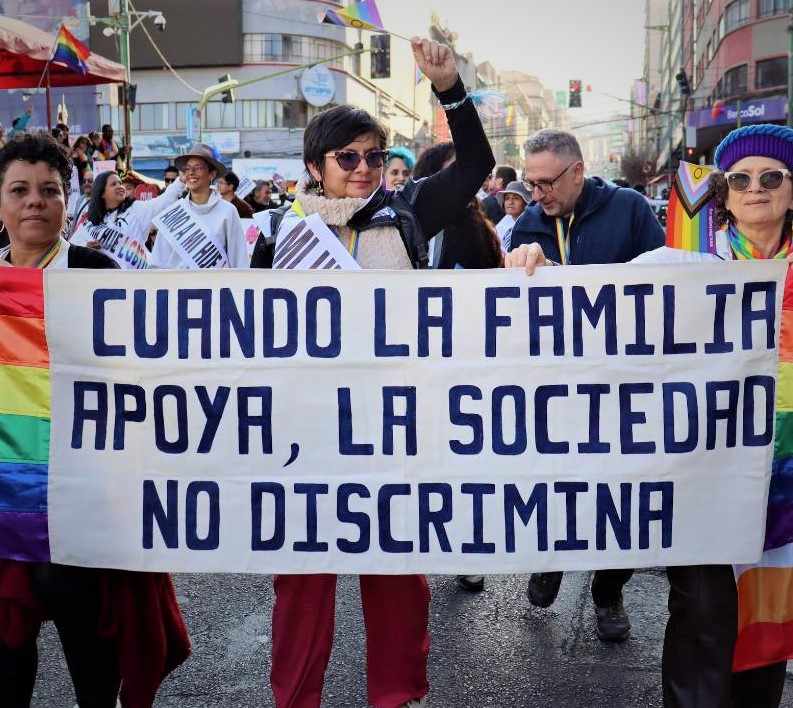
“There is no official statistical data because the authorities do not register victims respecting their gender identity. They rely on official identity documents (identity cards), which often do not record the identity with which the victims lived or were known,” said Paola Tapia, head of the Unit for Populations in Situations of Vulnerability and Sexual Diversity Ombudsman's Office
But discrimination by authorities and society also creates another reason for underreporting: fear of revealing one's identity. This is why a large proportion of hate crimes motivated by homophobia or transphobia go unreported.
“We estimate that only one in ten LGBTQ+ people report a homophobic incident. Another nine remain silent for fear of revealing their identity,” said Cristofer Quiller, president of the La Paz LGBTQ+ Collective .
The first classification as femicide of the murder of a trans woman
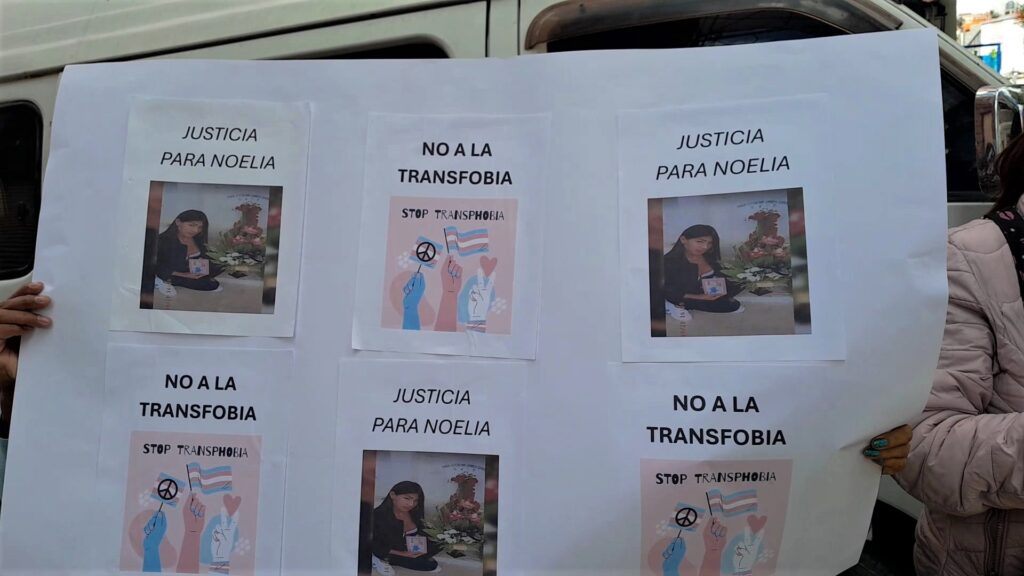
Violently stabbed, left to bleed to death, and forgotten, Noelia, a 21-year-old trans woman, died on April 30th in a hostel in the city of Oruro. She was a victim of the hatred of her attacker, a homophobic teenager who, according to the investigation, planned the crime days before even meeting his victim.
Her body was found two days after the crime. Society didn't notice her absence, just as it didn't accept her life. She lay there in her room for two days. They only found her because it was time to collect the rent.
“Noelia’s murder is a femicide,” declared Oruro’s departmental prosecutor, Aldo Morales, despite questioning from journalists and other sectors. “The victim’s gender identity was female, as recognized by Law 807 , and therefore it is a femicide,” he maintained.
“To date, only two hate crime cases against the LGBTQ+ community have resulted in a sentence, both for homicide. In Noelia's case in Oruro, it was classified as femicide; now we await a sentence. In this case, the media and authorities have respected her gender identity,” Llanos stated.
This recognition is very important for the LGBT community. For the first time, a femicide conviction could be obtained for the murder of a transgender woman. Noelia's case will not be a simple homicide.
Andrade believes that while the legal concept of femicide exists and could be applied, it is regrettable that the legal concept of transfeminicide cannot be included in a sentence to bring visibility to the situation of this population. “We must continue to demand public policies and denounce the absence of the State,” she maintains.
In her assessment, Gabriela Blas, representative of the Wiñay Wara collective, pointed out that one issue that remains unresolved each year is hate crimes. “It’s something that affects us, and especially the trans population, on a recurring basis.
“Although an attempt was made two years ago to amend the penal code, it was unsuccessful. There has been no progress on the issue this year either,” he stated.
Social security for common-law unions, among the small advances
“Progress has been very limited; there have been minor administrative changes, such as making common-law unions more effective. Specifically, a resolution from the Ombudsman's Office has allowed couples who have entered into common-law unions to access social security,” Blas stated.
In 2023, the Plurinational Constitutional Court (TCP) issued Constitutional Ruling No. 0577, dated June 22, 2022, which gives free rein to the registration of same-sex civil unions in the Civil Registry Service (Serecí), as a result of a lawsuit filed by David Víctor Uruquipa Pérez and Guido Álvaro Montaño Durán in 2018.
While the document is historic and recognizes the right to a civil union between same-sex couples, it still fails to address several of the negative consequences of not having this recognition. Social security coverage, inheritance, joint property, and parentage are issues that were not specifically considered.
Therefore, in administrative matters, the ombudsman's resolution is among the small advances to make effective the ruling that recognizes free unions.
“This resolution indicates that simply presenting the certificate of common-law marriage is enough to access insurance coverage, which wasn't possible until last year. Several meetings have been held with the Civil Registry Service (Sereci), and there are still several issues that haven't been resolved,” Blas explained.
This simplified administrative procedures. Additionally, efforts were made to inform the public about the process among the officials involved.
The resolution stems from a series of actions taken before the relevant institutions since 2023. Although it has not yet been finalized, there has also been progress on inheritance matters.
“There is something that could not be addressed, because it involves other entities, regarding the issue of parentage. The Civil Registry Service (Sereci) is washing its hands of it, because it says that everything not covered in the ruling must be addressed in the legislature, such as the issue of parentage.”
A regulatory stalemate
In 15 years, Bolivia approved eight laws for the protection of this population, such as: Law 045 Against Racism and all forms of Discrimination, Law 348 to Guarantee Women a Life Free of Violence, Law 807 on Gender Identity, the Family Code and the Family Process, Supreme Decree 1022, which declares May 17 of each year as the Day of Struggle against Homophobia and Transphobia in Bolivia, Decree 189 which declares June 28 as the Day of the Rights of the Population with diverse sexual orientation in Bolivia, and the National Human Rights Action Plan.
Bolivia is preparing for the fourth cycle of the Universal Periodic Review (UPR) on human rights. The previous recommendation for this review indicated minimal progress on the issue.
“Recommendation: 115.14 Continue fighting against discrimination by developing specific legislation aimed at combating discrimination on the grounds of disability, sexual orientation, gender identity or social condition,” states the recommendation made by Honduras to the Bolivian Government.
“The recommendation was minimally fulfilled on May 21, 2016, when Law 807 on Gender Identity was enacted, which aims to establish the procedure for changing the name, sex data, and image of transsexual and transgender people in all public and private documentation related to their identity, allowing them to fully exercise the right to gender identity, provided they are of legal age,” the document states.
We are present
We are committed to journalism that delves into the territories and conducts thorough investigations, combined with new technologies and narrative formats. We want the protagonists, their stories, and their struggles to be present.
SUPPORT US

FOLLOW US
Related notes


We are present
This and other stories are not usually on the media agenda. Together we can bring them to light.