

Honduras 2024: outstanding debt in gender identity and human rights
The Honduran government has not made progress in recognizing gender identity. The lack of policies for the LGBT population is being denounced.


Share

TEGUCIGALPA, Honduras . The Inter-American Court of Human Rights (IACHR) ruling in the case of Vicky Hernández et al. v. Honduras has been a turning point in the fight for the rights of LGBTIQ people in the country. Although the ruling was issued in 2021, one of its measures gained relevance this year in the pre-electoral political context: the guarantee of non-repetition, which requires the recognition of gender identity. But what has happened? The State of Honduras has still not implemented this measure.
The case of Vicky Hernández is emblematic. On March 26, 2021, the IACHR declared the Honduran state responsible for violating the rights of Vicky, a trans woman and sex worker living with HIV. Her body was found on June 29, 2009, during the curfew imposed after the coup d'état.

In its 2024 report on the Human Rights Situation in Honduras, the Inter-American Court of Human Rights (IACHR) emphasized that recognizing gender identity is essential to guaranteeing full access to human rights for transgender people. Therefore, the Court urges the Honduran State to comply with the guidelines established in its resolutions. Photo: Cattrachas Lesbian Network
The night before, Vicky was on the street with two friends when a patrol tried to stop them, forcing them to flee. When authorities recovered her body, they recorded her identity as “unknown male, ” and later, forensic doctors refused to perform an autopsy, arguing that she was HIV positive .
This case not only highlights institutional brutality and systemic discrimination, but also connects with issues that were discussed this year in dialogues between different sectors of Honduran society.
Government changes, promises and realities
The sentence was handed down under the government of Juan Orlando Hernández , who at the time maintained a tight grip on the powers of the state. Hernández was found guilty in March 2024 of drug trafficking offenses in the Southern District Court of New York.
Subsequently, on January 22, 2022, Xiomara Castro assumed the presidency with a speech focused on human rights and the inclusion of LGBTQ+ people . However, although she has had time to fulfill her promise to allow transgender people to change their name on the National Identity Document (DNI), this remains just a dream. The process is opaque.
In August 2024, news surfaced, unofficially, that the National Registry of Persons (RNP) would implement this measure. However, organizations denounced a worrying lack of transparency. "There is no political will to make this a reality," they stated. Although at the time RNP representatives declared that "the action was about to be implemented," the year is drawing to a close and the issue remains unresolved.
Political and legal obstacles
Gender identity recognition faces both political and legal barriers. Currently, there are two ways to implement it: submitting it as a bill to the National Congress or approving it through existing legal instruments.
In Congress, the outlook is unfavorable. The conservative opposition, led by the National Party, has made its rejection clear. Tomás Zambrano, the party's leader, stated on his social media account that they will not support "those kinds of motions." Rolando Kattán, the National Party's representative to the National Registry of Persons (RNP), has also adopted a similar stance. These statements were used as a political tool to mobilize conservative rhetoric attacking the ruling party. They also serve as a distraction from issues of greater national importance.
On the other hand, the legal route seems more viable. According to human rights expert Joaquín Mejía, a constitutional reform is not needed to allow a name change on the national identity document. "All that's needed is political will," he explained in an interview with the online news outlet Criterio.hn.
The urgency for a gender identity law
Agencia Presentes spoke with Lucía Barrientos, representative of the Ixchel Association , who assured that, in dialogues with authorities of the National Registry of Persons (RNP) and the Attorney General's Office, they were informed that the measure would be fulfilled before the end of the year.

Photo: Ixchel Organization.
Barrientos believes that legislative approval is unnecessary for this action, as the National Registry of Persons (RNP) has sufficient authority to implement name changes on National Identity Documents (DNI). "This is not a matter under discussion. The technical analysis has already been completed; only the resolution is pending," he explained.
However, the change in government presents a new challenge. While acknowledging that Xiomara Castro's administration has taken small but significant steps toward recognizing the rights of LGBTIQA+ people, Barrientos warns that progress could stagnate or reverse if a conservative government returns to power.
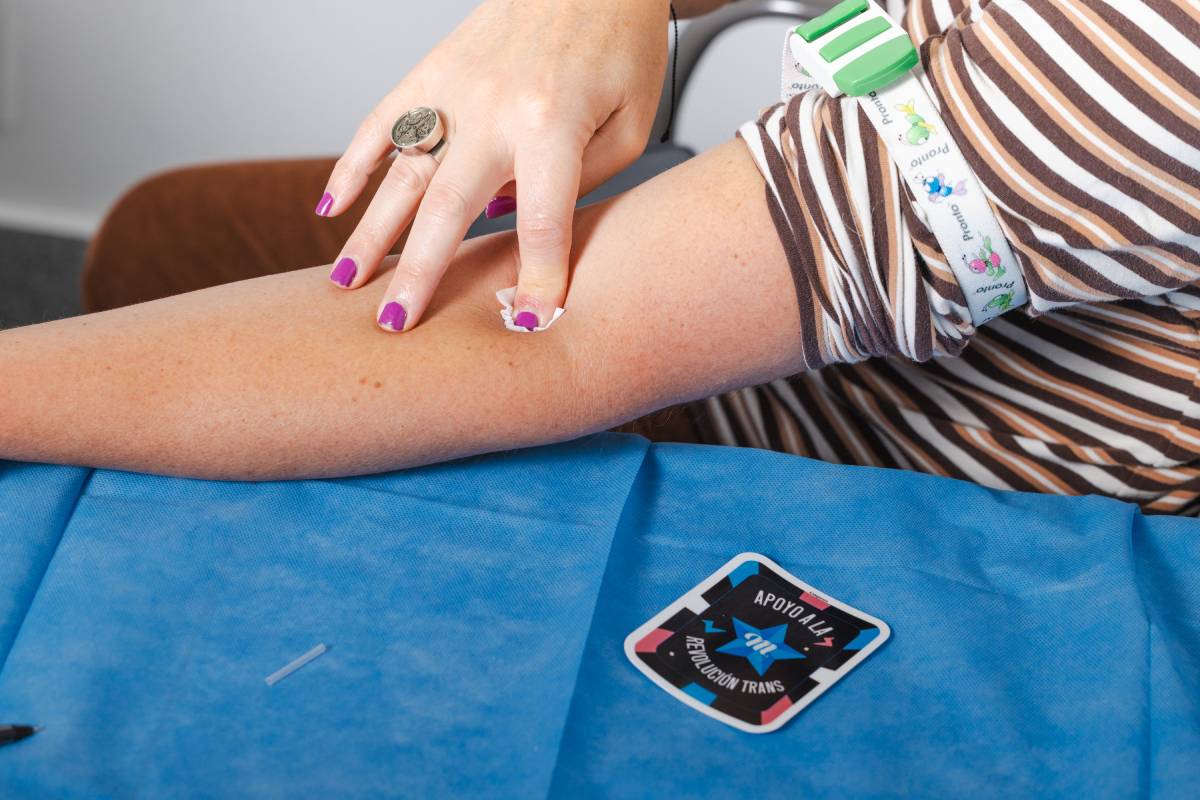
A recent example of progress is the reform that allows diverse individuals to donate blood, a decades-long struggle that finally came to fruition on November 30 of this year, following its publication in the official gazette, La Gaceta . Barrientos emphasized that this measure was included in the government plan submitted to Castro by civil society organizations. However, he made an urgent appeal for these actions to be legally protected, as a change in government could turn this step forward into three steps backward.

An adverse context under the yoke of the state of exception
While these discussions generated sensationalist headlines in conservative media and increased stigmatization, the political and social landscape in Honduras remains complex. The Castro government continues to strengthen the state of emergency , in effect since December 2022. Although designed to combat extortion by gangs, its lack of effectiveness has drawn considerable criticism.
Transporters, one of the sectors most affected by extortion, say that illegal payments have not decreased, but rather increased. Even more worrying, this regime has offered no protection to the LGBTQ+ community.
According to data from the organization Cattrachas , from its implementation until October 2024, 68 LGBTQ+ people have been murdered, 29 of whom were gay men. These figures reflect a growing vulnerability that has not been addressed, even within the context of extraordinary security measures.
LGBTI+ Community: Exclusion and More Violence
The landscape of violence against the LGBTIQ community in Honduras is worsening, with alarming figures. According to the KAI+ Observatory , 38 violent deaths were recorded in 2024, 10 of which occurred in public. This raises questions about the role of the security forces: where were they at those times? But the problem doesn't end there.
The report details that 87% of the cases did not progress beyond the initial investigation stage. In some cases, no arrests were even made.
In addition, 230 cases of widespread violence were documented, 42 of which targeted transgender women. This particularly vulnerable group suffers arbitrary arrests and multiple forms of physical and economic violence, especially within the context of the state of emergency. According to Lucía Barrientos, this situation is exacerbated by the lack of a Gender Identity Law, which renders this population invisible and perpetuates their exclusion from the state system.
Institutional lack of protection
The impact of violence against the LGBTIQA+ community also reached a critical point at the National Women's Penitentiary for Social Adaptation ( PNFAS ) where in June 2023, 46 women were brutally murdered.
Among the victims, five were identified as members of the LGBTQIA+ community. This highlights the extreme risk they face even in state custody. However, the subsequent legal proceedings raised more questions than answers. Although 15 women were tried on December 12 for their involvement in the crime, no mastermind or state official has been identified or investigated to date, despite the grave implications.
The Deputy Minister of Security herself, Julissa Villanueva, denounced on television that ammunition belonging to the National Police was found at the crime scene and on the victims' bodies, which underscores a chain of complicity and negligence that remains unresolved.
Political invisibility: a persistent obstacle
With elections approaching in Honduras, LGBTIQA+ people continue to be ignored in political proposals. For organizations in the country, progress on human rights is virtually nonexistent. "There are no structural changes, everything remains the same," said Grecia O'Hara, an activist from the community.
Furthermore, homophobia has become a political weapon. In recent days, social media users have been observed using homophobic rhetoric to attack candidates from other parties. In doing so, they perpetuate discrimination in an environment that should be inclusive, especially in a government that champions the fight for and recognition of human rights.
We are present
We are committed to journalism that delves into the territories and conducts thorough investigations, combined with new technologies and narrative formats. We want the protagonists, their stories, and their struggles to be present.
SUPPORT US

FOLLOW US
Related notes
We are present
This and other stories are not usually on the media agenda. Together we can bring them to light.