

Guatemala 2024: More setbacks than progress for the LGBTI+ population
LGBT rights are being rolled back following the rise of anti-rights groups. While there have been efforts in recent years to raise awareness and protect sexual diversity, structural challenges remain.


Share

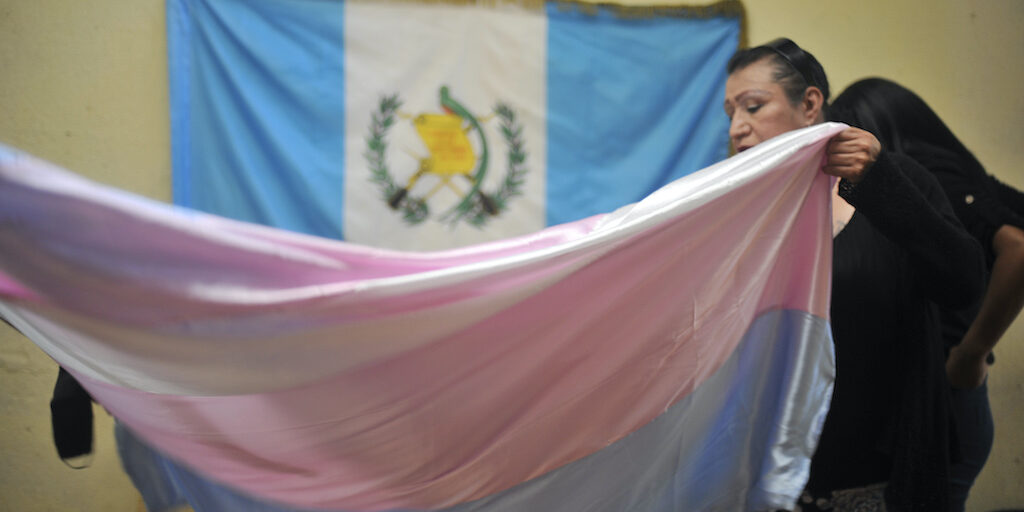
GUATEMALA CITY, Guatemala. The LGBTIQ+ population in Guatemala faces a complex context regarding human rights and legal recognition. A growing culture of conservatism is observed. While there have been efforts in recent years to raise awareness and defend the rights of this community, structural challenges persist. These include a lack of inclusive legislation, systematic violence, and deeply rooted cultural discrimination.
The current situation is that there has been progress. But there have also been setbacks, both in the legal sphere and in Guatemalan society. By integrating data from international organizations and non-governmental organizations (NGOs), we can gain a better understanding of the overall picture.
Legality of same-sex relationships
Consensual same-sex sexual relations have not been prosecuted in Guatemala since 1871. However, there is no legal recognition for same-sex couples in the form of marriage or civil unions.
In 2018, the Inter-American Court of Human Rights urged member states to recognize and guarantee the rights of same-sex couples. Despite this, Guatemala has not implemented these recommendations. On the contrary, this year, many members of Congress with anti-rights views insisted on seeking setbacks and prohibitions in the area of human rights, not only for sexual diversity but also for women.
The legal framework: limited protections and structural obstacles
From a legal standpoint, Guatemala lags significantly behind in terms of the rights of the LGBTQIA+ population. The country lacks a legal framework that guarantees fundamental rights such as marriage equality, same-sex adoption, or gender identity recognition.
In the same 2018 ruling, the Inter-American Court of Human Rights (IACHR) urged Guatemala and other member countries to guarantee same-sex marriage and the right to gender identity . However, these recommendations have not been implemented. On the contrary, Congress has debated restrictive initiatives, such as Law 5272, also known as the "Law for the Protection of Life and Family ," which aims to criminalize comprehensive sex education and hinder the rights of the LGBTIQ+ community.
This year, anti-rights groups, through allied members of parliament, have presented three bills to restrict the rights of women and the LGBTIQA+ population.
Eliminate sex education
One initiative is the "Law on Sexual Education for the Protection of Children and Adolescents in Guatemala." This law aims to prevent children and adolescents in the public and private education system from accessing information related to sexual diversity , abortion, prevention of sexually transmitted diseases , "or any other topic that encourages early sexual activity in children and adolescents."
The goal, they state, is to protect the right of children and adolescents within the National Education System to receive sexuality education in accordance with social, civic, and ethical values, always with prior parental authorization and in constant communication with them.
A protection against discrimination
Another proposed law is the " Law for the Comprehensive Preservation of Society ." The text clarifies that it "seeks to protect human life at all stages and to strengthen the family as the fundamental basis of society."
Another aim is to ensure that no one can be prosecuted for not accepting sexual diversity or "gender ideology" as "normal" within their family. Article 78 expressly prohibits same-sex marriage and civil unions.
The same group of deputies has proposed reforms to the penal code through decree 17-73 to criminalize medical personnel who attend to children and adolescents "and who apply therapies or any type of services or practices, surgical or otherwise, with the objective of altering the biological sex of minors or people with mental disabilities."
The State abandons the diverse population
Diego Lima, representative of the Lambda Observatory for Violent Deaths , said that this year has been a year of disappointment for activists. After conservative and anti-rights governments, they had hoped for a more open and progressive government with the Semilla party , one that would be willing to work with civil society organizations. All indications are that the challenges remain the same.
Lima noted that collaborative work has been done with other state entities, such as the Ministry of the Interior, to address the prevention of violence against LGBT individuals. Furthermore, the proposal for public policies has been revived in conjunction with the Presidential Commission for Peace and Human Rights (Copadeh) , a situation that did not occur under previous administrations.
The violence continues
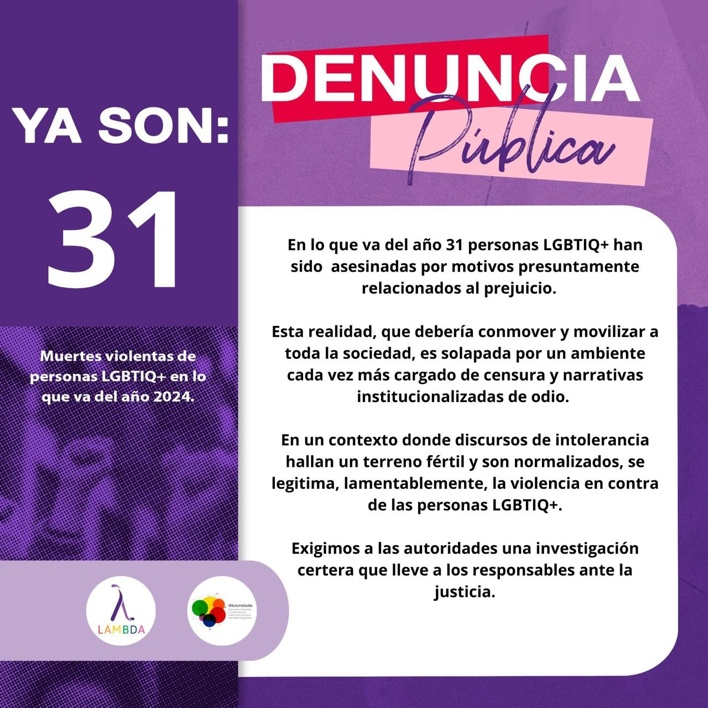
The Observatory for Violent Deaths has recorded 31 violent deaths due to prejudice and hatred towards people of sexual diversity so far in 2024. In 2023 the figure reached 34 cases.
“In a context where discourses of intolerance find fertile ground and are normalized, violence against LGBTIQ+ people is unfortunately legitimized, resulting in such alarming figures,” the observatory stated.
Social progress: the role of civil society and NGOs
The Pride March in Guatemala City is an example of resistance and visibility. In 2024, despite facing attempts to ban it, the Constitutional Court allowed it to take place under conditions that many activists consider stigmatizing.
The Court granted an injunction in June to anti-rights groups so that the sexual diversity parade could take place, supervised by the National Civil Police (PNC) so that it would be carried out under "good customs" .
Despite the obstacles, civil society organizations have played a key role in defending the rights of the LGBTQ+ population.
At the time of writing, Presentes was awaiting a response from the presidency regarding the possibility of working jointly with organizations linked to the LGBTIQ population.
We are present
We are committed to journalism that delves into the territories and conducts thorough investigations, combined with new technologies and narrative formats. We want the protagonists, their stories, and their struggles to be present.
SUPPORT US

FOLLOW US
Related notes


We are present
This and other stories are not usually on the media agenda. Together we can bring them to light.