

Mexico: 10 years without truth or justice for the disappearance of 43 students from Ayotzinapa
September 26th marks the anniversary of one of the biggest state crimes in Mexico's recent history: the massacre of 43 students from Ayotzinapa.


Share

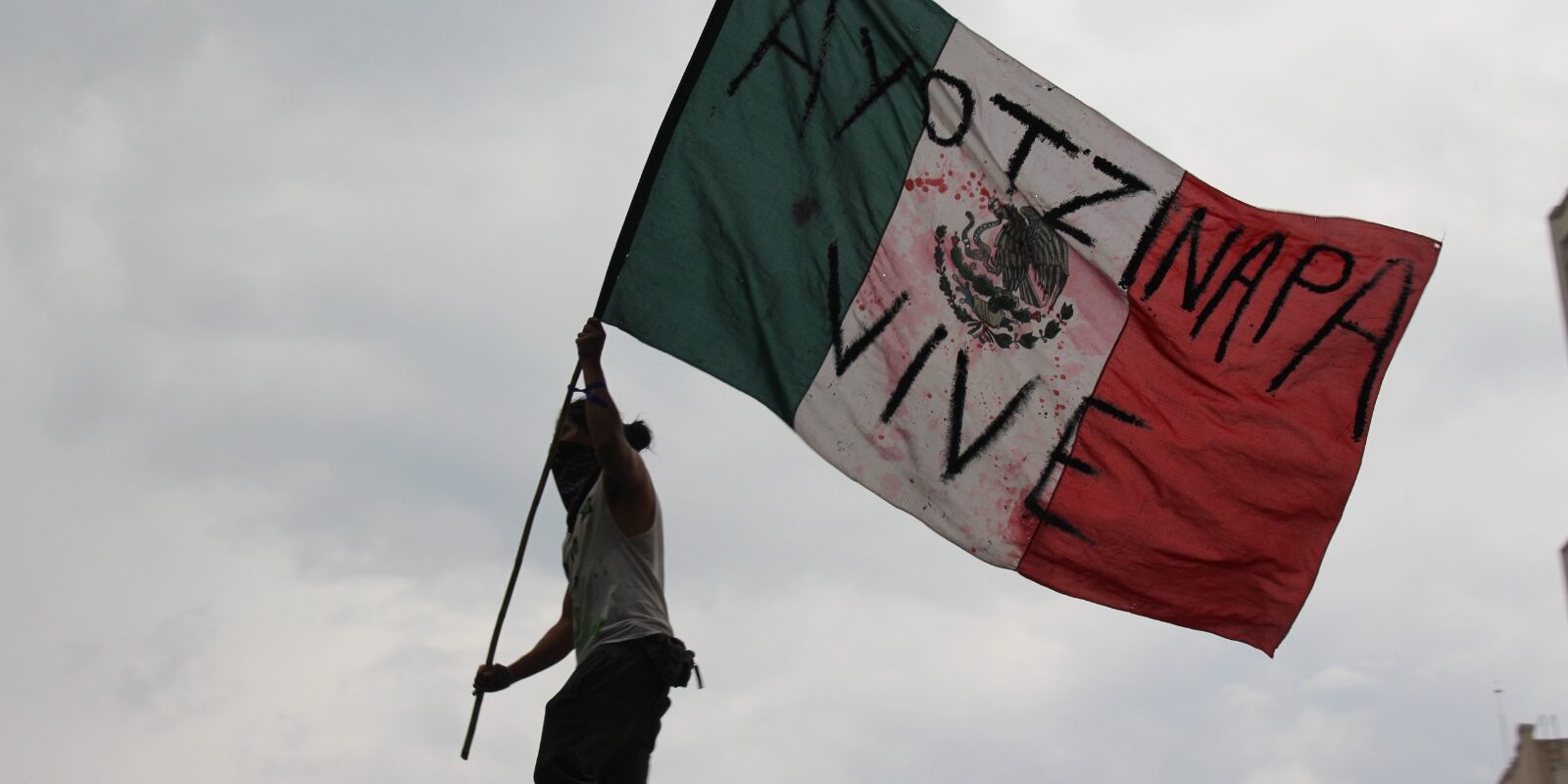
The night of September 26, 2014, marks one of the worst state crimes in Mexico's recent history. A group of 43 students from the Raúl Isidro Burgos Rural Teachers' College of Ayotzinapa, in Guerrero, were attacked by local police in the city of Iguala. This marked the beginning of one of the most emblematic cases of enforced disappearance in the country. Ten years have passed, and the families continue to ask: Where are they?
That night, the young people were headed to a protest in Mexico City to commemorate the Tlatelolco massacre (where students were killed by Mexican state forces on October 2, 1968), but they never arrived. Instead, a violent operation was unleashed, leaving six dead, numerous wounded, and 43 students missing.
The first hours after the attack were chaotic. The students' families denounced the situation and mobilized to demand answers. However, the authorities downplayed the events. The government at the time, led by former President Enrique Peña Nieto, faced intense public pressure through demonstrations and protests.
“The historical truth”: an official narrative that sought to close the case
Under Peña Nieto the "historical truth" —a false narrative about the events intended to close the case. Official versions claimed that the students had been murdered and their bodies incinerated in a garbage dump in Cocula, a municipality in Guerrero.
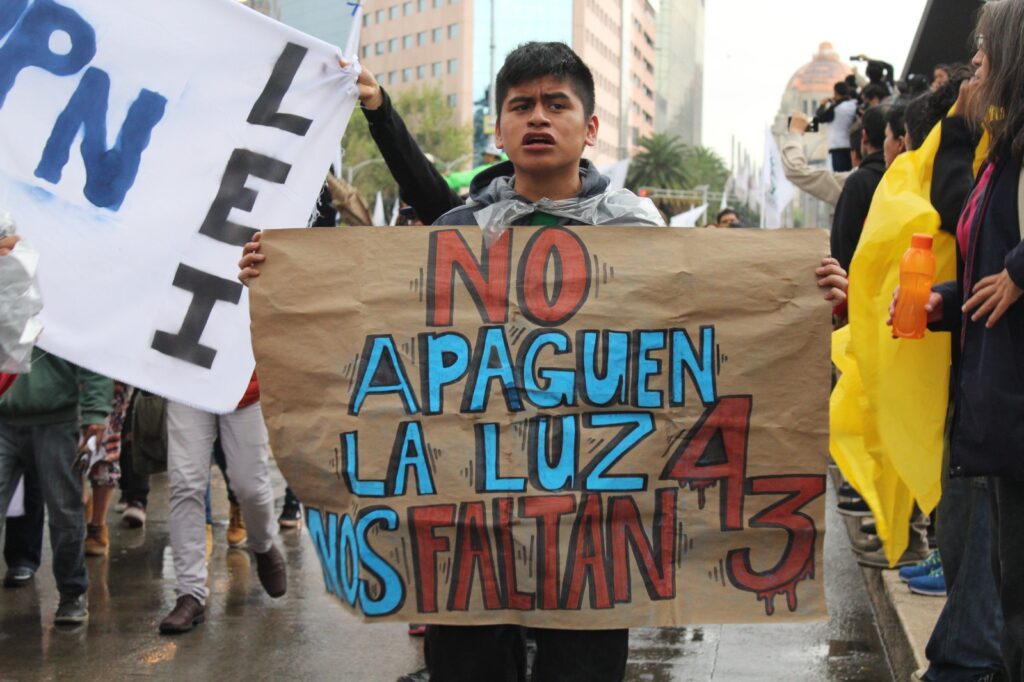
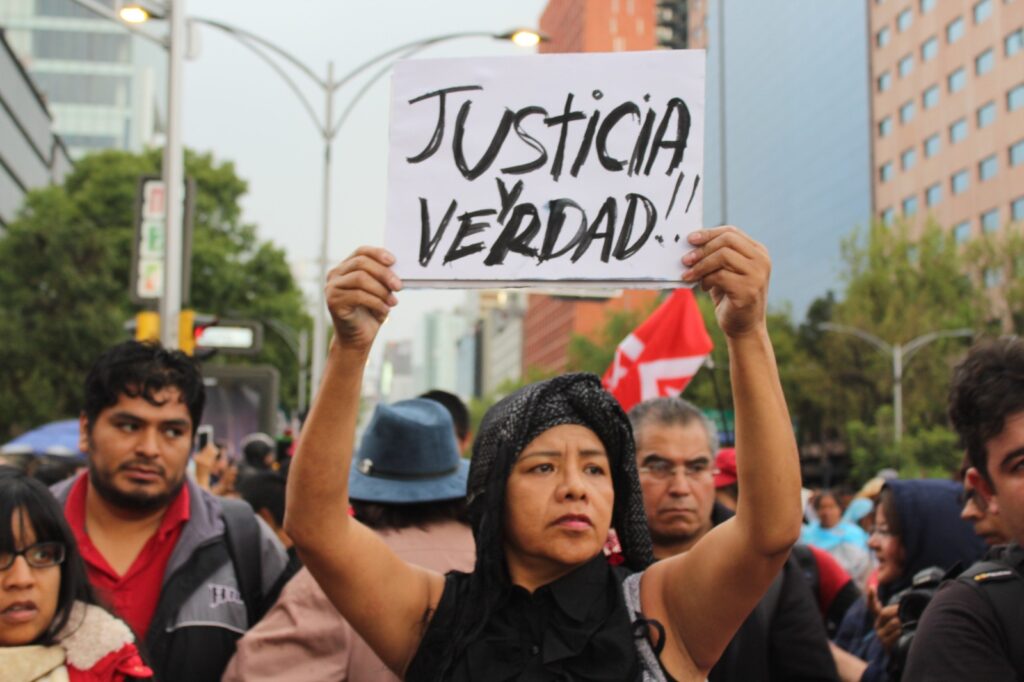
Following this narrative, public outrage grew. Families, students from rural teachers' colleges, and their fellow activists organized protests and marches, demanding justice and the truth. The voices of the families resonated in international forums, generating a global movement demanding clarification of what had happened.
The lack of progress in the investigation led to the intervention of the Interdisciplinary Group of Independent Experts ( GIEI ). Established in 2015, it was tasked with reviewing official investigations and providing technical and scientific support. The GIEI uncovered irregularities in the judicial process, suggesting that the official narrative was riddled with inconsistencies .
As the years passed, the actions of the Mexican state became a subject of criticism. While some arrests were made, many of those implicated in the students' disappearance remained free.
The families continued to demand justice and truth. Meanwhile, international organizations such as the Inter-American Commission on Human Rights (IACHR) became involved in the case with the GIEI (Interdisciplinary Group of Independent Experts). The Mexican government was urged to conduct a thorough investigation and protect witnesses. To this end, the Special Mechanism for Monitoring the Ayotzinapa Case (MESA) was created on July 29, 2016, through resolution 42/16 .
In the pursuit of justice, the Mexican state also used violence against detainees. In 2018, the United Nations Human Rights Office presented the report “Double Injustice .” It revealed that Mexican authorities used torture in 51 of the 63 cases examined among the first 129 people arrested in this case.
The unfulfilled promise of justice
In 2018, Andrés Manuel López Obrador assumed the presidency and promised the families a thorough investigation that would bring truth and justice. As a result, new prosecutor's offices were created and investigations were reopened, but progress was slow.
The Commission for Truth and Access to Justice in the Ayotzinapa Case ( CoVAJ ) was created, chaired by Alejandro Encinas. The commission would coordinate with the Special Investigation and Litigation Unit for the Ayotzinapa Case (UEILCA) and the GIEI, and it was established that all institutions should provide information and collaborate with the investigation.
In October 2021, the Truth Commission revealed conversations intercepted by the army between local police chiefs in Iguala and members of Guerreros Unidos , an organized crime group. In these conversations, they discussed the fate of the students, claiming there were mass graves where they were to be buried.
In 2022, CoVAJ declared that the disappearance of the 43 students from Ayotzinapa was a state crime in which members of Guerreros Unidos and federal and state authorities participated.
The army continues to deny information and its responsibility.
In July 2023, the sixth and final report of the GIEI stated that the army "actively participated" in the disappearance of the 43 from Ayotzinapa along with drug trafficking groups and are responsible for this crime.
The report details that the army not only participated in the torture of detainees alongside the General Police of the Republic and the Specialized Deputy Attorney General's Office for Investigation and Organized Crime; but also sought to "erase the traces" of its participation.
Furthermore, they point out that the Ministry of National Defense (SEDENA) has denied any responsibility to this day and continues to deny what happened and its co-responsibility, despite "being documented in its own files," reports the GIEI.
In September 2023, the families asked the president to have the army hand over 800 missing pages of documents that the GIEI had identified as missing from the military archives it had been able to review and that could contribute to the location of the students .
In July of this year, the president presented a letter to the families of the 43 students from Ayotzinapa in which he said that "absolutely nothing" had been found regarding the army's involvement and mentioned that the military authorities had already handed over all the information.
“The unjustifiable cannot be justified (…) There are numerous testimonies and ministerial statements that support the fact that on that day the army was in the streets and participated in a shameful way in the disappearance of our children on that fateful September 26, 2014 (…) That is an irrefutable truth,” said the families of the 43 students in response to the president’s letter .
Today, Mexican families and society still do not know what happened and where the 43 students from Ayotzinapa are.
Ten years later we are still asking: Where are they?
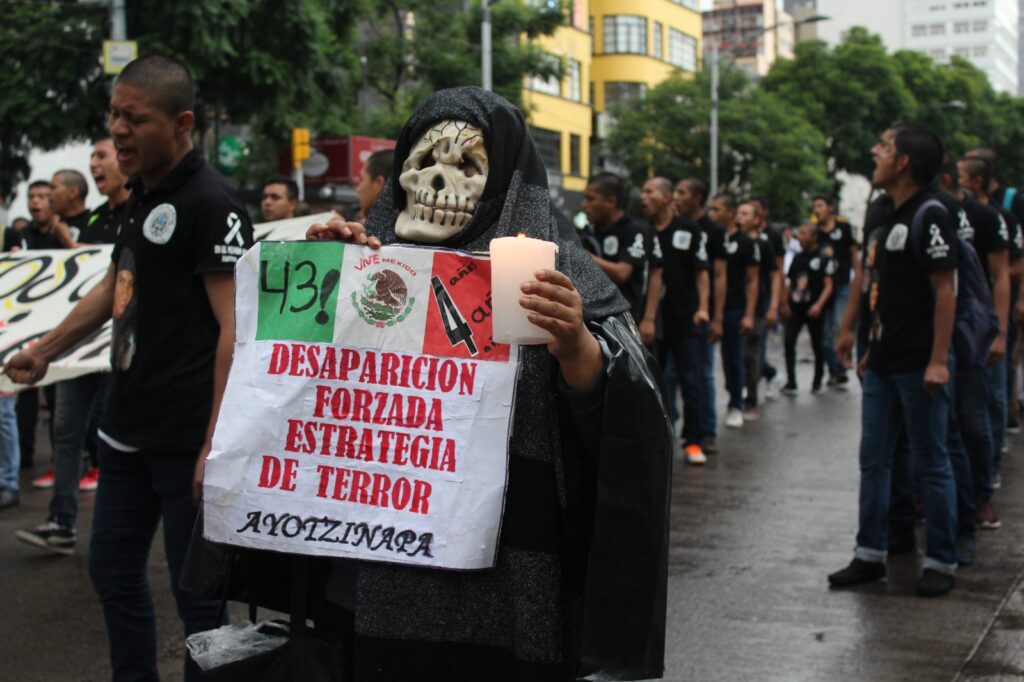
Every September 26th, marches and commemorative events are held in various cities in Mexico asking "Where are they?" But remembering that the Ayotzinapa case is not just an isolated event, as it is part of a human rights crisis and impunity.
This human rights crisis worsened in 2007 when then-President Felipe Calderón implemented a failed security strategy that gave the armed forces powers for public security tasks.
Since then, the army has been used for public security tasks. Neither the subsequent governments of Enrique Peña Nieto nor Andrés Manuel López Obrador have modified this strategy, which has increased human rights violations.
According to public data from the National Human Rights Commission (CNDH), complaints against the armed forces have increased since 2007. This includes complaints against the National Guard (a militarized police force created by the government of Andrés Manuel López Obrador, which is also part of the public security strategy) for its involvement in serious human rights violations such as torture, disappearances, arbitrary detentions, and extrajudicial killings.
Far from achieving justice and truth, Mexico faces a forensic and human rights crisis in which more than 115,000 people are missing. And in the last six years alone, more than 72,000 bodies remain unidentified, according to a recent journalistic investigation by the media outlets A dónde van los desaparecidos and Quinto Elemento.

We are present
We are committed to journalism that delves into the territories and conducts thorough investigations, combined with new technologies and narrative formats. We want the protagonists, their stories, and their struggles to be present.
SUPPORT US

FOLLOW US
Related notes


We are present
This and other stories are not usually on the media agenda. Together we can bring them to light.