

Salta: Trial begins for the attempted transfemicide of artist Camila Spears
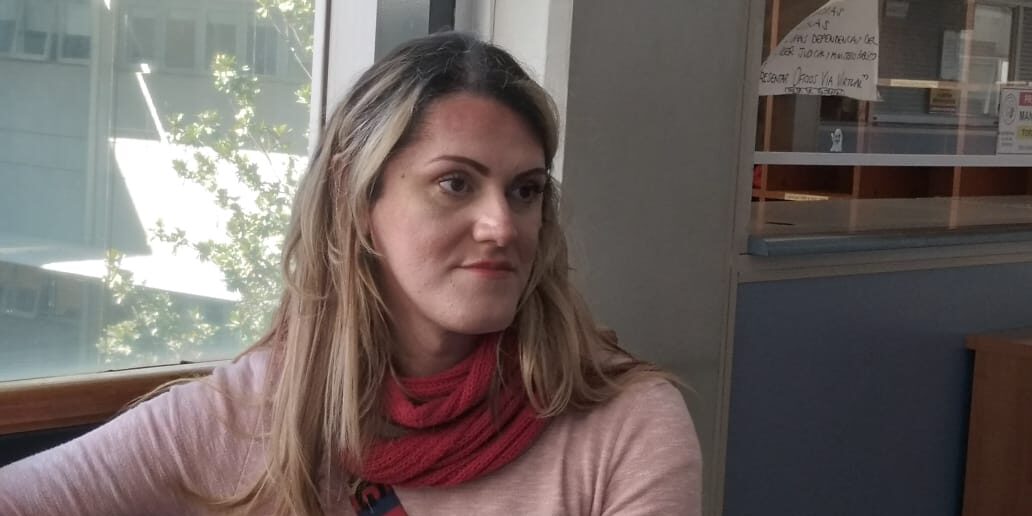
On February 1, 2023, trans woman Camila Maza, known by her stage name Camila Spears, was beaten by her partner, Luis Alberto Martínez.


Share

On February 1, 2023, Camila Maza, a trans woman known by her stage name Camila Spears, was brutally attacked by her partner, Luis Alberto Martínez. Camila was hospitalized for nearly two months with a severe head injury. She spent 21 days in intensive care and survived. Yesterday, she testified at the start of the trial against her attacker.
“I had to learn everything from scratch,” Camila told Judge Mónica Faber of the Fifth Chamber of the Trial Court in the city of Salta. “I spent two months trying to piece together everything that happened in my head,” she said.
She recounted that the attack left her with lasting effects. She can't put any weight on the left side of her body and lost some hearing in one ear. "It's like being born again. It's having to learn to walk, to talk, to eat, to use the toilet." However, she said she was lucky in that situation: "I never forgot who I was, because I didn't recognize anyone when I woke up."
Camila began the round of testimonies in the public trial in which Martínez is charged with the crime of "attempted aggravated homicide due to a prior relationship and gender-based violence." Martínez is currently under house arrest, a decision made by Judge Ignacio Colombo.
"I knew something was going to happen to me"
The attack took place on February 1, 2023, in the home where the accused and the victim lived together, in the same city of Salta.
Camila recounted the incident again in her statement. Earlier, at the request of her lawyer, Fidel Ahuerma, the aggressor was removed from the courtroom.
Visibly nervous and struggling to remember some words, Camila began recounting the birthday party the day before the attack, on January 31, 2023, at La Rosa Disco. She was scheduled to perform, but was frustrated because Martínez hadn't secured the sound system. This led to an argument, though they continued at the party. They returned home the following morning, having bought beer, and continued the "toast," as she called it.
Mid-morning, they had a violent argument, this time sparked by Martínez seeing her chatting online. He demanded her phone to check it and smashed it on the table. Camila, whose memory holds images more than words, couldn't recall what they said, but she's certain, she said, that the exchange was intense enough for her to call her sister, Jorgelina Maza, "because I was afraid." "I knew something was going to happen to me," she asserted.
She also remembered, because she has a vivid image of him taking off his engagement ring and throwing it away, that he told her to leave, that the relationship was over. She has another image of that moment: " Me standing in front of the mirror and I see him grabbing the chair." She managed to see him bring it down on her arm while yelling something like, "I'm going to kill you." Then, the man grabbed the chair by the legs and struck her again, this time on the head . Camila remembers that at that moment she grabbed the railing of the nearby staircase and touched her head: her hand was covered in blood. Her next memory is of waking up from her coma, already in San Bernardo Hospital, where she was hospitalized until March 13, spending 21 days in intensive care.
Previous attacks
Camila recounted that Martínez had assaulted her on other occasions. "The first time was a very hard blow to the face," which made her bleed, she recalled. That was in 2021. "Then there were other violent attacks," she said, adding that he once threw her to the ground. "Remembering this makes me feel terrible," she confessed, her voice trembling. Later, when the plaintiff, Fidel Ahuerma, asked her if Martínez had threatened her, she referred to "a harsh tone of voice" to describe the expressions her partner used in those situations.
Despite the attack, Camila feels fortunate. Unlike most people in the trans community, she always had the support of her mother and sister. This allowed her to finish high school at the Tomás Cabrera School of Arts and begin a career as an "independent artist" at age 17, which made her well-known in the province.
She had a job and was in a relationship, she explained, to clarify why she hadn't reported her ex-partner's previous abuse. "I couldn't tell anyone else," she said, because she feared rejection. She only told Martínez's grandmother, and later her sister, who confronted Martínez.
The couple's only income was what she earned from her work as a comedian. Martínez, who acted as her manager, handled that income. Camila also recalled that Martínez was jealous, often checking her social media and making accusations.
Attempted transfemicide
Before the hearing began, Camila made public statements in which she emphasized that the attack she suffered was an attempted transfemicide. She questioned why she hadn't reported the violence she suffered earlier and asked women going through similar situations to report it, saying, "We mustn't stay silent, we mustn't hide the acts of violence we experience."
She also highlighted the support she received from the now defunct Ministry of Women, Gender and Diversity, as well as from the Salta Women's Center.
After a difficult recovery process, which included physical rehabilitation and psychological treatment that is still ongoing, Camila was able to return to her work as a comedian, although it is difficult, she told Presentes before going into the room to give her testimony.
“I never thought I would have to go through this. I’m alive, and I’m going to have to live through this situation. It’s very difficult, because I’m a trans woman, but beyond that, I’m an artist.” “It affects my work. I’m a comedian, a humorist. The show starts, and I have to smile, no matter what, but the lights go down, the curtain closes, and I’m back to feeling sad,” she said.
We are present
We are committed to journalism that delves into the territories and conducts thorough investigations, combined with new technologies and narrative formats. We want the protagonists, their stories, and their struggles to be present.
SUPPORT US

FOLLOW US
Related notes


We are present
This and other stories are not usually on the media agenda. Together we can bring them to light.