

A week in Argentina: gender violence and the media
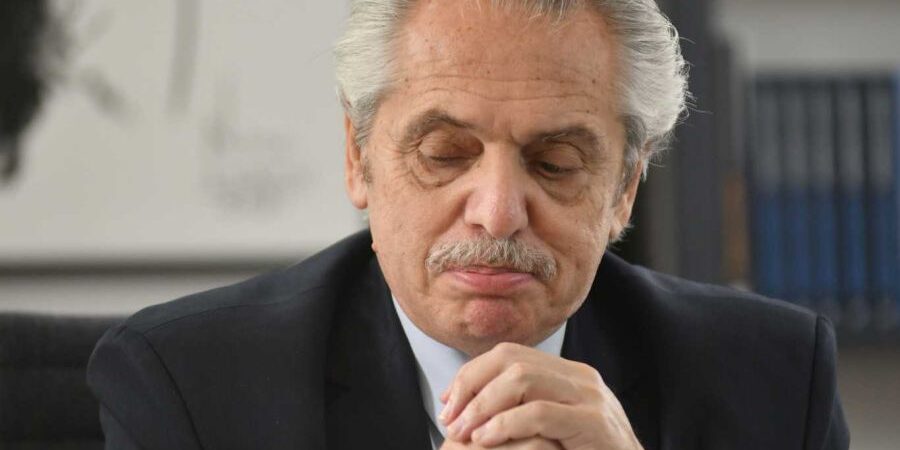
The media coverage of the allegations against former president Alberto Fernández continues to remind us that patriarchal practices are still prevalent. Without women and diverse individuals in decision-making positions in the media, in politics, and everywhere else, there is no equality, nor will there ever be.


Share

The news that dominated Argentina's agenda this week shook us both politically and in the media. As a media outlet that covers patriarchal and sexist violence, these events impact us deeply and raise questions that are both familiar and new.
Starting on Sunday, increasingly disturbing information began circulating about acts of gender-based violence suffered by Fabiola Yáñez at the hands of former president Alberto Fernández. As if the shock weren't enough, days later, crucial details, chats, and images of Yáñez's bruised face and body leaked from a court file were also leaked.
The law states that it is essential to preserve in the media the integrity, dignity and image of the victim of gender violence (Article 3, section D of Law 26.522/09).
Disseminating these images goes against all recommendations for journalistic treatment: "The emphasis of the coverage should be on raising awareness and preventing gender violence," says the guide to good practices of the Ombudsman for the Public, one of the few organizations standing up for equal communication.
Many journalists, especially men, overreacted to the outrage against gender-based violence. La Nación + and TN constantly talk about the seriousness of the problem, sighing and wincing when they say "feminism," while celebrating the dismantling of gender policies.
Perhaps they finally understood that gender-based violence is a reality, but they overlooked the fact that, in addition to physical violence, there is also symbolic and media violence. And that is what they perpetuate every time they reproduce violent images obtained from sealed case files or intelligence leaks. Why are certain images of dubious origin superimposed over everything else and over any journalistic procedure?
Nancy Pazos on C5N asked for those sensationalist images to be taken down. They're still there, everywhere, with Infobae and La Nación boasting about having been the ones to broadcast the photo or video, breaking the story with the patriarchal logic of turning an atrocious event into capital. What interests are behind this? Perhaps journalism won't be the one to uncover the truth.
Media violence
In recent days, the names of other women linked to the former president have also circulated, along with a video featuring one of them. That woman was on the front page of Clarín on Friday, alongside headlines labeling him a wife-beater. The fact that many media outlets continue to publish leaked videos, blaming a woman in a position of significant power imbalance, exposing her, stigmatizing her, and attacking her dignity, is also a form of media and symbolic violence.
Tiempo Argentino was one of the few media outlets that did not jump on the sensationalist bandwagon and where, at the urging of gender editor Maby Sosa - one of the few places where that figure is prevalent - the team decided not to reproduce the images or the video.
The fact that we are all talking about gender violence today as a problem that transcends the private sphere and becomes political is, however strange it may sound, a step forward thanks to the persistence of the feminist movements that are ridiculed. We haven't just missed the mark; we've fallen short. Media coverage continues to remind us that patriarchal practices are more prevalent than ever. Without women and diverse individuals in decision-making positions in the media, in politics, and everywhere else, there is no equality, nor will there ever be.
The carrion
As a strategy to seize power, the libertarian government has turned feminism, diversity, and the fight for human rights into its main enemies, and its army of trolls has used this news to reinforce its attacks. The image of Alberto Fernández as a womanizer and abuser is conflated with the historical struggles of the feminist movement. The mainstream media, besides indulging in sensationalism, are making a spectacle of the former president's double standards in the same week that members of the La Libertad Avanza party visited repressors and referred to them as political prisoners and "ex-combatants." Everything is mixed together, and thus, everything becomes plausible and justifiable.
From panel discussions and social media—which supposedly reflect the “common sense” of “the people”—things are said like, “See, in the end, feminism and the fight for human rights were all just a racket?” The same old refrain is repeated: “with my taxes,” “with ours,” and this is how the closure of INADI (the decree was published this week), the elimination of programs for women and LGBTQ+ people, the silencing of public media, the dismantling of culture, and, of course, the cover-up of unemployment, inflation, hunger, and the plundering of the country are covered up. Hours before Yañez's accusations and the leaked photos and chats, it was reported that 54.9% of people in Argentina live below the poverty line. It's impossible not to connect the horror of the violence with political and media opportunism. The end and the means.
One of our articles this week, in the context of the Olympics and the misgendering of Imane Khelif, explains how hate campaigns and gender disinformation operate . Mexican journalist Danielle Cruz explains how the strategies of the new right, targeting women and LGBTQ+ people, are camouflaged behind false, confusing, or malicious data. Following clickbait came ragebait: exaggerating outrage to increase traffic at the expense of content quality. Ragebait exploits prejudice and discrimination to encourage interaction. Sound familiar?
We are present
We are committed to journalism that delves into the territories and conducts thorough investigations, combined with new technologies and narrative formats. We want the protagonists, their stories, and their struggles to be present.
SUPPORT US

FOLLOW US
Related notes

We are present
This and other stories are not usually on the media agenda. Together we can bring them to light.