

How gender disinformation campaigns work
What role do the media play in lending credibility and a platform to disinformation campaigns on gender issues? Why are we seeing a steady decline in the quality of their content? What power do we have to confront them?


Share

Let's begin by naming the violence that intertwined at the Olympic Games surrounding the coverage of Imane Khelif. The misgendering of the Algerian boxer, the online harassment and bullying, was built upon a transphobic discourse that is costing lives worldwide. It wasn't a "controversy." It was a violent campaign that, as Volcánicas, began with far-right Italian accounts to justify a possible defeat for the Italian competitor, Angela Carini.
Questioning the gender of women athletes of color has been a constant in high-level competitions, especially when their talent begins to become evident. Binary rules in professional sports are not built on irrefutable scientific data, but rather on social constructs. They are constantly being modified to limit who is (but especially who is not) a woman, as this piece by Malvestida explores in depth .
What is the role of the media in giving credibility and a platform to these hate campaigns? Why are we seeing a steady decline in the quality of their content? And, more importantly, what power do we—as audiences and members of these vulnerable communities—have to confront them?
Disinformation, propaganda and social media
Constructing a false narrative is not the same as unquestioningly adopting one. But understanding the differences between these two processes is crucial for a deeper understanding of what happened and how to prevent it from happening again.
In English-speaking media criticism, different terms are used for these two processes: disinformation refers to the creation or manipulation of false narratives with a clear political or social intent. Misinformation is the replication of these narratives without the explicit intent of the former.
Successful disinformation campaigns are shared by users and replicated by media outlets, generating a second wave of misinformation that, at the same time, obscures the true origin and reinforces the primary objective of the disinformation. This is what we saw last week after Khelif's victory over Carini.
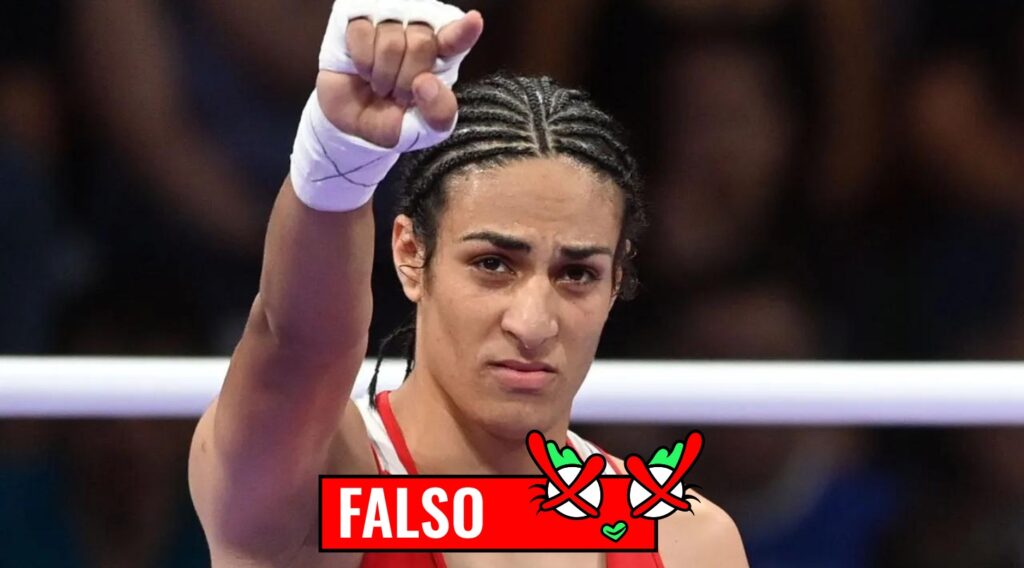
A year ago, the transphobic coverage surrounding Khelif remained confined to Mexico. It was picked up by media outlets in the region focused primarily on content aggregation. Both what happened in 2023 and what we saw at the Olympic Games cannot be explained without understanding the changes that have occurred within the media and how most outlets have abandoned any semblance of social responsibility and journalistic ethics due to the demands of the digital platforms that distribute their content.
Ragebait: How to Normalize Hate
Ragebait is a direct descendant of clickbait : editorial strategies designed to attract the attention of social media and search engine users. The goal is to get them to click on a link or interact with the post. Unlike clickbait , which is usually an unfulfilled promise within the article, ragebait exploits the systemic prejudices and discrimination of an audience to encourage interaction.
For ragebait to work and be an effective strategy, it needs "polarizing issues." These are political and social advances achieved through decades of struggle (made invisible and criminalized by the media itself) that have gained greater visibility, triggering a reaction from conservative groups. Migration, territorial defense, feminism, the environment, and the mere existence of LGBT+ people in the public sphere are topics frequently exploited for this type of content, presented with the seemingly innocent question to social media audiences: "What do you think?"
For the public unfamiliar with hate speech and the political and ideological agendas of right-wing groups on social media, seeing a post that, without any context, accuses "a man" of competing against women in the Olympic Games triggers an angry reaction: something unfair is happening and we have to "make some noise".
In this sense, anti-rights groups develop a symbiotic relationship with these types of media. Various digital personalities have gained prominence as “journalists” or “analysts” by publishing increasingly extreme disinformation—copying the “culture wars” of the United States and Europe verbatim—while the media transforms these publications into misinformation that aims to increase audiences and engagement.
How the media became disinformation machines
The “mistake” that dozens of Mexican media outlets made for the second time against Imane Khelif is a systemic failure that could happen again: the demand of digital platforms to generate “content” has generated a long series of problems throughout the editorial chain of the vast majority of media outlets.
The context is fertile: fewer and fewer media outlets and editorial teams are committed to building quality journalism. In the process of accepting the empty promises of digital platforms, they have made multimillion-dollar investments that can only be sustained with poorly paid and precarious staff. These same limitations surrounding journalistic work have shaped the editorial lines of the vast majority of media outlets: for many, the only correct editorial decision is the one that improves audience figures.
These changes haven't happened in a vacuum: they're part of a series of "business models" implemented by management and owners who have repeatedly prioritized business logic over journalistic ethics and the social responsibility that supposedly underpin the media. When it's not the owners themselves, it's digital consulting firms that dominate the market and advise more than 60% of local, regional, and national newsrooms with the same strategies, the same anti-journalistic advice, and the same insistence on making work in the media more precarious. The demand for better media must also take into account the conditions of workplace violence, economic insecurity, and the complete lack of opportunities for growth and creativity within their newsrooms.
Accountability, regulation, recovery: how to clear the way
Amid a growing advance of the far right in every corner of the world, the urgency for critical media could not be greater, but we are confirming time and time again how the media we currently have are not up to the task.
However, we do have journalists in every corner of the world conducting investigations, confronting power, and questioning their work every day: great journalism is done by journalists, but some media outlets are hindering it.
How do we confront and reclaim the media? By supporting independent journalism and generating pressure—yes, even on social media—when blunders like the one on August 1st occur. And by demanding effective regulation that gives audiences the tools that already exist for public media (audience ombudsmen, among others) and that private media comply with regulations transparently.
I firmly believe in the power of silenced and ignored voices, in the power that historically marginalized groups have to construct the stories we have always told ourselves, because they have taught us how to survive and fight. I believe in the potential of our struggle, which has shown every day that, like Imane, it doesn't have to adhere to the conditions imposed by the system to win and assert itself.
We are present
We are committed to journalism that delves into the territories and conducts thorough investigations, combined with new technologies and narrative formats. We want the protagonists, their stories, and their struggles to be present.
SUPPORT US

FOLLOW US
Related notes


We are present
This and other stories are not usually on the media agenda. Together we can bring them to light.