

Nessa Sosa: from social exclusion to international debut as a trans model
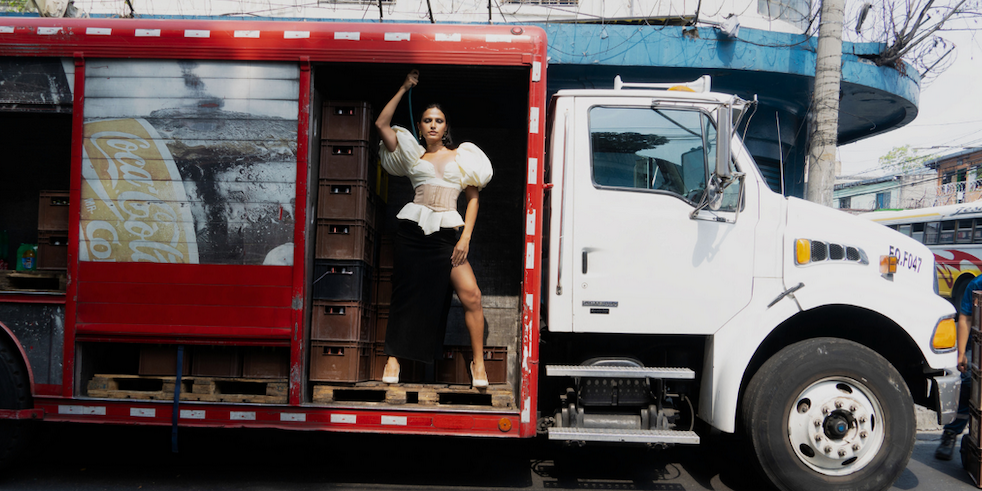
Since Nessa Sossa posed for a magazine sharing her experience of being a trans woman in El Salvador, she has become a leading figure for the LGBTQ+ community in El Salvador. "You represent us," a gay man recently told the young student who is taking TikTok by storm.


Share

She travels by bus every day. She's never been robbed. She could eat vegetable soup for the rest of her life, especially if her mother makes it. Before she turned 20, she wanted to be a bodybuilder because she enjoys lifting weights and is studying for a degree in Physical Education at the University of El Salvador. Later, on her own initiative and thanks to comments from her friends, she became convinced that she has a talent for modeling.
Modeling is not just the profession she aspires to make a living from. It's the starting point for her to begin fully accepting herself as a trans woman a year ago. Before, her family and social circles prevented her from freely expressing her identity and gender. She had to deny who she was even in her workplace: the catwalk.
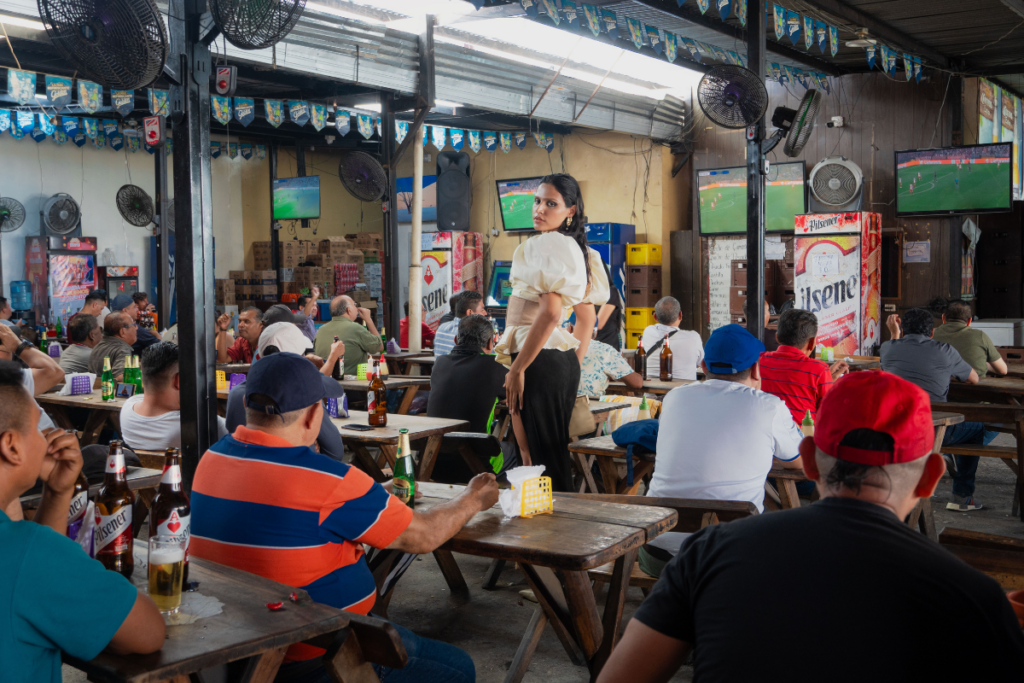
Nessa Sossa has now become a leading figure for the LGBTQ+ community in El Salvador. "You represent us," a gay man recently told her after a shy theater performance. And so, she continually receives comments on social media and in person praising her work and her visibility as a trans woman in a country that discriminates against and stigmatizes sexual diversity, both in public office and on the street.
Although she already used TikTok and Instagram to showcase her modeling talent in an unusual setting like the Historic Center of San Salvador, Nessa rose to fame after the April edition of the New York-based magazine Blanc Magazine, on whose cover she appeared, and which also published a photo essay of hers titled "The Flower Route," to tell the world about the daily life of a trans woman in El Salvador.
"I am here to forge my own path and serve as an example for all trans people who hide and protect themselves in our small, conservative country," Nessa explains to Blanc Magazine.
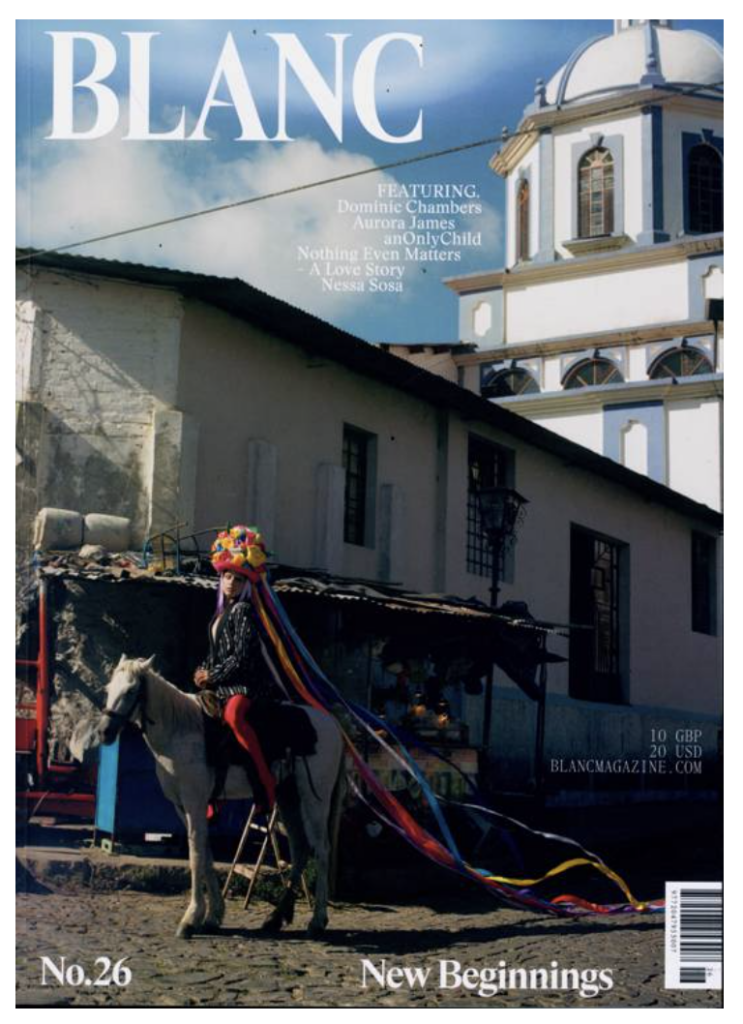
The magazine's 26th issue was titled "New Beginnings" and featured Nessa as El Salvador's first transgender model. On the cover, Nessa appears slender, wearing a blazer made with traditional fabrics, seated on a horse and sporting a colorful floral hat with ribbons, next to the church in Concepción de Ataco, a tourist town in western El Salvador.
The hat he wears is inspired by the one worn by the Historiantes, Latin American folk characters who, in El Salvador, perform a traditional dance every August in Izalco, Sonsonate, to represent the struggle between Moors and Christians.
For Nessa, the accessory symbolizes something more: “These ribbons falling are like the LGBT flag, because they’re colorful ribbons, and ultimately, the story behind ‘La ruta de la flor’ is about a trans woman, Nessa Sosa, which is me. So it has a lot of meaning.” In fact, the cover image for this magazine, which has a reach in several countries in the Americas and Europe, wasn’t planned. It came about when the production team saw a man riding a horse past them: 17 years later, and for her first global photoshoot, Nessa would once again ride a horse.
In El Salvador, the LGBTIQ+ population faces a society that places them in unequal conditions compared to heterosexual people. There are no laws that penalize discrimination against people of diverse sexual orientations and gender identities, that recognize transgender people, or that allow same-sex couples to have basic rights such as access to social security or property rights.
Of all groups, trans women are the most affected. In 2018, only one in three trans women in El Salvador had been able to enter the workforce, according to research published by the organization AMATE.
Hate crimes paint the harshest picture of the life expectancy of trans women. According to the Latin American and Caribbean Network of Trans People, trans women have an average life expectancy of 35 years. That is, 42 years less than the 77 years of life expected for cisgender women.
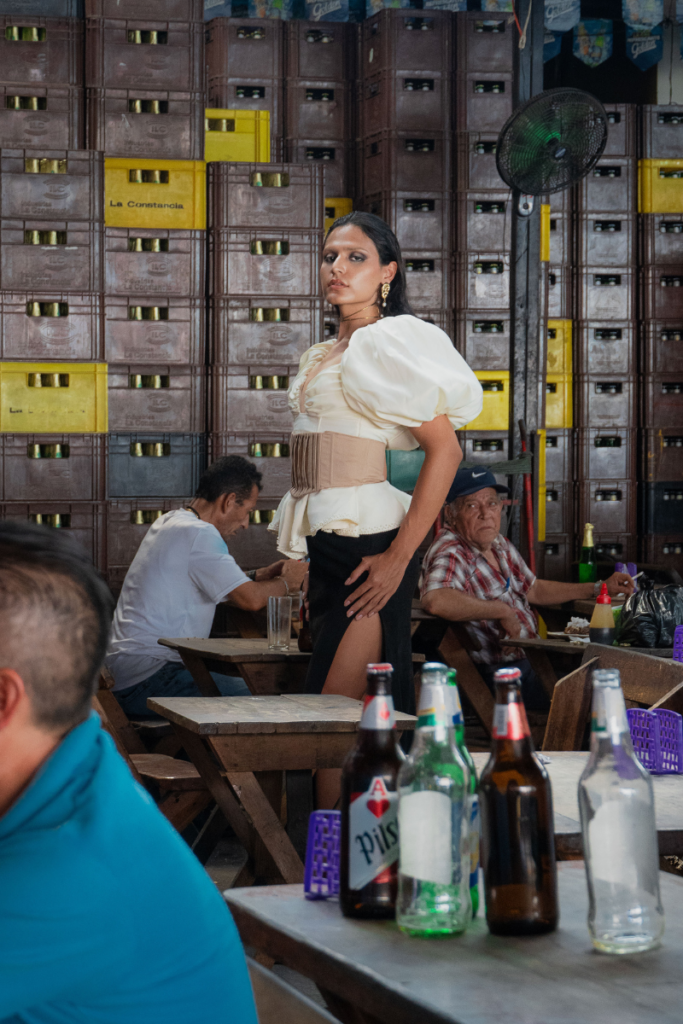
Nessa combines modeling with her university studies and a job at a beauty salon. She only has 11 courses left to complete her degree, but in the next five years she sees herself traveling the world, modeling.
"Life isn't easy for many, and for us, it's even less so (...) I feel observed in my daily life, I suppose sometimes with admiration, confusion, morbid curiosity, desire, or perhaps hatred," the model says in a video posted by Blanc Magazine's Instagram platform on April 15, the day of the launch of the edition in which she was the cover star.
In March 2023, Nessa modeled women's clothing on a runway for the first time. She had tried before, but at the three fashion shows where she had previously been accepted, she was asked to model men's clothing. She, who was still openly transgender, did it.
On that occasion, designer Didihiver chose her to model a leather dress at El Salvador Fashion Week . Nessa also modeled his designs in November of that year at Mercedes-Benz Fashion Week . These are the two most important fashion events held in El Salvador, and Nessa became the first trans woman to walk their runways.
"That time I fulfilled my dream, and I feel that since then I am who I am today, because it gave me the strength to say, 'Okay, this is who I am, and this is what I want to do.'" She recalls, proudly, how she received a standing ovation and praise.
Didihiver didn't know that, in 2023, he was the first Salvadoran fashion designer to choose a trans woman as a model, respecting her feminine identity and gender expression. He says that, during the casting, he was amazed by Nessa's talent.
"As a gay person who had many security problems in my adolescence and who grew up in a very traditional and rigid family, when I see people from the community who manage to express their true identity, I feel immediate attraction and total admiration for them," he adds.
Since Nessa's appearances on these runways, the designer says, several trans women who follow him and the model have been asking her about upcoming castings so they can enter the modeling world. Nessa is paving the way.
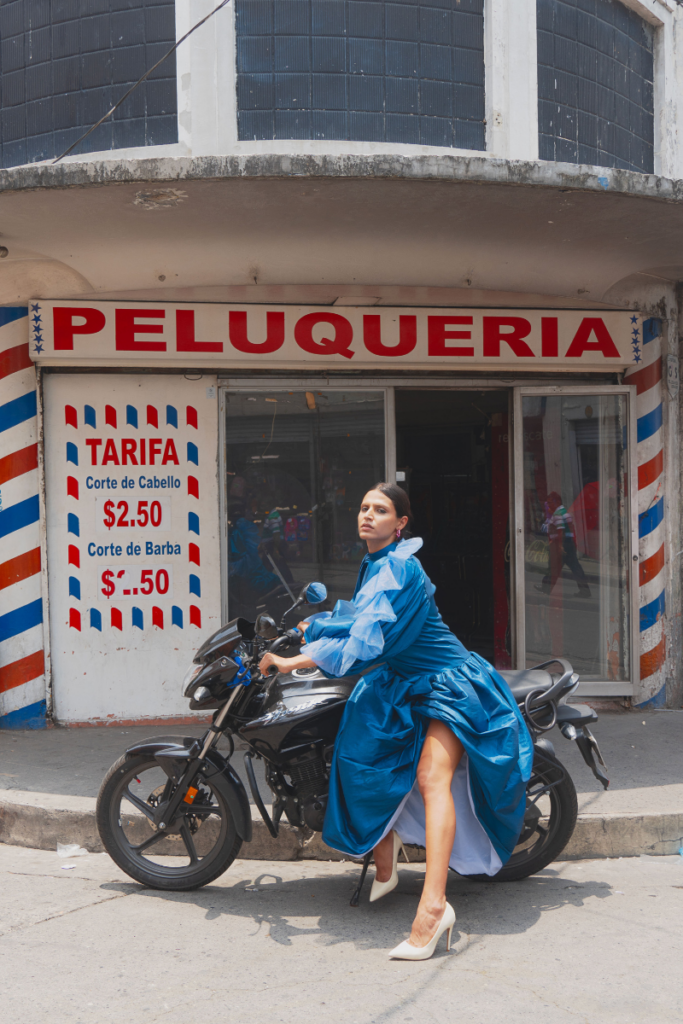
Just like what happened with Nessa in the fashion industry in a country that discriminates against and stigmatizes sexual diversity in all areas, between 1995 and 1999, Cris Miró, the first trans vedette in Argentina, rose to fame for her talent in acting and modeling.
In her brief career, Miró became a symbol of LGBTQ+ resistance in a society that had not yet legalized same-sex marriage (2010) or the Gender Identity Law (2012), and which was also unaccustomed to seeing trans people in prominent positions in the art and entertainment world. Today, in Latin America, Argentina stands as an oasis in the protection of the rights of sexual minorities.
"Just as they make me known, they make my entire community known, all the trans women in the country. And I think that the support, the love, the admiration I receive is priceless because it's part of the community and, above all, of trans women," Nessa explains.
After the March 2023 runway show, Nessa knew she had taken a significant step in her modeling career and told herself that if she remained consistent, more achievements would follow. Inspired by the successful Britney Manson , a Russian trans model and TikToker who shares tips for aspiring models, the Salvadoran decided to make videos of herself modeling in San Salvador's Historic Center go viral on TikTok and Instagram .
Why this location as a catwalk? "The reality of the country is in downtown San Salvador. You clearly have to go to hidden alleyways, where you can see people experiencing homelessness. It's not just about beauty. There's a lot of cultural and architectural beauty, but also human reality," explains the model, the day before she was to model a dress made from jerseys of Club Deportivo Alianza—the capital's soccer team—designed by the Salvadoran brand Midnight of Delight.
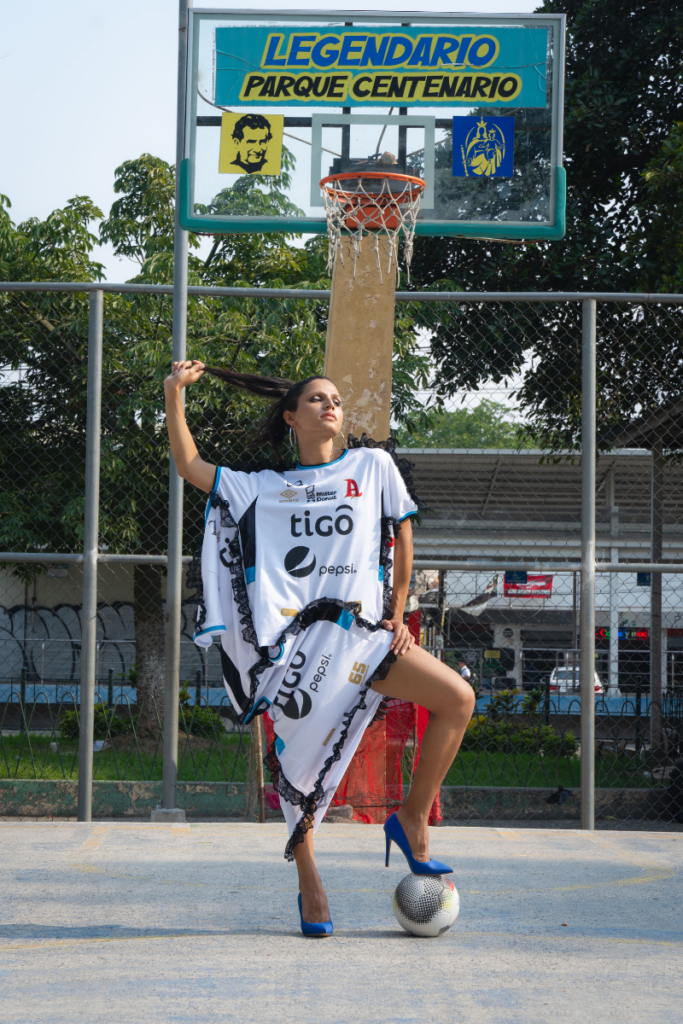
Since becoming a visible figure in the fashion world, her mother and sister also learned of her female gender identity through social media. Although they live in the same house, her identity and professional career are topics she doesn't discuss with her family.
At 16, her mother asked her if she liked men, and from then on, the family relationship became strained. There were constant arguments that caused Nessa, for a time, to doubt her identity and her sexual orientation.
Amate's research also shows that of the 284 people interviewed for the study, 22% responded that they had to leave home when they came out of the closet and fend for themselves because their family turned their backs on them.
It was through social media that Kevin Alexander, a Salvadoran fashion photographer based in the United States, met Nessa. After seeing a TikTok video of Nessa modeling a black suit and brown boots at the Central Market in San Salvador, Alexander was captivated by her and contacted her to collaborate on projects. Last September, they met at a Salvadoran fashion event, and this year they finally collaborated on "La ruta de la flor" (The Flower Route).
"The Flower Route" comprises 22 photographs taken in Ataco—one of the districts that now make up the tourist route known as the Flower Route—and its surroundings. Alexander's objective was to present Nessa and El Salvador, with its cultural nuances, which also encompass its LGBTQ+ hate.
In the photo series, Nessa wore 11 outfits designed by national and international designers. The photographs show her posing in different locations around town and interacting with local artisans. Each image is accompanied by excerpts from a letter that, at Alexander's request, Nessa dedicated to the LGBTQ+ community.
"As a transgender woman, a transgender model, I don't have the same opportunities as a cisgender model. At the end of the day, the fashion industry in El Salvador isn't as advanced as in other places," acknowledges photographer Alexander.
Amid this context of closing opportunities for sexual diversity, there is the anti-rights advance of Nayib Bukele's unconstitutional government. In 2021, his allied legislators shelved a draft Gender Identity Law for the recognition of transgender people; and, in June, the Ministry of Culture censored the play "Inmoral" at the National Theater of San Salvador, presented by a drag troupe that depicts the violence experienced by LGBTIQ+ people in El Salvador.
The censorship of the work continued with the dismissal of 300 employees from the Ministry of Culture on June 27, the day before the global celebration of Pride Day , because, according to a post on Bukele's social media network, they "promoted agendas that were incompatible with his government's vision." In 2019, his government delegated the functions of the now-defunct Secretariat of Social Inclusion to this ministry.
“Even in that process of seeing myself in that feminine way, it was also difficult for me to say ‘I am a trans woman.’ It was a long process of months of denial. It’s difficult, because what goes through your mind is how you’re going to live your life now saying that you’re a trans woman, that this is your name, that you want to be treated this way. It’s hard to think that your life is going to change 100%, literally. Everything changes, but like everything, it’s a slow process,” Nessa reflects.
Credits: Gabriela Murillo, stylist; Midnight Delight, styling assistant; Adriana Molina, makeup; Elisa Hernández, production and photography. Wardrobe: Didi Hiver, Maribel Valladares, Midnight Delight.
This article was originally published in Alharaca (El Salvador) and we are publishing it in Presentes as part of an agreement with this media partner.
Share
We are present
We are committed to journalism that delves into the territories and conducts thorough investigations, combined with new technologies and narrative formats. We want the protagonists, their stories, and their struggles to be present.
SUPPORT US

FOLLOW US
Related notes
We are present
This and other stories are not usually on the media agenda. Together we can bring them to light.