

A young trans woman was murdered in Tabasco: she had reported an attempted transfemicide.
Kenia Cruz was 20 years old and a man had already tried to kill her a year ago. Since then she had been receiving threats.


Share

Kenia Cruz was a young trans woman who had just turned 20. On Saturday, June 15, her lifeless body was found with signs of violence in the yard of her home in the municipality of Cárdenas, Tabasco, a state in southeastern Mexico. The young woman had been the victim of an attempted femicide a year earlier. She had received threats from the family of the man who tried to kill her.
Kenia's trans femicide is the third to occur this year in Tabasco. Nationwide, at least 27 trans women have been murdered, according to the National Trans and Non-Binary Assembly's registry of trans femicides.
“Tabasco remains a deeply violent state for LGBT people, and for women in general. Femicides are on the rise. So is everyday violence, such as insults, attacks, and brutality against trans women,” said Felipe Sánchez, coordinator of the Casa de las Muñecas Tiresias organization in Tabasco .
Tabasco is one of the nine states in the country where the right to identity is not yet guaranteed administratively. It is only possible through legal protection (amparo). Furthermore, it was one of the last states to legalize same-sex marriage .
Kenia experienced family exclusion and was the victim of an attempted femicide
On February 14, 2023, Kenia was the victim of an attempted femicide. She was attacked with a machete and required 49 stitches to her face, in addition to injuries to her eye, head, and hand.
Kenia reported the incident to the Tabasco Attorney General's Office. Relatives of the man who tried to kill her threatened her after his arrest.
Felipe Sánchez, coordinator of Casa de las Muñecas Tiresias Tabasco, recounted that after the attempted femicide, Kenia traveled to Mexico City to seek refuge and treat her injuries at the Paola Buenrostro Children's Home . She later left, and the organization lost contact with her.
Months later, the organization learned that Kenia had tried to return home, but her biological mother refused to take her in. Sánchez explains that Kenia experienced exclusion within her family. Her support network consisted of friends and a woman Kenia called her "adoptive mother."
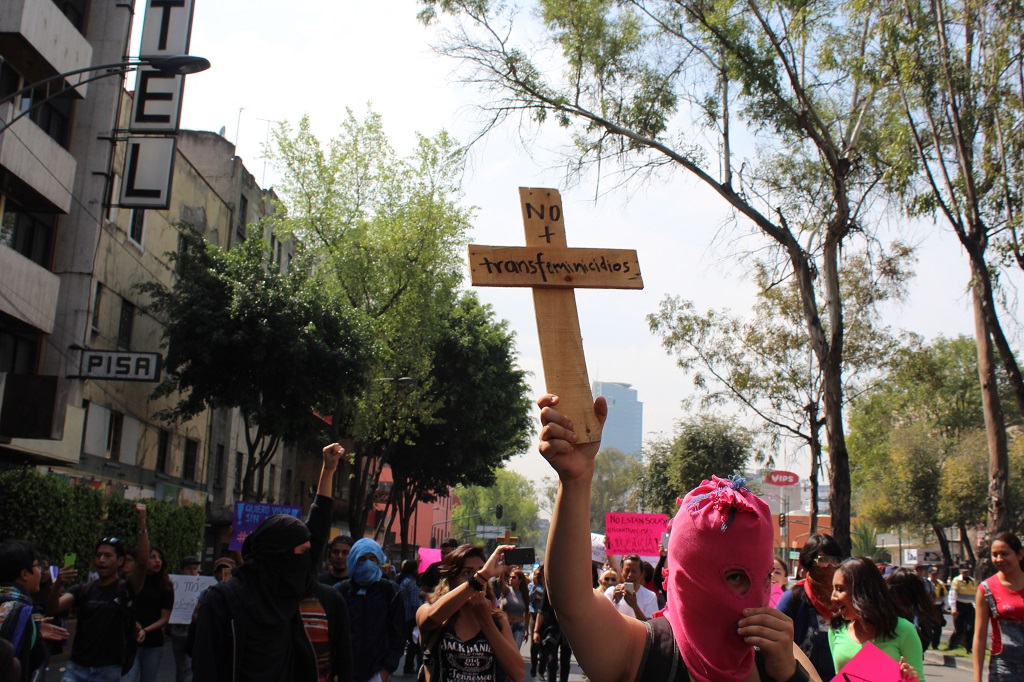
“In Tabasco, nobody is doing anything to prevent transphobic violence.”
The Tabasco Attorney General's Office had prior knowledge of the attempted femicide against Kenia and the threats from her attacker's family. However, according to press reports , the Attorney General's Office is pursuing two lines of investigation in this crime: one for "revenge" and another for "a conflict during a party."
So far the Prosecutor's Office has not issued any statement about this crime and when attempts were made to contact them directly, they were left on hold.
“The Prosecutor’s Office has a record of the violence Kenia experienced and failed to prevent anything. In Tabasco, nobody does anything to prevent transphobic violence,” denounces Felipe Sánchez.
The coordinator of Casa de las Muñecas Tiresias Tabasco explains that, as activists, they face difficulties when supporting victims of trans femicides whose blood relatives do not recognize them. In these cases, the Prosecutor's Office prevents them from participating in monitoring the investigation and seeking justice, arguing that they can only provide information to immediate family members.
“We are seeking an agreement with the prosecutor's office so that they implement protocols and allow us to support our colleagues who have been murdered and lack family support networks. We are doing the government's job (…) So far, what we have managed to do from Casa de las Muñecas Tiresias is ensure that, when supporting these cases, the victims' identities are respected and recognized, and we pressure them to take into account the gender perspective, but this is not something that comes directly from the authorities,” adds Felipe Sánchez.
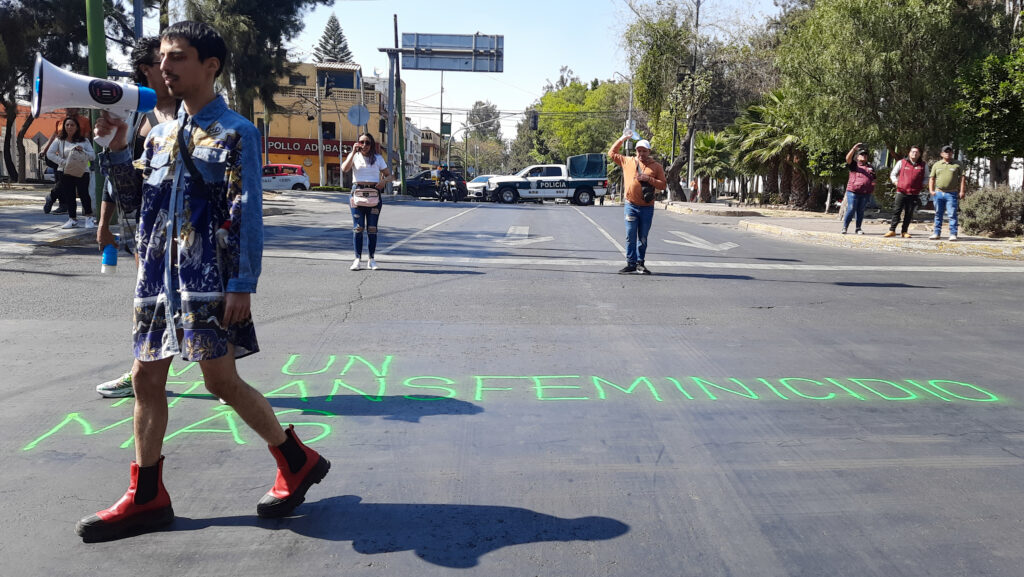
“We are doing the government’s job.”
In 2022, activist and director of the Tiresias Dollhouse , Kenya Cuevas , held a meeting with the prosecutor of the state of Tabasco, Nicolás Bautista Ovando, and denounced that the gender and human rights perspective is not applied in the investigations of transfeminicides.
Since then, this organization has sought to ensure that justice personnel not only investigate under this approach but also apply the National Protocol of Action for Personnel of the Justice Administration of the Country, in cases involving Sexual Orientation or Gender Identity , a document that is supposed to be socialized and applied by every person involved in the Mexican justice system.
Felipe Sánchez commented that in the coming days they plan a protest outside the Tabasco Prosecutor's Office to continue demanding justice for the transfeminicide of Kenia.
But also for Elisa Cortés, murdered on February 13 of this year in Villahermosa , and Mónica, a trans woman who was homeless, murdered in the municipality of Balancán on June 5. Sánchez denounces that in both cases there has been no progress in the investigations.
We are present
We are committed to journalism that delves into the territories and conducts thorough investigations, combined with new technologies and narrative formats. We want the protagonists, their stories, and their struggles to be present.
SUPPORT US

FOLLOW US
Related notes


We are present
This and other stories are not usually on the media agenda. Together we can bring them to light.