

Gender policies emptied in Argentina: And now, who will defend us?
Workers from the former Ministry of Women, Gender and Diversity of the Nation held an assembly to defend public gender policies.


Share

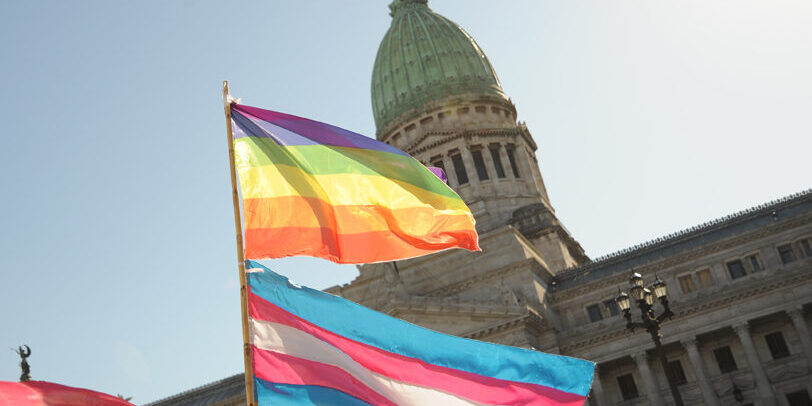
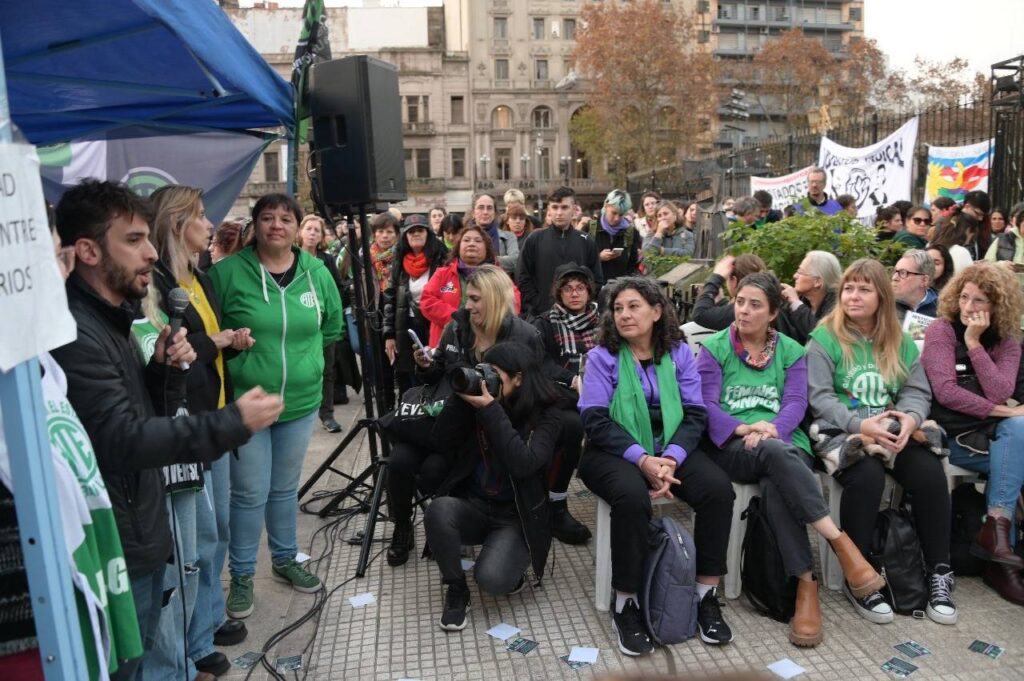
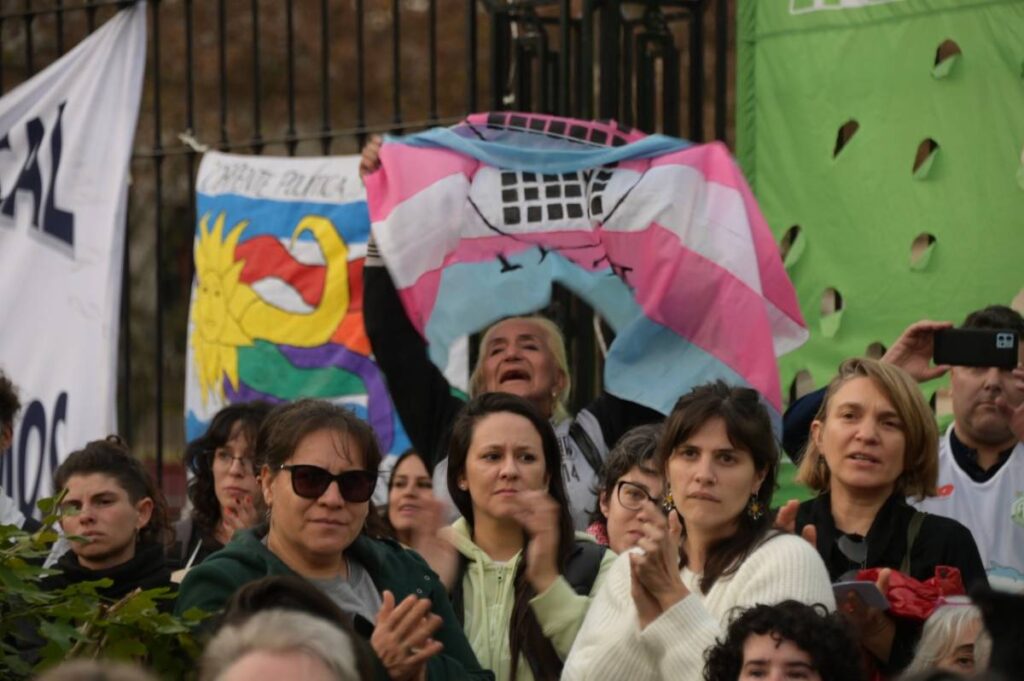
BUENOS AIRES, Argentina. Women and diverse groups participated in the open assembly of workers from the former Ministry of Women, Gender and Diversity of the Nation in repudiation of the announcement of the closure of the Undersecretariat of Prevention against Gender Violence .
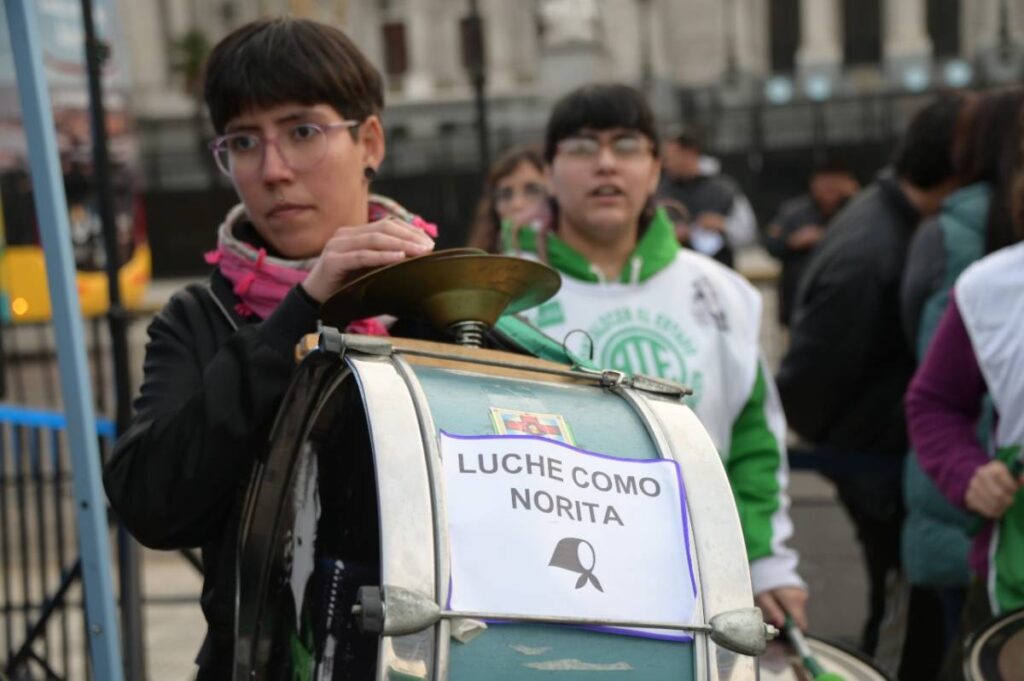
They also rejected the layoffs in the area and the dismantling of gender policies during a day of struggle in the vicinity of the National Congress.
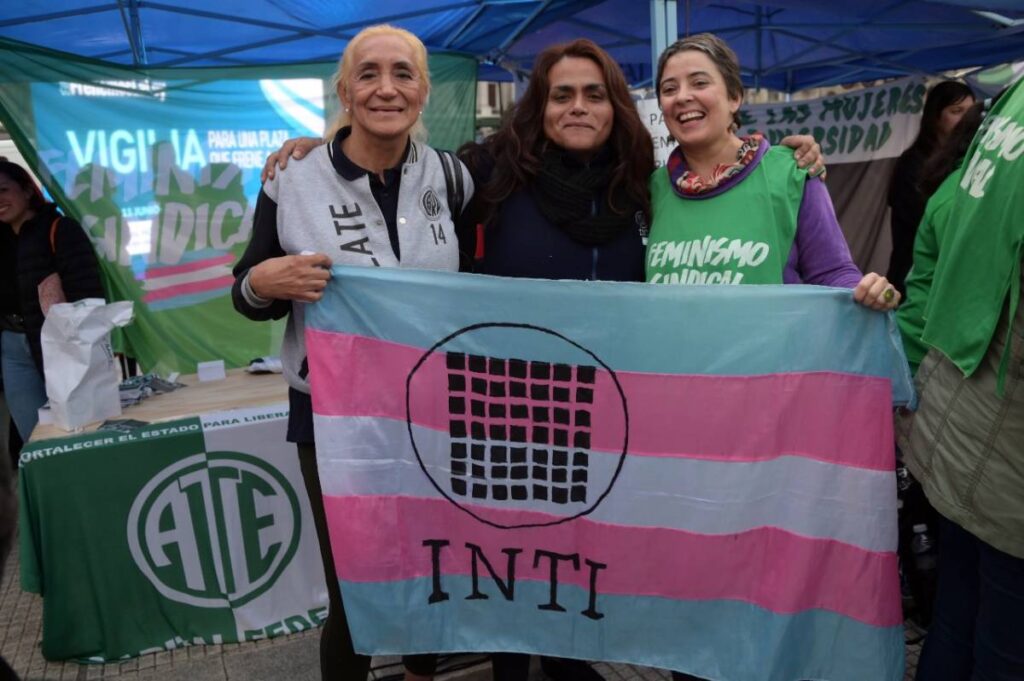
“Thank you to the workers of the former Ministry of Women, Gender and Diversity for everything you did to change our realities,” said trans activist Alma Fernández during the meeting.
Without gender policies
In a 24-page report , the workers of the former Gender Ministry and the ATE internal board in the ministry stated: “In the week of a new anniversary for Ni Una Menos, the government of Javier Milei decided to dissolve the Undersecretariat of Protection against Gender Violence, the space within the state organizational chart to which the Ministry of Women, Gender and Diversity had been reduced.”
“What we are experiencing is not a cut in policies. It is the complete dismantling not only of the policies that have been implemented in the last ten years but since the return of democracy. What is being done is to undermine every national institution. We are going back more than 40 years in gender policies,” Lau, a 33-year-old trans man who works at the Undersecretariat for the Prevention of Gender Violence and is a delegate for the ATE Presentes
This is the last bastion of the Executive Branch in its fight against gender violence, in a country with 114 femicides, three lesbicides , and one transvesticide so far this year. The Argentine State committed to having a specific department dedicated to this issue, in accordance with Law 26.485 on comprehensive protection against violence against women , passed by Congress in 2009.
In December 2023, the ministry had a staff of 1,282. This number has now dropped to 630, a 50% reduction in less than six months. A further 80% reduction of that number was recently announced .
Among the data compiled by the workers are the results of Line 144. From 2019 to 2023, more than 1,200,000 communications were received and more than 93,000 interventions were carried out, providing advice and assistance in situations of violence.
Dismantling and lack of protection
On the morning of Tuesday the 11th, women and LGBTQ+ individuals from various sectors participated in a meeting at the Annex of the Chamber of Deputies, organized by the Women and Diversity Commission, chaired by Deputy Mónica Macha. During the meeting, workers from the former Ministry of Women, Gender and Diversity denounced the fact that gender policies are not currently being implemented.
“I work in the Acompañar Program . It’s a program that assists people who are or have been in situations of gender-based violence. It provides financial support, which is very important for escaping situations of violence,” Lau shared. And she clarified: “At this moment, the program is practically nonexistent.”
“As my program stands, all policies are at a standstill: the Travesti Trans program, which supports trans people who are precisely in a situation of social vulnerability. The Producir program, which supports women's entrepreneurship in situations of violence. Well, all the Ministry's policies are currently at a standstill,” she explained.
A necessary public policy
In the report, the workers detailed the policies implemented by the Ministry during its four years in office. The Acompañar Program, which promotes the economic autonomy of women and LGBT+ individuals at risk of gender-based violence, reached 352,300 people. Additionally, the Acercar Derechos Program for people experiencing gender-based violence supported 33,908 women and LGBT+ individuals across the country.
“The ministry was the culmination of a public policy that began with democracy in 1987, with (Raúl) Alfonsín and continues to this day. There has always been an institutional framework for gender equality because it is understood that gender-based violence and inequalities are a public problem,” said former Minister of Women, Gender and Diversity, Elizabeth Gómez Alcorta, in an interview with this agency.
He added, "This ministry made it possible to have a budget that allowed us to seriously address a problem that, without a doubt, in 2015 with the Ni Una Menos movement, put on the political scene that femicides are a problem of the State.".
For diversity
With the implementation of the Law for the Promotion of Access to Formal Employment for Transvestite and Trans People , 955 transvestite and trans people were incorporated into the public administration through the monitoring of the Ministry.
Regarding the LGBTIQ+ community, another example is the Program for Strengthening Access to Rights, aimed at transvestite, transsexual and transgender people.
“This population has a life expectancy of less than 35 years, making it one of the most vulnerable, especially those over 35, who are survivors of transvesticide and social transvesticide. The Program is aimed at transvestites and trans people over 18 years of age who live in the national territory and are experiencing a violation of their rights due to their gender identity and/or expression. Through this policy, comprehensive assistance is provided through an interdisciplinary team, along with financial support to cover basic needs,” explained the former ministry.
In 2022, a support line for trans elderly people was created that includes financial assistance to people over 50 years of age equivalent to six minimum living and mobile salaries on a one-time basis.
"Our resistance is just beginning"
Jem Rodríguez is a 57-year-old trans activist and leading member of the organization Otrans Argentina , who received one of these reparations last year. “It was for the systematic violation of the rights of my community and myself. I was arbitrarily detained many times. It helped me a lot,” she told Presentes .
Because of her age, Jem is a survivor of the trans community, and she doesn't know if she'll ever see the community truly enjoy full rights. Regarding the current situation, she lamented, "Seeing the rollback of what we've achieved with so much sacrifice is like being killed with a single shot."
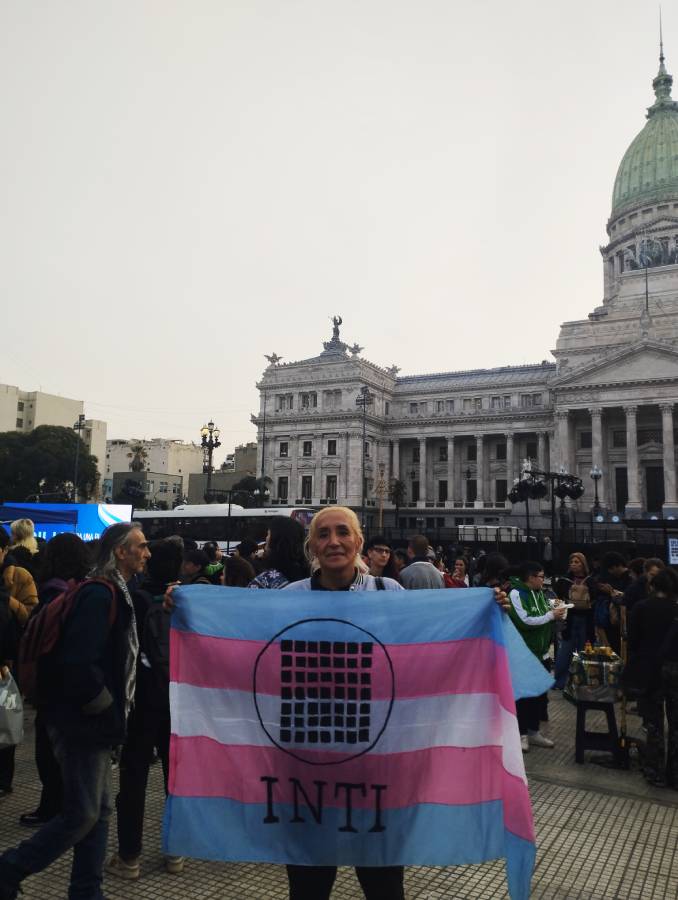
“This is not a gift, this is an acquired right, a historical reparation that society and the State owe us. They owe it to the LGBTQ+ community, especially to trans women, who are the most vulnerable group. They owe us lives because the lives of my colleagues have been lost,” she added.
Regarding policies focused on sexual diversity, the Gender Equality Office also provided support and training for the implementation of non-binary national identity cards. In addition, it coordinated Inclusive Health Policies.
“All of this worries us a great deal. But at the same time, we are convinced that this is just the beginning, that our resistance is starting now, and that they are not going to defeat us so easily. We have a great history of struggle, a great history of resilience, and that is what we are putting to the test now as well,” Lau concluded.
We are present
We are committed to journalism that delves into the territories and conducts thorough investigations, combined with new technologies and narrative formats. We want the protagonists, their stories, and their struggles to be present.
SUPPORT US

FOLLOW US
Related notes


We are present
This and other stories are not usually on the media agenda. Together we can bring them to light.