

Estrella, a trans survivor, gets married: "I got married to have a dignified old age"
The story of Estrella, a trans woman from the province of Santa Fe, who at 50 years old decided to get married.


Share

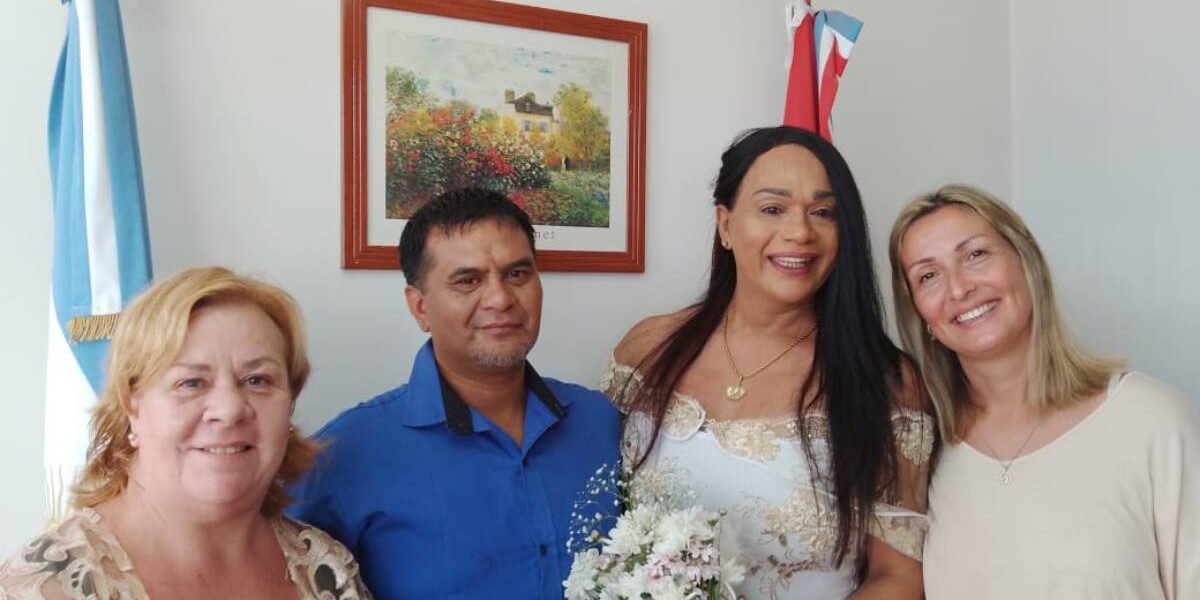
SANTA FE, Argentina. On Friday, March 1, Estrella Cardozo Kauffman, a 50-year-old trans woman, married Tomás Alberto Zerda. They have been together for over 30 years. Estrella is considered a survivor within the trans and travesti community, whose life expectancy is between 40 and 45 years. If you ask Estrella why she and Tomás decided to get married, she doesn't resort to clichés, but rather makes a political and revolutionary statement: "To have a dignified old age."
A whole life
The Nicolás Avellaneda school is where it all begins. There, in the 1980s, a trans girl of almost 20 (with many arrests for "morality" already on her record) meets a cis boy. She doesn't pay much attention to him, but he can't stop staring at her. Not in the school hallways, nor on the number 16 bus they both take to get home.
“I started living my identity at 14. Back then, the Morality Unit had to bring you in every week. If a few days went by and you didn't show up, the judge would send someone to find you anywhere,” she recalls of the early days of democracy when the articles of the Code of Misdemeanors still provided excuses to arrest someone “for cross-dressing.” “Anyway, I would wear my school uniform to school and always tie a sweatshirt around my waist so it would look like a skirt,” she says.
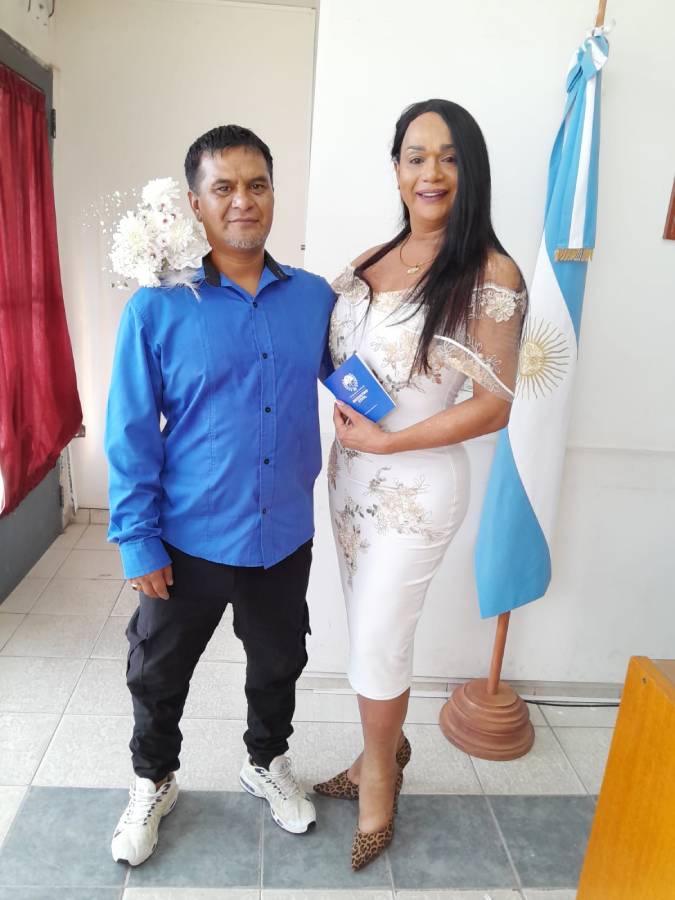
Estrella knows she's lucky. She recognizes her mother as the cornerstone of that "luck," which is acceptance. "My family accepted me right away. When you have children, all you want is for them to be happy. My mom and dad wanted that for me," she emphasizes.
She says she was able to take good care of herself and didn't have to be on the streets. "I stayed home, I learned to sew and cook. Today I'm a designer," she says. "I was home so much that I never realized that the boy who looked at me on the 16th lived a block away."
One day she confronted him to find out what he wanted. “He lied to me. He told me he was older, that he was my age. We started chatting,” she recalls. “It wasn’t like now with apps. He would come to my house, knock on the door, and I would go out and sit with him on a low wall to chat, to get to know each other. I had seen my sister do the same thing, so I followed in her footsteps. One day it started to rain, and my mom went outside and told us, ‘Come inside, you’re going to get sick.’ From then on, he never left.”
A conversation that was forever.
Almost immediately they began living with Estrella's mother. Today, Tomás works in a workshop, and Estrella has set up a hair salon in her home. She also makes wedding dresses and all kinds of clothing.
When he proposed to her 20 years ago, she laughed like a little girl. However, Estrella recently brought the conversation up again. Soon she will be one of the first beneficiaries in the province of Santa Fe of the Post-Dictatorship Reparation Law for Trans and Transvestite People and will be able to access health insurance. “I want to have all my paperwork in order so I can have a dignified old age.”
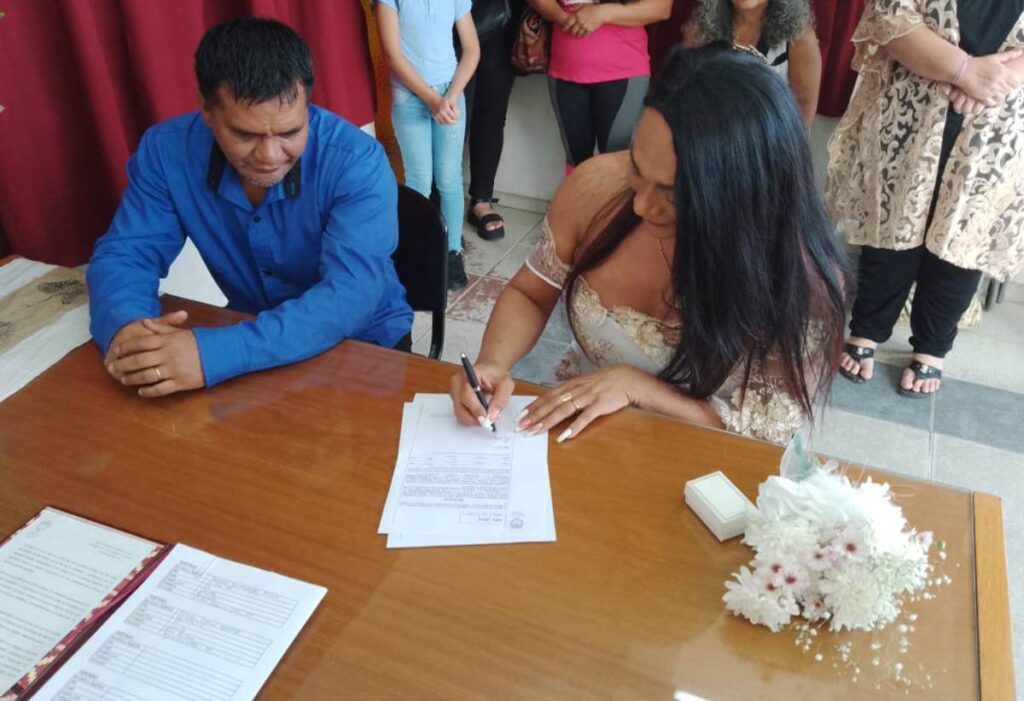
Estrella knows that her story is very different from that of most of the trans and transvestite people around her. As a role model and survivor, she reflects on where her path diverged from that of her peers in some respects.
“ All trans girls should have the opportunity to be cared for by their parents. The first school is the home . Having good parents who talk to you, help you, and protect you is very important. I wish all trans women had that support,” she emphasizes.
the transfemicide of her colleague, Alejandra Ironici, murdered by her partner, was recently , Estrella says: "That cannot continue to happen."
To unravel the patriarchy
Andy Panziera is a psychologist specializing in trauma and gender. She spoke with Presentes about what the right to marriage means for a couple who don't conform to the traditional cisgender heterosexual norm. "Many people in the LGBTQ+ community were raised by cisgender heterosexuals. They taught us what the world was like, what was allowed and what was forbidden. How to inhabit or close off one's own body, how relationships of friendship, rivalry, kinship, and the dynamics of affection should be. Growing up on the margins of this order, many people seek access to what was denied them, in the most traditional way imaginable," she summarized.
He also highlighted that in many cases there was expulsion from the home, affective networks were woven from another place, and a "family" was created with those people who provided support after the blows of the world.
Both marriage equality and other rights were achieved through struggle and hard work, both in legal documents and in the streets. Andy Panziera addressed this point, explaining that activism developed " a strategy to highlight the inconsistencies in the system and expose them from within ."
“If marriage was the sphere in which patriarchy ensured its continuity, reproducing erotic/affective models, economic organization, hierarchy and domination, reproduction of stereotypes and invisibility of care work, then we take this institution and turn it into something else . In the case of two non-binary people, with 'x' on their ID, how does patriarchy codify that?” she exemplified.
Looking ahead, she believes that if the first battle was to gain the same rights as a heterosexual couple, “ now the fight is for the meaning of things. To make visible the plurality of family structures and to politicize everyday life , from a human rights perspective.”
We are present
We are committed to journalism that delves into the territories and conducts thorough investigations, combined with new technologies and narrative formats. We want the protagonists, their stories, and their struggles to be present.
SUPPORT US

FOLLOW US
Related notes


We are present
This and other stories are not usually on the media agenda. Together we can bring them to light.