

A trans doctor opened a clinic for sexual diversity in Mexico
It is a place of comprehensive care for trans and non-binary people, served by LGBT professionals.


Share

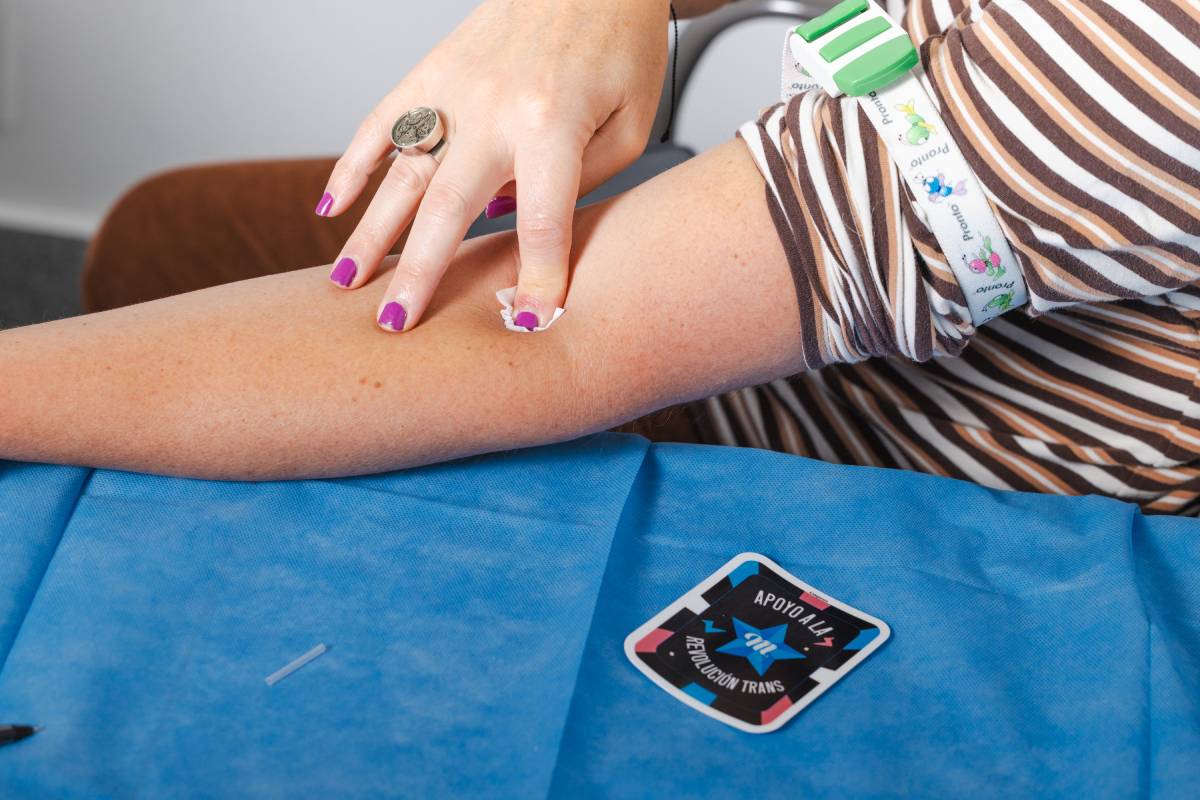
Guanajuato now has a new space for comprehensive and specialized medical care for trans and non-binary people. It's called MassClinik , the first specialized medical space in the city of León, Guanajuato. It's a medical coworking space staffed by healthcare professionals who are also part of the LGBT+ community.
In Mexico, there are only three public clinics that provide free gender-affirming hormone therapy. All three are located in the capital. These are the two branches of the Clínica Condesa, and the Comprehensive Health Unit for Trans People (USIPT), which is the only one entirely dedicated to the comprehensive health of these populations, not just providing hormone therapy.
MassClink is part of Transsalud , a cause and community of professionals specializing in comprehensive health care for trans people, founded by Dr. Daniela Muñoz.
The clinic, explains Daniela Muñoz, “is self-financed through surgical and medical health services. As an LGBT medical coworking space, it also involves renting plans through subscriptions that cover a certain number of hours per month for operating room and consulting room rentals. That is our business model.”
Transsalud operates as a physical medical space through MassClinik in León, Guanajuato. Since its founding as a virtual clinic, it has served trans and non-binary people from Latin America, Europe, and Oceania. It currently has more than 21 healthcare specialists, some of whom are affiliated with the World Professional Association for Trans Health (WPATH), an organization dedicated to developing ethical standards of care for trans health.
“Opening a trans clinic in Guanajuato is a defiant act.”
“Opening a clinic in León is a defiant act. Guanajuato is a historically conservative, far-right, and deeply religious state with a very close connection to political decisions. Furthermore, we decided to open here because we noticed that renting space and buying supplies is cheaper. Therefore, for our patients, this benefits both the economy and the operation of the LGBT health coworking space,” says Dr. Daniela Muñoz, founder of Transsalud.
Public healthcare for transgender people in Mexico is not fully guaranteed. Those who manage to access not only certain gender-affirming processes but also even the most basic healthcare face lengthy bureaucratic processes that require prior guarantees of their right to identity and the right to work, which would provide them with access to health insurance.
In this context, MassClinik's goal is to provide transgender people with an option to afford their medical services. This ranges from basic and specialized care to a post-surgery recovery center staffed by a medical team sensitive to the needs of transgender communities.
“A response to inadequacy and violence in health settings”
For psychologist Lúa Castañeda, who is part of Transsalud, the importance of a trans clinic like this is also “a response to the inadequacy and violence” that trans people face in health and public health settings in Mexico.
“Trans people have been historically violated and marginalized in healthcare settings, excluded from specialist training, and marginalized in terms of our needs. This highlights the inefficiency of the public sector in addressing the universal right to health for all people, especially considering that this is directly related to access to a dignified life. Healthcare systems are not equipped to meet the needs of the LGBT population, not just the trans population. There are multiple forms of violence perpetrated by healthcare personnel, including stigma, prejudice, serophobia, and transphobia, which limit access to dignified care,” Castañeda explains.
In Mexico, health spaces are one of the places where trans and non-binary people have experienced the most discrimination.
According to the latest national survey prepared by the National Council to Prevent and Eliminate Discrimination (CONAPRED, 2018), 94.2% of trans and non-binary people experienced discrimination based on their gender identity when receiving medical care, ranging from experiencing humiliation and not receiving care to minimizing their ailments.
In addition, 4 out of 10 trans and non-binary people said they had to hide their gender identity to avoid being discriminated against in health spaces.
Despite the existence of the Protocol for Non-Discriminatory Access to Healthcare Services for LGBTTTI People , trans activists denounced that it is not being applied.
Initiatives like Clínica Condesa, USIPT, and other private sector programs that provide care to transgender people indicate a lag in public health. Even at the regional level, the Inter-American Commission on Human Rights (IACHR) and the Network for Economic, Social, Cultural and Environmental Rights (REDESCA) warned in 2023 that in recent years the right to health has faced “an increase in stigmatizing rhetoric and regressive legal measures.”
“I think the demand will overwhelm a clinic like MassClinik. The same thing is happening with other clinics like Condesa or USIPT, and that should be reason enough for the right to health to be guaranteed at the public health level in Mexico. Because in the long run, services like Transsalud, with their political, ethical, and community-based stances that seek the well-being of trans people, will also end up becoming overwhelmed, and that's also part of our challenge. The solution isn't to have a Transsalud clinic in every state of the country; it's for the State to guarantee the right to health with this perspective at the public level,” adds Daniela Muñoz.
Decentralizing trans health also implies having trans health professions
The second largest community of transgender people served by Transsalud live along Mexico's northern border. The largest is in Mexico City. However, beyond the geographical aspect, the vision of decentralizing transgender healthcare at this clinic also involves the members of the healthcare team.
“We specialists at Transsalud are trained in some field of health and are part of the diverse sex and gender community. And that, beyond visibility, is a statement because historically, discourses within medicine have pathologized difference. Particularly today, we are experiencing a bottleneck because there is a lot of hatred and ignorance; even today, there are still calls for trans people to be confined to psychiatric hospitals. So, a clinic of this nature implies a political, ethical, and healthcare stance regarding the needs of trans people,” adds psychologist Lúa Castañeda.
However, Castañeda cautions against romanticizing LGBT+ healthcare professionals. “Just because someone is part of the community and specializes in a health field doesn't guarantee good treatment. Being part of the community can help with empathy, but it's not a guarantee, and that's important to keep in mind,” she says.
For Alec Velasco, a transmasculine person who receives care at Transsalud, the fact that his doctors are part of the LGBT community has meant feeling “more confident and comfortable because they understand our processes as trans people and our experience. I think that's positive in the long run because it prevents us from resorting to self-medicating with hormones, for example; or from seeking mental health care without stigma; or from seeking gynecological care where there is often a lot of ignorance.”
To learn about the services of Transsalud and MassClinik and the CVs of the health professionals who are part of it, you can visit their website [ here ].
We are present
We are committed to journalism that delves into the territories and conducts thorough investigations, combined with new technologies and narrative formats. We want the protagonists, their stories, and their struggles to be present.
SUPPORT US

FOLLOW US
Related notes


We are present
This and other stories are not usually on the media agenda. Together we can bring them to light.