

Domestic violence against trans women: a normalized reality
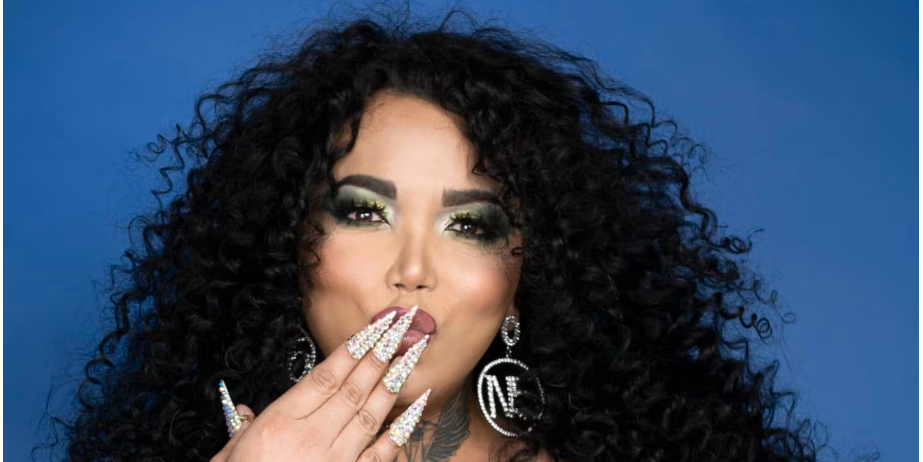
Following the complaint by Mexican influencer Paola Suárez about the violence perpetrated by her partner, the discussion on a normalized issue was reopened.


Share

It was recently revealed that influencer Paola Suárez, a trans woman, was the victim of physical violence at the hands of her partner. They had been engaged just the day before. This news brought the issue of domestic violence against trans women to the forefront of national discussion.
The Mexican right wing is infiltrating feminist movements with anti-trans rhetoric. Various transphobic figures, such as PAN federal deputy Teresa Castell, have exploited high-profile cases of violence, revictimizing women like Paola, as well as the deceased Ociel Baena and Dorian Herrera. They are generating a narrative that claims trans people experience and perpetrate violence against their partners simply for being trans .
But how true is it that intimate partner violence is inseparable from the trans experience? Perhaps from a more observable perspective, for trans women who have relationships with cis men.
Breaking the rules
Couples comprised of a trans woman and a cis man face a unique challenge. Both partners experience the violence inherent in being assigned male at birth. This involves breaking free from the two major impositions this entails: heterosexuality and masculinity.
Relationships between trans women and cis men are constantly challenged in terms of identity. The heterosexuality of men who love trans women is questioned.
There are no spaces where men can discuss their relationships with trans women without being mocked, questioned, or even subjected to violence. This deprives them of opportunities to reflect on and relearn about violent practices within their relationships.
As long as heterosexual masculinity entails the appropriation of violence and self-destructive behaviors, such as the denial of affection, to maintain itself, trans partners will continue to be collateral victims of hegemonic heterosexuality . At this cost, trans women will be relegated to clandestine and abusive relationships.

And in this equation: What about trans women?
The continuous loss of capital experienced by most trans women, such as social capital with early expulsion from the home, academic capital with the high rate of school dropout, and economic capital with the lack of job opportunities, is usually thought of only from economic, patrimonial and political consequences, displacing the affective implications for trans women.
We know that approximately 9 out of 10 trans women still survive on sex work from a young age and do not have access to upper secondary or higher education.
The world of trans women is smaller. When there's no high school or university, there are no classmates to share five days a week with for three or four years of your life. There are no escapes to a bar after a week of exams, nor are there office colleagues because there's no formal employment. Nor is there socialization during adolescence and young adulthood for trans women among peers who share experience and inexperience on equal footing.
There is no citizenship for trans women in a world that lives by day and sleeps by night, while trans women work at night and rest during the day. Nor is there any meaningful connection with others. Socialization is limited to other trans women and clients. Love, when it is found, is usually found in unequal relationships marked by the loneliness that these losses generate, a loneliness that is exploited through practices like love bombing . Economic imbalances, the promise of better treatment, of an economic, professional, or financial alternative, and even the manipulation of relationships by partners are also factors.
This, together with a State that does not think of women outside of cis heterosexuality and does not address violence that does not correspond to that hegemonic heterosexuality, is the formula for codependent relationships where trans women find themselves in cycles of violence.
How can violence be prevented?
How do you learn to recognize as violence what trans women see as normal because it's the norm? Can you publicly denounce what you barely know how to handle privately?
What prevention measures are in place if their inclusion in spaces for victims of violence, such as shelters, is questioned? How can trans women seek help from institutions designed only for cisgender heterosexual women? How does a trans woman escape a codependent relationship with an abusive partner who lacks job and financial alternatives?
The ostracism of trans women also becomes an affective and violent condemnation for which we will also be held responsible, as long as a State that hates trans women continues to deny its role in sustaining that condemnation.
We are present
We are committed to journalism that delves into the territories and conducts thorough investigations, combined with new technologies and narrative formats. We want the protagonists, their stories, and their struggles to be present.
SUPPORT US

FOLLOW US
Related notes


We are present
This and other stories are not usually on the media agenda. Together we can bring them to light.