

Salta: Two Wichi children died in a situation of extreme vulnerability
They report that both children died due to lack of food and insufficient medical attention.


Share

SALTA, Argentina. The deaths of an Indigenous boy and girl from northern Salta have once again highlighted the precariousness of life in Indigenous communities, a situation made even more acute in recent days by rampant inflation. The boy, just over a year old, died from aspiration pneumonia. The girl, nine months old, suffered septic shock.
The provincial government assured that they were not malnourished, but Reinaldo “Oso” Ferreyra, an indigenous leader from the area, -who knew both children-, says that it was obvious that they had nutritional deficiencies.
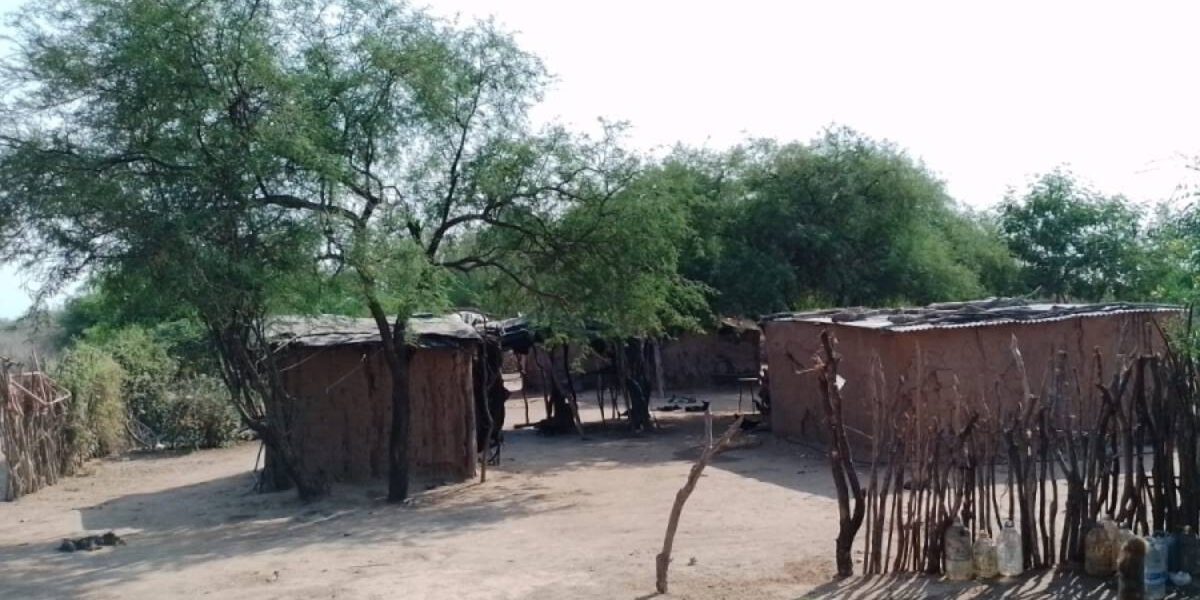
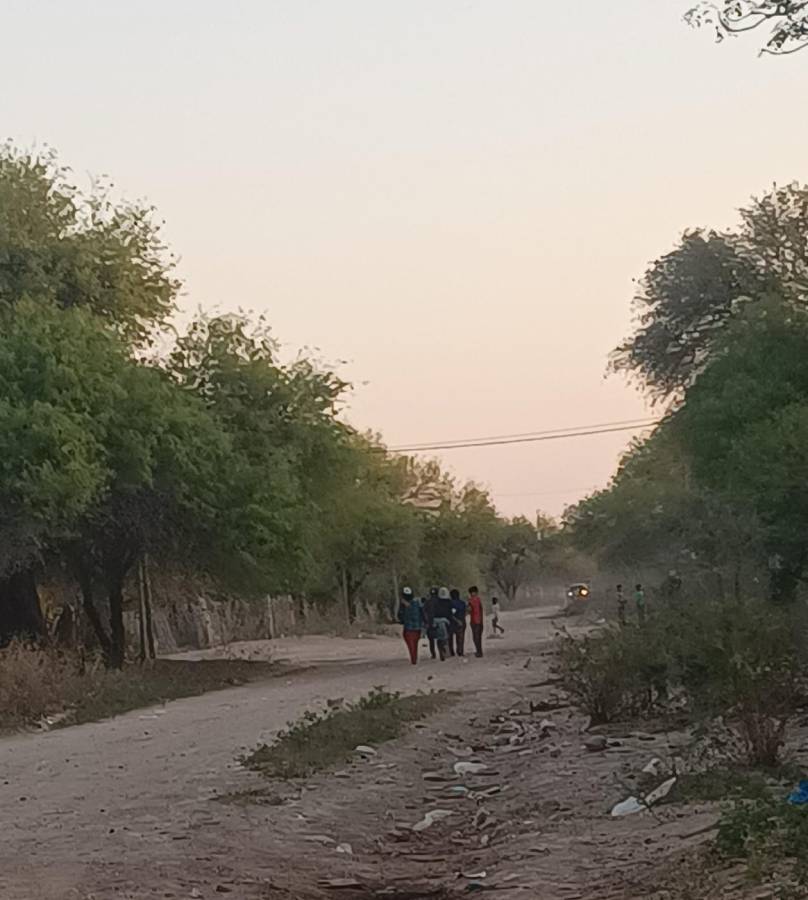
The children were part of the Wichí people and lived in the town of Coronel Juan Solá, better known by the name of its railway station, Morillo. It is 296 kilometers north of the city of Salta.
According to what could be reconstructed by different sources (some agreed to speak with Presentes without giving their names), the child entered the Morillo Hospital on Wednesday, January 3 at 9:30 p.m. and died at 5:30 a.m. on Thursday the 4th, due to bronchoaspiration.
The little girl died the following day, Friday, January 5th. She was hospitalized at the San Vicente de Paul Hospital in the city of Orán, almost 200 kilometers away. She had been transferred from Morillo and was admitted a week before her death.
Two cases with accompaniment
In both cases, the provincial government monitored the situation. Gabriela Dorigato, Undersecretary of Social Medicine, an area under the Ministry of Public Health of Salta, stated in declarations to the Multivisión channel (in northern Salta) that these deaths were not linked to malnutrition and that none of the infants had been reported as underweight.
The undersecretary's office reported that the cases had been detected through Primary Health Care (PHC), which includes community health workers. It is more difficult to understand why their deaths could not be prevented.
A source in Morillo provided more details. They said that the boy's parents had been charged in Ballivián, though they claimed to be unaware of the reasons. They indicated that the staff of the provincial family support program encountered resistance from the paternal family, and that these staff members went to see the boy "on several occasions," but "they weren't seen or they hid." This, they said, made it difficult for them to help the child. "Then the little boy arrived with a fever. He was vomiting and had diarrhea. He was hospitalized that night and died the next day from aspiration pneumonia."
The same source confirmed that the state was also providing support to the baby girl, who had been born underweight. According to the source, in this case, the mother was very attentive to her daughter's health. She took her to the emergency room "many times," and there "they would attend to her, the baby would feel a little better, and they would send her home," until the last time, which was before New Year's.
When the mother "stood up to the security guard, she said she wasn't leaving until she was transferred" to a more specialized hospital. She was so insistent that she finally got the transfer, but by the time she arrived in Orán, "it was too late." The girl's infection was very advanced. It was the Morillo hospital that was slow to make the transfer, the source stated.
"How do you explain the hospital's low level of alarm?" Presentes . "There isn't much oversight in that regard. It's as if it's normalized for children to have health problems, especially given the conditions they live in in their communities. So they don't pay much attention to it anymore," the source replied.
Although the manager of the Morillo Hospital, Dante Arroyo, did not respond to this agency's inquiries, local news outlets quoted a source at the hospital explaining that the girl was not malnourished, "but she was indeed undernourished." The Undersecretary of Social Medicine also did not respond to this agency's inquiry, only stating that she was in Morillo on January 10th, specifically addressing this matter.
This is not the first case
“This isn’t the first case. There have been several here. But since they are doctors and one is not a doctor, one cannot argue when it is certified that the deaths of indigenous infants are due to causes other than malnutrition,” stated Ferreyra, one of the few people in the area who agreed to speak using his full name.
“In the community of Los Baldes, there are several malnourished children. Today, there is a little boy from Los Baldes in the Morillo Hospital who is malnourished,” he stated . He explained that the boy has been hospitalized for several days, having been transferred to Orán and then returned to the local hospital, where “he continues to fight for his life; he is severely malnourished. I personally went to see that little boy,” he confirmed. Los Baldes, comprised of 45 families, is located 30 kilometers south of Morillo.
Ferreyra, who was a councilman in his town and for many years spearheaded the calls, including protests, to address the problem of addiction in the indigenous communities of Morillo, estimated that “more than a dozen” indigenous children in that area have died from causes related to malnutrition. “Due to state neglect,” he said, and recounted, as an example, that the targeted food basket (milk, flour, and “a few other things”), sent by the national government, is delivered every two months and “lasts two days.” The last delivery was made last October, he said.
How can they not get sick?
To explain the recurring illnesses among the children of his town, Ferreyra described the living conditions in the communities of the municipality of Morillo. The town is located in the extensive Rivadavia department, which in this area is called Rivadavia Banda Norte, and whose dividing line is the Bermejo River.
The man said that the water they consume, which is distributed through the network, is not potable, that it comes out "brown" in the mornings, and that they have been unsuccessfully requesting the provincial and national governments to address this issue for some time now. "And now I don't know what's going to happen. The situation we're experiencing is becoming increasingly dire."
That's why community leaders advise trying to purify the water. For this, they need water tanks, which not all families have. And they also need a guide on how to purify the water.
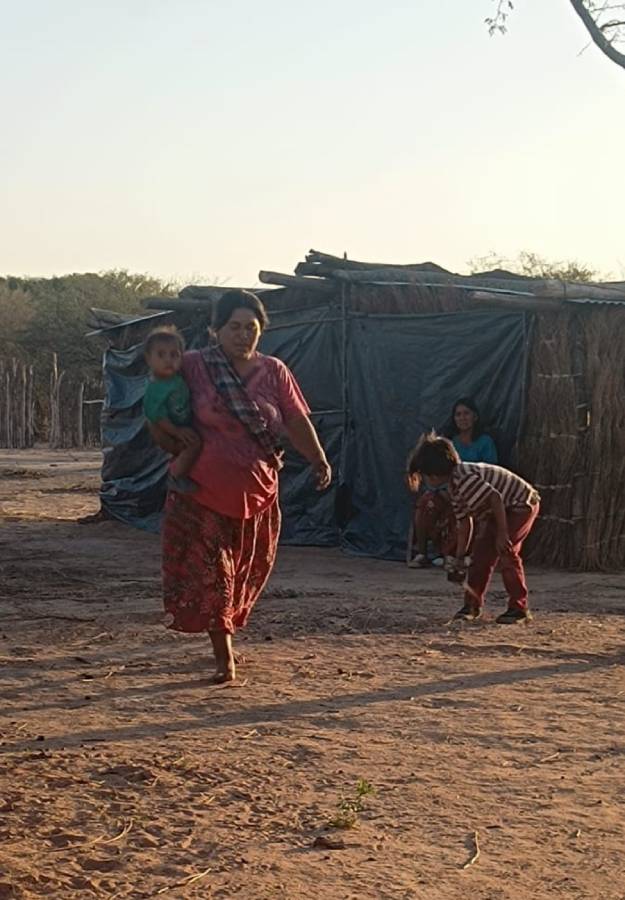
Regarding the two specific cases that prompted this article, he said that both families do not have adequate housing.
Poor healthcare
Ferreyra states that healthcare staff often don't work as they should. “Medical care here has always been lacking. When a patient is admitted to the hospital and their condition worsens, they are transferred to Orán or Salta, but they should act sooner because in most cases, they never arrive.”
Three months ago, a Gender Committee was formed in Morillo, comprised of various stakeholders, including Indigenous women intercultural facilitators. One participant reported that they have been receiving requests to improve healthcare services through this committee.
The Mesa group managed to get a community psychologist and a social worker at the local hospital. “There’s also no intercultural perspective,” the source noted.
Nearly 200 recovered and over a thousand in treatment
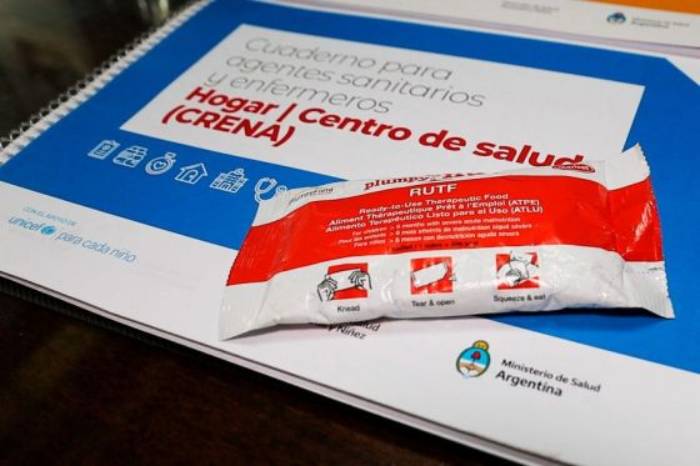
On January 9, the provincial government reported that, through a hospital and community-based management strategy for underweight children at risk, it achieved nutritional recovery in 194 patients within three months. Meanwhile, 1,151 remain under treatment. These patients are receiving "ready-to-use therapeutic foods (ATLU)," a compound available in sachets.
The official statement cited information provided by the Undersecretary of Social Medicine, Gabriela Dorigato. She detailed that this strategy, Community Management of Acute Malnutrition (CMAM) , began to be implemented last October in 14 operational areas (including Morillo) in the departments of San Martín, Rivadavia, and Orán. All of these areas are included in the declaration of a socio-sanitary emergency by the Salta government.
Within the framework of this strategy, “we worked with 1,365 underweight children,” providing them with 10,034 sachets of ATLU (Ultra-Low Weight Treatment). Dorigato explained that an intersectoral approach is being implemented, involving the health system and the children's families. “Underweight children are identified and diagnosed through a medical and nutritional assessment. Critical cases require hospitalization, but others can continue treatment at home; that's why we refer to it as community-based management,” she said.
The government added that mothers and caregivers are being trained in the proper use of therapeutic foods and in improving family feeding practices. "In all cases, the health system conducts regular follow-up and monitoring of children undergoing treatment," the government stated.
The child nutritional recovery centers operate in Santa Victoria Este, Tartagal, and Embarcación. “Children aren't just admitted to treat low weight. It's an opportunity for mothers and the rest of the family to receive health guidelines, learn how to prepare the food they receive in the government-provided food packages, understand the importance of hygiene, recognize warning signs, and other related topics,” the official explained.
She added that “we also work with women, providing them with information on sexual and reproductive health, offering and fitting them with contraceptive methods, and explaining that the ideal inter-pregnancy period is two years, meaning that there should be a two-year gap between births so that the mother can recover nutritionally to face a new pregnancy.”
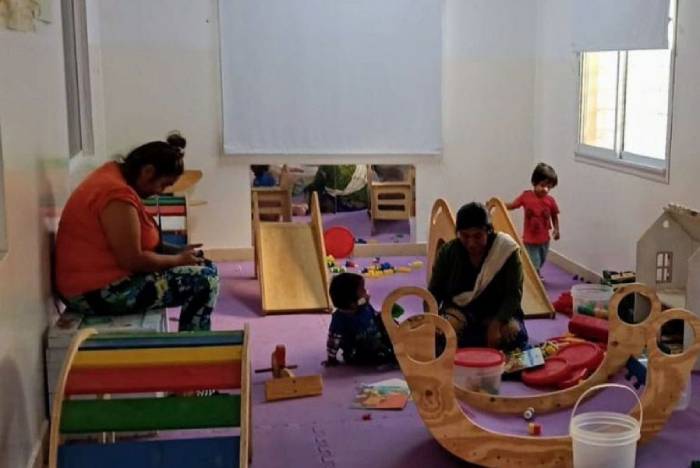
The undersecretary stated that the indigenous families accepted this type of food. “The ATLU (Urgent Food Transfers) are a donation that UNICEF made to the province in 2023. Their introduction in northern Salta was based on the experience of other countries with similar populations and geographies, such as Colombia and Bolivia. They have the advantage of not needing refrigeration, are consumed on the same day, and contain all the vitamins a child needs to grow healthy,” she emphasized.
We are present
We are committed to journalism that delves into the territories and conducts thorough investigations, combined with new technologies and narrative formats. We want the protagonists, their stories, and their struggles to be present.
SUPPORT US

FOLLOW US
Related notes


We are present
This and other stories are not usually on the media agenda. Together we can bring them to light.