

Omnibus Law: how the reform affects gender and diversity policies
The package of measures sent by President Javier Milei to Congress, among its many proposals, proposes to modify and restrict gender and diversity policies.



Share

BUENOS AIRES, Argentina. In the package of measures seeking to reform the Omnibus Law, the language used to express these changes is itself a political practice. The text that President Javier Milei sent to Congress on December 27, titled “ Draft Law of Bases and Starting Points for the Freedom of Argentinians, ” seeks to reform issues and areas of all kinds: the economy, health, education, among others. If approved, its scope will profoundly affect people's lives, and especially those of women and LGBTQ+ individuals, far beyond these specific cases. This refers to the infrequent mention of gender issues explicitly in the 350-page document, which, in those few references, suggests setbacks in terms of policies and hard-won rights.
Anti-rights coded language
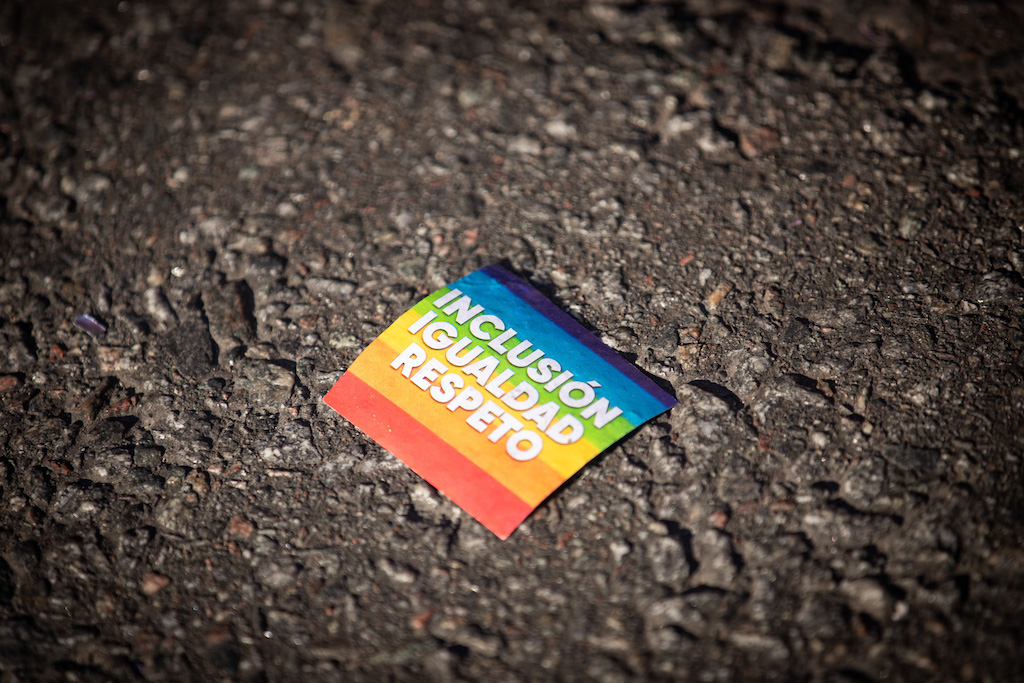
The term " gender violence" is replaced in the text of the Micaela Law, for example, by "domestic violence and violence against women." This change in approach represents a serious setback. On the one hand, it renders diversity invisible by limiting it to the category of "woman." On the other, it ignores the fact that gender violence takes on different dimensions and is perpetrated in spaces that extend far beyond the family, operating as a basis for structural inequality.
The Omnibus Bill proposes to amend, among other things, the Thousand Days Law (Law 27.611 on Comprehensive Health Care and Support during Pregnancy and Early Childhood). It eliminates the term "pregnant persons "—in the original text—and replaces it with "pregnant mothers . And it repeatedly refers to " children from conception ," a concept that forms the basis of movements opposing abortion.
It also removes references to "unrestricted respect for the best interests of the child and the principle of progressive autonomy " and to "the autonomy of women and other pregnant people ."
INADI in danger
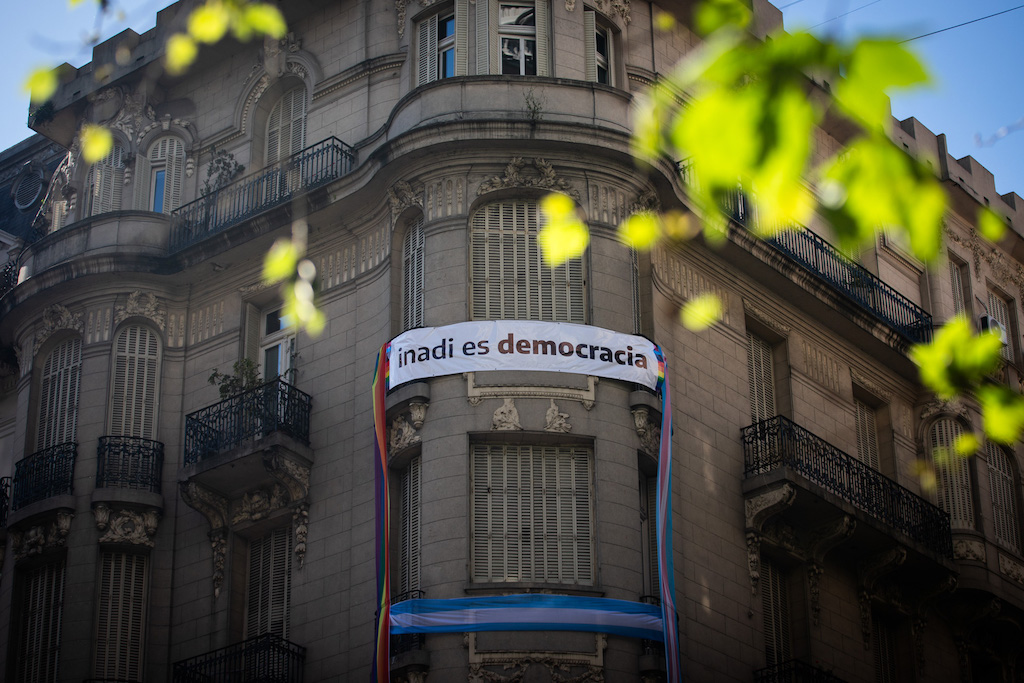
Through article number 348 of the Justice section of the so-called "Law of Bases and Starting Points for the Freedom of Argentinians", the Executive Branch sets out the repeal of Law 24,515 which had the purpose of creating the National Institute against Discrimination, Xenophobia and Racism as a decentralized entity of the Executive
INADI is a key institution for promoting anti-discrimination policies and a federal reporting mechanism, with a nationwide network. It is the first place many people from diverse sexual orientations and cultures turn to when they experience discrimination.
The Argentine LGBT+ Federation expressed its condemnation yesterday in a statement: “The closure of INADI goes against respect for diversity and freedom in our country. Freedom is impossible if the response to it is violence and discrimination. And it is the State that must safeguard that freedom.”
Without a Ministry of Women, Gender and Diversity
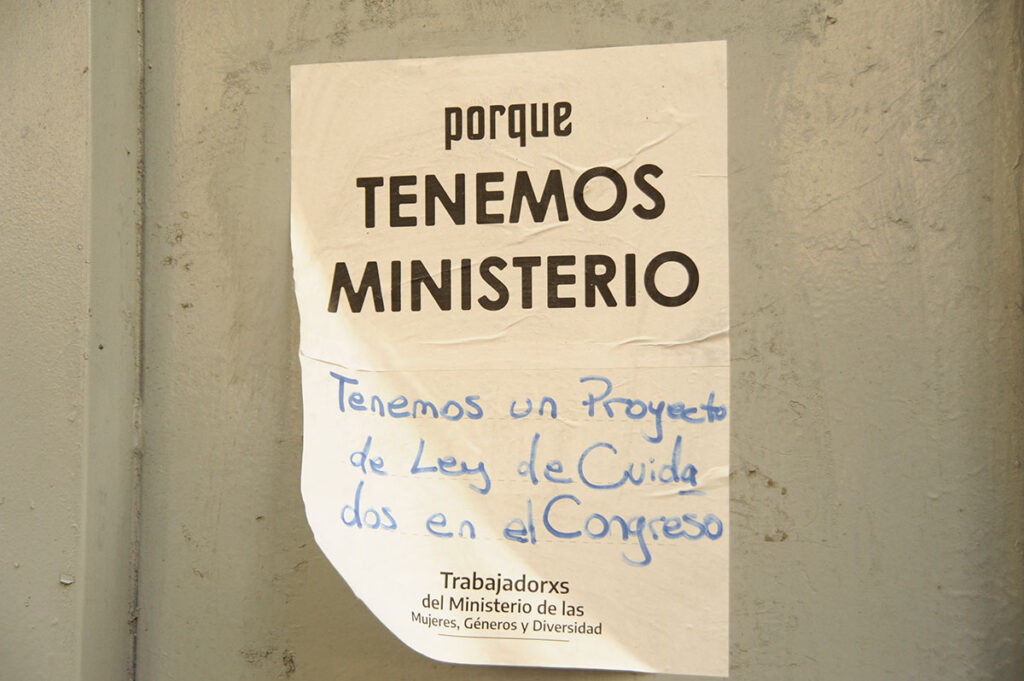
Although not part of the Omnibus Law, the Ministry of Women, Gender and Diversity was transformed by decree into the Undersecretariat for Protection Against Gender Violence. It now reports to the mega-Ministry of Human Capital.
The Ministry of Women was the implementing authority for, for example, the Micaela Law, which was also included in the reform package.
Restrictions on the Micaela Law
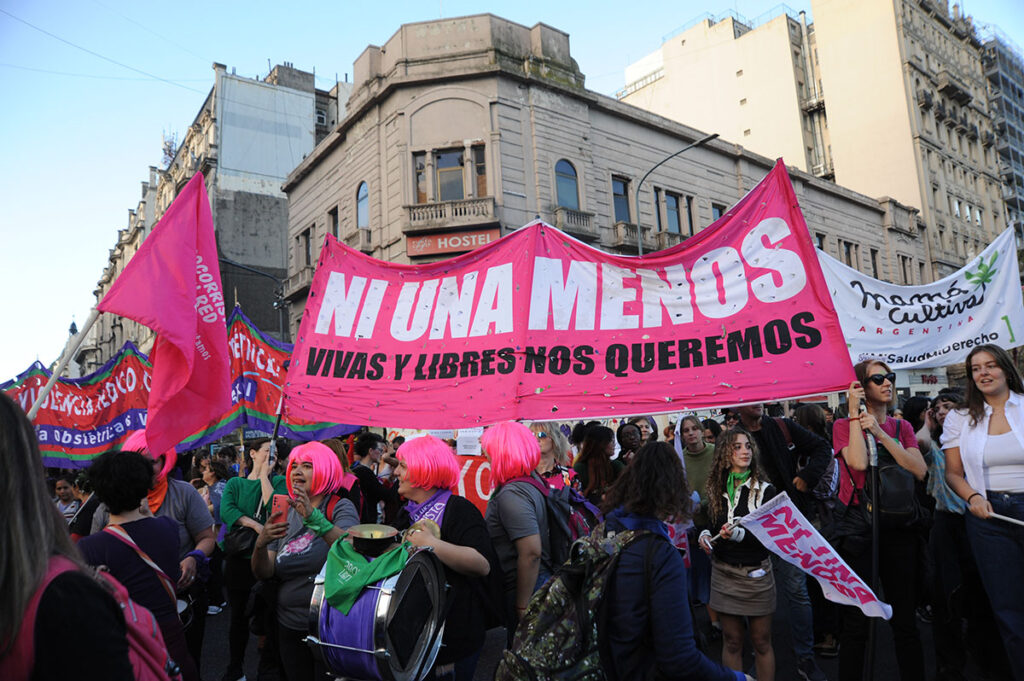
The Micaela Law (Law 27,499) enacted in 2009 established mandatory training on gender issues and violence against women for all people in public service at all levels and hierarchies in the Executive, Legislative and Judicial branches of the Nation.
In the reform project that incorporates the Omnibus Law, training sessions on " domestic violence and violence against women" to all public employees in the relevant agencies . Therefore, its scope will be much more restricted.
According to the bill, the implementing authority will be the Ministry of Human Capital.
Micaela García was a young woman from Entre Ríos, a member of the Evita Movement and a feminist, murdered at the age of 21. Her killer was on parole after being convicted of raping two women. Her femicide brought to the forefront the urgent need for gender-sensitive training for all those working within the public sector.
Without gender parity
In its proposed electoral reform, the Omnibus Law proposes, among other things, changing the composition of the Chamber of Deputies and dividing the country into 254 constituencies, each of which would send one representative. This would make gender parity, guaranteed by the Gender Parity in Political Representation Law (Law 27.412), enacted in 2017, impossible.
We are present
We are committed to journalism that delves into the territories and conducts thorough investigations, combined with new technologies and narrative formats. We want the protagonists, their stories, and their struggles to be present.
SUPPORT US

FOLLOW US
Related notes



We are present
This and other stories are not usually on the media agenda. Together we can bring them to light.
1 Comment