

Omnibus Law and Emergency Decree: risks to the environment and indigenous and peasant communities
Javier Milei's government seeks to repeal fundamental laws protecting land and the environment. What is at risk?


Share

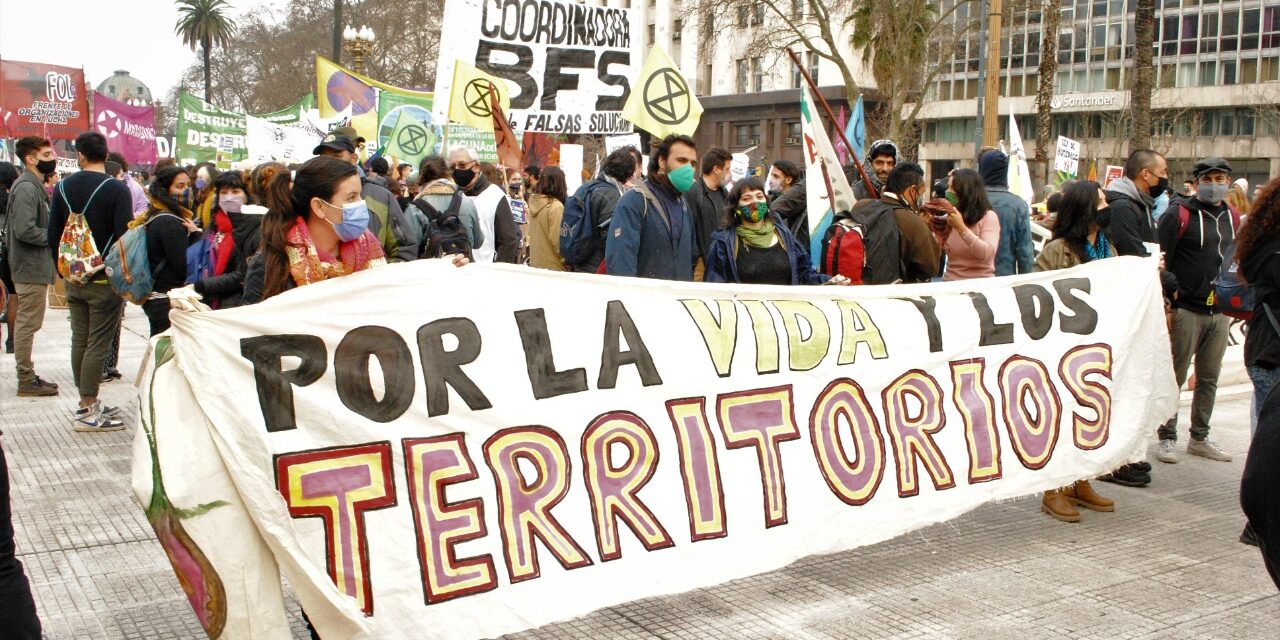
BUENOS AIRES, Argentina. The omnibus bill presented on Wednesday, December 27, and emergency decree have raised concerns about the extraction of natural resources and land sovereignty. The repeals announced in the emergency decree and those he seeks to eliminate in the bill directly impact the environment and communities, and exacerbate land destruction.
In addition to the repeal of the Land Law and the Mining laws in the DNU, the modification of the Forest Law , the Glacier Law and the Fire Management Law in the Omnibus bill is also included.
The emergency decree has not yet taken effect, and the bill must be debated. Both initiatives threaten the democratic system and jeopardize rights gained in recent years, including socio-environmental rights.
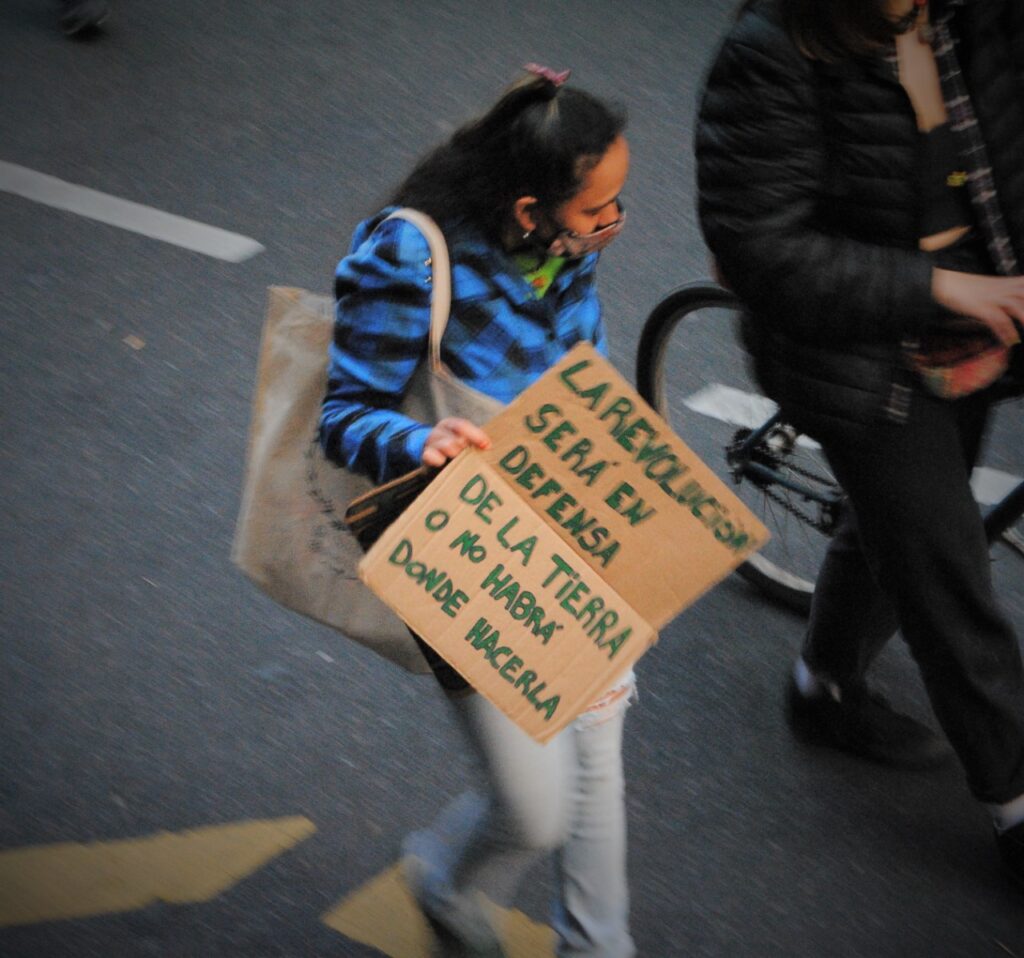
“A declaration of war against the Argentine socio-environmental movement”
“The combination of the Emergency Decree and the Omnibus Bill is a serious setback, an environmental regression that is prohibited even by our own legislation and by international treaties that Argentina has signed. There are two laws that are the backbone of the socio-environmental struggle in our country: the Glaciers Law and the Forests Law. They want to eliminate both of them. We are in a state of alert and mobilization, a kind of declaration of war against the Argentine socio-environmental movement,” environmental lawyer Enrique Viale Presentes
Forest Law
Currently, Law 26.331 protects forests, classifies them by their level of conservation, establishes limits on deforestation, and takes into account the interests of indigenous communities.
The bill sent to Congress modifies this law to allow deforestation in areas zoned as red and yellow zones, where deforestation is currently prohibited. “If this law is passed, it is an invitation to destruction ,” says Viale.
Furthermore, the project eliminates the point that establishes access to information for indigenous peoples, native peoples, peasant communities and others related to the authorizations granted for land clearing, within the framework of Law No. 25,831 on the Regime of Free Access to Public Environmental Information.
Glacier Law
With regard to the "modification to the Glaciers Law", it changes articles 1 and 2 of Law No. 26,639 of the Regime of minimum budgets for the preservation of glaciers and the periglacial environment.
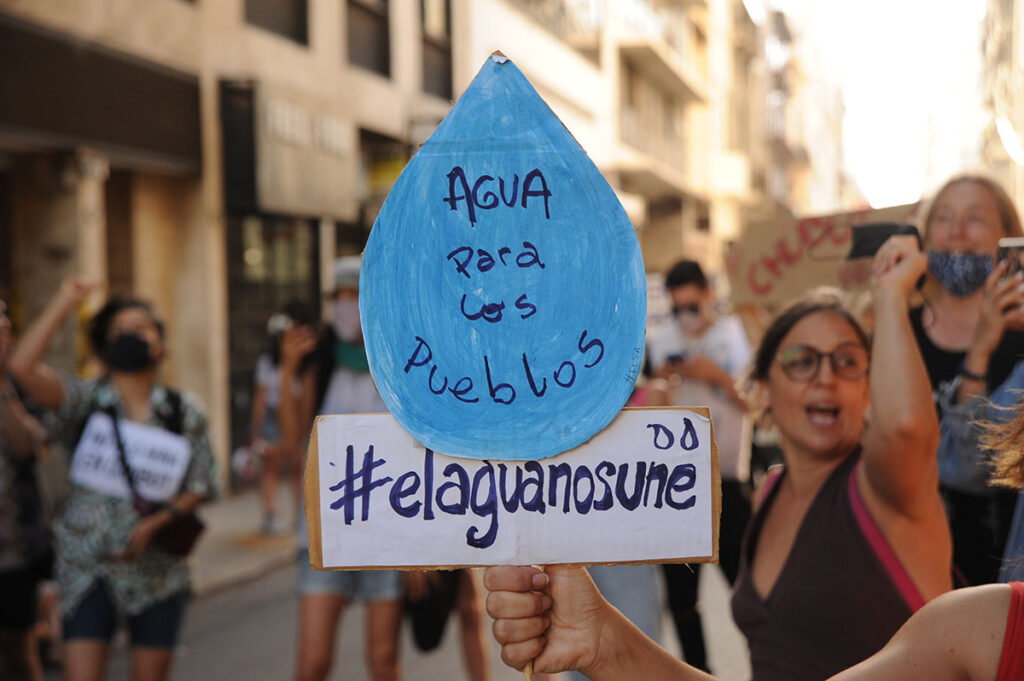
“This protection is very important because it prohibits mining and oil activity in these areas. This bill eliminates that prohibition. It authorizes large transnational mining companies, such as Barrick Gold, to advance into these vital areas where Argentina's water originates,” Viale adds.
Land Law
The repeal of the Land Law gives free rein to the indiscriminate sale of land to foreign capital, both physical and legal.
Law 26.737, passed in 2011, establishes a limit of 15 percent of land ownership for foreigners. A single foreign owner cannot exceed 30 percent of that percentage, nor 1,000 hectares, among other restrictions. Furthermore, it prohibits the sale to foreigners of land "that contains or borders significant and permanent bodies of water ": seas, rivers, streams, lakes, wetlands, lagoons, glacial estuaries, and aquifers.
This law seeks to prevent what happened at Lago Escondido (Río Negro province), where British magnate Joe Lewis owns a ranch. Lewis is accused of appropriating 12,000 hectares in Patagonia and blocking free access to the lake.
Another example of foreign land ownership in Argentina is the Benetton Group, which owns 844,200 hectares of land in the provinces of Buenos Aires, Neuquén, Río Negro, Chubut, and Santa Cruz. The Italian company is considered the largest landowner in Argentina.
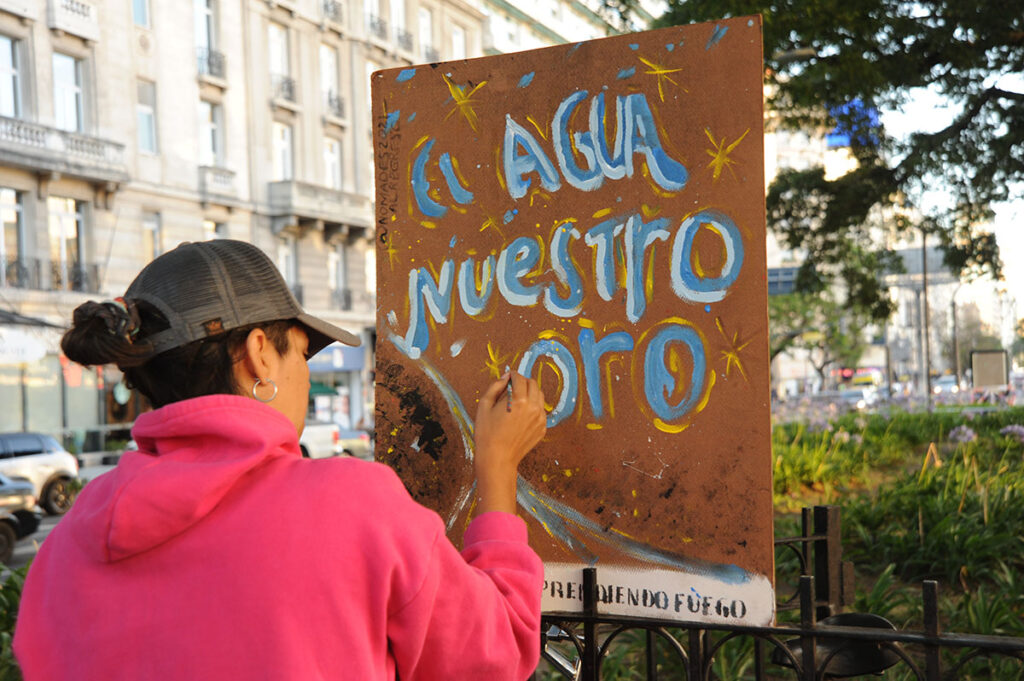
“This repeal implies a surrender of sovereignty over our land and fertile soil to foreign corporations that have historically viewed our country as a basket of resources to exploit and plunder. It presents a serious institutional and socio-environmental crisis because it occurs within a context of profound concentration of land, income, and wealth in our country, in the hands of corporations and investment pools primarily linked to large-scale mining, fossil fuels, and agribusiness, especially monocultures of soy, wheat, corn, and forestry products such as pine and eucalyptus,” stated the Collective for Action for Ecosocial Justice (CAJE) and the Argentine Association of Environmental Lawyers (AAdeAA)
Without protection for the people
“This decree is terrible. It worsens the situation we Indigenous peoples are already experiencing. We have Indigenous laws that are not recognized, and this repeal will be worse for us and for everyone. We, the peoples who have been dispossessed, have no rest,” Soledad Cayunao, a 39-year-old Mapuche woman, tells Presentes . Along with her family, she is resisting in the Lof Cayunao, a reclaimed territory, while facing legal proceedings.
Soledad is a territorial defender and is responsible for protecting the headwaters of the Chubut River, in the province of Río Negro, while large landowners fence off territories and prevent access to the river for the communities in the area.
“The repeal of the land law will primarily affect the province of Río Negro. From my point of view, what is happening is serious. The Minister of Security is once again Patricia Bullrich, responsible for the murder of Santiago Maldonado , among other things. We already know how she acts when it comes to defending the interests of capitalism. Indigenous peoples are an obstacle to capitalism. We defend life and well-being, something they completely oppose,” he adds.
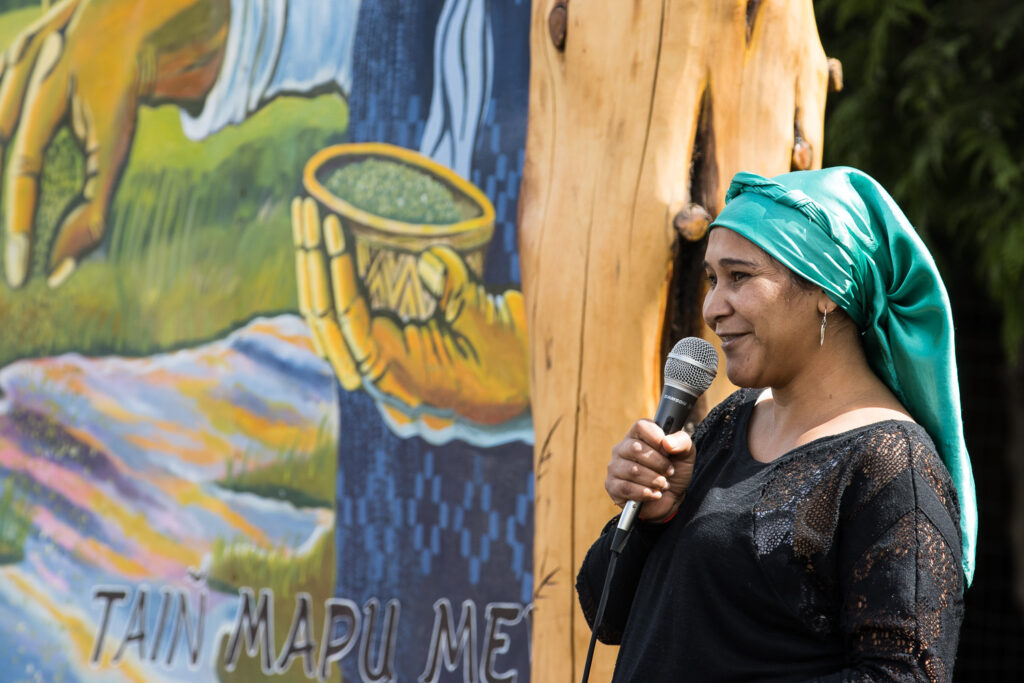
Photo: Denali DeGraf
Mining Laws
The DNU repeals Law No. 24,523 of the National Mining Trade System and Law No. 24,695 of the National Mining Information Bank.
“This implies even greater opacity in an activity that is already completely deregulated and with the authorization of large-scale mining that weakens controls,” said the Collective for Action for Ecosocial Justice (CAJE). In addition to the decree, President Milei said on the program "La noche de Mirtha ," hosted by Mirtha Legrand ( El Trece ), that Elon Musk had called him because he was interested in Argentine lithium for his electric car company, Tesla.
Northern Argentina forms part of the “Lithium Triangle ,” along with Bolivia and Chile, due to its extensive salt flats. The constitutional reform proposed by the governor of Jujuy, Gerardo Morales, enables the dispossession of ancestral territories. Mining to extract so-called “white gold”—highly sought after by companies in the Global North for cell phone batteries and the transition to supposedly “clean” energy—consumes enormous quantities of water, damaging ecosystems: the resulting environmental and cultural degradation poses a threat to the existence of Indigenous communities.
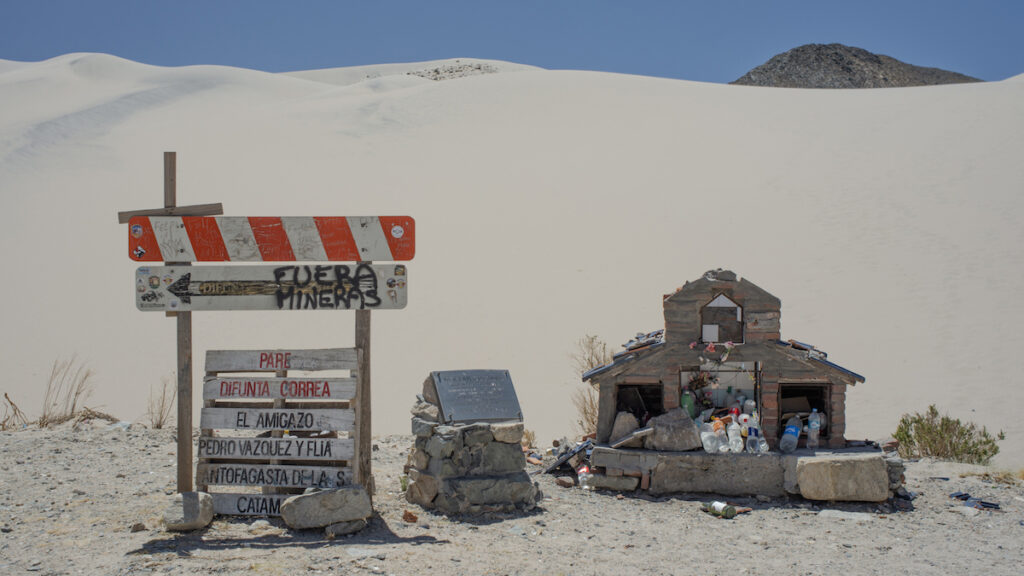
Photo: Débora Cerutti and Sofía Bensadon
“When we in Jujuy said that Morales was leading the way, we weren’t wrong,” reflects Natalia Machaca. She belongs to the National Indigenous Peasant Movement and is a leader in the communities of Yala, Lozano, León, and Los Nogales in Jujuy. She analyzes the Emergency Decree and the Omnibus Law project from the perspective of the Third Malón de la Paz (Peace March), which arose as resistance to the reform of the provincial constitution in June, approved behind the backs of the people of Jujuy.
“Milei is doing the same thing Gerardo Morales did. We are worried and scared. The situation is serious. They are handing over the lithium to the highest bidder, in this case, Elon Musk. They are not only coming for the lithium in Jujuy. They are coming for the water, the land, and all the natural resources. Just as they did with the reform, they are doing the same thing now at the national level. We in the Multisectoral Committee in the province have already experienced this. We need all the organizations (CGT, CTA, CCC, UTEP) to unite and call a general strike. They need to learn from what happened to us here. It is not fair that we suffered repression and abuses and they learned nothing,” says Natalia.
“Today, most of our lithium is exported. BMW buys from the Livent project in the Salar del Hombre Muerto , in Catamarca. Then there's Sales de Jujuy (Allkem-Sales de Jujuy), a project in Jujuy, and Toyota used to have shares in it. Elon Musk would be another buyer, adding to the growing list of buyers already established here. I don't know if investment will accelerate, but it's already happening at a very rapid pace. Today we have almost three operational projects, two running at full capacity. One is just starting production now, and we have more than 40 exploration projects,” Luciano Pafundi, director of Atlas Social and a specialist in the social performance of mining projects, Presentes
Fire Management Law or amendment to the Burning Law
This law prohibits changing the use or purpose of protected areas and wetlands after they have been affected by fire.
Article 498 of the so-called omnibus law modifies the authorizations for burning in article 3 of Law No. 26,562. Here, "all burning activity that does not have the proper authorization issued by the competent local authority is prohibited throughout the national territory."
“This encourages the use of fire to clear forests, wetlands, grasslands, and all types of protected ecosystems on land dedicated to agriculture, livestock farming, or real estate development. It thus allows the destruction of entire ecosystems and protected natural areas, which is necessary in the current context of the accelerating climate crisis and the loss of biodiversity,” said the Argentine Association of Environmental Lawyers (AAdeAA) and the Collective for Action for Ecosocial Justice (CAJE).
We are present
We are committed to journalism that delves into the territories and conducts thorough investigations, combined with new technologies and narrative formats. We want the protagonists, their stories, and their struggles to be present.
SUPPORT US

FOLLOW US
Related notes



We are present
This and other stories are not usually on the media agenda. Together we can bring them to light.