

HIV Law in Argentina: What to expect from the new government?
Organizations and people living with HIV warn that medication and the full implementation of Law 27.675 are at risk.



Share

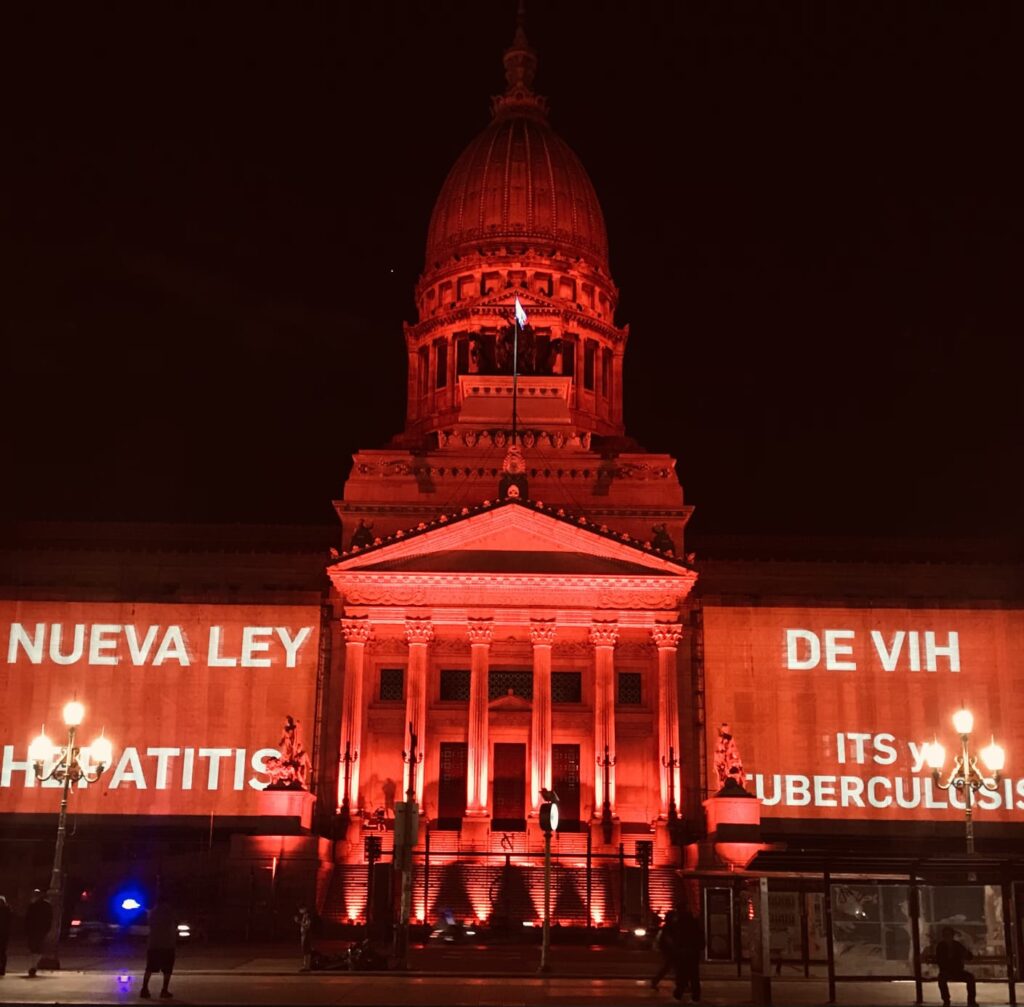
Following Javier Milei's victory as president of Argentina, organizations and individuals living with HIV have begun to worry. They warn that access to medication and the full implementation of Law 27.675 are at risk.
The law was passed on June 30, 2022, after eight years of attempts, but Milei and his current vice president, Victoria Villarruel, opposed it. In the Chamber of Deputies, there were 241 votes in favor and 8 against. Half of the votes against came from Milei's political party.
According to Bulletin No. 39, Response to HIV and STIs in Argentina, it is estimated that 140,800 people are living with HIV in the country. Of that number, 65% receive care through the public system. This means that the national government guarantees access to treatment through public hospitals for 65,500 people.
Concerns of organizations of people living with HIV
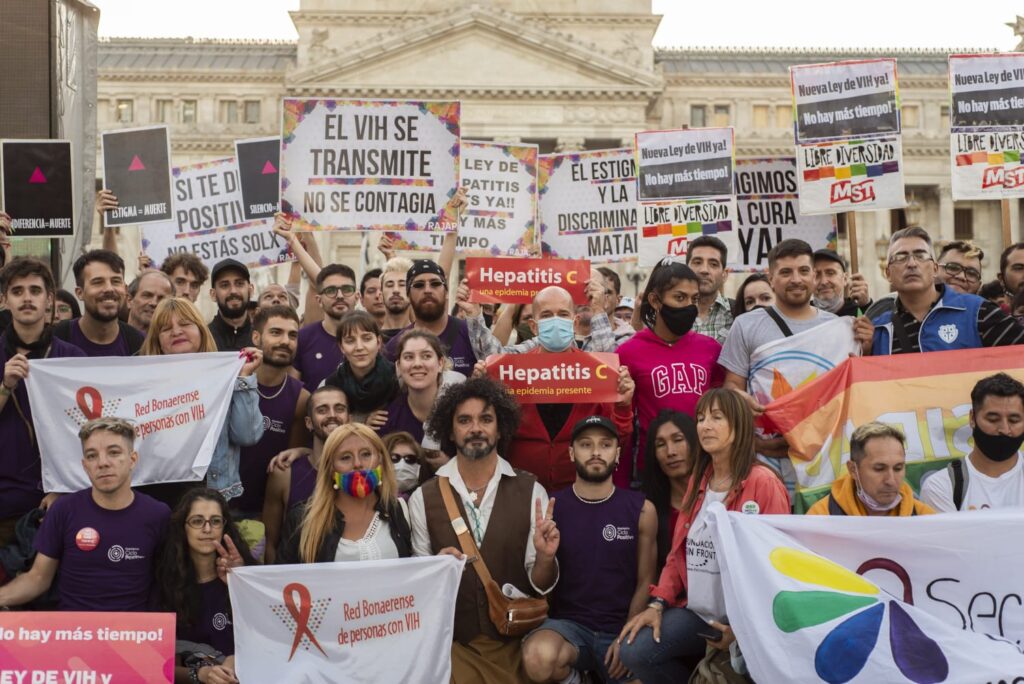
“The La Libertad Avanza movement is threatening to repeal laws like those on abortion. It’s easy to deduce that the same could happen with this new legislation on HIV, which was opposed by Milei and Villarruel,” Horacio Barreda, a member of RAJAP (Argentine Network of Positive Youth and Adolescents), explained to Presentes.
For its part, the National Front for the Health of People with HIV, Hepatitis, and Tuberculosis issued a statement. “Given the current climate of great uncertainty in Argentina, with the new government and the contradictory pronouncements made daily regarding public policies, and in a context of escalating hate speech and hate crimes against our communities, we urgently demand the effective implementation of the Comprehensive Response Law to HIV, Hepatitis, STIs, and Tuberculosis, Law 27675. Our health and our lives are in danger, as we shouted while fighting for the passage of the Law: There is no more time!”
Before the elections, the Argentine Women's Community with HIV (ICW Argentina) had also warned about this issue: "It is not a minor fact that during the four years of Macri's government the bill languished in the Chamber of Deputies and gradually lost its parliamentary status."
National laws and international treaties
The current law declares in its article 1 to be of national public interest medicines, vaccines, procedures and medical and non-medical products for the prevention, diagnosis, treatment and cure of HIV, viral hepatitis, other STIs and TB.
In the event of non-compliance, Horacio Barreda explained that Argentina's international commitments should protect patients' rights. The Political Declaration on HIV/AIDS addresses this issue.
“Although there is no specific international agreement on HIV, Argentina does follow UNAIDS guidelines. Sometimes they are slow to implement them, but in general terms they are followed,” explained Federico Aballay, Deputy Coordinator of the Communications Area of RAJAP.
What happened during Macri's presidency?
During Mauricio Macri's government, the Ombudsman's Office of the City of Buenos Aires warned about possible shortages of antiretroviral medication.
The statement indicated that “the national government has the obligation to provide antiretroviral medication; laws 24,455 and 24,754 require social security organizations and prepaid medical companies to provide comprehensive care to people with HIV/AIDS at no additional cost.”
During his campaign, Milei spoke about other laws, such as the Voluntary Termination of Pregnancy Law. He said he would hold a plebiscite, and if it resulted in his favor—that is, against the law—he would repeal it.
The president could repeal the HIV law only through an Emergency Decree (DNU), but it would have to be addressed in the Chamber of Deputies and the Senate, where La Libertad Avanza does not have a majority.
“If there is no Ministry of Health, the reality is that budget allocations would be smaller, and that jeopardizes antiretroviral medication, because it is something we have already gone through,” Aballay explained.
He added that during Macri's presidency, from 2016 to 2019, medication shortages became severe: “During that time, we received many complaints, which we were able to resolve as quickly as possible. People must take their antiretroviral medication, and adherence should not be affected by bureaucratic or socioeconomic factors.”
If you find out that medication is missing, you can write to jovenespositivos@gmail.com or to Instagram: @rajaporg.
We are present
We are committed to journalism that delves into the territories and conducts thorough investigations, combined with new technologies and narrative formats. We want the protagonists, their stories, and their struggles to be present.
SUPPORT US

FOLLOW US
Related notes

We are present
This and other stories are not usually on the media agenda. Together we can bring them to light.