

What is the role of the media in preventing hate speech?
The role of the media in preventing hate speech is a free downloadable book that compiles reflections on the topic. It originated from a series in which Agencia Presentes participated with "Tools to Identify and Address Hate Speech," which we are reproducing here.


Share

BUENOS AIRES, Argentina . The role of the media in preventing hate speech is a publication that arises as both a response and a kind of compass to help address the current situation. The publication is the result of a series of activities organized in a context where hate speech was beginning to circulate with greater virulence on social media and in the news media.
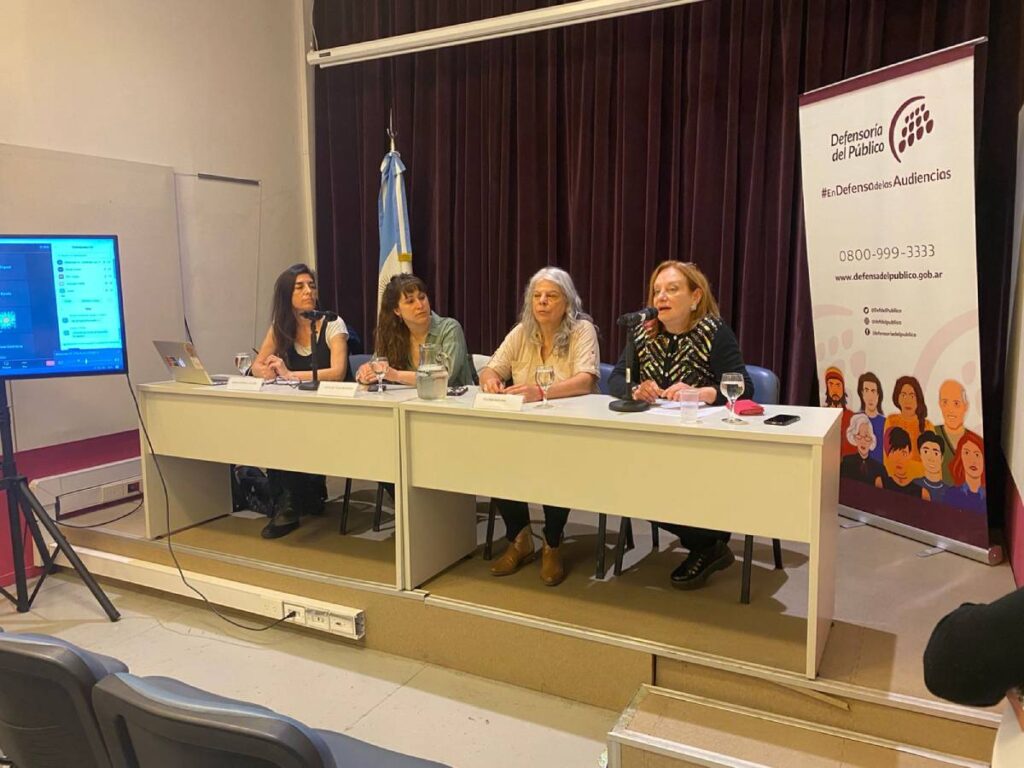
Between October and November 2022, in a series of talks and meetings convened by the Ombudsman's Office for the Public—headed by Miriam Lewin—and the Télam news agency, we discussed hate speech in Argentine society—on September 1st, there had been an attempted assassination of Vice President Cristina Fernández de Kirchner—and some of the issues that later gained even greater prominence during the election campaign. These included discriminatory messages, denialism, and the stigmatization and criminalization of difference. Presentes participated in the day of reflection on “Gender, Diversity, and Dissidence.” And at each session, a question arose: What is the role of the State and the legal framework for addressing these issues, and how should they be handled by the media and news agencies?
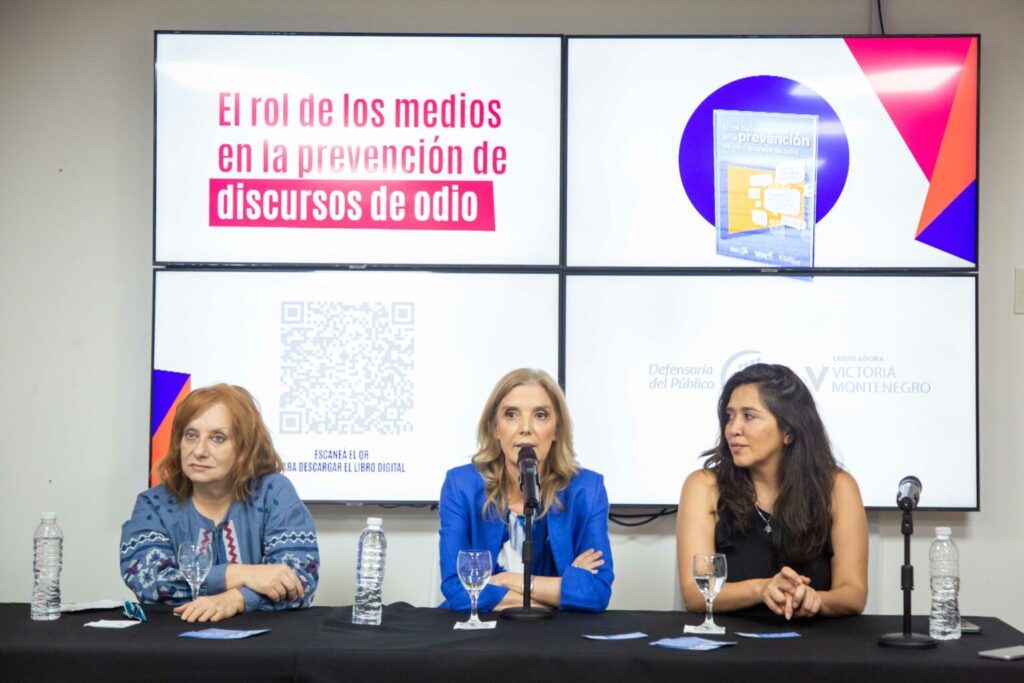
The series of talks culminated in this book, *The Role of the Media in Preventing Hate Speech *, published by the Ombudsman for Audiovisual Communication Services, Télam, and legislator Victoria Montenegro. The texts include contributions from Andrea Copani (Secretary of Human Rights), Bernarda Llorente (Télam), Catalina Figueira Risso (Feminacida), Daniel Feierstein (CONICET), Ezequiel Ipar (National University of San Martín), Héctor Shalom (Anne Frank Center), Horacio Lutzky (Ombudsman), Miriam Lewin (Ombudsman), Silvina Molina (Télam), Vera Jarach (Mothers of Plaza de Mayo, Founding Line), Victoria Montenegro (Legislator of the City of Buenos Aires), and Agencia Presentes.
Back in March 2022, Buenos Aires legislator Victoria Montenegro had already called for a debate on the issue with groups and organizations, through the Human Rights, Guarantees and Anti-Discrimination Commission she chairs, in response to the “increase in acts of vandalism against elements that highlight the collective memory of our people, along with attacks suffered by social and political organizations, the increase in violent acts against the LGBTIQ+ community, attacks on homeless people and many other sectors of society.”
At Presentes, we participated in that meeting at the Legislature, and during the Ombudsman's series, we shared our ongoing work on this topic with the team based in Argentina and Mexico, where anti-trans rhetoric has reached alarming levels. We are reproducing the chapter "Tools for Identifying and Addressing Hate Speech ," which is part of the book. We recommend reading the entire publication, which is free and can be downloaded here .
As Vera Jarach, a founding member of the Mothers of Plaza de Mayo, Holocaust survivor, and mother of Franca Jarach, who disappeared in 1976, says in this publication: “Hate spreads, like seeds of hatred, in different ways and for different reasons. In general, it arises very frequently in serious situations where everything seems to be going wrong, where a scapegoat has to be found. That is when those seeds sprout. The consequences are grave. They are the worst forms of violence known to humanity: persecution, racism, genocide, wars—all of that is the fruit of hatred. In our Argentine history, it is all of that which has happened in the distant past, what is happening now, and what could happen again.”
Vera proposes adding to the slogan “Never again” two more that are essential: “Never again hatred” and “Never again silence.” They are linked because at the first signs of hatred, what must be done is not to remain silent, not to look the other way; the silence must be broken.”
Tools to identify and address hate speech
By María Eugenia Ludueña (Journalist specializing in gender, diversity and human rights at Agencia Presentes. Graduate in Communication Sciences from the University of Buenos Aires (UBA). Professor in the Master's Program in
Communication and Human Rights at the Faculty of Journalism of the National University of La Plata and professor at the Metropolitan University for Education and Work (UMET).
At Agencia Presentes, we are concerned about the significant rise of hate speech in our region and around the world. While Argentina is not the first country where this phenomenon emerged, we observe strong anti-rights movements that appropriate language and engage in certain types of operations, which we will attempt to analyze in this meeting.
I would like to clarify, first of all, that we do not have definitive solutions to this problem, which we undoubtedly consider very serious, but we believe it is part of a larger issue: human rights and structural inequalities.
What do we mean by hate speech?
Let's begin with the United Nations' definition of hate speech. It is any form of communication—spoken, written, or otherwise—that attacks or uses derogatory or discriminatory language against a person or group based on their inherent characteristics. This includes their religion, origin, nationality, race, ethnicity, color, ancestry, gender, or any other factor related to their identity. In many cases, hate speech is linked to intolerance and inequality.
At Presentes, we've been working on an agenda with two groups that are particularly vulnerable to hate speech. On the one hand, there are LGBTQ+ communities, but also those from diverse cultural backgrounds, especially women and Indigenous peoples. In the last 23 , for example, we've seen how some media outlets construct news stories using certain strategies that generate hatred, sometimes brutally and other times more subtly. There are ways of telling news and stories that can be discriminatory, insulting, offensive, threatening, or directly incite violence. We see this in the coverage of Indigenous issues by certain sectors, with stigmatizing and dehumanizing approaches that disregard the framework of human rights.
While we have fairly consensual definitions of hate speech from international organizations, there is no such clarity regarding the international legal definition, which has been under discussion for years.
In the words of the United Nations:
While the Inter-American human rights system has developed certain standards, there is no universally accepted definition of “hate speech” in international law. According to a recent UNESCO report that studied the various definitions of hate speech in international law, the concept often refers to “expressions that incite harm (particularly discrimination, hostility, or violence) based on the identification of the victim as belonging to a particular social or demographic group. It may include, among others, speech that incites, threatens, or motivates acts of violence. However, for some, the concept also extends to expressions that foster an environment of prejudice and intolerance, with the understanding that such an environment may encourage discrimination, hostility, and violent attacks directed at certain people” (Cited in Violence against Lesbian, Gay, Bisexual, Trans, and Intersex Persons in Latin America , OAS 24 ).
In Argentina, the problem of hate speech gained particular prominence, of course, due to the attempted assassination of the vice president, but it is an issue that had already been under discussion beforehand. In fact, in 2019, the UN developed a strategic action plan against hate speech.
Within the Inter-American human rights system, there is a consensus that the focus should not be on censoring these abuses as on developing strategies to prevent them by addressing the root causes. For now, the media is attempting to moderate them and discuss possible strategies for confronting them.
From this perspective, then, I'm going to share our experiences and approaches. At Presentes, we function as a communication platform, but we're also very much in touch with activism, which in turn is deeply rooted in territories where journalists are increasingly less present. They are crucial allies when it comes to gathering data, addressing, and reflecting on certain issues that, from some journalistic perspectives, might seem somewhat distant.
One of the issues we work on closely with LGBTQ+ activism is the rise of trans-exclusionary discourses, known as TERFs (an acronym for trans-exclusionary radical feminism), which exclude trans people by claiming—and I'm somewhat ashamed to say this—that they erase cis women from the agenda. To put it very simply: the problem of gender violence and other forms of exclusion that women suffer are long-standing issues linked to patriarchy and historical oppression; no one would ever think they have anything to do with trans people, who, in Latin America, have an average life expectancy of between 35 and 40 years.
After becoming aware of these discourses that generate hate messages against the trans community from the "trans-exclusionary" movement, we began a series of exchanges to think about what to do.
Main characteristics of hate speech
Based on this and other experiences, we understand that there are certain characteristics that allow us to identify hate speech. But, to be clear, we're not talking about formulas that refer to closed categories, but rather conversations we're having with colleagues on the team I lead with Ana Fornaro, co-director and co-founder of Presentes, and Lucas Fauno, our audience editor. It's on social media where we're finding the most manifestations of hate speech today.
On the other hand, in Mexico, where another part of the team lives, including coordinator Milena Pafundi and trans journalist Geo González, the problem of TERFs has become very serious. Geo has been attacked while covering certain stories. Some time ago, we decided to write an article to consult with trans and travesti collectives in Mexico about how they dealt with hate speech, what strategies they had found viable, or if they could share anything about how to handle these expressions. Because this kind of speech can generate violence. There is a link between physical violence and hate speech; they don't operate separately, even though it sometimes seems that way. Furthermore, they cause emotional harm, something that is less often discussed.
We then put together a guide, a sort of "first aid kit," for hate speech. One of the first things trans activists shared with us was the importance of being aware of the dangers of this type of speech. And this awareness is linked to a question about what we call it. Hate speech? Discriminatory speech? How do we talk about it?
Sometimes it seems that for something to be considered hate speech, it has to be at one extreme, but if it's not at that extreme, it isn't hate speech, because nobody says, "Go ahead, kill them," and then it wouldn't be incitement to violence. But the truth is that this phenomenon has different gradations and levels. That's why it's so important to be vigilant.
They seek to harm a person or group
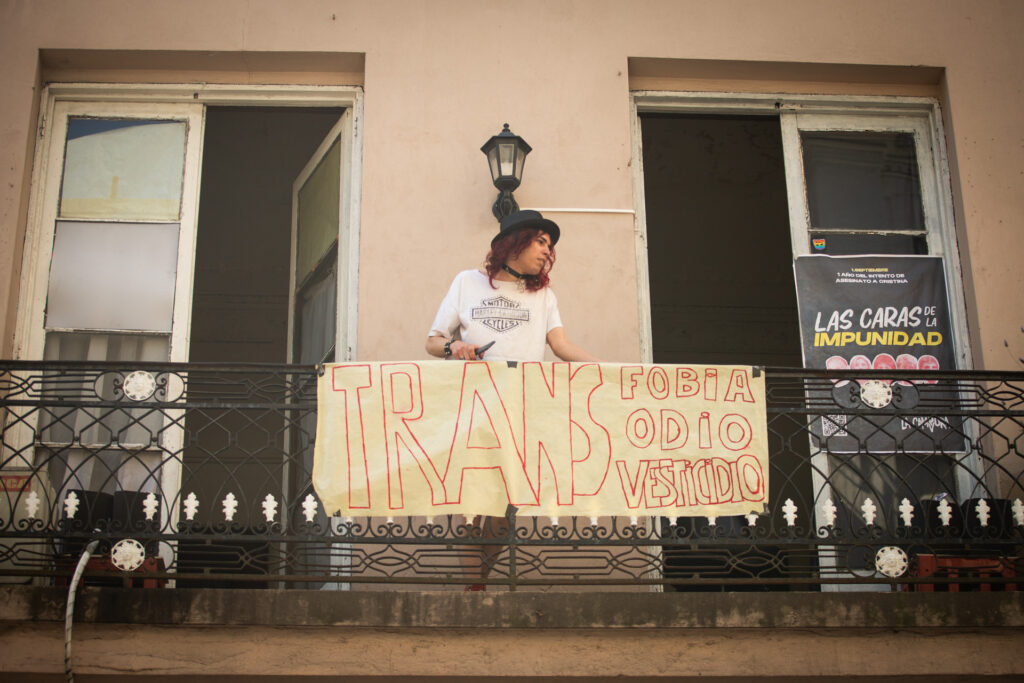
Who are the targets of hate speech? Is it aimed at anyone or at specific groups? It's not always aimed at minorities. In general, it targets historically marginalized groups and is related to structural violence. “Hate speech isn't just false accusations intended to cause harm. It's linked to structural and systematic violence against historically marginalized groups, which fosters stigma and prejudice against them,” Janet Castillo, coordinator of the legal clinic on sexual and reproductive rights at the organization LEDESER (Mexico), told us in this article written by Geo González.26.
Sofia Jiménez Poiré, a member of the Dignas Hijas Collective, proposes refining the concept of “hate speech” to “stigmatizing or anti-rights speech.” Because “they don’t appear to be hate speech, but rather speeches in defense of a group.”
The first step is to identify it and assess whether it's hate speech, whether it's discriminatory, whether it's intended to harm someone. And then the question I often ask myself when trying to understand this issue is: what interests are at stake? Who do these speeches defend?
To legitimize a status of inequality
Sometimes, highly inflammatory rhetoric is the first sign, but not the only one. We'll see that it's not a single characteristic, but rather a layering of traits. In general, this discourse constructs a false narrative, dehumanizes the other person, stigmatizes them, and uses misleading or distorted quotes like "biology says..." Because often, they try to find arguments to reinforce a false idea of "neutrality" or "naturalness," when we're actually talking about social constructs. And hate speech almost always claims to possess absolute truth, but what it's really trying to do is legitimize a status quo of inequality.
Another characteristic is the widespread practice, especially regarding issues of sexual diversity, of using scientific arguments (this is also seen in the agribusiness debate). But science is not neutral either and is influenced by vested interests and inequalities; in fact, it is very common for “trans-exclusionary” movements to appeal to inexact science, which reveals that we are dealing with discriminatory discourse. It is also common for them to focus on a particular trait and try to generalize it.
At Presentes, when we conduct workshops, we always emphasize that Argentina has a progressive legal framework regarding, for example, sexual diversity—we are one of the countries in Latin America with a pioneering and groundbreaking Gender Identity Law (2012) and an Equal Marriage Law (2010). However, we know that cultural transformations are complex and take much longer. Therefore, even though we have wonderful laws, they don't always find a counterpart in media or judicial discourse, which continues to discriminate. Although in recent years we have witnessed many promising changes in the area of human rights for sexual diversity, we continue to see discriminatory headlines in Argentina, which has these laws, similar to those we see in El Salvador or Paraguay, which still lack them.
The construction of enemies
Another characteristic of hate speech and discriminatory discourse is the construction of the enemy. The other day I saw an article in the newspaper La Nación analyzing the Mapuche women deprived of their freedom in Bariloche. While some have been released, others remain under house arrest; among them a machi, Betiana . For the Indigenous world, she is a spiritual authority. But an article in La Nación took the trouble to analyze why a person who identifies with an Indigenous nation receives social welfare programs. The machi was portrayed by that publication as an enemy, from a prejudiced and offensive perspective that promotes a false view of history, where Indigenous peoples have suffered genocide and have been dispossessed not only of their land but also of their most basic rights. When conflicts arise over this issue, the Indigenous world appears stigmatized or criminalized in certain media outlets.
Another characteristic of the enemy construction sought by hate speech is its reinforcement of the schematic notion of “you” and “us.” We in the media must make a great effort to avoid polarization, to avoid binary communication, and to avoid highlighting the divisions that hate speech is creating.
What does hate speech have to do with violence? The Inter-American Commission on Human Rights published 28 on Violence Against LGBTI People in Latin America (2015). It is one of the most important and comprehensive reports on the region, and it noted that violence against lesbian, gay, bisexual, trans, and intersex people is reinforced by the dissemination of hate speech directed at this community in various contexts. And, while it states that this phenomenon needs to be studied in greater depth, the evidence suggests that when crimes against LGBTIQ+ people occur, they are frequently in a context of dehumanization and discrimination. I think it's also interesting to point out when we see this most frequently. In general, we see that violence against LGBTIQ+ people increases in electoral contexts, which is one of the times when hate speech surges, or in legislative debates where the same thing happens.
Several months ago, Representative Victoria Montenegro organized a roundtable discussion against hate speech at the Buenos Aires City Legislature. I was struck by the number of groups convened to address the issue of hate; people from very diverse backgrounds and with very different human rights issues who felt targeted by hate speech. What all these people had in common was a situation of vulnerability: racialized people, people experiencing homelessness, victims of police violence, lacking access to rights. Precisely because of the diversity of its targets, hate speech is part of the problem, but not the only one. The underlying problem is part of a larger and very unequal struggle, and it has to do with guaranteeing rights for everyone.
Moderate content
Some people try to justify hate speech under the guise of freedom of expression, arguing that "I have the right to express myself." In general, those who advocate for freedom of expression, which is, of course, a very important right—I'm not diminishing its importance—claim, "I have the right to express myself." It's sometimes helpful to remember that the right to freedom of expression—as stated by the UN Special Rapporteur on Freedom of Expression—is not above any other right; it is not an absolute right.
It's also important to consider what happens to the right to communication, because communication is also a human right. To what extent does the target of hate speech correlate with who can exercise the right to communication in the media today? In other words, how many Indigenous women and diverse groups have access to the means of production and can generate their own communication, narratives with identity, on equal terms with other media outlets? The inequalities here are enormous. This issue cannot be left unresolved.
Finally, I'd like to share something that happened to us at Presentes. In October 2022, we covered the story of Shane Cienfuegos, a non-binary person, being legally recognized in Chile with an ID card bearing the letter X. It was a major step forward after a legal battle, because it's not a right, as it is here, enshrined in law through a presidential decree. Shane's victory was the result of a court fight. Airam Fernández, our correspondent in Santiago, Chile, then posted a series of videos on Twitter featuring Shane as the protagonist of the story: a legal victory. The amount of hate speech on Presentes' social media was staggering.
In the six years we've been around, we've never experienced such a level of aggression. We couldn't keep up with blocking all the comments. Because, while we can't stop it completely, we can do some things about it. Moderation also involves differentiating the degree of aggression in messages. We're in favor of debate; we're not going to block everyone who expresses disagreement. We want to foster conversation. What we don't want is for anyone to feel attacked, violated, or discriminated against. That's why we're working on a guide to establish moderation levels and determine some criteria for taking certain actions, always prioritizing the well-being of the community.
Moderating hateful or discriminatory comments is part of our responsibility to protect our audiences. Presentes cannot be a breeding ground for such discourse, which has a contagious effect. Documenting these attacks, which in some ways also violate freedom of expression, is another aspect of our strategy. We believe it's important to understand where they come from and when they occur. If we know they're going to happen, how can we develop a strategy and be more vigilant? We can debate, but we can also silence, block, and report.
We have a note 29 in Presentes that explains how to easily and quickly report discriminatory speech to the Ombudsman's Office , as happened in 2022, when the institution received a flood of complaints 30 .
We can demand transparency from those responsible for the large platforms regarding the use of algorithms, because we know that certain expressions are related to extreme emotions that spread more quickly.
We can build non-binary communication by trying not to polarize; we can organize ourselves collectively as we are here, talking, opening up communication to see how we prevent them, how we eradicate them.
In conclusion, I would like to add that we need to build support networks, spaces for listening and providing containment. Because all of this causes harm; it comes at a price. We need to offer support however and wherever we can, also demanding public policies that encourage diverse, pluralistic, and democratic communication, so that everyone can fully exercise their right to communication.
- Available at : https://agenciapresentes.org/2022/09/09/las-personas-lgbt-conocemos-el-impacto-que-tienen-los-discursos-de-odio-en-las-vidas/
Other articles from Presentes related to this topic
https://agenciapresentes.org/2022/09/09/las-personas-lgbt-conocemos-el-impacto-que-tienen-los-discursos-de-odio-en-las-vidas/
https://agenciapresentes.org/2018/11/22/clarin-si-gue-alimentando-discursos-de-odio-contra-personas-lgbti/
Share
We are present
We are committed to journalism that delves into the territories and conducts thorough investigations, combined with new technologies and narrative formats. We want the protagonists, their stories, and their struggles to be present.
SUPPORT US

FOLLOW US
We are present
This and other stories are not usually on the media agenda. Together we can bring them to light.