

On-site inspection for the murder of Rafael Nahuel: the location where the young Mapuche man was killed has been confirmed
The on-site inspection of the territory where Rafael Nahuel, a 22-year-old Mapuche man, was murdered in 2017 proved invaluable in the pursuit of justice. It described the incident as "a chase with gunfire up the mountain" involving at least "130 bullets fired with the intent to kill.".


Share

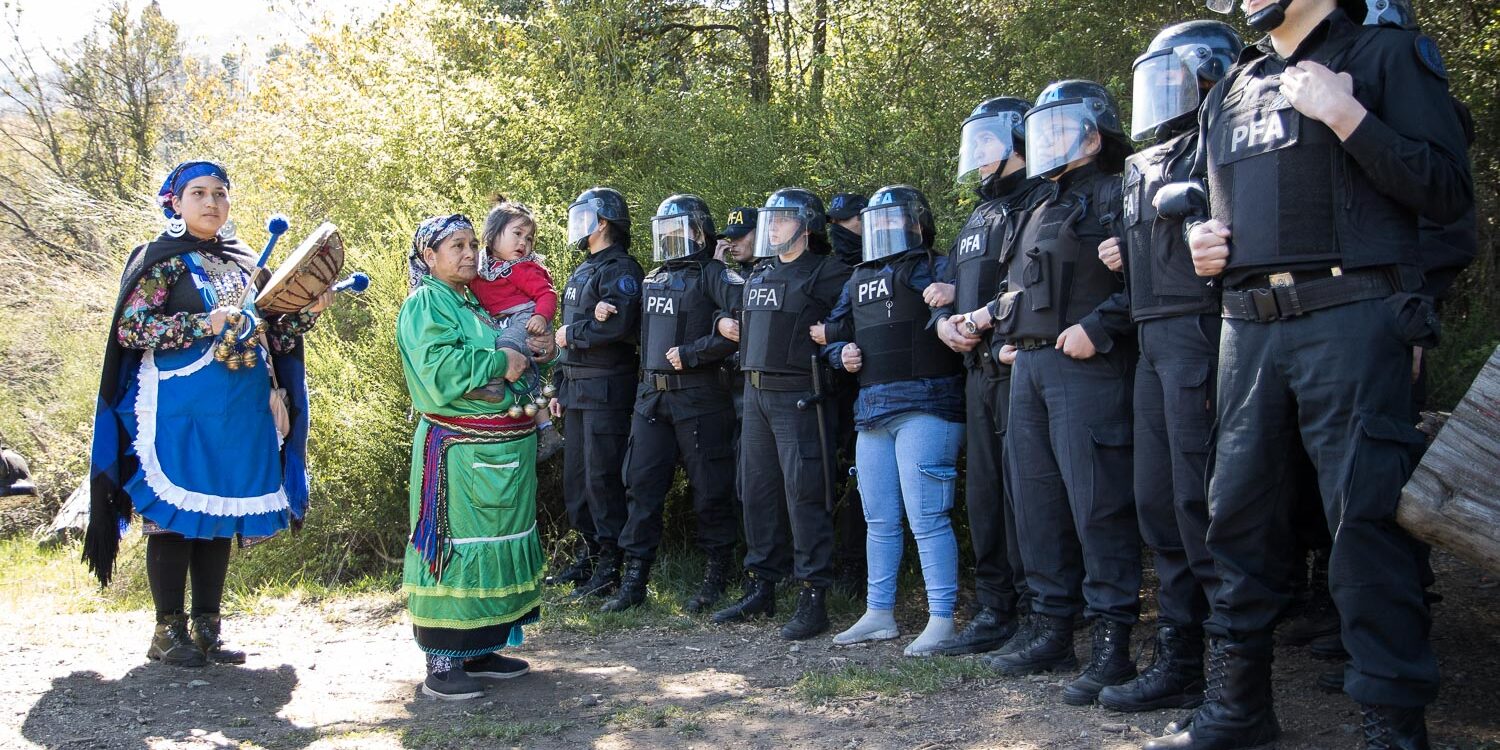
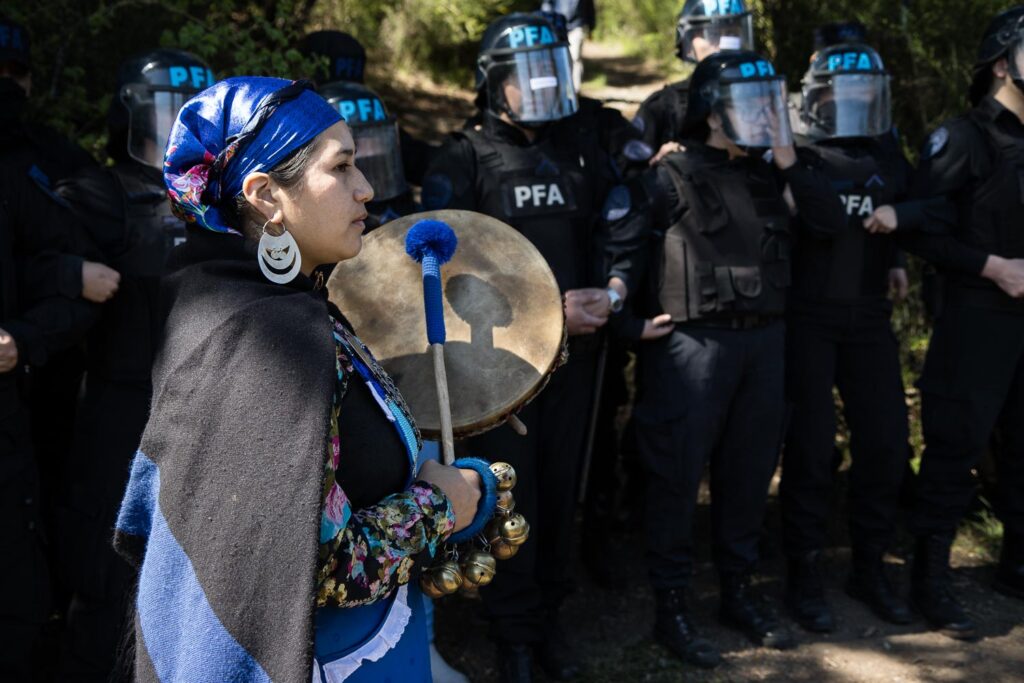
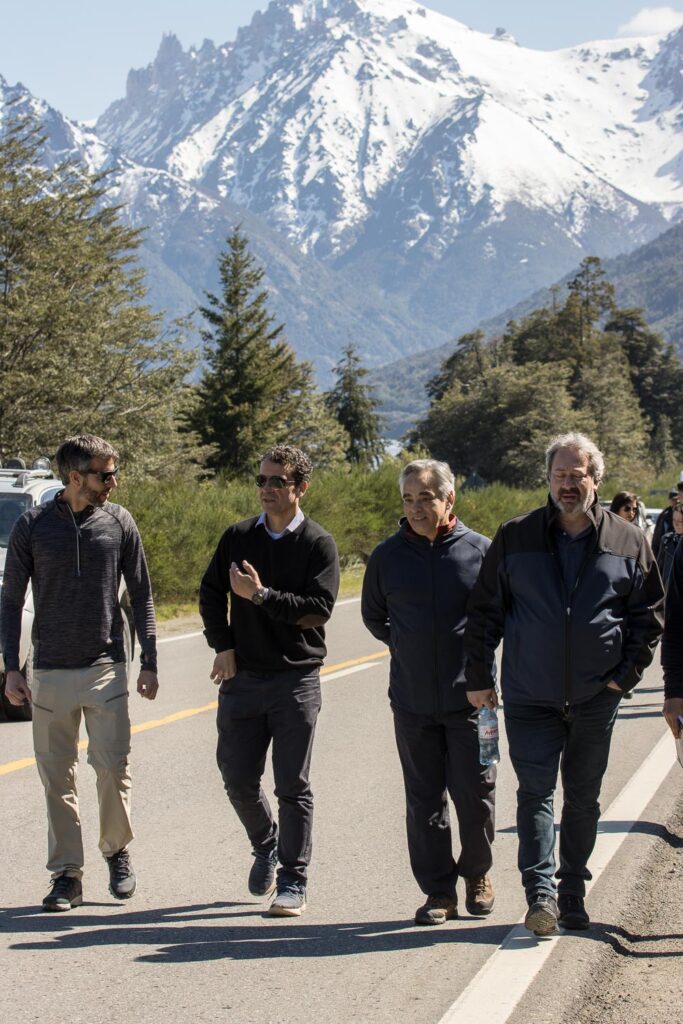
LOF LAFKEN WINKUL MAPU/Villa Mascardi (Río Negro). Yesterday, an on-site inspection was carried out in the territory where the Mapuche community Lof Lafken Winkul Mapu settled and where, during an operation, the young man Rafael Nahuel on November 25, 2017. As part of the trial for his death —five members of the Albatros Group of the Argentine Naval Prefecture are accused—judges, witnesses, and some of the accused toured the property, from Route 40 to the site of the fatal shooting. A group of women from the community accompanied them, including the machi Betiana Colhuán Nahuel (Rafael's cousin). With a large police presence, the group entered the area around 11:00 a.m. and spent six hours touring it.
The inspection took place two days after the national elections in which Patricia Bullrich was a candidate and finished third, behind Massa and Milei. At the time of Rafael Nahuel's murder, Bullrich was Minister of Security in Mauricio Macri's government.
Furthermore, a week ago, at the conclusion of the Plurinational Meeting of Women and Dissidents, held in Bariloche (35 km from here), more than a hundred people marched in a caravan to the Lof Winkul Mapu community for a symbolic embrace of the struggle to defend their territory. Holding the meeting in Bariloche was a consensus among feminist movements to support the struggle of the Mapuche women who had been imprisoned for a year.
130 bullets with intent to kill
Bullrich's Ministry of Security always maintained the theory that there had been an armed confrontation. And not only her: even the initial charges were for "homicide in excess of self-defense." As the trial progressed, the evidence dismantled this hypothesis.
Mariano Przybylski, National Director of Policies against Institutional Violence at the Secretariat of Human Rights, who represents the agency as a plaintiff, concurred: “We went to trial and stated that there was a chase with gunfire up the mountain, with community members running and five officers firing at least 130 lead bullets at them with the intent to kill. That's what we presented at the trial. Throughout the proceedings, we corroborated all those facts. Today we were able to retrace our steps. We saw where the first shots were fired, marked by the collection of shell casings, we continued uphill and saw where it ended. We saw it on the ground, and the court saw it,” he told Presentes.
During the proceedings, those present on November 25, 2017—both defendants and witnesses—gave their accounts of what happened. Only two of the defendants, Juan Ramón Obregón and Sergio Damián García, participated in the proceedings. The other three, Sergio Guillermo Cavia, Francisco Javier Pintos, and Carlos Alberto Sosa, did not attend.
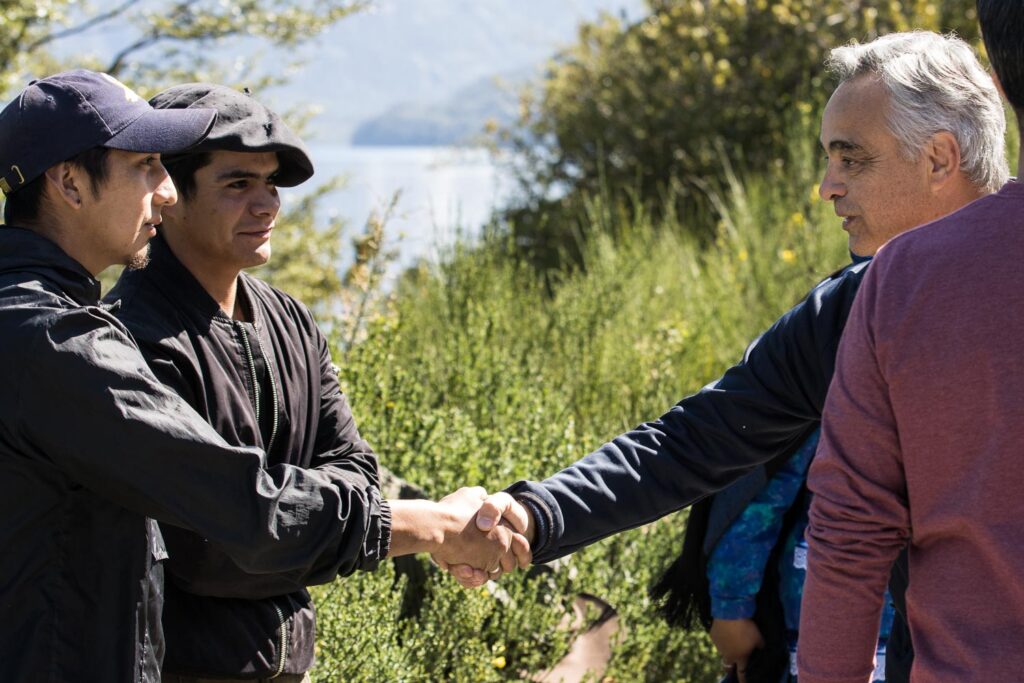
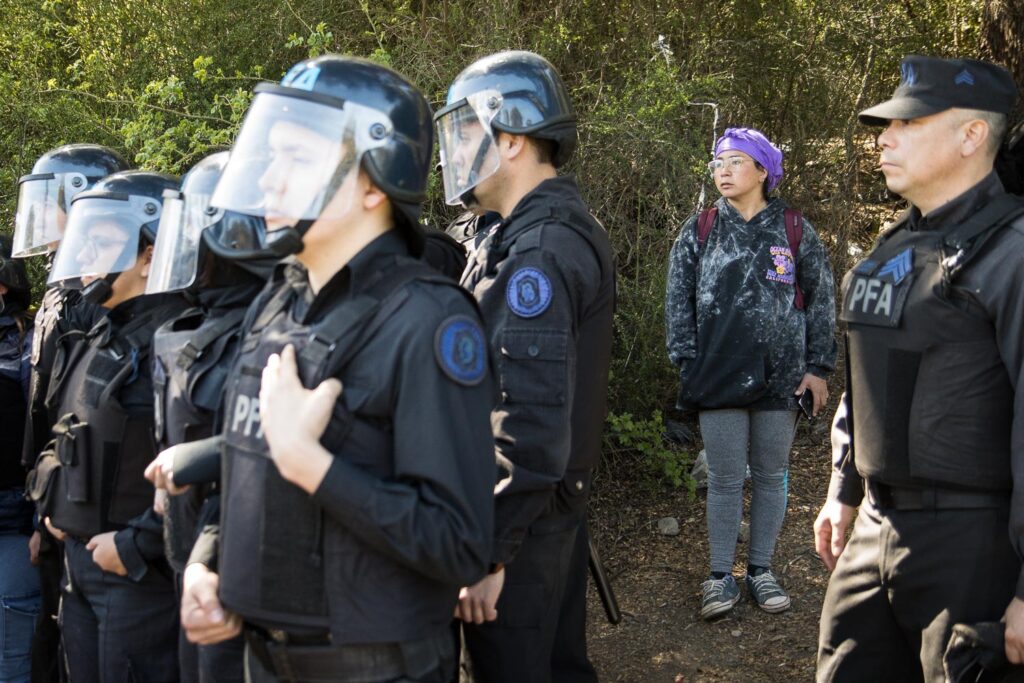
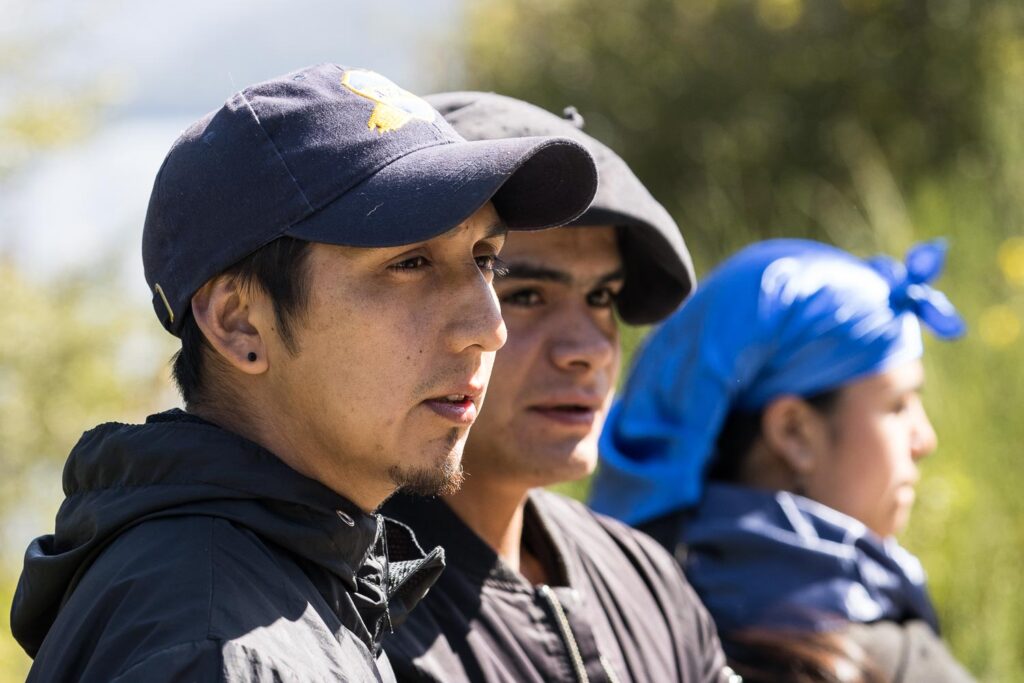
There are three witnesses to the shooting who have already testified at the trial, and all of them participated: Johana Colhuán Nahuel, Rafael's cousin, who was also shot in the shoulder that day; and Fausto Jones Huala and Lautaro González Curruhuinca, who carried Rafael down the mountain in search of medical help (although he died on the way)
Presentes asked both of them about the day. Jones Huala replied, “Rough. It’s very hard to travel that road and have to listen to the prefects’ lies. But we were able to recount how everything happened.” González Curruhuinca added, “They contradict themselves all the time.”.
During yesterday's inspection, upon arriving at the site where Rafael fell, they were the first to reach it and point it out. When the rest of the group, who had been walking more slowly (it was about a kilometer and a half up a steep path through a dense forest), arrived, it was confirmed: the indicated location perfectly matched the geolocated coordinates obtained during the inspection immediately following the incident.
At the conclusion of the inspection (the media were not allowed entry), the prosecution in this trial, which is taking place before the Federal Oral Court (TOF) of General Roca/Fiske Menuco, expressed its satisfaction. Prosecutor Rafael Vehils Ruíz stated: “What we were looking for is precisely what we obtained. The prosecution has a theory of the case, and this on-site inspection provided it. For the Public Prosecutor's Office, it was an extremely positive and important step for the case.”
“The accused were stepping on each other’s toes”
María Nahuel, Rafael's aunt and Johana's mother, told Presentes what her daughter told her: “She says they were constantly contradicting each other. They were saying things that weren't true. Back then, when Rafita was murdered, there weren't any houses, just tents. And they were saying there were houses, just fences. The houses were built later… They were lying. They were constantly contradicting each other; one would say there was a house here and the other would say there wasn't. They were saying all sorts of things.”
Regarding the differences between the testimonies, Prosecutor Vehils Ruiz pointed out something important: “Of course, everyone gave their version of events. It's important to remember that the witnesses were under oath, while the defendants were not. Everyone knows that this is a right of defense; they can say whatever they want, they can lie, and nothing can be said to them about it. This is not the case for witnesses, who, if they lie, are under oath to tell the truth, and that would have legal consequences.”.
Moments of tension
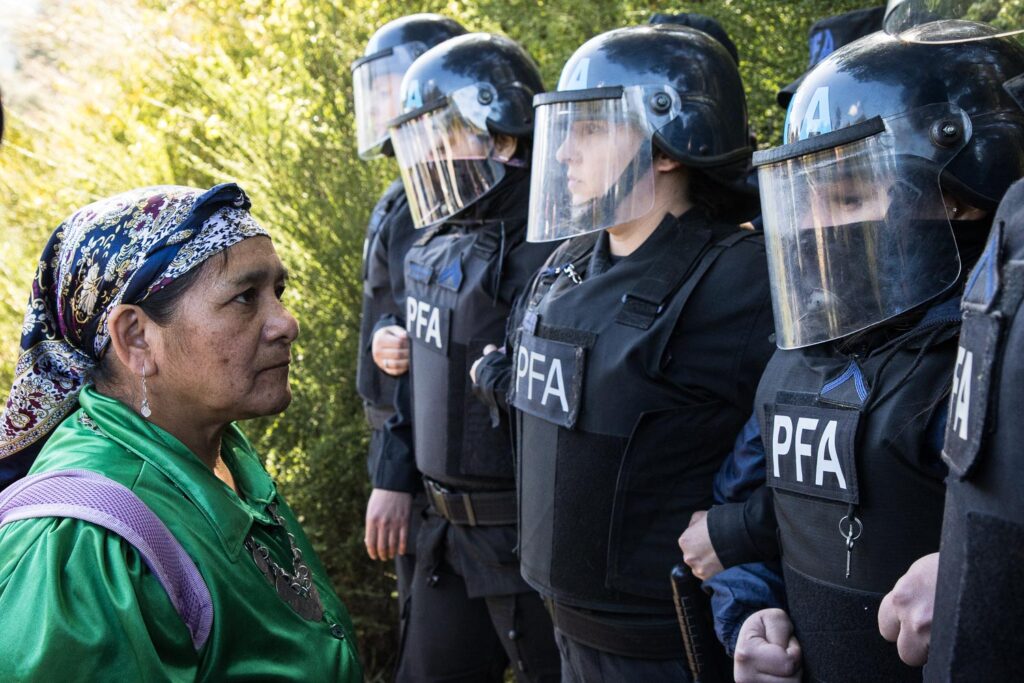
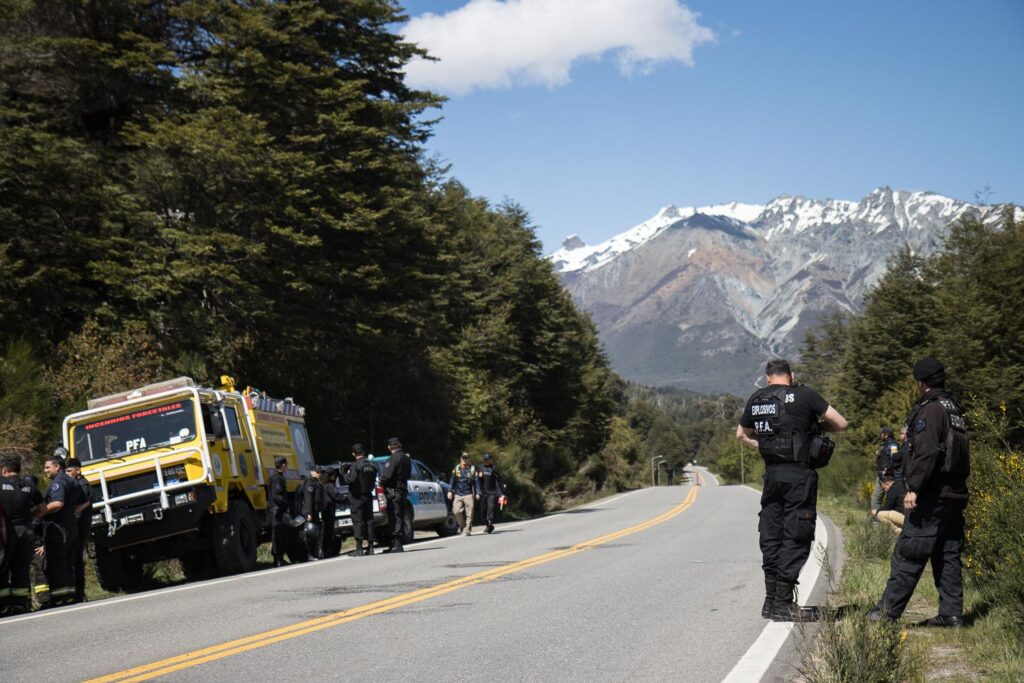
The operation involved a heavy police presence, with over a hundred officers from the Federal Police, Airport Security Police, and National Gendarmerie. Route 40 remained closed throughout the day. Vehicles needing to travel between Bariloche and El Bolsón were escorted by patrol cars in groups that passed through Villa Mascardi periodically. Only judicial and police personnel, lawyers for the parties involved, witnesses, and the accused were allowed access to the area.
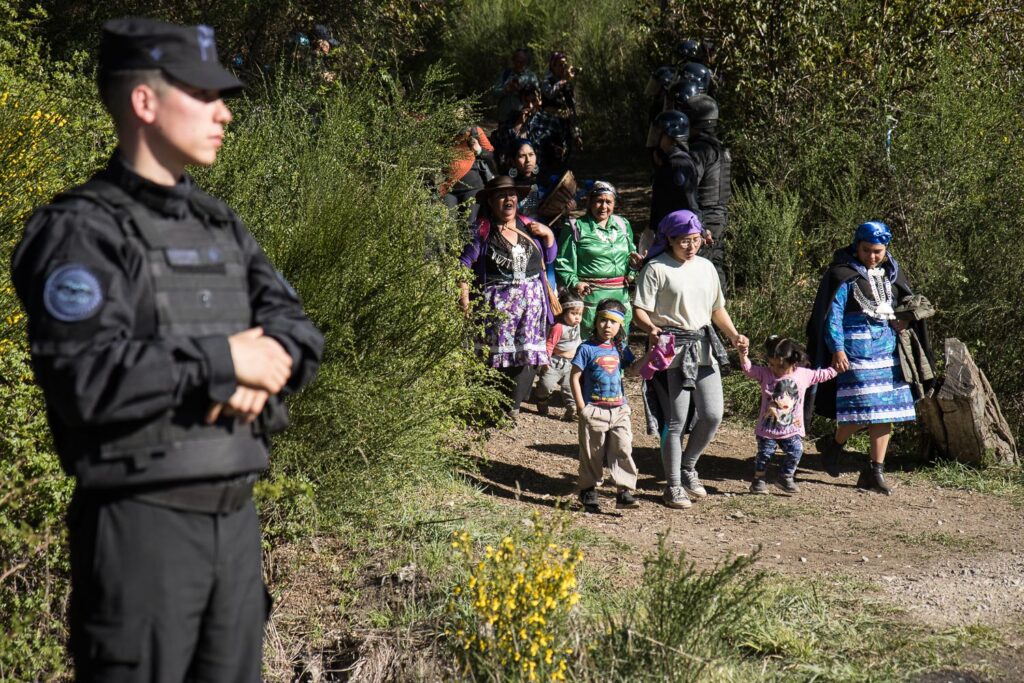
When the entire delegation entered, a tense situation arose, as there were other members of the community who wanted to enter the property. The community was violently evicted on October 4, 2022. Seven women and their children were arrested, and four of them remained under house arrest for eight months .
That detention ended with a dialogue with the National Secretariat for Human Rights on June 1st, when an agreement was signed that brought them closer to freedom, as they were finally released . It was also agreed that the machi Betiana Colhuán Nahuel could return to the rewe (ceremonial site), however, this has not yet been implemented.
The machi is demanding the ceremonial space
Yesterday, Machi Betiana, along with her mother, María Nahuel, her two children, and other members of the community, requested access to the rewe (sacred site) to remain there while the legal proceedings took place. After a tense half-hour standoff with the police cordon, the court finally granted them entry to the sacred space. When it was all over, Machi Betiana Colhuán Nahuel shared: “It was hard being there, surrounded by police. We signed that agreement, but so far they only let us in for short periods, and we can’t rebuild anything.” The agreement includes a commitment to rebuild three houses on the site, replacing the ones that were demolished.
It was a valuable day in the pursuit of justice for Rafael's death. "We can't think that the justice system will turn a blind eye and ignore what we've been seeing throughout the trial," the plaintiff's lawyer, Przybylski, told Presentes. "The expectation is that this will end as it should, which is with a conviction for homicide. I don't see any other possibility."
The arguments will begin in the first week of November, and a verdict is expected near the end of the month.
We are present
We are committed to journalism that delves into the territories and conducts thorough investigations, combined with new technologies and narrative formats. We want the protagonists, their stories, and their struggles to be present.
SUPPORT US

FOLLOW US
Related notes


We are present
This and other stories are not usually on the media agenda. Together we can bring them to light.