

Let's fight cissexism and transphobia in the Green Wave: let's start with language
Non-binary and trans people from Mexico reflect on visibility and claim the right to be named in the struggles for legal abortion.


Share

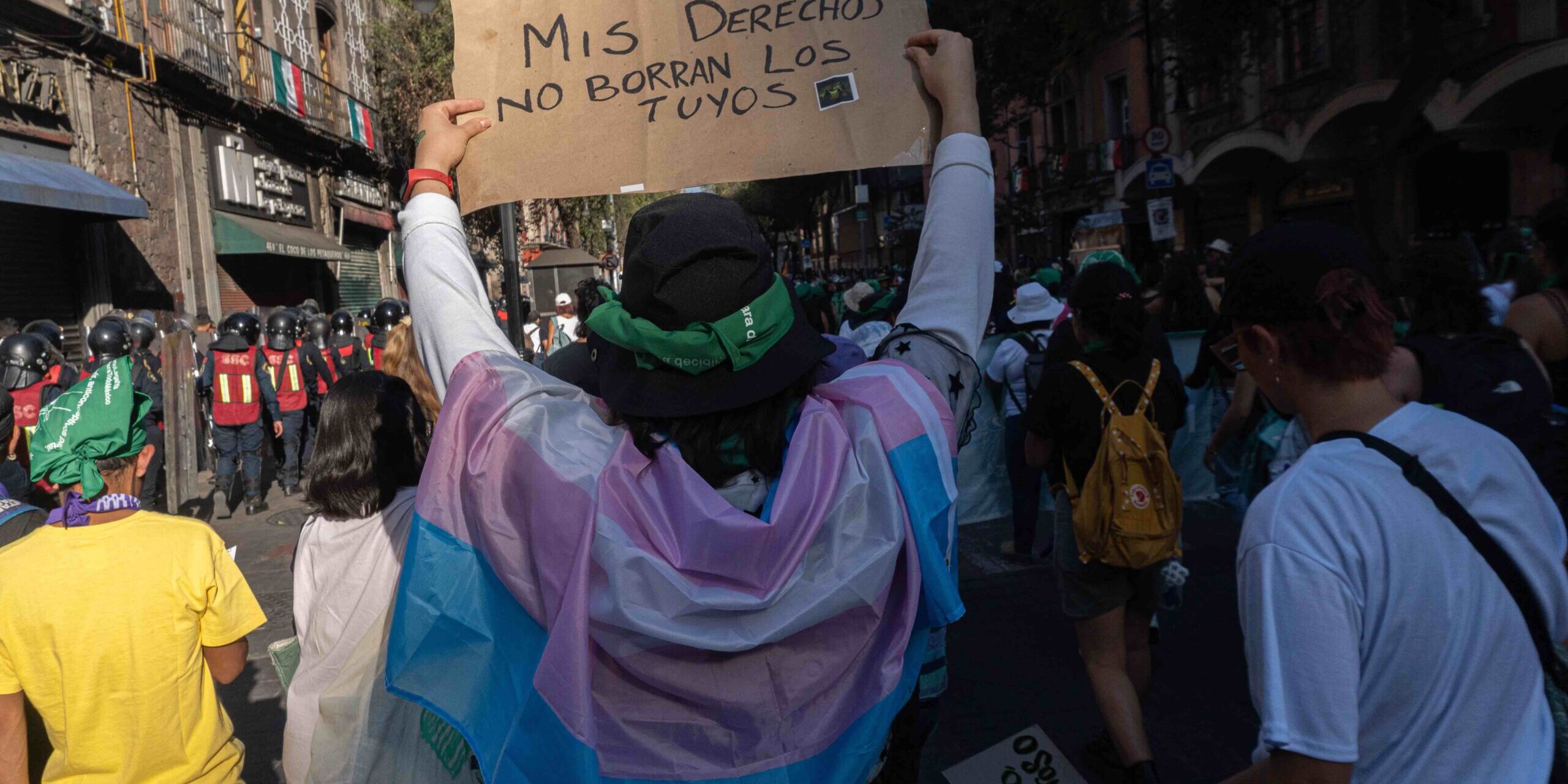
“Where is the solidarity? Where is the support for the diverse groups that have been part of the fight for sexual and reproductive rights? As non-binary people, we have to navigate with caution or even fear, even though these are also struggles that affect us ” says Alex Argüelles (K. ).
Since last year, collectives in the capital have been organizing a contingent to march for chosen motherhood, fatherhood, and parenting. The call to action makes it clear that the route from the Glorieta de las Mujeres que Luchan (Roundabout of Women Who Fight) to the Zócalo has a specific purpose: to reclaim the political visibility of gender and sexual minorities within the Green Wave movement .
“In 2022 it was quite a bittersweet experience ” says the technologist and founder of the Digital Resilience Lab comun.al. “ While we, a group of trans people with the capacity to gestate, were with our chosen families, using trans-inclusive slogans and sharing our experiences, we received attacks from transphobic and cis-sexist people ” she explains.
In recent years, Alex's testimony has become a constant refrain. Transphobia—often accompanied by racism and classism—from supposedly radical "feminisms" has managed to infiltrate the abortion rights movement (also known as pro-choice). However, epistemic, symbolic, and material violence against non-binary people and trans men can be traced in historical documents. Because yes: it all begins with the way we—or don't—narrate and name the world and those who inhabit it.
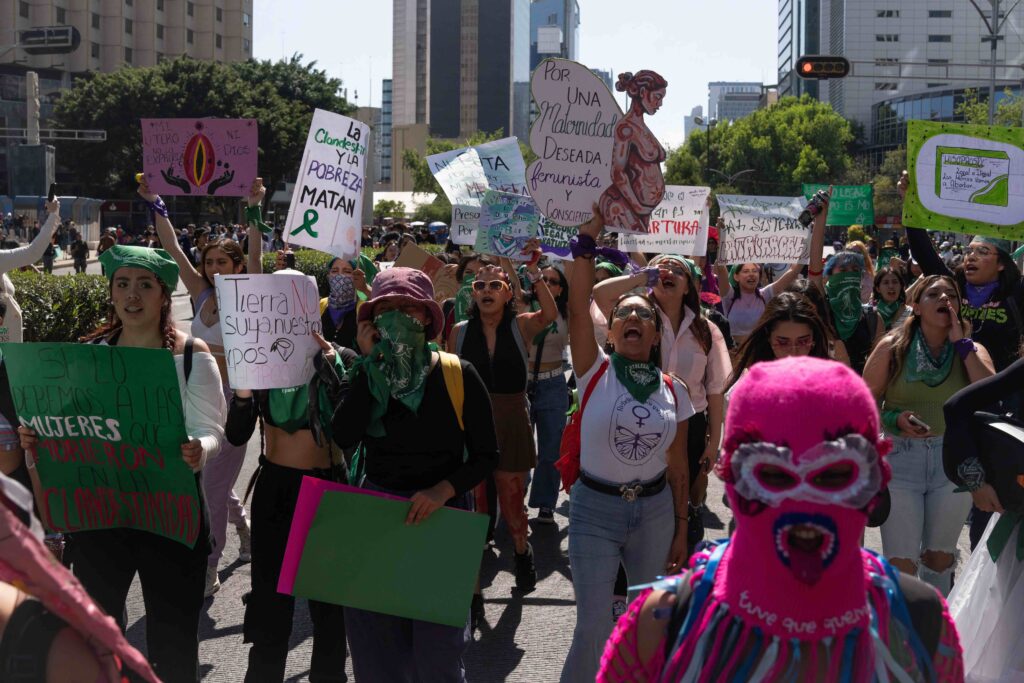
Outrage over "people with the capacity to gestate"
The Supreme Court's ruling not only sparked outrage among ultraconservative groups. From devout feminists to biological determinists, there was a 'concern' about a—false—'erasure of women'. However, the real erasure has been happening elsewhere.
The Legal Abortion Information System does not consider sexual orientation or gender identity as relevant indicators/categories. This omission is one of the factors that explains the lack of information regarding abortion and its guarantee for gender-diverse populations.
However, as revealed by the Gender Equality Observatory of Latin America and the Caribbean , this omission does not make Mexico a special case. Of the 75 regulations on abortion in the countries of the region, only one explicitly mentions the term 'persons with the capacity to gestate' : Law 27,610 (Access to Voluntary Termination of Pregnancy, Argentina), in articles 1, 2, 4, and 5 .
Another finding that exposes cissexism and heteronormativity is the exclusionary approach in care protocols . Although the National Center for Gender Equity and Reproductive Health ( CNEGSR ) takes a gender perspective as a cross-cutting theme and recognizes people with the capacity to gestate in the Technical Guidelines for Safe Abortion Care in Mexico , a binary approach is perceptible.
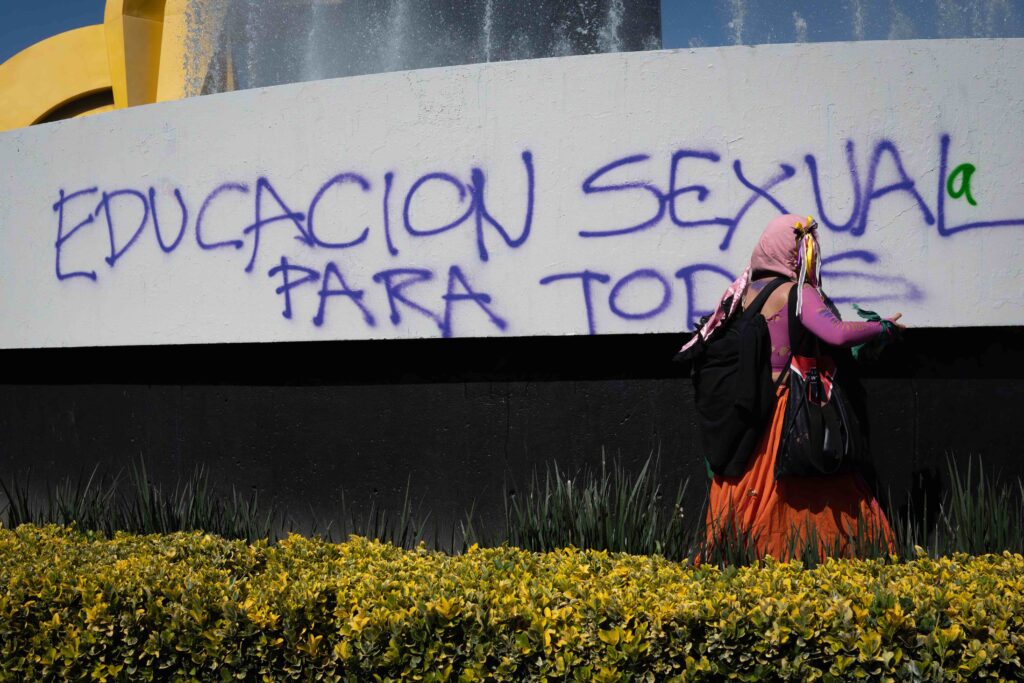
From Mutantes Disidentes (a collective from Guasave, Sinaloa specializing in trans support), Marce Casman comments that in institutions like the Mexican Social Security Institute ( IMSS ), proof that "for the health system, trans people do not exist" is that "access to specialists depends on the gender that appears on the health card."
For the companion, this is no small matter. In Mexico, only 20 of the 32 federal entities have a gender identity law. Furthermore, the process for modifying legal documents is not accessible in all states. “So you depend on the flexibility of the staff assisting you ” she says.
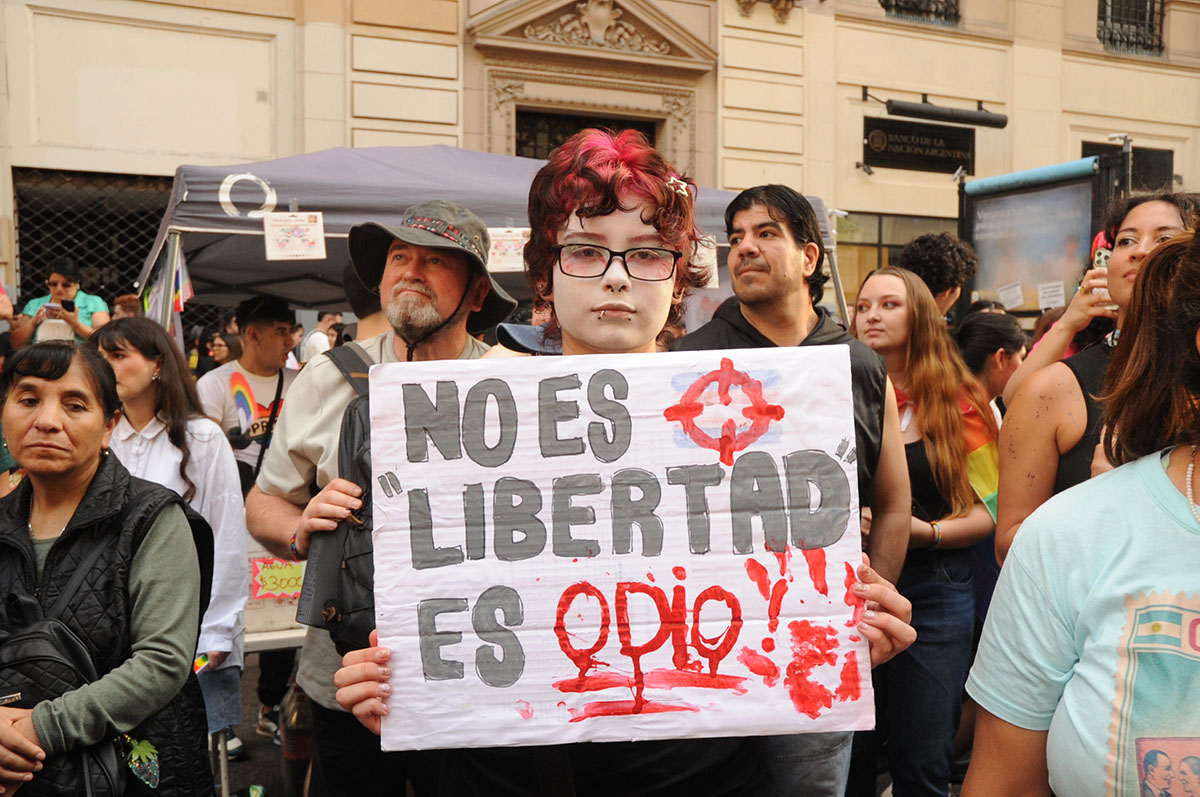
As Marce's words suggest, violence through language has material and everyday repercussions. This is compounded by the omissions—many of them intentional—in support and legal resources. The erroneous narrative that the Green Wave is only for and by cis women has made spaces for gathering (such as the September 28th mobilizations) inaccessible and hostile for some.
Biologist slogans
Verbal aggression also manifests in slogans that, while not strictly related to the abortion movement, are included and even celebrated during the marches. For example: “Rapist dick to the blender!” or “Anyone who doesn’t jump is a man!”
In addition to exclusion and—often—expulsion from 'separatist' marches, Alex emphasizes that another consequence of the predominance of cisheterosexual language is disinformation . A strategy seized upon and exploited by the far right.
Legal setbacks like those in Alabama, Georgia, Mississippi, and Ohio demonstrate how abortion bans and transphobia have common ground . As columnist Moira Donegan , “Both are part of a project to roll back the victories of the feminist and LGBTQIA+ rights movements and thus enshrine a law with gender hierarchies.”
In a similar argument, the organization We Testify states that addressing abortion solely as “a matter of women’s health and rights” hinders comprehensive care, as “experiences, identities, and specificities are erased.” In this regard, Marce adds that this bias—fueled by strong prejudice—also affects the work of collectives as information facilitators and as primary sources for statistical analysis and public policy design.
“If a man sends a message asking for information, they simply don’t give it to him. Often, trans men and non-binary people have to give their birth name or explain that they have a vulva to access the resources they need. Most studies focus on cis women. It’s very difficult to keep records on trans and non-binary people who have abortions. Currently, we’re trying to reach out to collectives that, like Mutantes Disidentes, are openly trans to see if we can interview the trans population. But we also can’t force them to talk to strangers.”
Asterisks
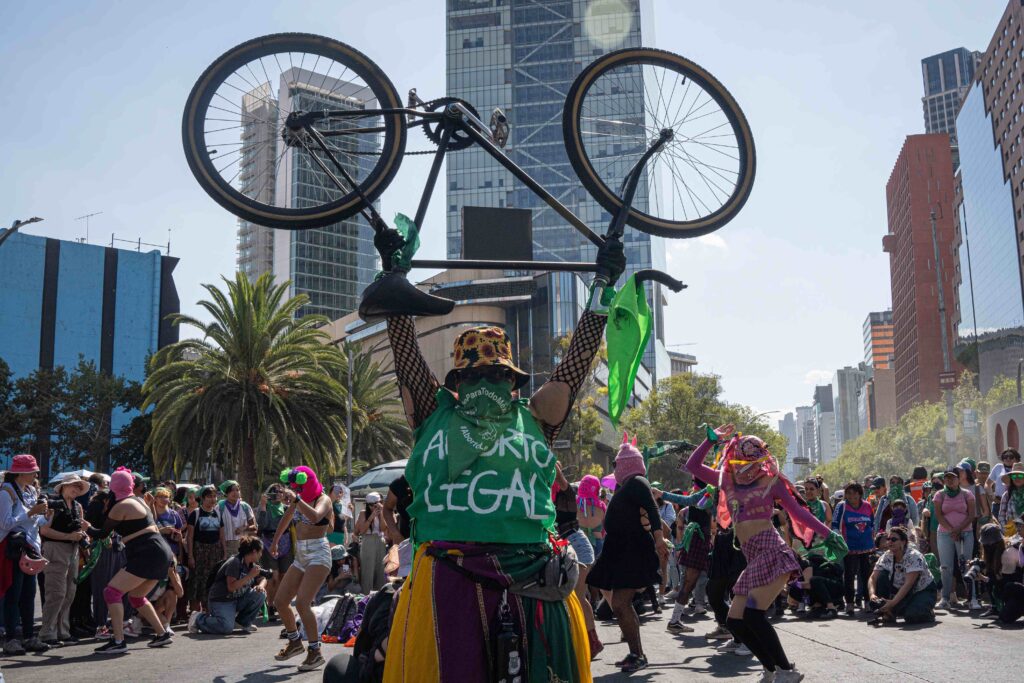
It's true: it's increasingly common to see calls for and promotions of safe abortion services and care that place an asterisk next to the word "women"*. At the same time, various media outlets have asserted that abortion minority population of trans men." But these actions are not enough.
While Marce acknowledges that the recognition and inclusion of the term "people with the capacity to gestate" in projects—though very few—legislation, manuals, and protocols is a step forward, she states that in countries like Mexico it is crucial to specify which populations are covered by the guarantee of this right. "We can no longer approach it from a perspective of otherness ," she declares.
Therefore, groups and organizations with " power to convene and referentiality " must be more consistent and aware of the role they play within activism.
In a similar and complementary view, Marce emphasizes that “respect and love are the very least that support should be offered during an abortion .” To ensure that the Green Wave goes hand in hand with the empowerment of gender and sexual minorities, trans and non-binary populations are organizing autonomously and confronting groups that, despite calling themselves 'inclusive,' collaborate with projects that have at some point violated their rights.
“It’s trans people themselves who have taken the initiative to become visible. In LGBT+ groups, issues of sexual and reproductive rights for trans and non-binary people are hardly ever discussed. It’s generally seen as an issue exclusive to feminists. But on the other hand, from the feminist perspective, we’re told: ‘We’re not the mothers of all struggles.’ That’s why we see trans and non-binary people standing alone and leading the fight for the right to a dignified abortion. We’re making progress, but it’s been through pain.”
Queer and trans justice is a historical debt . Even within movements that advocate for different worlds. At this point, the Green Wave cannot settle for adopting an 'inclusive' language, or one that it conveniently interprets as such . We need to build a movement based on anti-transphobic language and action . For chosen motherhood, fatherhood, and parenting. Legal, safe, free, dignified, supported, and informed abortion for all. Because yes: on our journey through the waves, we have also been joined by comrades who challenge this (cis)ideme.
We are present
We are committed to journalism that delves into the territories and conducts thorough investigations, combined with new technologies and narrative formats. We want the protagonists, their stories, and their struggles to be present.
SUPPORT US

FOLLOW US
Related notes
We are present
This and other stories are not usually on the media agenda. Together we can bring them to light.