

Five questions they ask us bisexuals
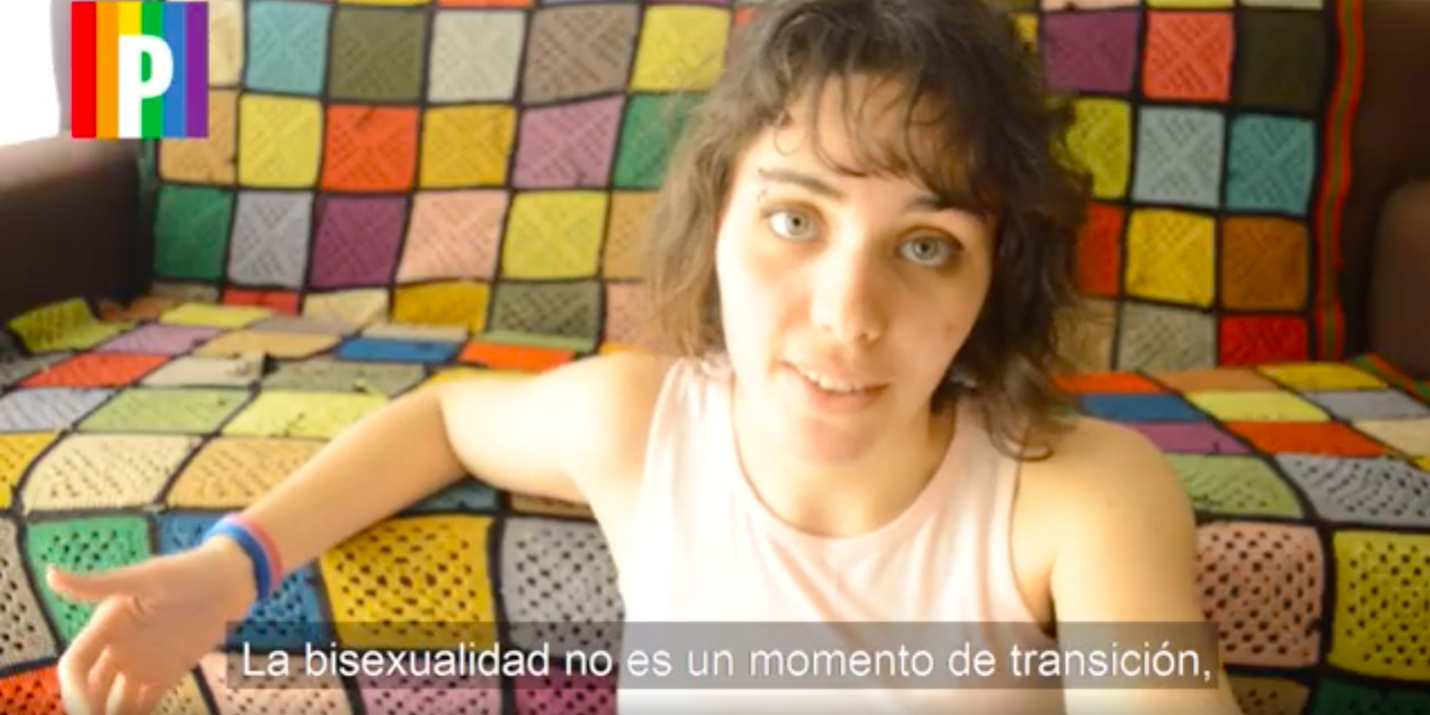
In this video, we share some frequently asked questions about bisexual people. And the answers, to make it clear: bisexuality is not a transition, it's not confusion, and it's not a choice.

Share

Video: Legüera ProduAcciones/Agencia Presentes
By Agustina Ramos
1. Which one do you enjoy more?
What do you like more? Although some bisexuals may like people of a certain gender more, there are those who do not perceive these kinds of distinctions or hierarchies: they simply like people, without this being related to their gender.
2. Is it because they don't like commitment?
Does your partner mind? Do you want to have a threesome? Does that mean you like me too? I don't think it's difficult to be with you: or is it? Being bisexual doesn't mean we like more people than someone straight or gay. There might not be a gender barrier when it comes to liking someone, but there might be another one. Bisexuals don't fall in love more easily or feel more desire than non-bisexual people.
Some bisexual people are more emotionally committed than others. Some bisexual people choose monogamy in their relationships, while others don't.
3. Why don't you make up your mind?
Are you afraid to be gay? Is it just a phase? Are you being lukewarm? Bisexuality isn't a transitional phase, it's not confusion, and it's not a choice. Being bisexual is having a certain sexual orientation. And like any sexual desire or orientation, it's not a choice.
Society tends to seek definitions, to want to categorize, to look for dichotomies and antagonisms. But what bisexuality, as well as pansexuality and non-binary gender, have in common is that they exist within a spectrum. They are not at one extreme or the other, and they cannot be explained through a binary system.
A bisexual person has a transient desire and will continue to have it. Therefore, telling them they are in a stage or moment of transition toward homosexuality or heterosexuality is violent.
4. Why do they use the prefix bi?
Are you binary? Or perhaps pansexual? Bisexual orientation means feeling desire, attraction, or affection for people of your own gender or of other genders. It doesn't specify which ones. That's why we talk about bisexualities rather than bisexuality. There are trans people, transvestites, and non-binary people who identify as bisexual. Being bisexual is different from being pansexual. The history of bisexual and pansexual activism is different. The ways of naming oneself are also different. Some people feel more comfortable or more represented by one or the other, and that deserves everyone's respect.
5. Why do they feel the need to talk about their sexuality?
Does that really exist? These questions point to a problem: the invisibility of bisexuality. The number of bisexual people tends to be larger than the number of homosexual people. In other words, it's a large population. However, their demands and claims are often ignored or dismissed as a joke.
Bisexual people are sometimes attacked, sometimes by heterosexual people and sometimes by LGBT+ people. Therefore, the violence they often experience is twofold. Furthermore, they lack safe and welcoming spaces.
Added to this are the stigmas faced by the bisexual community. Bisexuals are often considered unfaithful, immature, in transition, and unserious. That's why we're speaking out about our sexuality: because, as we know, what isn't named doesn't exist.
Three tips if you have any further questions
1) Put prejudices aside
2) Look for information that exists and is reliable
3) Always ask questions respectfully and politely.
We thank everyone who sent us questions they ask bisexuals through Presentes' social media channels, which we are sharing here.
All our content is freely accessible. To continue producing independent, inclusive, and rigorous journalism, we need your help. You can contribute here .
We are present
We are committed to journalism that delves into the territories and conducts thorough investigations, combined with new technologies and narrative formats. We want the protagonists, their stories, and their struggles to be present.
SUPPORT US

FOLLOW US
Related notes


We are present
This and other stories are not usually on the media agenda. Together we can bring them to light.