

What strategies does LGBTI+ activism have in the face of the anti-rights advance in Argentina?
In the context of the Day of Activism on Sexual Diversity, we spoke with LGBTI+ activists to consider the challenges and strategies in the face of ultraconservative advances in Argentina.


Share

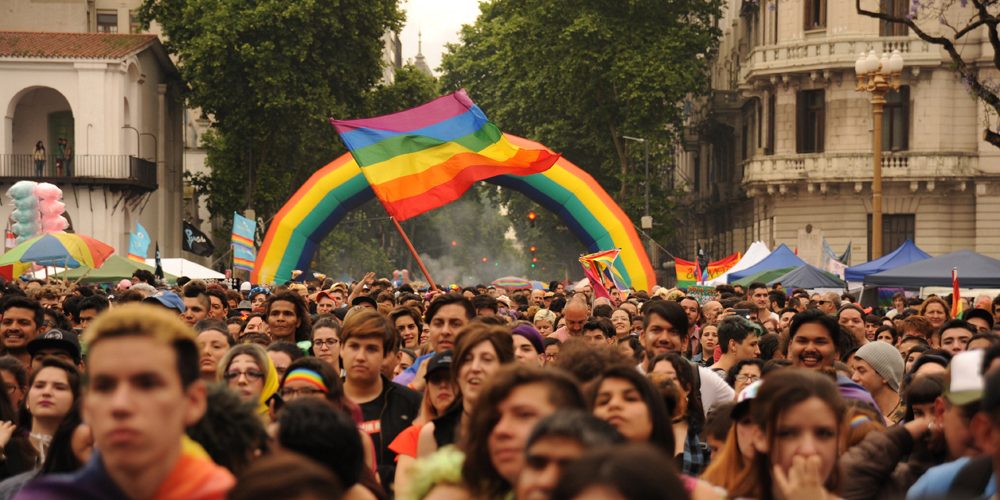
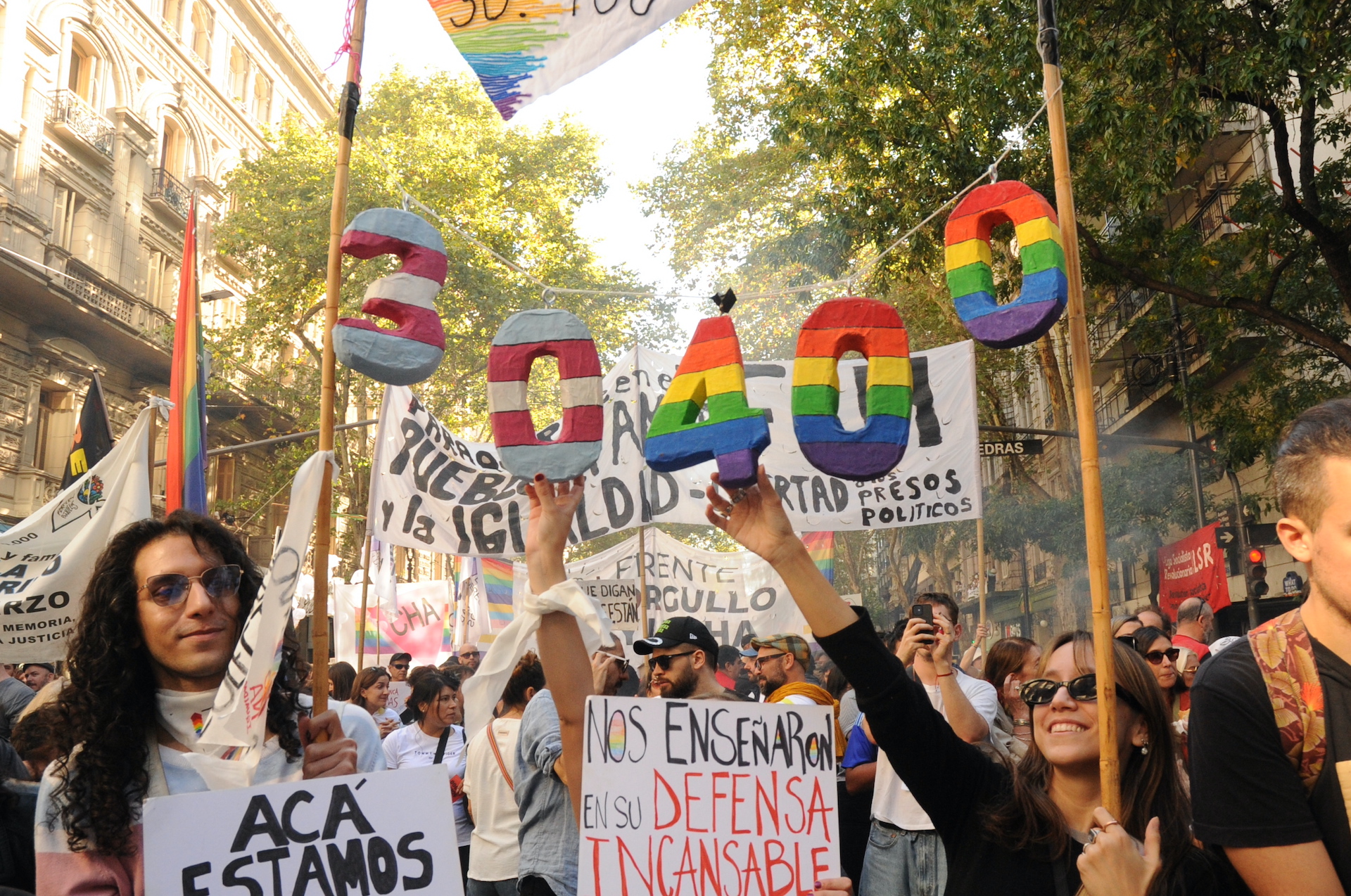
LGBTIQ+ activists are focusing on memory, dialogue, and raising awareness of rights and violence in the face of the rightward shift in Argentine politics. They are doing so within the framework of the Day of Activism on Sexual Diversity , commemorated every August 20th since 2012, in memory of the activist for sexual diversity, Carlos Jáuregui .
Last Sunday, Argentina held its primary, open, and simultaneous elections (PASO) . The most voted-for presidential candidate was Javier Milei, of the La Libertad Avanza party, along with his running mate, Victoria Villarruel.
Both have spoken out against rights already won in the country. Villarruel said in an interview with journalist Luis Novaresio that same-sex marriage was unnecessary, as civil unions were sufficient. Milei, meanwhile, spoke out against legal abortion and announced that if elected, he would hold a referendum on the law regarding the voluntary termination of pregnancy (IVE) . These are among their other proposals.
What to do in the face of the confusion brought on by Sunday's primary election results? How to channel this confusion into collective action? Activists Alba Rueda, SaSa Testa, and Vic Sfriso answered some questions to help us reflect on activism today.
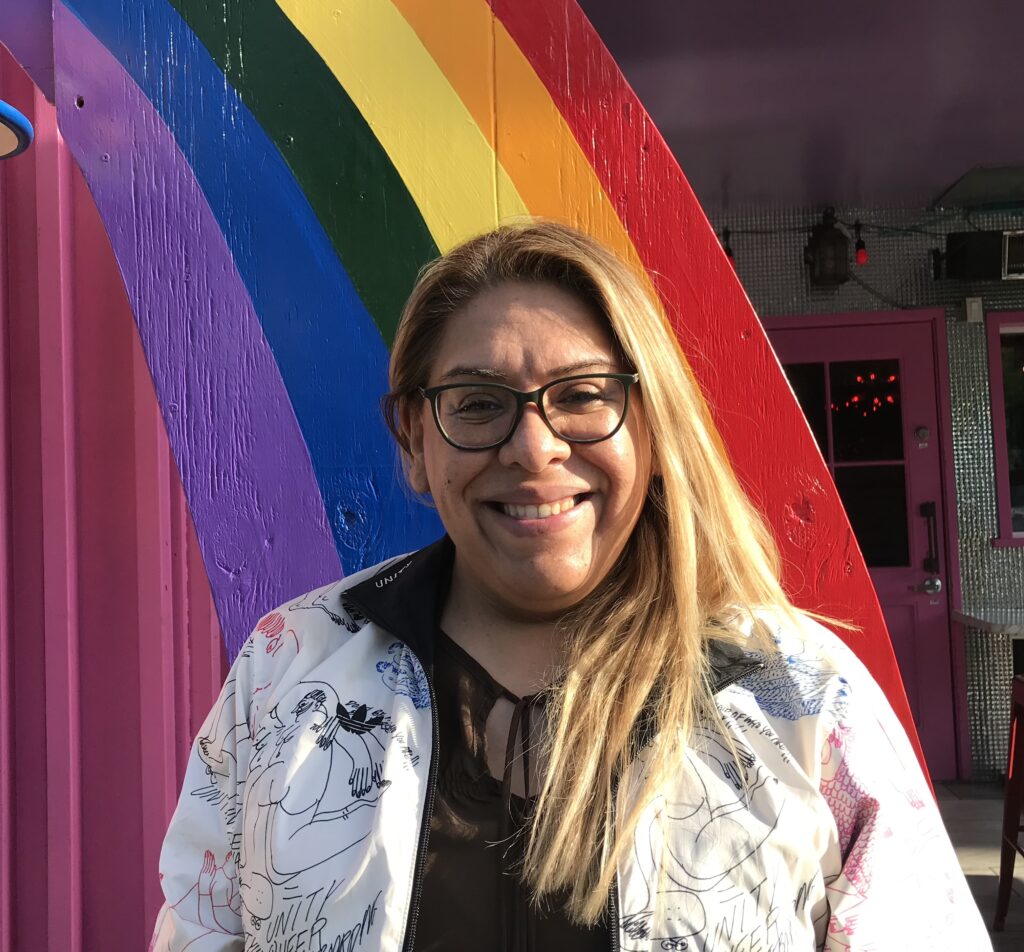
Alba Rueda, trans activist and Special Representative on Sexual Orientation and Gender Identity at the Argentine Foreign Ministry
What strategies can LGBTIQ+ activism implement in the face of the current rightward shift in politics and the emergence of hate speech?
The primary strategy for the LGBTIQ+ community in the current landscape remains visibility. In this case, political visibility that reclaims the true meaning of our activism, which in Latin America is not liberal or pinkwashing , but rather grounded in an awareness of the need to transform the inequalities we live in, towards more just and egalitarian societies.
On the other hand, it's crucial to make the violence visible. LGBTIQ+ people are experiencing violence on social media, and some of it occurs in public spaces and on the streets. The threat posed by a government that promotes and aims for the superiority of some people over others undoubtedly has a significant impact on our lives.
One approach to addressing this involves showing the implications of the claims being made. What happens in different spheres when our rights are not respected? What happens is that these stereotypes are reinforced, they become more prevalent, they are validated, and the silent violence of prejudice is legitimized. And in other cases, these are not so silent or individual, but rather collective attacks on our positions.
How can the reach of discourses in favor of LGBTIQ+ rights be extended to other sectors?
We identified the importance of maintaining social visibility for all our activism a long time ago. I believe that social media plays a fundamental role today. It's crucial to listen to young LGBTQ+ people who have a vision committed to our reality. It's time for them to step forward and demonstrate the importance of conscious solidarity and a broader social awareness of all that still needs to be done.
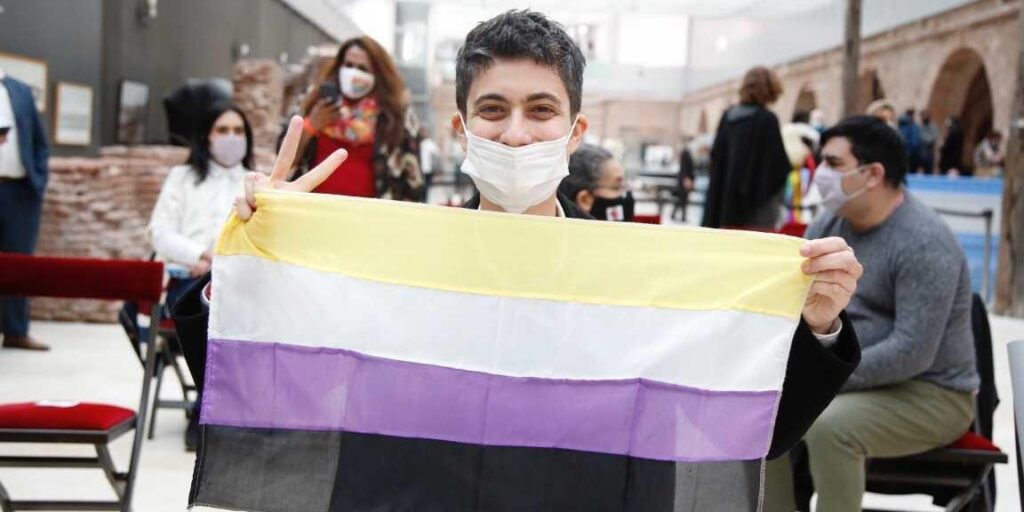
SaSa Testa, non-binary trans activist, Master in Gender Studies and Policies
What strategies can LGBTIQ+ activism implement in the face of the current rightward shift in politics and the emergence of hate speech?
I believe it is urgent and necessary to reactivate policies that preserve the memory of our population. There are members of the LGBT community who have voted for options that have systematically worked against the acquisition of new rights, which should concern us and prompt reflection.
I think it's becoming urgent to get out there. At times, I notice a tendency towards creating a ghetto where we only talk amongst ourselves, while reality is much broader. That's why it's necessary to start a dialogue with other sectors that probably don't think like us or don't see things the same way, but it's essential to listen to them in order to also develop new strategies for reaching out.
How can the reach of discourses in favor of LGBTIQ+ rights be extended to other sectors?
I believe it's necessary to sit down and talk with other sectors, with a willingness to actively listen and also to accept positions that may differ from our own understanding of things. We need to try to see what's happening in those other sectors, how they see things. Based on that, we can develop new strategies.
Clearly, a large segment of young people are choosing other political alternatives that are openly opposed to acquiring new rights, and even to upholding those already acquired . Therefore, I believe the way to reach other sectors involved in expanding rights is to sit down and talk with them, to get to know them. To sit at the table, to talk, to negotiate, and to listen to what they have to say, while still maintaining our ability to come together collectively.
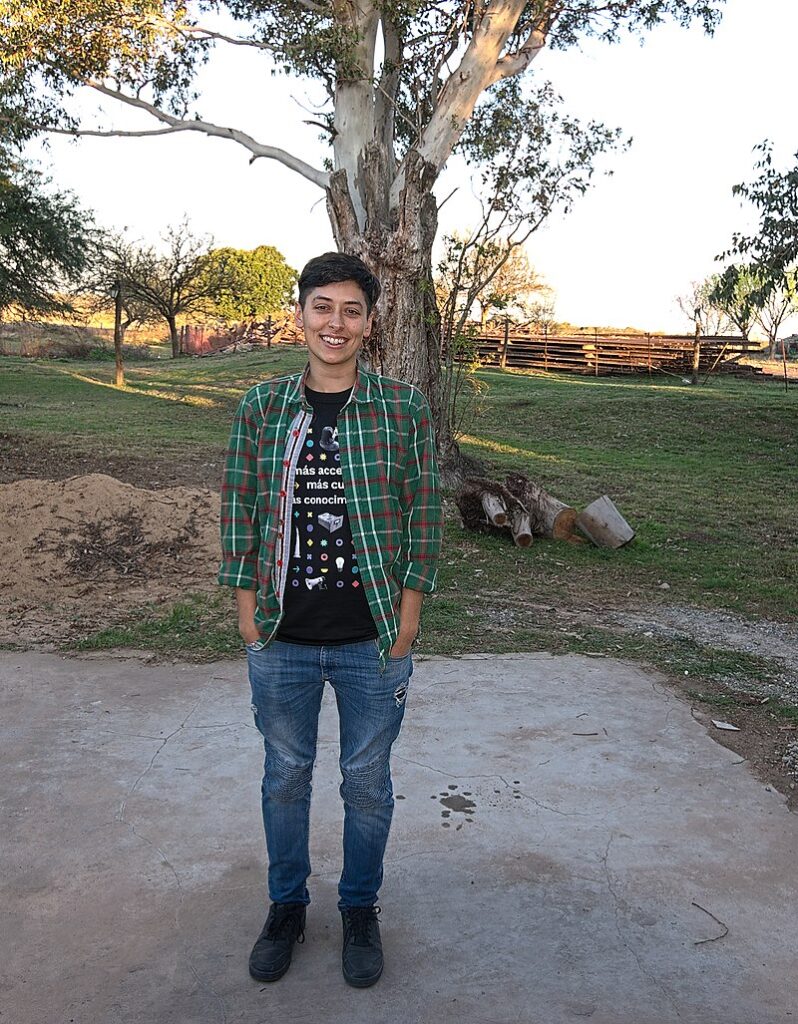
Vic Sfriso, lesbian activist, teacher and translator
What strategies can LGBTIQ+ activism implement in the face of the current rightward shift in politics and the emergence of hate speech?
The rightward shift in politics is becoming more pronounced right now, but it was already underway. Perhaps at this pivotal moment, we should ask ourselves what we've been doing and what effects we're seeing from our activism strategies. It seems there's no time for reflection because the context is so volatile, but the cracks through which we can glimpse proposals aren't so far away. For example, a sector of LGBT activism has been pointing out for years that punitive strategies aimed at protecting the community from hate speech and hateful actions are the tools of the master, as Audre Lorde . They are reinforcing the logic of punishment, censorship, and surveillance, which are commonplace in our society.
In this context of helplessness and confusion, reactions from the LGBT community are emerging that propose closing themselves off (even further) under metaphors of refuge from hostility. It is true that being close and caring for our spaces is a community-building task that we cannot abandon. But perhaps it is time to explore the shadows of identity politics and how it leads us to political action articulated around the notion of victimhood, and to broaden our perspective to a politics of alliances.
How can the reach of discourses in favor of LGBTIQ+ rights be extended to other sectors?
I don't think it's about recipes or greater effort, but about time and political will to not lose sight of the fact that rights are never fully guaranteed or permanent, and that it's not just about rights but about cultural changes. That takes time, and in this moment of political urgency, that time doesn't seem to be readily available.
We are present
We are committed to journalism that delves into the territories and conducts thorough investigations, combined with new technologies and narrative formats. We want the protagonists, their stories, and their struggles to be present.
SUPPORT US

FOLLOW US
Related notes


We are present
This and other stories are not usually on the media agenda. Together we can bring them to light.