

Veracruz: March against discrimination and hate crimes
Activists marched in Veracruz to celebrate LGBT pride and denounce the violence experienced by diverse communities in that state.


Share

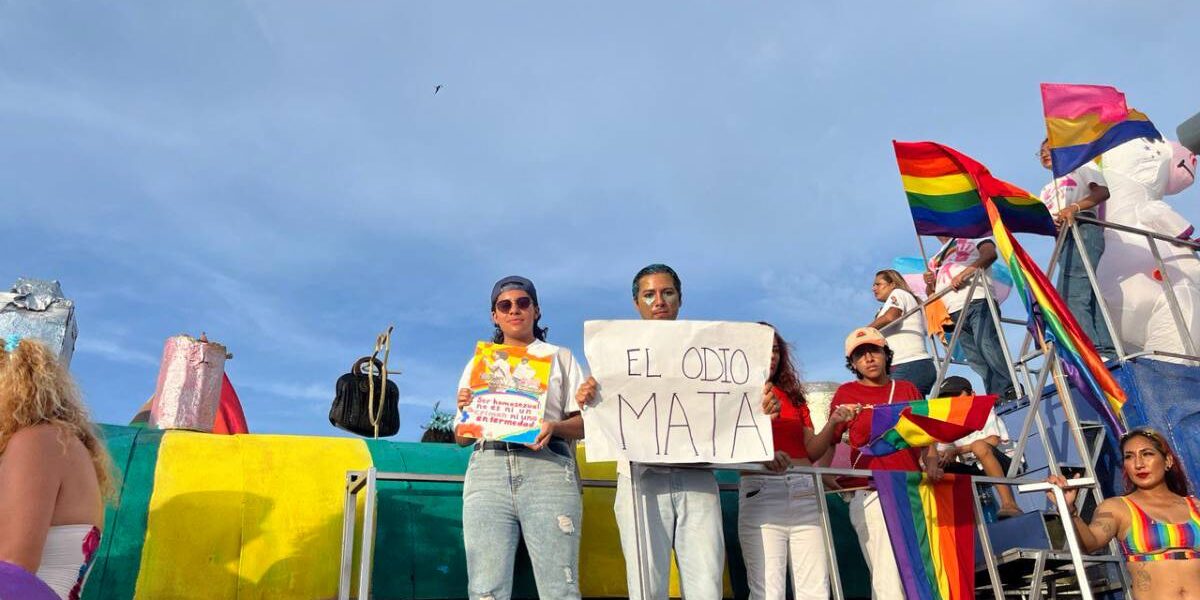
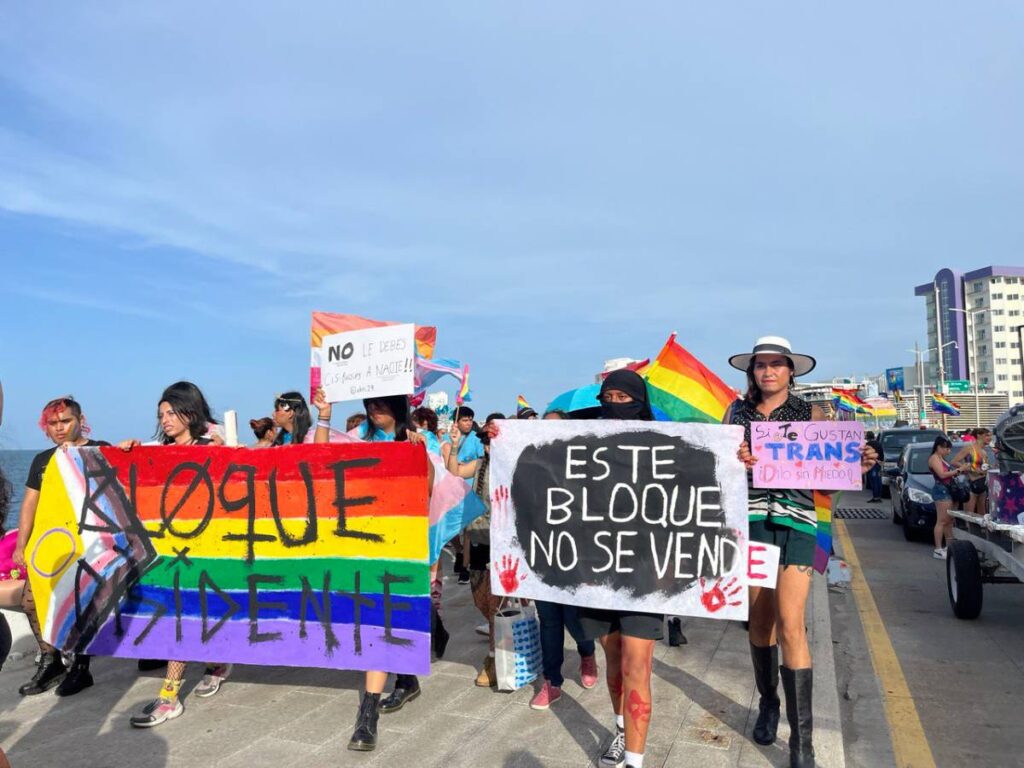
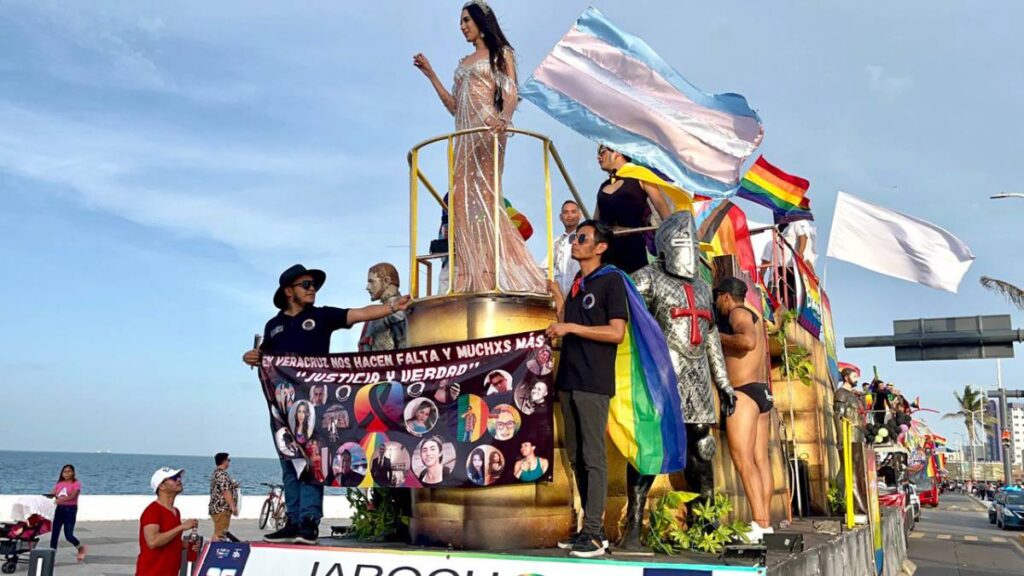
VERACRUZ, Mexico. Rainbow flags, drum circles, drag costumes, banners demanding justice, protest signs, and messages of support mingled in a multicolored river to celebrate LGBTQ+ Pride. But also to protest discrimination, so-called conversion therapies (ECOSIG), hate crimes, and the lack of justice in Veracruz , one of the most violent states for sexual and gender diversity in the country.
By the sea, members of the community made themselves visible and spoke out. Veracruz is a place of high discrimination and where they frequently face acts of violence, even though it claims to be a tolerant place.
“For us, marching is protesting, it’s demanding. It’s demanding justice for the victims of femicide, transfemicide, and all forms of violence against the LGBT community,” said Many, a member of the dissident bloc.
A hatred legitimized by the police
Edgar Gómez, general secretary of the Soy Humano Civil Association, reported that 15 hate crimes against people of diverse sexual orientations and gender identities were registered in the state. Last year there were 26, and most remain unsolved.
But the attacks against the LGBTI+ community in Veracruz are not limited to those that end in death. There are many more, which go largely undocumented due to the fear experienced by those who suffer them. For example, several organizations have reported that the State Police harass gay and trans people in the streets. They have even gone so far as to rob and beat them, but few cases are reported.
That's why this year Isaí Chiñas was named one of the kings of the march. He and his partner were brutally beaten by police on May 20th as they were returning from dropping off a relative at a party. He suffered the worst of it and even recounted that they didn't stop beating him until they thought he was dead.
The king of the day
Although it wasn't the only attack of this kind, Chiñas decided to report it both legally and publicly. Because of this, he received calls trying to lure him to strange places, supposedly to give a statement, he said.
“It’s a great experience (to be king), and we’re going to assert our rights; that’s what we’re respectfully requesting. I take it (the appointment) as a compliment because I know I’m not alone, that we have support, and that we’re going to meet more often so that our voice continues to be heard,” he said, wearing his crown. He added that the investigation into his case is still underway, while one of the officers continues working in the same area where he was assaulted.
For a meeting for everyone
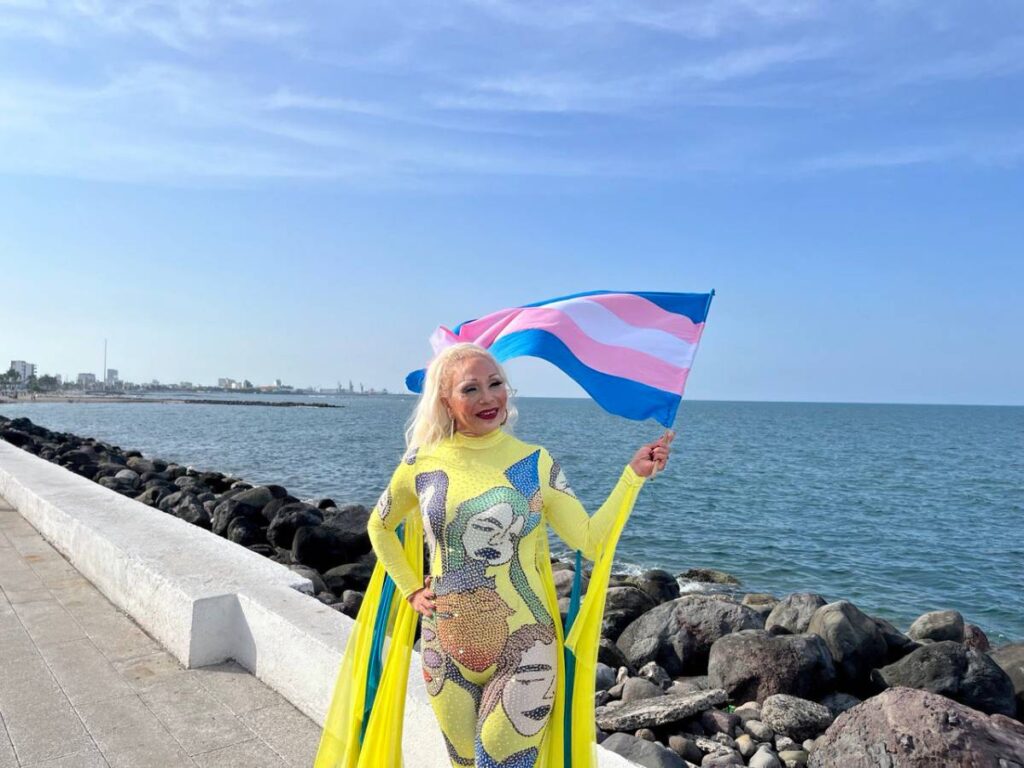
The march was also led by Noah Prieto, a trans woman, as queen, and Toca Queer as queen. Gómez said this is the first year that a non-binary person has been included among those crowned, to raise awareness of their existence and support education on the subject.
Unlike previous years, when not all the local groups worked together to organize the march, this year they decided to collaborate due to the significant amount of work that still needed to be done. As a result, the groups were larger and more numerous.
“That inclusion is lacking; I think it will take years, but we are making slow but steady progress. Little by little, we are including more people from society. I hope that more will join this year, that families will come, that allies will come, that we can show other people that it is hard work,” said Vianey Jefry, the march coordinator.
This year the march was already being organized jointly, but the need to unite into a single contingent was reinforced after Roberto's murder due to homophobia. He was sweeping outside his house when a neighbor, who according to the groups was a religious extremist, began arguing with him and ended up shooting him with a shotgun; although he was hospitalized and underwent several surgeries, he ultimately died.
Jefry stated that this is a clear example of the high levels of discrimination experienced by the LGBTIQ+ community in the state of Veracruz and one of the reasons why it is necessary to march and carry out multiple educational activities.
Make visible with joy
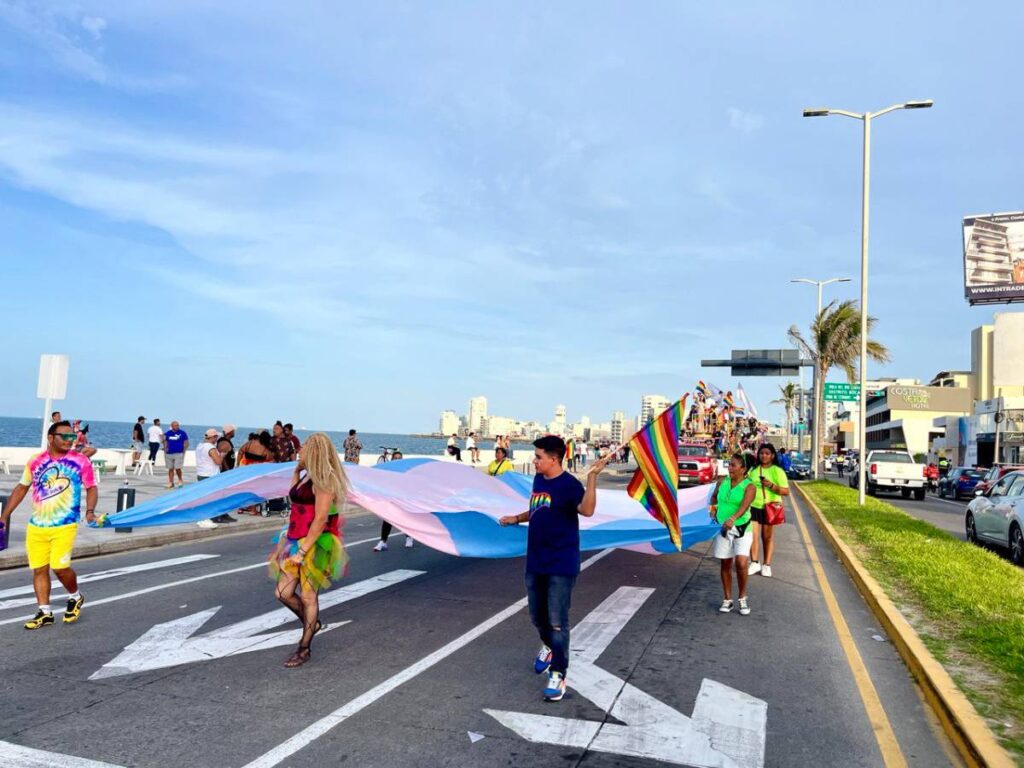
At the head of the march, trans women dressed in jarochas (the traditional dress of Veracruz) led the parade. Popular songs played from the cars, and many people danced and showed their joy; for them, it's an important day, a day when they come together and march alongside people they love to show they have support.
It is the day when they can go out to parade on a main street and not experience aggression, sexist comments or discrimination.
“For me, marching is about supporting my friends. There’s a lot of ignorance and discrimination against the trans community, especially, I think. I have trans friends, and there’s a lot of discrimination,” said another participant in the march. Like her, many people accompanied their families, including grandmothers giving out hugs, mothers, and nieces and nephews displaying pride banners.
A state with violence
Veracruz often tops the statistics for hate crimes. That's why the celebration, the dancing, and the rhythm combined with the protest.
The need to bring these situations to light was recognized 12 years ago by Felipe Santiago, who founded the marches in Veracruz and passed away last year from complications of HIV, one of the causes he championed for many years and supported. Therefore, at the end of the event, he was remembered, and part of the ceremony was dedicated to his memory.
The medal of the night went to Jazz Bustamante of Soy Humano. She couldn't be present because the violence in Veracruz forced her to seek refuge in another city, but the community decided to present her with the award for her long career in defending human rights.

March and actions
The laughter, the party, the dazzling drag show, the cries for justice, and the parade stretching over 3 kilometers weren't all. A week earlier, the LGBTI+ community organized a series of events to support education and help stop violence. There was a play called Strawberry with Chocolate . Also, a leadership workshop was held by the civil association Casa Veracruz, which provides support to people of diverse sexual orientations and gender identities living with HIV.
Another activity was a presentation on the community's historical context by the civil association Soy Humano, which supports victims of violence and promotes legislative processes. This was followed by a group exhibition by Casa de las Artes Phaskein, a collective of community artists who seek to combat discrimination through art and close existing gaps in this area.
In addition, there were activities such as discussions about families of transgender people, and recreational events like fashion shows, among others. All of this was to celebrate their continued existence in a state like Veracruz, which remains among the worst in terms of hate crimes and attacks against the transgender community. It was also a way to commemorate those who are no longer with us, victims of the hatred that everyone faces every day.
We are present
We are committed to journalism that delves into the territories and conducts thorough investigations, combined with new technologies and narrative formats. We want the protagonists, their stories, and their struggles to be present.
SUPPORT US

FOLLOW US
Related notes



We are present
This and other stories are not usually on the media agenda. Together we can bring them to light.