

Aymara and Quechua Identities in LGBTI+ Pride Month
At a time that requires decolonial responses to a patriarchal, denialist history, sisters from Bolivia tell us about their identities.


Share

International LGBTQ+ Pride Month commemorates the uprising led by our Afro-trans and Latina sisters Marshall Johnson and Sylvia Rivera in New York. Almost half a century after this event, we ask ourselves: from what time/space do we recount the beginning of the history of sexual diversity? At a time that demands decolonial responses to a patriarchal, denialist history, our brothers and sisters from Bolivia share their Indigenous identities and experiences of sexual diversity.
Ullupaku
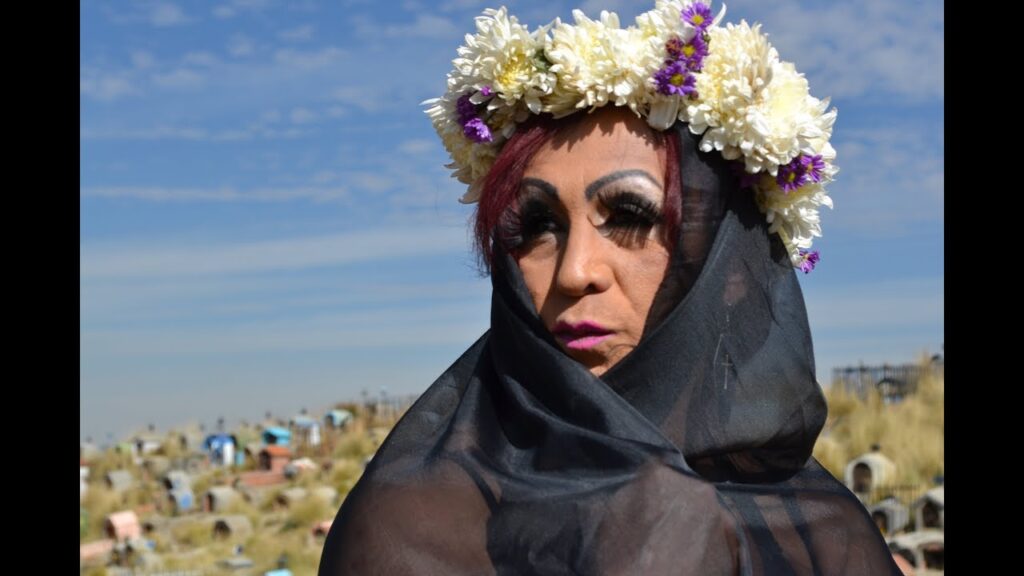
Laura Libertad Álvarez is a 52-year-old trans woman, a leader in the trans organization Otraf , and a public servant in the Ombudsman's Office of the City of El Alto, where the majority of people from the Aymara Nation live. During Pride Month, she asks, "Where is Indigenous sexuality? Is there an Indigenous eroticism?" "Of course there is," she replies, "but it's hidden; there's a lack of understanding. People who are part of the gender and sexual dissidence make ourselves visible through our bodies. When we name ourselves as trans women, we do so from a place of difference. But if, in doing so, I identify myself as a woman with a penis, ullupaku in Quechua, I'm also questioning the binary system, where female genitalia—vulva and male genitalia—are assigned roles and hierarchies of power. However, we are born women with penises, men with vulvas, intersex people, non-binary transvestites, etc. By simply identifying ourselves, we are generating knowledge outside of the colonial binary."
Bolivian Faggots
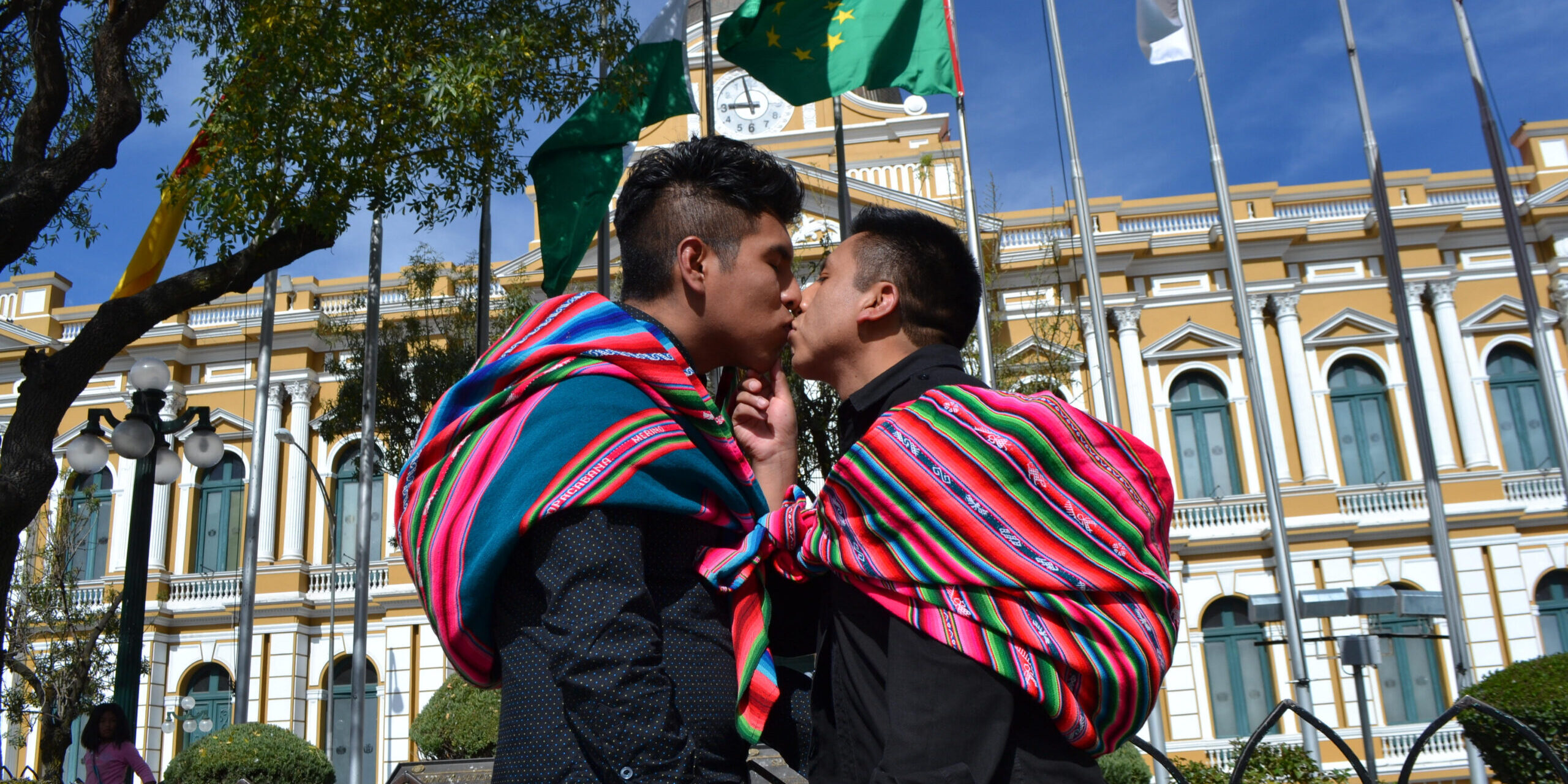
With over 10 years of experience, Roberto Condori and Edgar Solís are the gay men behind the YouTube channel of Movimiento Maricas Bolivia (Movement of Gay Men of Bolivia), a leading community media outlet for diversity. Roberto explains that for one of their projects, they began reflecting on their Aymara or Quechua identity. “It’s an identity that runs through us, and we had to undergo a personal process of Indigenous self-affirmation. This evolved into a collective process of identifying the racism that was always present and that we had to confront .” From this recognition, they began connecting with other Indigenous lesbians, gay men, and trans people, each with their own unique experiences. This is how Jiwasa/us in Aymara . It’s a book of stories featuring the voices of Indigenous people from both the Altiplano and the Amazon rainforest, recounting their journeys to becoming diverse sexualities.

Edgar, for his part, points out that “as Maricas Bolivia we see a neo-colonial conception of LGBT, because it is an urban culture with a specific rights agenda that are necessary, of course, but that reproduces the logic of the global north; pink capitalism, gay supremacy over other identities, racial practices, etc. There, the majority of brown subjects are not activating those spaces.”
For them, a pivotal moment in the movement was recognizing themselves as Indigenous women in front of the mirror, with their brown skin and profile, as Adriana Guzmán, a community feminist from Bolivia, describes it. Today, they are developing a new project, this time audiovisual, called “Street Queer Nation.” Here, they reclaim public space as a political act of redefinition, interviewing sexual dissidents in different contexts in each episode. Edgar explains, “We seek out symbolic urban or peripheral landscapes so that the territory itself can speak and have meaning.”
Lesbian and Quechua from El Alto
Romina Apaza, 33, is the president of the LGBTI Collective of El Alto. As a lesbian and Quechua teacher in Aymara territory, Romina addresses the strengthening of identity through education. She recounts that her journey began in her rural upbringing. “Reaching out to families and building alliances within communities are strategies for overcoming ignorance surrounding sexual diversity. As teachers, we are role models for a generation that must shed the fear we were taught.”
Share
We are present
We are committed to journalism that delves into the territories and conducts thorough investigations, combined with new technologies and narrative formats. We want the protagonists, their stories, and their struggles to be present.
SUPPORT US

FOLLOW US
Related notes



We are present
This and other stories are not usually on the media agenda. Together we can bring them to light.